How To Clean Lg Top Load Washing Machine – Guide
To clean your LG top load washing machine, first remove all laundry and close the lid and detergent drawer. Use the Tub Clean cycle with about one cup of bleach in the dispenser. Run it on the hottest water setting to sanitize the drum.
Make sure to regularly clean the detergent dispenser, door gasket, inlet filters, and drain pump. This helps prevent buildup and odors.
After cycles, leave the door and dispenser open to let everything dry out. For detailed maintenance and troubleshooting, keep exploring these essential steps.
Preparing Your LG Washer: Empty and Set Up
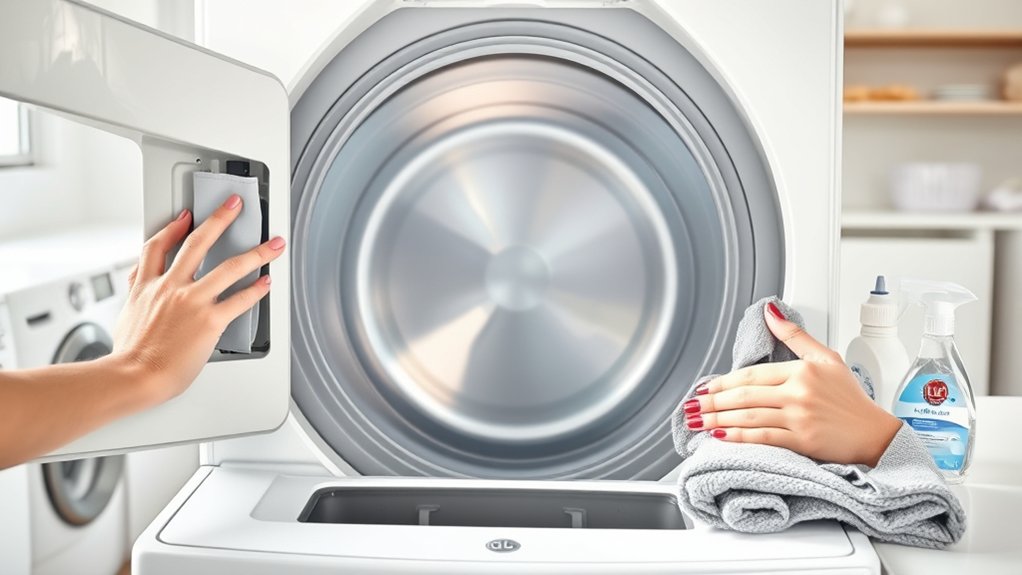
Before starting the cleaning process, make sure you remove all laundry and foreign objects from the drum to prevent damage or obstruction. Close the detergent dispenser drawer and the washer lid securely to prepare for the cleaning cycle.
Next, turn off the water supply valves and unplug the machine to guarantee safety during maintenance. Inspect the drain pump filter and inlet filters for debris, clean them if necessary, and reinstall properly to avoid clogs or malfunctions.
Once the washer is prepped, select the appropriate cleaning option, such as the Tub Clean cycle, designed to thoroughly sanitize the drum. Following these steps ensures your LG washer is correctly set up for effective cleaning and peak performance during maintenance routines.
How to Use the Tub Clean Cycle on Your LG Washer
How exactly do you use the Tub Clean cycle on your LG washer to maintain peak hygiene? Start by closing the lid and opening the detergent dispenser drawer. Select the [TUB CLEAN] option on the control panel.
Pour one cup of bleach into the designated detergent compartment to boost cleaning power. Make certain no laundry or other items are inside the washing machine during this cycle.
Run the Tub Clean cycle using the hottest water setting, typically around 95°F, to effectively remove residue and bacteria.
After the cycle finishes, open the lid to ventilate and dry the drum.
Don’t forget to clean the gasket regularly to prevent mold buildup and odors. This helps keep your LG washer in excellent condition.
This process maintains your washing machine’s hygiene efficiently. It’s a simple step that can really make a difference in how fresh your washer stays.
Adding Bleach Safely During Your LG Washer Clean
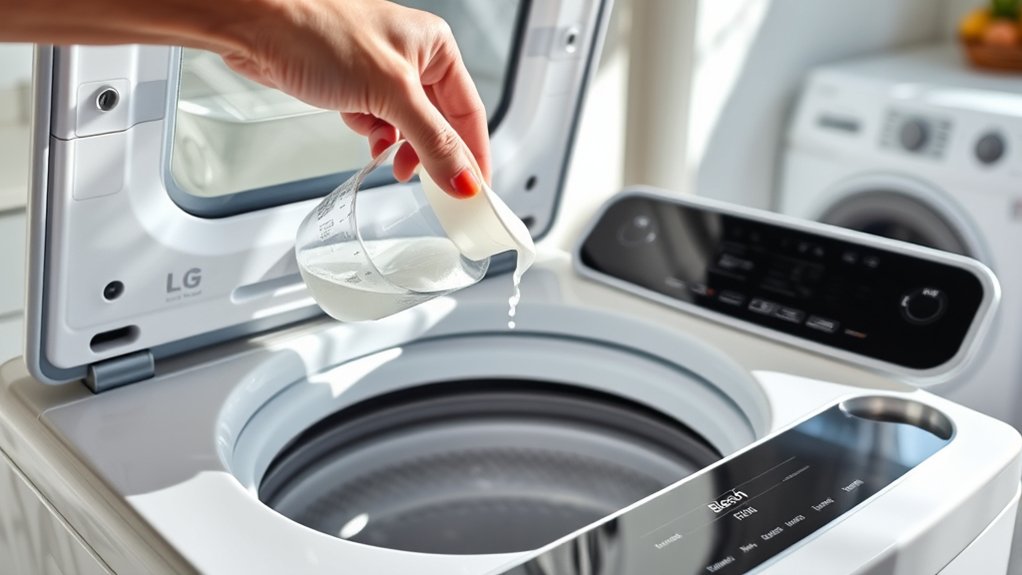
When you’re adding bleach during your LG washer’s tub clean cycle, make sure to pour it into the designated compartment in the detergent drawer. It’s important not to use more than one cup—that helps protect the drum and gasket from any damage.
Also, set your washer to the hottest water temperature.
And remember, don’t add any clothes or other detergents during this cycle. This way, you’ll ensure a safe and effective sanitization every time.
Bleach Usage Guidelines
Why should you add bleach carefully during your LG top load washer’s cleaning cycle? Proper bleach usage is essential to guarantee effective disinfection and prevent damage. Always pour one cup of bleach into the detergent drawer before starting the tub clean cycle. This placement helps the bleach disperse evenly during the cycle.
Use the hottest water setting available, usually around 95°F, to get the most out of the bleach’s disinfecting power and to remove detergent residue. Be careful not to mix bleach with other cleaning agents or detergents because that can cause harmful chemical reactions.
Run the tub clean cycle without any clothes inside to thoroughly sanitize the drum. Once the cycle is done, leave the lid open to let the interior dry. This helps reduce the chance of mold or mildew and keeps your washer running well for a long time.
Easy, right? Just a few simple steps to keep your washer clean and fresh!
Safety Precautions
Where should you add bleach to guarantee your LG top load washer stays in top condition? Always pour bleach into the designated dispenser to avoid damage to internal components.
Use only 1 cup as your cleaning solution during the tub clean cycle. Make certain the washer is empty of detergent and clothes before starting.
Run the cycle on the hottest setting (around 95°F) to disinfect effectively without risking damage.
And don’t forget to follow your LG model’s specific manufacturer instructions for safe bleach incorporation.
How to Clean the Detergent Dispenser and Prevent Clogs
Although the detergent dispenser is a small component, it plays a critical role in your LG top load washing machine’s performance and requires regular cleaning to prevent clogs.
Start by pulling out the detergent dispenser until it stops, then press down the tab between compartments to release it. Use warm water and a soft brush to clean the dispenser tray and interior housing thoroughly, removing detergent residue and buildup.
Pull out the detergent dispenser, press the tab to release, then clean with warm water and a soft brush.
After cleaning, reassemble and reinsert the dispenser to guarantee proper detergent flow.
Regularly inspect the dispenser opening for clogs or accumulated detergent, using a soft brush or toothbrush to clear obstructions. Avoid using excessive detergent, as it promotes clogs.
Also, run a hot water rinse periodically to prevent residue buildup in the detergent dispenser.
Keeping an eye on these small details makes a big difference in how well your washer works. It’s simple but helps avoid bigger problems down the line.
Wiping Down the Washer Drum and Door Gasket
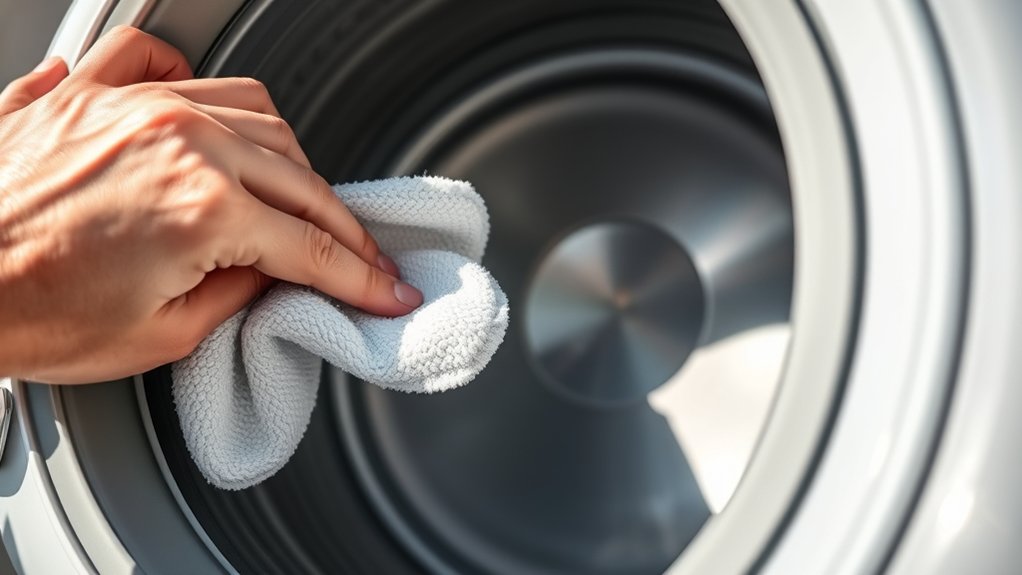
How often do you wipe down your washer drum and door gasket? Consistent cleaning is essential to keep your LG top load washing machine running smoothly and hygienically.
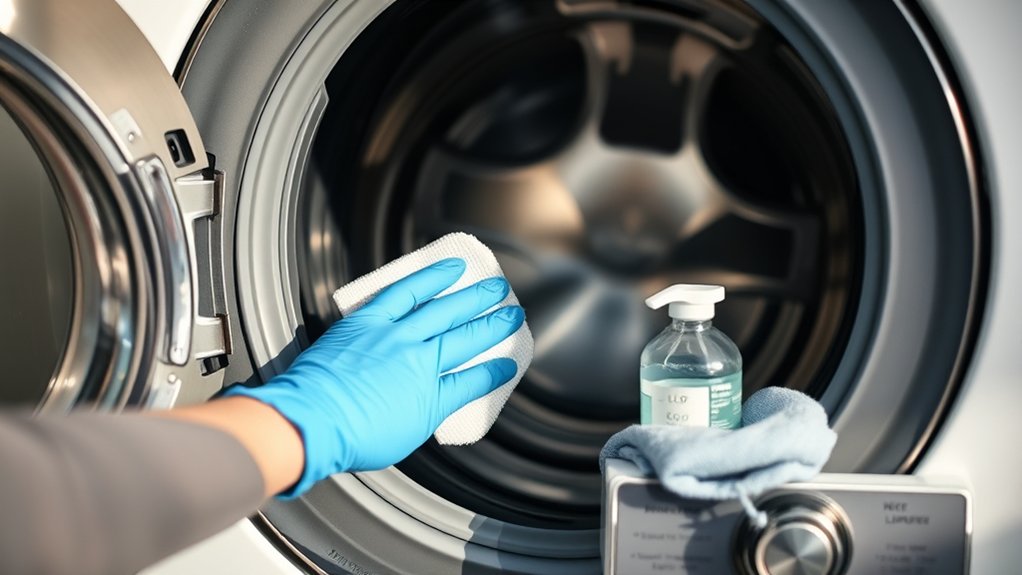
After each use, grab a dry microfiber cloth and wipe the inside of the washer drum to get rid of detergent residue and lint.
For the door gasket, pull back the rubber seal to find any trapped dirt. Then, wipe it thoroughly with a soft cloth dampened in a water-vinegar solution.
It’s a good idea to regularly check the gasket for mold, mildew, or soap scum and deal with these issues right away.
Always leave the door open afterward so everything can air dry properly. This helps prevent odors and keeps your machine fresh.
Here are the key steps for effective wiping:
- Remove residue from the washer drum after every cycle
- Pull back and clean beneath the door gasket
- Use a water-vinegar mix for thorough wiping
- Air dry by leaving the door open post-cleaning
How to Clean and Maintain Your LG Washer Inlet Filters
Why should you regularly clean the inlet filters on your LG top load washing machine? Proper cleaning and maintenance of these filters prevent clogs and guarantee ideal water flow.
Start by turning off the water supply and unplugging the washer for safety. Use pliers to carefully remove the inlet filters from the water inlet hoses, avoiding damage to the fittings.
Soak the filters in vinegar for 10-15 minutes to dissolve mineral deposits and buildup.
After soaking, rinse the filters thoroughly with clean water to remove all debris and residue.
Finally, reinstall the inlet filters securely into the hoses and reconnect the water supply.
Regular cleaning using vinegar prolongs your washer’s efficiency and helps prevent water supply issues caused by clogged inlet filters. It’s a simple step that goes a long way in keeping your machine running smoothly.
How to Clean the Drain Pump and Remove Water Build-Up
Before you start cleaning the drain pump on your LG top load washing machine, make sure to turn off and unplug the unit to guarantee your safety. Access the drain pump by opening the service panel at the bottom-left corner.
To effectively remove water build-up and detergent residue, follow these steps:
Detach the drain hose and drain any accumulated water into a container. Clean the drain hose thoroughly to prevent clogs.
Remove the drain pump filter and wash it with warm water and a soft brush to clear debris.
Then, reassemble the drain pump and hose, making sure all connections are tight to avoid leaks.
Regularly cleaning the drain pump and removing water build-up will maintain maximum drainage and extend your washer’s lifespan.
It’s a simple task that really pays off in the long run.
How to Clean and Care for Your Washer Exterior
When should you clean the exterior of your LG top load washer? It’s a good idea to regularly wipe the surface with a soft, damp cloth. This helps keep dust, stains, and spills from building up over time.
If you come across stubborn dirt or stains, try using a mild, non-abrasive cleaner or a simple mixture of water and dish soap. Just be sure to avoid harsh chemicals or abrasive scrubbers because they can damage the washer’s finish and control panel.
Pay special attention to the control panel and display screen. Gently clean these areas with a soft cloth to prevent any residue from sticking around.
Once you’re done cleaning, dry the exterior thoroughly with a clean, dry cloth. This helps prevent water spots and keeps your washer looking great.
How to Troubleshoot Cleaning Issues and Odors in Your LG Washer
If you’re dealing with odors or cleaning problems in your LG washer, the first thing to do is check the door gasket and filters. Sometimes debris or small items get stuck there, which can cause blockages and smells.
Next, make it a habit to run the Tub Clean cycle once a month. Use hot water and a bit of bleach to help stop mold from building up inside the machine.
Also, after each wash, try to leave the door and detergent dispenser open. This helps everything dry out properly and keeps those musty odors from developing. It’s a simple step that really makes a difference!
Identifying Odor Causes
Although your LG top load washing machine may seem clean on the surface, odors often develop from hidden mold, mildew, or detergent residue in the gasket, drum, and dispenser areas. To identify odor causes, inspect these critical components carefully.
Check for mold and mildew buildup around the rubber gasket and inside the drum. Also, look for detergent residue accumulation in the dispenser and drum surfaces. Don’t forget to check for organic debris like lint, hair, and soap scum trapped in the gasket or filters.
Another thing to watch for is signs of moisture retention caused by clogged inlet filters or drain pumps. Persistent musty smells often happen when you don’t run the tub clean cycle regularly or leave the door and dispenser closed after use.
Resolving Cleaning Blockages
How can you quickly identify and resolve cleaning blockages in your LG top load washer? Start by inspecting the filter for clogs or lodged items that might be causing odors and poor cleaning. Running a tub clean cycle monthly with hot water and bleach helps get rid of any residue buildup.
Also, check the inlet filters for debris or lime scale that could be restricting water flow. Make sure the drain hose and pump are free of obstructions to avoid water pooling and unpleasant smells. Don’t forget to regularly clean the door gasket and dispenser to remove mold, mildew, and detergent residue.
| Component | Action |
|---|---|
| Filter | Remove clogs and trapped items |
| Tub Clean Cycle | Run monthly with hot water & bleach |
| Inlet Filters | Inspect and clean debris/lime scale |
| Drain Hose | Clear blockages and ensure flow |
| Door Gasket | Wipe to remove mold and residue |
When to Call for Professional LG Washer Help
If your LG top load washer keeps giving off persistent odors or mold even after regular cleaning, it’s definitely time to call a professional. Getting expert help means you’ll get a precise diagnosis and solutions for any complex issues that go beyond just routine maintenance.
Reach out to a qualified technician if you notice things like malfunctioning control panels or electronic components showing error codes. Also, if your washer won’t drain or spin properly after you’ve tried basic troubleshooting, it’s a good idea to get professional help.
Other signs include unusual noises or vibrations during operation that can’t be explained by a simple check. And if you find leaks or water damage that you can’t fix by just tightening connections or cleaning filters, it’s time to call someone who knows what they’re doing.
Taking care of these problems quickly helps prevent further damage and keeps your washer running at its best.
Don’t try complicated repairs yourself — professionals make sure the job is done safely, accurately, and will keep your LG top load washer working well for years to come.
Frequently Asked Questions
Can I Use Vinegar Instead of Bleach to Clean My LG Washer?
Yes, you can use vinegar instead of bleach to clean your LG washer. Pour equal parts white vinegar and water into the tub or dispenser, then run a hot water cycle.
Vinegar effectively breaks down residue and removes odors without damaging components.
However, it may not disinfect as thoroughly as bleach for heavy mold or bacteria.
Use this method monthly to maintain freshness and prevent buildup safely. It’s a simple and gentle way to keep your washer clean without harsh chemicals.
How Often Should I Run the Tub Clean Cycle on My LG Washer?
You should run the tub clean cycle on your LG washer once a month to keep it fresh and efficient. If you notice a musty smell, increase cleaning to weekly for three weeks. This prevents detergent buildup and mold.
In households with heavy use or hard water, more frequent cycles help maintain hygiene and extend your washer’s lifespan. Stick to this routine to avoid costly repairs and keep your laundry smelling great.
Is It Safe to Use Fabric Softener During the Cleaning Cycle?
No, you shouldn’t use fabric softener during the cleaning cycle. It can leave residues that interfere with the washer’s ability to remove buildup effectively.
Instead, add fabric softener during the rinse cycle since your LG washer is designed for that.
Always check your user manual to confirm specific instructions. But generally, avoid fabric softener in the tub clean cycle to maintain peak cleaning performance.
This also helps prevent residue buildup inside the machine.
What Should I Do if My Washer Drum Smells Musty After Cleaning?
If your washer drum smells musty after cleaning, run a tub clean cycle using hot water and bleach to kill mold and mildew.
Leave the washer door open after each cycle to let it dry completely.
Wipe the door gasket, drum, and door glass with a dry towel to remove trapped moisture.
Also, clean the detergent dispenser and inlet filters regularly to prevent residue buildup that causes odors.
Make certain there’s proper ventilation for thorough drying.
This way, your washer stays fresh and odor-free.
Can I Clean My LG Washer While It’s Still Under Warranty?
Yes, you can clean your LG washer while it’s under warranty. Just make sure you follow the manufacturer’s recommended cleaning procedures and use approved products to avoid voiding the warranty.
Avoid deep cleaning methods that could cause damage without consulting LG support first.
Always document your cleaning steps and any service interactions to protect your warranty coverage. When in doubt, refer to your warranty terms or contact LG customer support for guidance. It’s better to ask than risk losing your warranty.
Conclusion
Cleaning your LG top load washer transforms a grimy drum into a sparkling chamber, ready to refresh your clothes. While buildup and odors may lurk like shadows, following these steps guarantees your machine runs smoothly and efficiently.
Neglect turns cleanliness into a challenge. But with regular care, like running tub cycles, using bleach, and wiping thoroughly, you can keep your washer performing at its best.
If problems persist and seem beyond your reach, don’t hesitate to call a professional for expert help. They can get things back on track in no time.