How To Clean Frigidaire Washing Machine Front Load – Guide
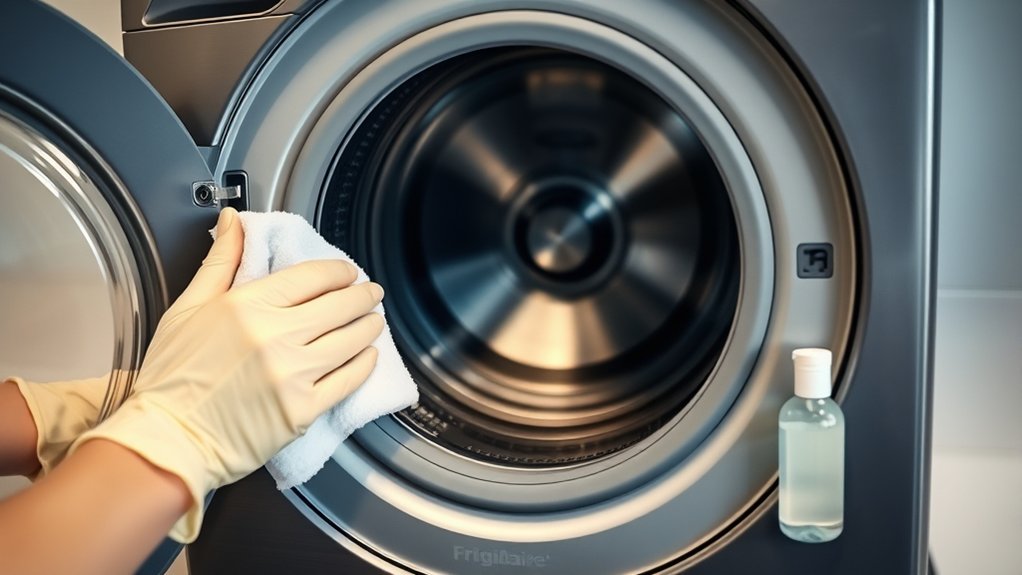
To clean your Frigidaire front-load washer, start by removing your laundry and wiping the drum with a damp cloth. Then, pull back and clean the door seal using mild detergent and a soft brush to get rid of any mold.
Next, soak the detergent dispenser in warm, soapy water and scrub away any buildup. After that, run a hot water cycle with vinegar or a washer cleaner once a month, making sure the washer is empty.
Finally, keep the door open after use to let the washer air out. Following these steps helps prevent odors and buildup. If you want, you can explore further for detailed maintenance and troubleshooting tips.
Materials Needed for Cleaning Your Frigidaire Washer
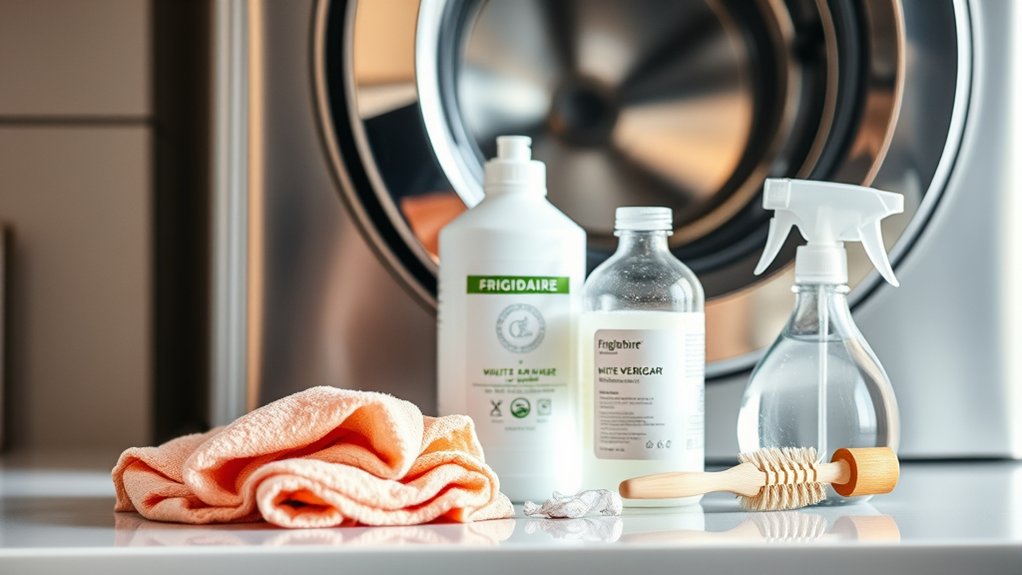
Before you begin cleaning your Frigidaire front-load washer, gather all necessary materials to guarantee a smooth process. You’ll need a microfiber cloth for gentle wiping, warm soapy water, and a small brush to reach tight spots.
Prepare cleaning agents such as vinegar or specialized washing machine cleaners in a spray bottle for effective maintenance. Use soft cloths and mild solutions to avoid damaging the washer’s surfaces.
Have towels or rags ready to promptly address any water spills during the procedure. Ensuring all cleaning materials are at hand minimizes interruptions and prevents moisture damage around the machine.
This preparation sets the foundation for an efficient, thorough cleaning of your Frigidaire washer’s exterior and seals, maintaining its performance and longevity. It’s all about making the process easy and keeping your washer in great shape!
How to Clean the Drum and Remove Odors Effectively
When you want to eliminate odors and maintain your Frigidaire washer’s drum, run a hot water cycle with two cups of white vinegar or a commercial washing machine cleaner.
Afterward, wipe the drum interior thoroughly with a damp cloth to remove residue. Regular cleaning prevents buildup and odors. You can also use a baking soda and water mixture to wipe the drum regularly.
Always leave the washer door open after use to allow the drum to dry fully. This helps reduce mold growth and keeps your washer fresh.
| Step | Action | Frequency |
|---|---|---|
| Deep Cleaning | Hot water cycle with vinegar | Monthly |
| Wipe Drum | Damp cloth or baking soda mix | Weekly |
| Dry Drum | Leave door open | After every use |
Running a Cleaning Cycle: What You Need to Know
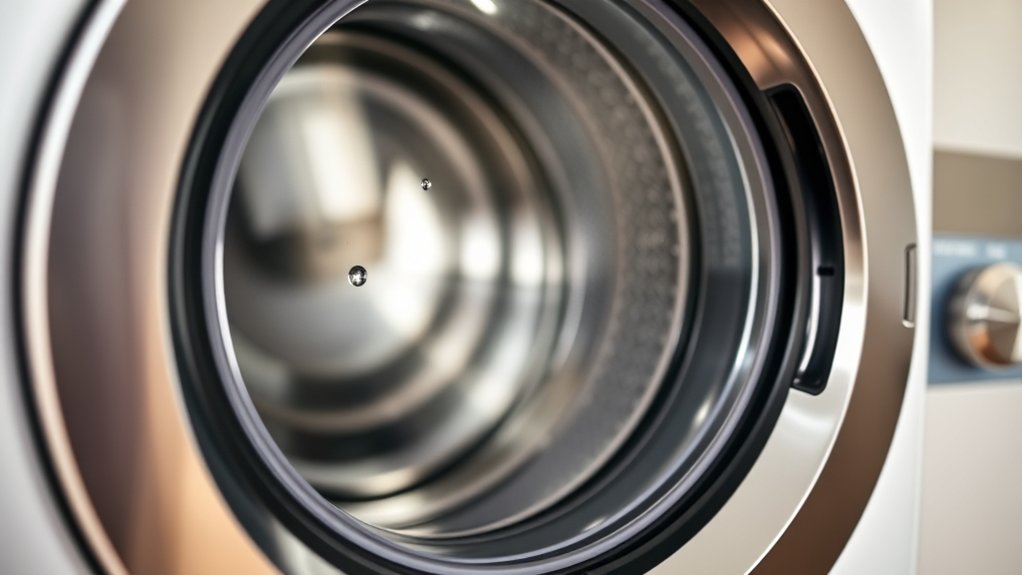
How often should you run a cleaning cycle to keep your Frigidaire front load washer in top condition? You should run it every 1-2 months to prevent residue and odors. Before starting, make sure the washer is empty so the cleaner can reach all internal surfaces effectively.
Use a specialized washer cleaner or a mixture of vinegar and baking soda for best results. Select the hot water setting during the cleaning cycle to maximize removal of soap scum, mold, and bacteria buildup. Follow the manufacturer’s instructions regarding cycle duration and any additional steps.
Consistently running the cleaning cycle maintains hygiene and washer performance. This helps ensure your machine operates efficiently and lasts longer.
Steps to Clean the Door Seal and Prevent Mold
Pull back the rubber door seal and give all the hidden folds a good clean with a damp cloth and some mild detergent.
You might want to use a soft brush to get rid of any mold and debris stuck in the crevices.
After that, wipe the seal down with a vinegar-water solution to help eliminate any lingering odors.
Make sure to dry the seal thoroughly afterward, and it’s a good idea to leave the door slightly open.
This helps prevent moisture from building up and keeps mold from growing.
Cleaning Door Seal
Since mold and debris often accumulate in the door seal folds, you’ll need to carefully pull back these folds to expose and remove trapped dirt, soap scum, or residue. Start by wiping the rubber gasket thoroughly with a damp cloth soaked in hot water mixed with mild detergent.
For stubborn mold or mildew spots, use a soft brush or toothbrush to scrub the crevices gently.
Next, spray an equal parts solution of white vinegar and water onto the gasket to disinfect and inhibit mold growth.
After cleaning, leave the door open to allow the door seal to dry completely. This helps prevent moisture buildup that fosters mold development.
Regularly maintaining the door seal this way helps keep your Frigidaire front load washer clean and odor-free. It’s a simple step that really makes a difference over time.
Mold Prevention Tips
Although cleaning the door seal removes existing mold, preventing its return requires consistent maintenance. Regularly wipe the door seal with a cloth soaked in a vinegar-water solution to eliminate mold and mildew.
After every wash cycle, leave the washer door open to allow the interior and door seal to dry completely, reducing moisture buildup.
Use a toothbrush or small brush to scrub debris from the folds of the door seal, making sure no residue remains.
Run a monthly hot water cycle with white vinegar or a specialized mold cleaner to disinfect the door seal area thoroughly.
Always dry the door seal completely after cleaning to stop moisture from sticking around.
Following these mold prevention steps helps you keep your washer clean and extend its efficiency. It’s a simple routine, but it makes a big difference in the long run!
Cleaning the Detergent Dispenser for Better Performance
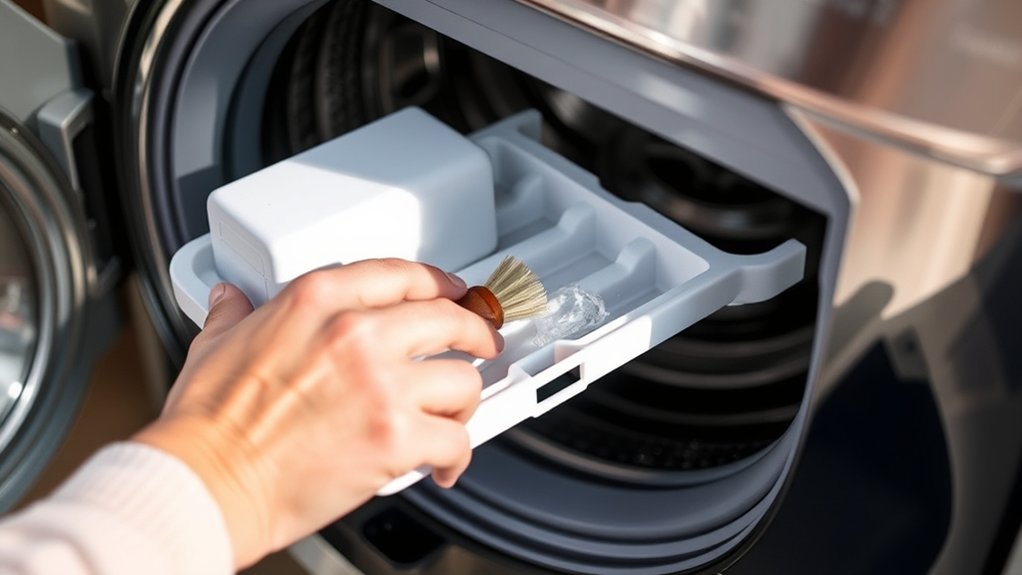
Start by taking out the detergent dispenser drawer and soaking it in warm, soapy water to help loosen any residue.
After it’s had some time to soak, grab a soft brush and gently scrub away any buildup or mold from all the compartments.
Once you’ve cleaned it well, rinse the drawer thoroughly before putting it back in place.
It’s a good idea to clean the dispenser regularly, along with the surrounding area inside the washer.
This helps prevent mold from forming and keeps the detergent flowing just right for the best washing results.
Removing Detergent Residue
How often do you check the detergent dispenser for buildup? To clean my Frigidaire effectively, start by removing the detergent dispenser drawer.
Rinse it thoroughly with warm water to eliminate visible soap residue.
For deeper residue removal, soak the dispenser in a solution of warm water and mild detergent or vinegar for 10–15 minutes.
After soaking, use a soft brush or toothbrush to scrub away any remaining detergent deposits or mold, focusing on the dispenser and its housing.
Wipe the surrounding area inside the machine with a damp cloth to remove loose residue or spills.
Finally, reinsert the cleaned detergent dispenser and run a short wash cycle with hot water to flush out any residual soap or debris, ensuring the best washing machine performance.
Soaking And Scrubbing Tips
When you soak the detergent dispenser drawer in warm, soapy water for 15-20 minutes, it helps loosen hardened residue and mold. This makes scrubbing much more effective. Be sure to remove the drawer completely and submerge it so all the buildup softens well.
After soaking, grab a soft brush or toothbrush and scrub all the compartments and corners of the detergent dispenser. Focus especially on areas with visible residue. Scrubbing gets rid of stubborn detergent deposits and mold that can mess with your washing performance.
Rinse the dispenser thoroughly under running water to wash away soap and loosened debris before putting it back in. It’s a good idea to soak and scrub the detergent dispenser every month to keep it working its best.
Finally, wipe the surrounding dispenser slot with a damp cloth. This helps stop mold and buildup from transferring and keeps the whole area clean and fresh.
Preventing Mold And Buildup
Although detergent dispensers are designed for convenience, they need regular maintenance to prevent mold and residue buildup that can mess with your washing performance. To keep mold at bay, make sure to remove and rinse the detergent dispenser every month.
Soak it in hot water and give it a good scrub with a soft brush to get rid of any stubborn deposits. Then, clean the dispenser area with a mixture of vinegar and baking soda to tackle mold and musty smells.
After cleaning, dry the dispenser thoroughly before putting it back in. This helps avoid moisture buildup, which is a prime spot for mold to grow.
Also, once a month, run a hot cleaning cycle using bleach or a washing machine cleaner. This disinfects the detergent drawer and the surrounding areas.
Benefits of Regular Cleaning for Frigidaire Front Load Washers
Because mold and detergent buildup can quickly compromise your Frigidaire front load washer, regular cleaning is essential to maintain ideal performance. Consistent maintenance removes residue and debris that impair wash cycles and cause unpleasant odors.
By cleaning frequently, you prevent mold and mildew growth, which can damage the drum and seals. This upkeep reduces clogs and drainage issues, ensuring efficient water flow and preventing malfunctions.
Furthermore, routine cleaning extends the appliance’s lifespan by minimizing wear on components affected by buildup. Maintaining your washer also improves laundry hygiene, so your clothes come out fresh and odor-free.
Prioritizing cleaning and maintenance safeguards your washer’s functionality and keeps it operating at peak efficiency. This saves you from costly repairs and ensures optimal wash quality every cycle.
Tips to Keep Your Frigidaire Washer Fresh Between Cleans
Maintaining your Frigidaire front load washer’s freshness between deep cleans helps prevent buildup and odors from developing. Always leave the washer door open after each use to promote air circulation and inhibit mold growth inside.
Regularly wipe the door seal and gasket with a damp cloth to remove moisture and debris that can cause odor.
Run a hot water cycle with a cup of white vinegar or a specialized washer cleaner periodically to sustain interior freshness without triggering appliance repair issues.
Avoid excessive fabric softener use, as residue contributes to unpleasant smells and buildup.
Finally, inspect and clean the coin trap and drain filter to prevent trapped debris from blocking the water supply and causing odors.
These steps ensure your washer stays efficient and odor-free between thorough cleanings.
Fixing Common Frigidaire Washer Issues After Cleaning
When you notice persistent odors, drainage issues, or error codes after cleaning your Frigidaire washer, addressing common problems promptly can restore peak performance.
First, run a maintenance cycle using a washer cleaner or a vinegar solution to eliminate residue causing odors.
Start with a maintenance cycle using washer cleaner or vinegar to remove odor-causing residue effectively.
Check and clean the drain pump filter and coin trap to resolve drainage problems.
Also, make sure your washer is level and that you evenly distribute your laundry to prevent out-of-balance errors and noise.
Use the correct amount of high-efficiency detergent to avoid over-sudsing, which can trigger error codes like F2 or E4.
Don’t forget to regularly clean the door seal and drum to prevent mold buildup. This helps keep odors at bay.
Following these steps will keep your washer running smoothly and efficiently after cleaning. It’s pretty simple but makes a big difference in how well your machine works!
Frequently Asked Questions
How Often Should I Deep Clean My Frigidaire Front Load Washer?
You should deep clean your Frigidaire front load washer every 1 to 3 months.
If you notice persistent odors or residue, clean it more often, about every two weeks, until the issue clears.
Monthly cleaning is ideal to prevent mold and mildew buildup.
Sticking to this schedule helps maintain peak performance and prolongs your washer’s lifespan.
Always follow the manufacturer’s guidelines to keep your machine running efficiently.
It’s worth the effort to keep everything fresh and working smoothly!
Can I Use Bleach Instead of Vinegar for Cleaning?
You can use bleach instead of vinegar, but it’s like choosing a harsher guest for your washer’s upkeep. Bleach disinfects effectively but can degrade rubber seals and cause chemical odors over time.
For routine cleaning, it’s best to reserve bleach for occasional deep cleans.
Vinegar offers a gentler, safer alternative that prevents mold without harming components. It helps your washer stay in prime condition longer.
Use bleach sparingly and carefully.
Is It Safe to Clean the Washer With a Pressure Washer?
No, you shouldn’t use a pressure washer on your Frigidaire front load washer. The high pressure can damage seals, gaskets, and electronic components, which might cause leaks or shorts.
Instead, just clean the exterior surfaces with a damp cloth or a soft brush.
For internal cleaning, it’s best to follow Frigidaire’s instructions and avoid letting water get into sensitive parts.
Using a pressure washer can lead to costly repairs and reduce the lifespan of your appliance, so it’s really better to steer clear of this method.
How Do I Know When the Door Seal Needs Replacing?
If your door seal looks like it survived a hurricane, it’s time to replace it. Check for cracks, tears, or missing sections in the rubber gasket. If the seal’s loose or detached, replacement is necessary.
Also, if persistent mold, mildew, or foul odors linger despite cleaning, it’s a good sign the seal needs swapping out. When debris or soap scum won’t wash away and the seal traps moisture, replacing it will help prevent leaks and bad smells effectively.
Can I Use Regular Laundry Detergent During the Cleaning Cycle?
You shouldn’t use regular laundry detergent during the cleaning cycle. It won’t effectively dissolve residues or break down mold and mildew inside your washer.
Regular detergent can create excess suds, which messes with drainage and the whole cleaning process.
Instead, go for a specialized washing machine cleaner like the ones Frigidaire recommends. These are designed to tackle soap scum and buildup much better.
Just make sure to follow the manufacturer’s instructions closely. That way, you’ll keep your front-load washer clean and running smoothly.
Conclusion
Now that you’ve tackled every nook, from drum to seal and dispenser, imagine your Frigidaire washer humming smoothly, free of odors and buildup. Regular cleaning isn’t just maintenance; it’s the key to peak performance and longevity.
Miss a step, and unseen grime could silently sabotage your next load. Stay ahead with these straightforward techniques.
Your washer will reward you with flawless cycles and fresh laundry every time. Ready to experience the difference? Start cleaning today.