How To Clean Automatic Washing Machine – Guide
To clean your automatic washing machine, run a hot water cycle with a washer cleaner or vinegar monthly. This helps remove residue and odors that can build up over time.
Make sure to remove and soak the dispensers. Also, wipe inside the drum and clean the gasket folds where mold tends to grow using a vinegar solution.
Check and rinse the filters regularly to prevent clogs. Use only the recommended detergent amount to avoid buildup. And don’t forget to leave the door open after use so the moisture can dry out.
Following these steps keeps your machine running efficiently and lasting longer. Next, you can explore detailed tips for both front- and top-loaders.
Causes of Mildew and Residue in Washing Machines
Why does mildew often develop inside your washing machine? Mildew thrives because of residual moisture and soap scum buildup within gaskets, dispensers, and drum areas.
Excessive detergent use, especially in water-saving washers, leaves soap residue that creates a breeding ground for mold and mildew.
When you leave wet clothes inside the machine for too long, the damp environment further encourages mold spores to grow. This combination of soap scum and moisture forms sticky coatings that harbor mold, leading to musty odors in your laundry.
Using too much detergent can also damage your washer’s components, which makes residue accumulation worse.
Understanding these causes helps you figure out why mildew and residue form so you can tackle them effectively and keep your washing machine clean and fresh.
How Often to Clean Your Washing Machine
Cleaning your washing machine at least once a month prevents buildup of detergent residue, mildew, and odors that can impair performance. For best results, run a cleaning your washing machine routine using a regular cycle with hot water and appropriate cleaning agents.
If you detect mildew or a musty smell in your laundry, increase the frequency to every 2-3 weeks, especially in hard water areas prone to limescale accumulation. Adhering to manufacturer guidelines guarantees your appliance maintains efficiency and hygiene.
Regular cleaning not only eradicates residue and mildew but also extends the lifespan of your washer, keeping it functioning reliably.
How to Clean the Washing Machine Drum
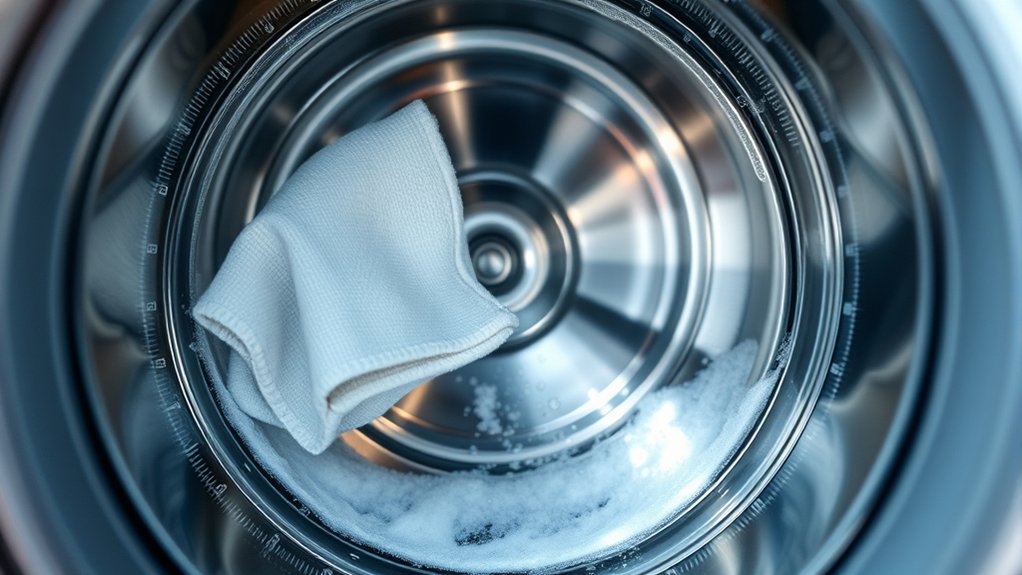
Maintaining a clean washing machine drum plays a key role in preventing odors and residue buildup that can affect your washer’s efficiency.
Keeping your washing machine drum clean prevents odors and residue buildup, ensuring optimal washer performance.
To effectively deep clean the drum, follow these steps:
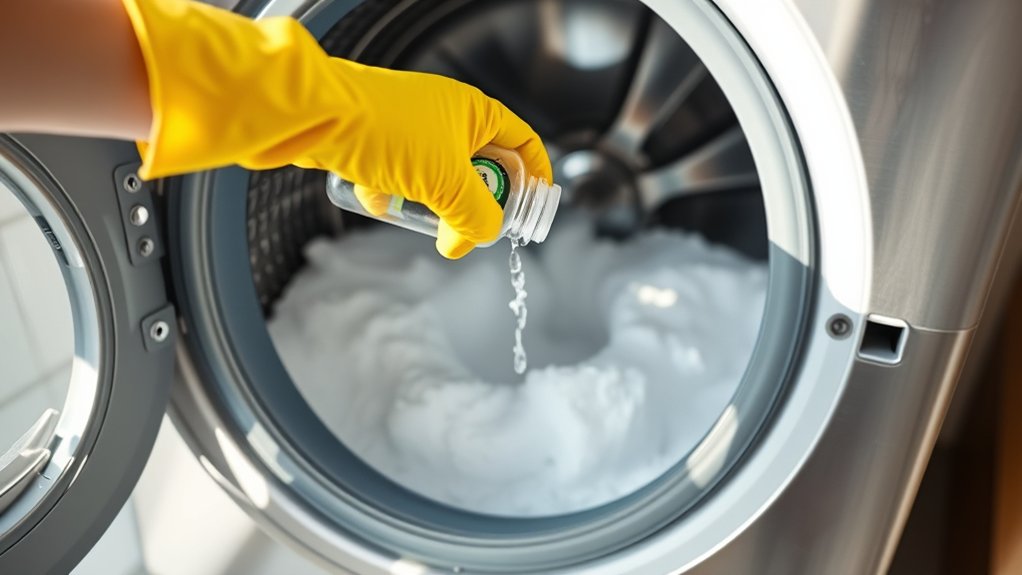
- Run a hot water cycle using a washing machine cleaner or two cups of vinegar to dissolve detergent residues and eliminate odors.
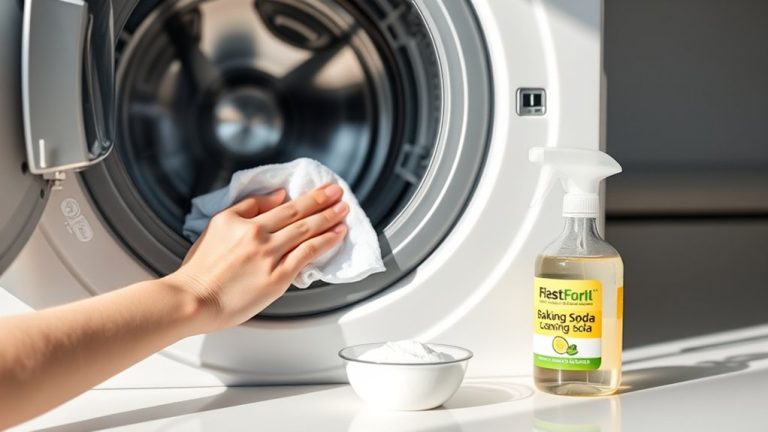
- After the cycle, wipe the drum interior with a damp cloth to remove loosened buildup.
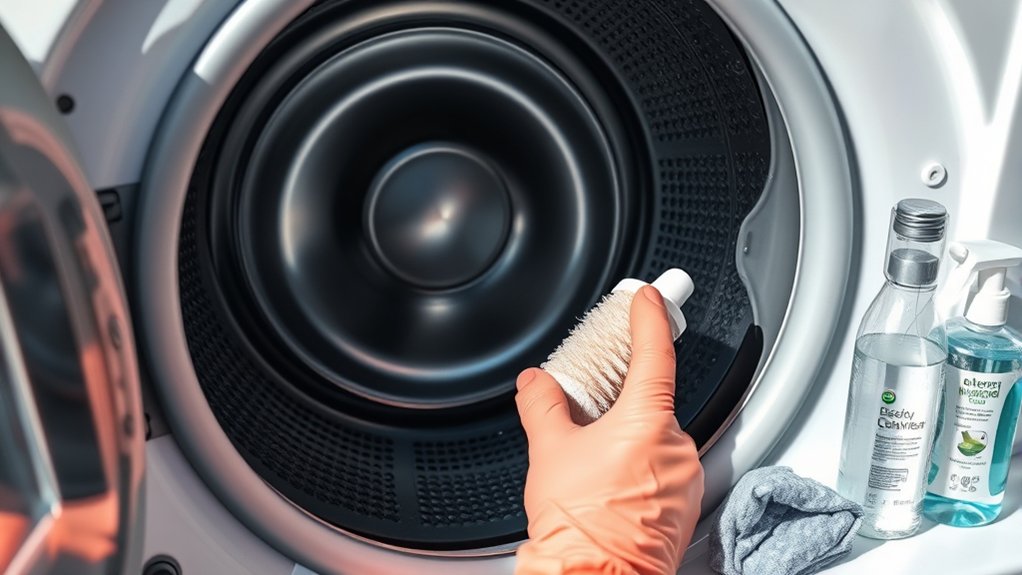
- For stubborn stains or mold, scrub gently with a soft brush dipped in a baking soda and water paste.
Make sure the drum is empty before you start.
Then, leave the door open afterward to let it dry completely.
Doing this regularly, ideally once a month, will help keep your machine clean and running at its best.
How to Clean Dispensers, Gaskets, and Filters
First, take out the detergent and fabric softener dispensers so you can soak them and scrub away any buildup. Once those are soaking, gently pull back the rubber gasket to get in between the folds—this is where mold and grime like to hide, so give it a good clean.
After that, go ahead and unscrew the filter or drain trap. Rinse out any debris you find there to make sure your machine drains properly and keeps running smoothly.
It’s a simple routine that really helps keep everything working well!
Dispenser Removal Cleaning
Although it may seem tedious, removing the detergent and softener dispensers is essential for thorough cleaning and preventing buildup. Proper dispenser removal lets you access hidden detergent residue and ensures the dispenser cavity stays clear to avoid clogging.
Follow these steps for effective cleaning:
- Remove the dispensers following the manufacturer’s instructions, then soak them in warm, soapy water.
- Use a small brush or cloth to scrub away residue and mold from the dispensers, paying close attention to crevices.
- Clean the dispenser cavity inside the machine with a damp cloth or brush to remove leftover detergent residue.
After cleaning, rinse all parts thoroughly and dry them completely before reassembling. This helps prevent mold growth and keeps the dispenser working great.
Gasket Deep Maintenance
After thoroughly cleaning the dispensers, turn your attention to the rubber gasket surrounding the washing machine door. Pull back the gasket folds carefully to access hidden mold, soap residue, and dirt buildup. Use a damp cloth or a soft brush to scrub these areas thoroughly.
Make sure to clear out any lint and debris trapped within the folds to prevent blockages and odors. Next, wipe the gasket edges with a vinegar-and-water solution to disinfect and reduce musty smells effectively.
Don’t forget to dry the gasket completely with a clean towel to avoid moisture buildup, which encourages mold growth.
Regular gasket deep maintenance not only extends your machine’s lifespan but also ensures hygienic washing conditions. It removes contaminants that affect performance and odor, keeping your washer fresh and working great.
Filter Drainage Care
When you’re maintaining your washing machine’s filter drainage, start by unplugging the unit. Then remove the detergent dispenser drawer and soak it in warm, soapy water. This helps loosen residue so you can scrub it thoroughly.
Next, focus on getting rid of debris and preventing clogs by carefully cleaning the drain filter and drain hose. Here’s what you need to do:
- Pull back the rubber gasket and wipe away mold, dirt, and lint with a damp cloth or soft brush.
- Open the drain panel, unscrew the drain filter, and remove any trapped debris and lint buildup.
- Rinse the filter under running water. Then check and clean the drain hose connection to keep blockages from forming.
Once everything is clean, put all the parts back together securely. This will make sure your washing machine drains properly and avoids water drainage problems.
How to Clean a Front-Loading Washing Machine
How can you guarantee your front-loading washing machine stays fresh and efficient? Start by setting your front load washer to the hottest, longest cycle to loosen grime and residues. Before starting, add two cups of vinegar and a quarter cup of baking soda to the drum. This combination effectively eliminates odors and mold buildup.
Set your washer to the hottest cycle with vinegar and baking soda to banish odors and mold buildup.
During the cycle, clean the rubber seal and door gasket with a damp cloth or sponge to remove soap scum and mold. After the cycle finishes, wipe down the drum and gasket surfaces with a clean damp cloth to clear any leftover residue.
Finally, leave the door open to let the interior dry completely. This prevents mildew formation.
Following these steps ensures your machine delivers consistently clean clothes and maintains peak performance. It’s a simple routine that really makes a difference!
How to Clean a Top-Loading Washing Machine
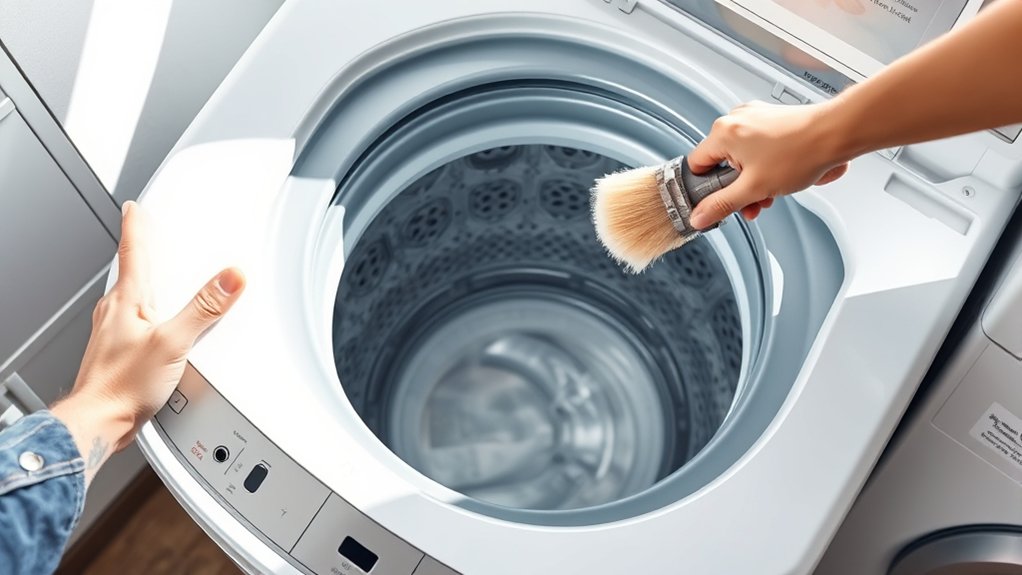
Although top-loading washing machines tend to accumulate fewer odors than front loaders, regular deep cleaning is essential to keep them running efficiently and hygienically. To clean your top load washer effectively, just follow these simple steps.
First, set the washer to the hottest, longest clean cycle and add four cups of bleach. Let it soak for an hour before finishing the cycle. This helps disinfect the machine thoroughly.
Next, add four cups of vinegar and soak for another hour during a second clean cycle. This step removes residue and mineral buildup that can affect performance.
Finally, use a damp cloth dipped in vinegar water to clean accessible surfaces like the lid and control panel. Take out the detergent dispensers and scrub them, then wipe the exterior dry to prevent mold growth.
Doing this regularly guarantees your top load washer works at its best and stays fresh and hygienic.
Tips to Keep Your Washing Machine Fresh
Maintaining a clean washing machine goes beyond periodic deep cleaning cycles. To keep your machine fresh, always leave the door or lid slightly open after use. This promotes air circulation and prevents mold and mildew buildup.
Make it a habit to wipe down the inside surfaces, especially the gasket, door, and detergent dispensers, with a damp cloth to remove residue and reduce musty odors. Avoid leaving wet clothes inside the drum for extended periods because dampness encourages microbial growth.
Run a regular cleaning cycle once a month using vinegar or a washer cleaner to eliminate soap scum and odor-causing bacteria. After cleaning, thoroughly dry all interior surfaces to maintain a fresh, odor-free environment.
These practical steps will help you clean your washing machine efficiently and extend its lifespan. It’s easier than you might think!
Safe Cleaning Products for Washing Machines
When selecting cleaning products for your washing machine, you should always prioritize those recommended by the manufacturer, such as affresh tablets, Glisten Washer Magic, or Tide Washing Machine Cleaner. These manufacturer-recommended washer cleaners ensure safe, effective cleaning without harming internal components.
Prioritize manufacturer-recommended cleaners like affresh or Tide to safely maintain your washing machine’s internal components.
Avoid abrasive cleaners, strong acids, or household soaps that can damage the drum or leave residue.
Here are key points to contemplate:
- Use only manufacturer-recommended washer cleaner products to protect your machine’s electronics and seals.
- Avoid laundry detergent or bleach not specified for cleaning cycles, as misuse can cause buildup or corrosion.
- Baking soda and vinegar are safe alternatives if used sparingly and per guidelines; overuse may damage gaskets.
Always follow product instructions carefully to maintain your washing machine’s integrity and performance.
Washing Machine Maintenance Tips for Longevity
It’s a good idea to set up a regular cleaning routine to keep buildup from forming in the drum, gasket, and detergent dispensers. This helps your machine work smoothly over time.
Also, make sure you’re using the right type and amount of detergent as recommended by the manufacturer. That way, you avoid leftover residue and unnecessary strain on the parts.
And don’t forget to check and clean the gasket and filter often—this prevents blockages that could end up damaging your washer.
Regular Cleaning Schedule
Although it might seem like an extra task, cleaning your washing machine at least once a month is crucial to prevent mold, mildew, and soap residue buildup.
Following a regular cleaning schedule ensures your washer stays odor-free and performs efficiently.
Use the appropriate cleaning cycle or a hot water setting combined with vinegar or a specialized cleaner to tackle detergent build-up effectively.
After the cleaning cycle, leave the washer door slightly open to let the interior dry completely, reducing musty odors and moisture buildup.
Here’s a practical routine to follow:
- Run a cleaning cycle monthly with a washer cleaner or vinegar.
- Wipe down seals and detergent dispensers to remove residue.
- Leave the door ajar post-cleaning to maintain an odor-free environment.
Proper Detergent Usage
How much detergent should you use for ideal washing machine performance? Always follow the manufacturer recommended detergent amount to prevent residue buildup and guarantee thorough cleaning. Using too much detergent can cause soap scum on clothes and leave a soap coating inside the washing machine’s drum.
This buildup leads to unpleasant odors. Choose the correct detergent type, either high-efficiency (HE) or standard, based on your washer model to optimize performance. Water-conserving machines need less suds, so avoid overusing detergent in these models.
For proper detergent usage, consistently measure detergent with the provided cap or measuring cup. This helps maintain the correct detergent amount every wash.
Taking this careful approach protects your washing machine’s components and extends its lifespan while delivering clean, fresh laundry.
Gasket And Filter Care
Two critical components that require regular attention for washing machine longevity are the gasket and the filter. Neglecting these can lead to mold growth, clogs, and leaks. Focus on thorough cleaning and inspection to maintain peak function.
Pull back the rubber gasket regularly to remove dirt, detergent residue, and trapped debris. Use a damp cloth or soft brush to clean the folds meticulously, targeting any visible mold or soap buildup.
Remove and clean the filter or drain pump filter monthly. This prevents clogs and ensures efficient drainage.
After cleaning, dry both the gasket and filter completely to inhibit mold and mildew development. Check the gasket for tears or damage and replace it if necessary to maintain a proper seal and prevent leaks.
Frequently Asked Questions
Can I Use Bleach Instead of Vinegar to Clean My Washing Machine?
You can use bleach instead of vinegar to clean your washing machine, but you should do so cautiously. Bleach disinfects effectively but may damage rubber seals and internal components if overused.
It’s best for deep cleaning or disinfecting infrequent buildup, not routine maintenance.
Always dilute bleach properly and follow your machine’s manufacturer guidelines to prevent damage or warranty issues. For regular cleaning, vinegar is gentler and safer for most parts.
How Do I Remove Mold From a Washing Machine Door Seal?
Did you know over 70% of washing machine mold hides in the door seal?
To remove it, gently pull back the rubber gasket to expose all folds. Mix equal parts water and white vinegar, then scrub the gasket thoroughly with a soft brush or cloth.
Make sure to focus on crevices using an old toothbrush. Rinse well with clean water, dry completely, and leave the door slightly open to prevent mold from returning.
This simple routine can really help keep your washing machine fresh.
Is It Safe to Run a Washing Machine Cleaner With Clothes Inside?
No, it’s not safe to run a washing machine cleaner with clothes inside. The cleaning agents can damage fabrics or leave harmful residues on your laundry.
You should always run the cleaner on an empty machine to guarantee it disinfects and removes mold, mildew, and detergent buildup effectively.
This also protects your clothes from discoloration or damage. Plus, it allows the washer’s internal parts to be thoroughly cleaned without interference.
What Should I Do if My Washing Machine Smells After Cleaning?
If your washing machine smells after cleaning, run a hot water cycle with two cups of vinegar and half a cup of baking soda to neutralize odors.
Thoroughly clean and dry the door gasket, seals, and detergent drawer to remove any leftover mold or soap.
Make sure to leave the door and detergent drawer slightly open afterward to let air circulate and keep things dry.
Also, don’t forget to check and clear the drain pump filter and hoses. Sometimes trapped debris in these areas can cause unpleasant smells.
Can Washing Machines Be Cleaned With Essential Oils?
Yes, you can clean washing machines with essential oils, but you should proceed carefully. Oils like tea tree or eucalyptus have antimicrobial properties that can boost your cleaning routine.
Just keep in mind that using too much might damage rubber seals or leave behind residue.
Always dilute essential oils in vinegar or water before adding them to your washer. It’s also a good idea to check your machine’s compatibility first to avoid any staining or harm.
This way, you keep your machine fresh without causing buildup or damage.
Conclusion
If you skip cleaning your washing machine, it might turn into a biohazard faster than you think. Mildew and residue can multiply like wildfire.
By regularly following these detailed steps, you’ll keep every drum, gasket, and filter spotless. This ensures peak performance and longevity. Don’t underestimate this routine maintenance.
A fresh, efficient machine saves you time, money, and headaches. Stay vigilant because your washing machine’s health directly impacts your clothes and home hygiene.