Can You Put Bleach In Washing Machine To Clean It – Guide
Yes, you can put bleach in your washing machine to clean it safely and effectively. Use half a cup for top-loaders or one cup for front-loaders during an empty hot water cycle. Just make sure to follow the manufacturer’s instructions closely.
Always add bleach to the dispenser, never directly on your clothes. After the cycle, run an extra rinse to remove any leftover residue.
Leave the door open to let the machine dry and help prevent mold. For detailed steps and best practices, keep exploring the guidelines.
Can You Use Bleach to Clean Your Washing Machine?
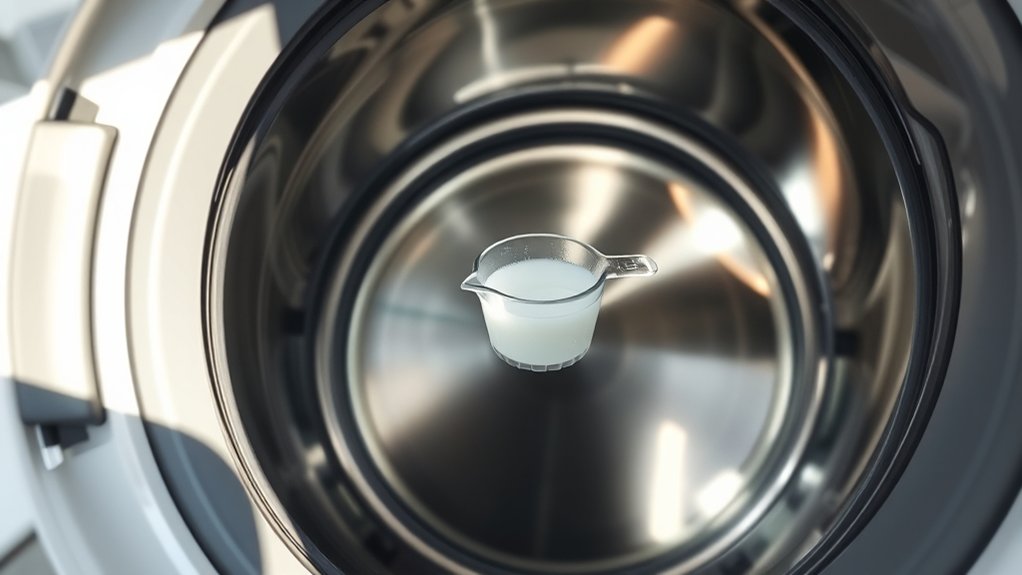
Although bleach is a strong chemical, you can safely use it to clean your washing machine by running an empty hot water cycle with about half a cup of chlorine bleach. This process disinfects the washer and effectively removes mold, mildew, and unpleasant odors.
Just make sure to follow the manufacturer’s instructions to avoid any damage.
Never pour bleach directly onto your clothes or mix it with other cleaning agents.
After the cycle finishes, leave the washer door open to let the interior dry thoroughly. This helps prevent mold or mildew from building up again.
Using bleach periodically is a great way to keep your washer hygienic and working its best.
It’s a reliable method to maintain cleanliness without risking harm to your appliance.
Give it a try to keep things fresh!
When and How Often Should You Clean With Bleach?
To keep your washing machine fresh and functioning properly, you should clean it with bleach about once a month. Running a hot water cleaning cycle with bleach in the bleach dispenser effectively eliminates mold, mildew, and bacteria buildup.
This regular maintenance helps prevent odors and residue that can affect your machine’s hygiene and performance.
Avoid using bleach more frequently than monthly, as overuse may damage rubber seals and other components. Always follow your washing machine manufacturer’s guidelines to determine the right amount of bleach and cleaning cycle settings.
By incorporating this routine, you guarantee your appliance stays clean, odor-free, and operates efficiently over time.
This also helps extend its lifespan while maintaining ideal washing conditions.
Safety Tips for Using Bleach in Your Washing Machine
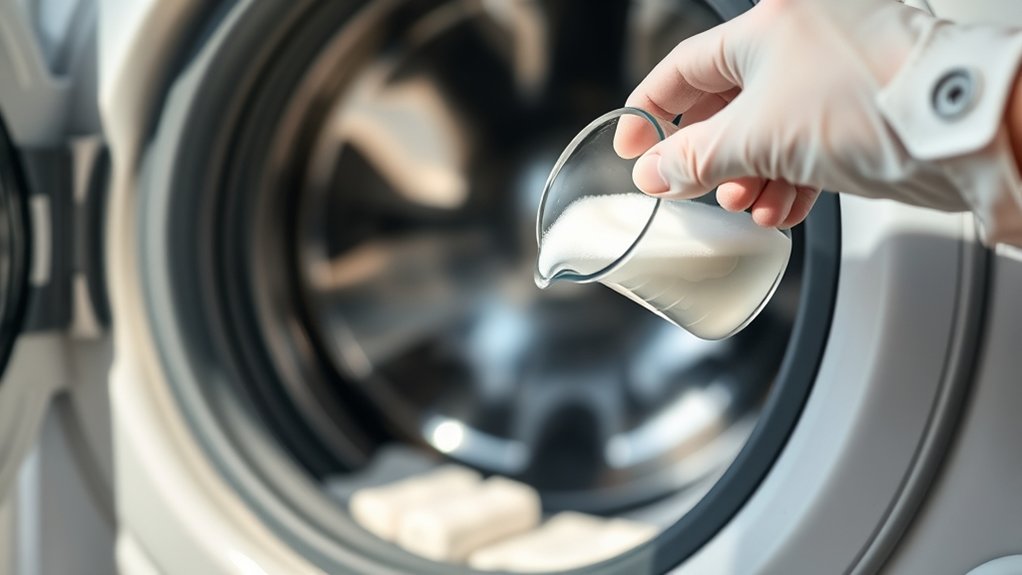
When using bleach in your washing machine, you need to follow safety precautions to protect both yourself and your appliance. Proper safety guarantees effective cleaning without damaging your machine or risking health hazards.
Always use the bleach dispenser or add bleach during a hot water cycle when the machine is empty.
Make sure to follow the manufacturer’s instructions on the bleach amount to avoid corrosion.
For your protection, wear gloves and ensure good ventilation when handling bleach.
Never mix bleach with other cleaners, as this can create dangerous fumes.
Remember these key safety tips:
- Use the bleach dispenser as directed
- Follow recommended bleach quantity
- Wear gloves and ventilate the area
- Avoid mixing bleach with other chemicals
- Store bleach securely away from children and pets
How to Clean a Front-Load Washing Machine With Bleach
Properly cleaning your front-load washing machine with bleach helps maintain its performance and prevents unpleasant odors. Start by adding one cup of chlorine bleach to the detergent dispenser or directly into the drum. Run your machine on the hottest maintenance or cleaning wash cycle to disinfect and remove mold, mildew, and detergent buildup.
Once the cycle finishes, run an additional rinse cycle to make certain all bleach residue is completely washed away. Don’t forget to remove the rubber door gasket and dispensers. Soak them in warm water mixed with bleach, then scrub and rinse thoroughly to eliminate grime.
After cleaning, leave the washer door open to promote air drying. This helps prevent mold and musty smells from returning. This routine keeps your front load fresh and functioning efficiently.
How to Clean a Top-Load Washing Machine With Bleach
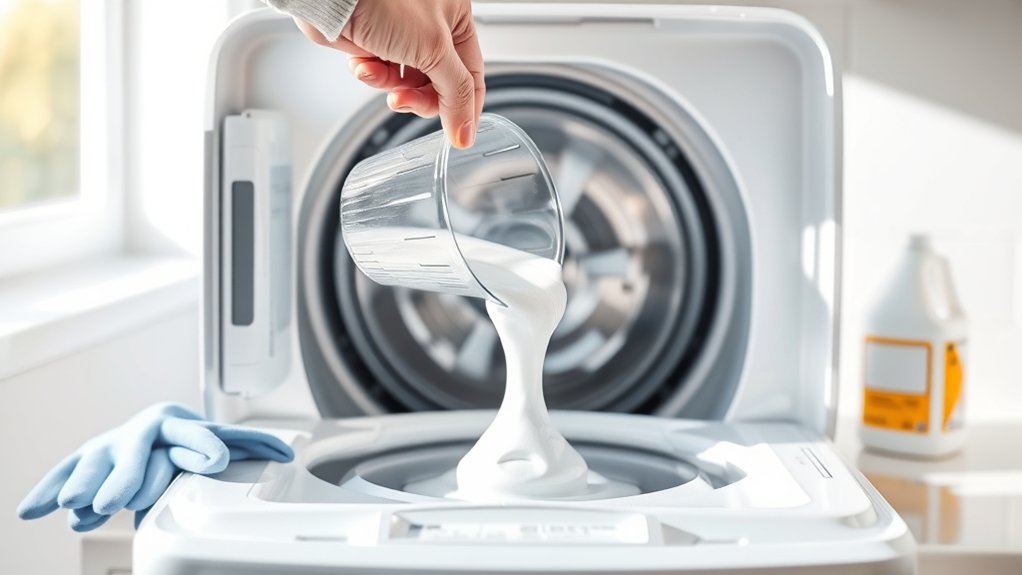
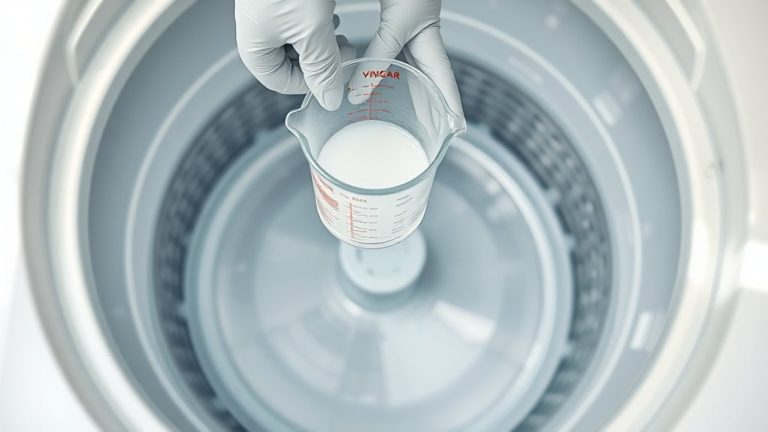
To clean your top-load washing machine with bleach, start by adding half a cup of chlorine bleach to the drum. Then, run a hot water cycle to disinfect and remove any buildup.
While that’s going, don’t forget to soak and scrub the detergent dispenser with bleach too. This helps get rid of any leftover residue that can cause odors or mold.
Once the cycle is done, run an extra rinse cycle to make sure all the bleach is washed away.
Finally, leave the lid open so the inside can dry completely and stay fresh.
Bleach Cycle Steps
Although it might seem straightforward, cleaning your top-load washing machine with bleach requires specific steps to guarantee effectiveness and safety.
To properly execute the bleach cycle, start by adding ½ cup of bleach directly into the drum or bleach dispenser. Then, select the hottest water setting available to maximize cleaning and disinfecting power.
Run a full cycle so the bleach can circulate thoroughly through the drum and internal components. Afterward, run an additional rinse cycle to remove all bleach residue.
Finally, leave the washer door open to allow the interior to dry and prevent mold growth.
These cleaning tips ensure your washer stays fresh and hygienic without damage.
- Add ½ cup bleach to drum or dispenser
- Use hottest water setting available
- Run a full bleach cycle
- Follow with an extra rinse cycle
- Leave door open to air-dry drum
Dispenser and Drum Cleaning
When you clean a top-load washing machine with bleach, targeting both the drum and dispenser is essential for thorough sanitation. Start by adding ½ cup of bleach directly into the drum during an empty hot water cycle. This disinfects the interior and eliminates mold, mildew, and odors.
Next, remove the detergent dispenser and soak it in warm water mixed with bleach. After soaking, scrub and rinse the dispenser thoroughly to remove any residue buildup.
Don’t forget to wipe the rubber door gasket and surrounding areas with a cloth dampened in diluted bleach. This helps prevent mold growth and musty smells.
Finally, run the machine’s cleaning or maintenance cycle with bleach. Make sure the area is well ventilated, and leave the washer door open afterward to allow complete drying.
This method guarantees effective dispenser and drum cleaning.
How to Rinse and Remove Bleach Residue Properly
Since most washing machines automatically rinse out bleach during their cycles, you usually don’t need to do much extra work to remove residue. However, to ensure your machine is thoroughly clean and free of bleach, consider these steps.
Running an extra rinse cycle with hot water dilutes and flushes out any leftover bleach, protecting fabrics and internal parts. If you detect a bleach smell or residue, wipe down the drum and door seal with a damp microfiber cloth.
Also, avoid opening the washer door before the cycle ends to prevent bleach from settling on surfaces.
- Run an additional rinse cycle after bleach use
- Use hot water to help dilute bleach residue
- Wipe drum and door seal with a damp microfiber cloth
- Wait for cycle completion before opening the door
- Ensure no lingering bleach smell remains
How to Prevent Mold and Mildew in Your Washing Machine
To keep mold and mildew from building up in your washing machine, it’s a good idea to stick to a regular cleaning routine. You can use bleach or special cleaners made just for this purpose.
Also, after you finish a load, make sure to leave the door open. This helps air circulate and lets any leftover moisture dry out.
Regular Cleaning Schedule
Although washing machines clean your clothes, they can harbor mold and mildew if neglected. Establishing a regular cleaning schedule is vital for mold prevention and maintaining your machine’s efficiency. Running a monthly bleach cycle helps eliminate mold spores and musty odors.
Combine this with routine maintenance cycles using hot water and specialized cleaners to remove detergent residue and prevent buildup. It might seem like extra work, but it really keeps your washer running smoothly and smelling fresh.
To keep your washer fresh and mold-free, follow these steps:
- Run a bleach cycle once a month for deep cleaning.
- Leave the washer door open after use to promote drying.
- Clean detergent dispensers and rubber door gaskets monthly.
- Use maintenance cycles with Extra Rinse settings.
- Regularly remove trapped dirt and residue inside the drum.
Proper Door Ventilation
When you leave your washing machine door open after each use, you allow residual moisture to evaporate. This considerably reduces the chances of mold and mildew developing inside.
Proper door ventilation is essential to prevent mold by keeping the interior dry and discouraging mold spores from thriving. Pay close attention to the door seal. Regularly wipe it down with a microfiber cloth to remove moisture and prevent mold buildup.
After washing, leaving the washing machine door open fully ensures air circulates around the drum and rubber components, especially during extended non-use.
This simple habit, combined with routine maintenance, helps clean a washing machine effectively and keeps mold at bay. It preserves your appliance’s hygiene and performance over time.
Effective Use Of Bleach
How often should you use bleach to keep your washing machine mold-free? Running an empty hot water cycle with bleach once a month effectively prevents mold and mildew buildup.
To maintain a clean washing machine, you should also tackle detergent residue and moisture regularly.
Here’s how to use bleach effectively:
- Run a monthly hot cycle with bleach to kill mold spores
- Leave the washer door open after each use to air dry the interior
- Clean door seals, gaskets, and dispensers with a bleach solution
Use maintenance or extra rinse cycles to remove detergent residue thoroughly.
Make sure there’s proper ventilation and avoid using too much detergent to reduce moisture retention.
Following these steps helps you use bleach safely and keep your washing machine mold-free. It’s really about consistent care that makes all the difference.
Common Mistakes to Avoid When Using Bleach
If you don’t use bleach properly in your washing machine, you risk damaging essential components like rubber seals and hoses. One of the most common mistakes with bleach use is pouring it directly into the drum instead of the designated dispenser. This can cause uneven cleaning and fabric damage.
Using excessive bleach or applying it too frequently accelerates wear, which undermines washer maintenance and shortens your machine’s lifespan.
Another frequent error is neglecting to run an extra rinse cycle afterward. This leaves harmful residues that promote mold and odors.
Always follow the manufacturer’s instructions carefully to avoid accidental damage or voiding your warranty.
How to Maintain Your Washing Machine Between Cleanings
Maintaining your washing machine between cleanings guarantees it runs efficiently and stays free from mold and odors. Regular maintenance is key to preventing odors and prolonging your machine’s life. Incorporate bleach or a specialized cleaner monthly to disinfect the drum and seals effectively.
Between cleanings, focus on these tasks: leave the washer door open after use to let moisture evaporate and prevent mold. Wipe down the door gasket, detergent dispenser, and control panel with a microfiber cloth. Running maintenance or hot cycles regularly helps refresh and clean the machine.
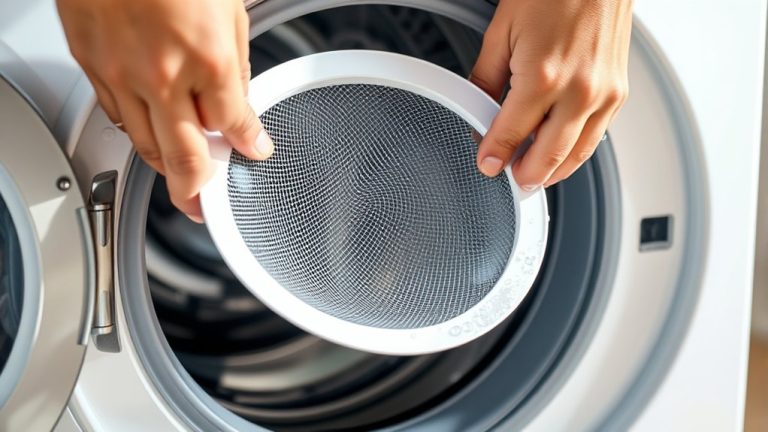
Also, make sure to inspect and clean the filter and drain pump to avoid blockages. Use bleach cautiously during monthly cleaning cycles to maintain hygiene.
Following these steps will keep your washing machine clean, odor-free, and performing at its best without needing frequent deep cleanings.
Troubleshooting Washing Machine Odors and Stains
You’ll want to start by figuring out where those odors and stains are coming from. Most of the time, it’s trapped moisture or detergent buildup lurking in the seals, hoses, or even the drum.
Once you know the source, you can tackle the problem head-on.
A good way to do this is by running hot cycles with bleach or other specialized cleaning products. This really helps break down the gunk and get things fresh again.
Taking care of these issues sooner rather than later makes a big difference. It keeps your washing machine smelling clean and free from stains, so your laundry comes out looking great every time.
Identifying Odor Sources
Since your washing machine often traps moisture, it creates an ideal environment for mold, mildew, and bacteria to thrive. This leads to persistent odors and stains. To identify odor sources, check areas prone to buildup and contamination.
Mold and mildew can grow inside the drum, door seals, or hoses. Detergent residue in dispensers encourages odor-causing bacteria. Neglecting regular cleaning cycles only makes these problems worse.
Lint, soap scum, and organic debris can accumulate in the drain pump or filter. Look for dark or greenish patches that indicate mold or mildew presence.
Common odor sources include:
- Mold and mildew inside the drum or rubber gaskets
- Detergent residue and fabric softener buildup in dispensers
- Odor-causing bacteria thriving in damp spots
- Lint and soap scum blocking drain pumps or filters
- Moisture trapped by closing the door after cycles
Removing Stains Effectively
Persistent odors often come hand in hand with stubborn stains inside your washing machine. To remove stains effectively, run a monthly hot water cycle with ¼ to ½ cup of bleach. This routine cleaning breaks down mold, mildew, and detergent residue that cause both stains and odors.
Don’t forget to clean the rubber door gasket, drum, and dispensers regularly using a bleach solution to prevent soap scum and mold buildup. Early intervention with bleach cleaning guarantees thorough odor removal and keeps your machine fresh.
Always follow manufacturer guidelines when using bleach to avoid damage while maximizing stain removal and disinfection.
Frequently Asked Questions
Can Bleach Damage My Washing Machine’s Rubber Seals or Hoses?
Yes, bleach can damage your washing machine’s rubber seals and hoses if you use it excessively or improperly. Over time, bleach may cause these rubber parts to become brittle, crack, or leak.
To protect them, always dilute bleach properly and follow your machine manufacturer’s guidelines. Occasional deep cleaning with bleach is usually safe, but frequent use can accelerate wear and reduce the lifespan of rubber components.
Is It Safe to Mix Bleach With Other Laundry Detergents?
You shouldn’t mix bleach with other laundry detergents, as 30% of chemical-related home injuries stem from unsafe cleaning mixes.
Bleach combined with ammonia or acids creates toxic fumes that can harm your respiratory system and skin.
To stay safe, always add bleach and detergent separately during different wash cycle stages.
Reading product labels carefully guarantees compatibility and prevents damage to your clothes, machine parts, and your health.
Can I Use Bleach to Clean Washing Machines With Stainless Steel Drums?
Yes, you can use bleach to clean washing machines with stainless steel drums. Just make sure you dilute the bleach properly and add it during a hot water cycle to avoid damage.
Running this cycle once a month helps disinfect and remove buildup without harming the drum.
Avoid pouring bleach directly onto the drum, and always follow the manufacturer’s instructions to keep your machine in great condition.
This way, you’ll keep your washer clean and running smoothly without any risk. It’s pretty straightforward once you get the hang of it!
How Long Should I Wait After Using Bleach Before Doing Laundry?
You should wait at least 30 minutes after using bleach in your washing machine before adding laundry. This waiting period lets the bleach dissipate and break down, which helps prevent damage to your fabrics.
Most manufacturers recommend a minimum of 15 to 30 minutes, but 30 minutes is safer.
Also, check that any bleach odor or fumes are gone before you start your next load. This way, you avoid residue transferring onto your clothes.
It’s a simple step that can save your laundry from unwanted stains or damage.
Are There Alternatives to Bleach for Cleaning Washing Machines?
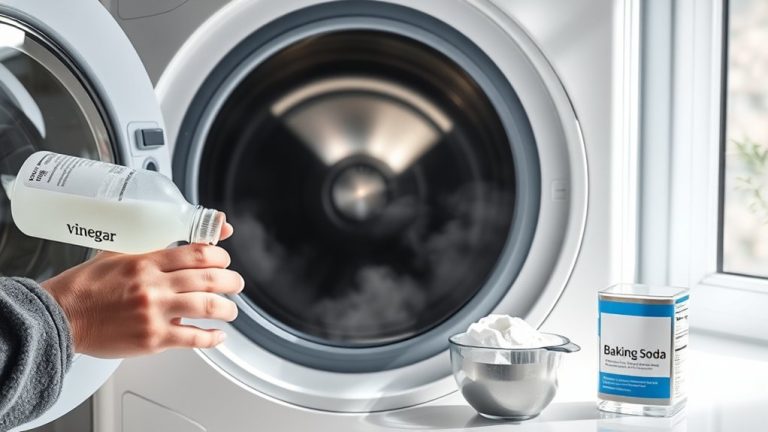
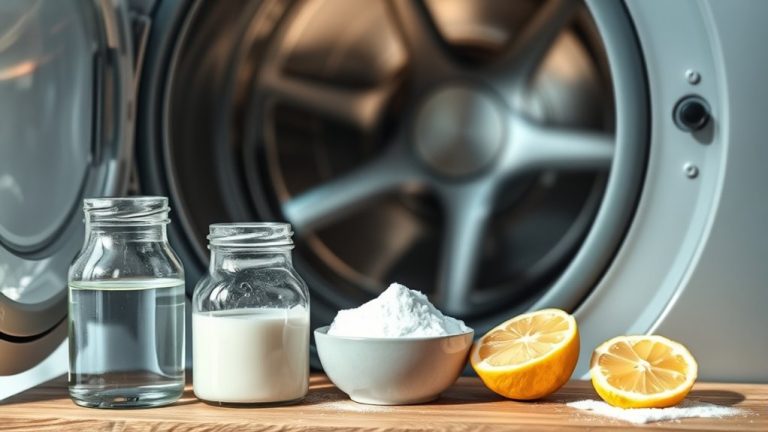
If you want to clear the fog of grime from your washing machine, you’ve got solid alternatives to bleach. You can use white vinegar, which acts like a gentle rain, washing away odors and bacteria without harsh chemicals.
Baking soda teams up with vinegar to break down residue and neutralize smells.
Commercial machine cleaners also work well. They’re specifically designed to tackle soap scum and limescale while keeping your washer safe and fresh.
Conclusion
Think of your washing machine like a garden. If you neglect it, mold and odors can quickly take root. Using bleach to clean your machine is like watering that garden with a powerful solution that keeps it fresh and healthy.
Just like gardeners tend to their plants regularly, cleaning your washer with bleach every month or so helps prevent buildup and odors. Follow safety tips and avoid common mistakes. That way, your machine will stay in top shape and deliver clean clothes every time.