How To Clean White Shoes With Oxiclean Powder – Do It Right
Check your shoe’s care label before using OxiClean. Stick to suitable canvas or synthetic materials, and test a hidden spot first. Remove the laces and brush off loose dirt.
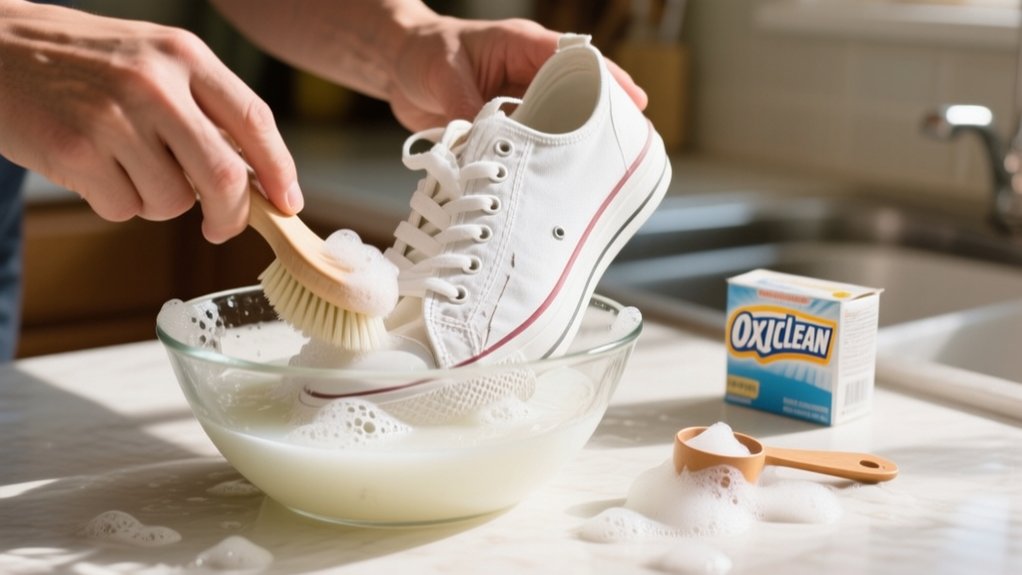
Then mix the powder with cool water exactly as the package directs. Gently scrub small areas with a soft brush, using as little moisture as possible.
Wipe away residue with a clean, damp cloth, then air-dry your shoes away from heat and sunlight. A few extra tips can help you get better results.
Check Your Shoe Material Before Using OxiClean
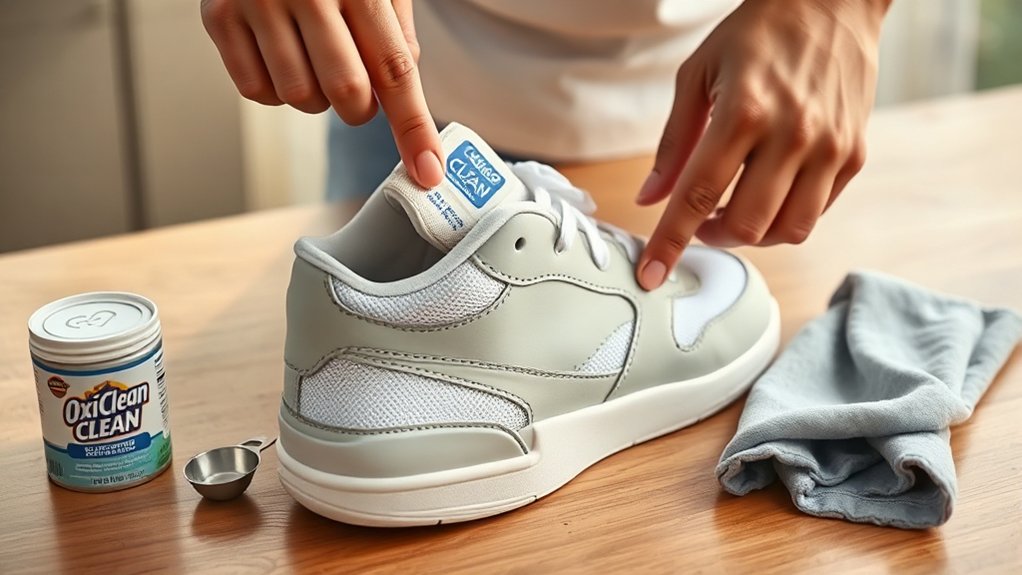
Before using OxiClean, check your shoes’ care label and material, since the cleaner may damage delicate fabrics or finishes. Look for cleaning instructions, water restrictions, and warnings about bleach or oxygen-based products. If the label says to use a professional cleaner, follow that advice instead.
Canvas and many synthetic uppers may tolerate careful cleaning, but don’t assume every white shoe is colorfast. OxiClean can affect dyes, coatings, adhesives, and decorative details, even when the shoe looks sturdy.
Leather, suede, nubuck, and satin need extra caution; avoid applying the cleaner unless the manufacturer specifically approves it.
When the label doesn’t provide clear guidance, test a small, hidden area first. Use a minimal amount, follow the product directions, and check for discoloration, texture changes, or damage before treating visible sections.
If anything changes, stop.
Gather OxiClean and Shoe-Cleaning Supplies
Gather OxiClean powder or solution, following the package directions, along with a soft-bristled brush, a small bowl, clean cloths, and cool water. Keep everything within reach before you start, so you won’t need to pause midway through cleaning.
Choose a brush with gentle bristles to help lift dirt without scuffing delicate surfaces. Set aside a separate cloth for wiping and another for drying; white cloths make it easier to spot any color transfer. You may also want an old towel to protect your work area and catch drips.
Use a soft-bristled brush and separate cloths for wiping and drying; white cloths help reveal color transfer.
Remove the laces and insoles if they’re removable, and keep them nearby for separate care. Check that your supplies are clean and free of grit, which could scratch the shoes. Don’t use a wire brush or abrasive pad.
You’re ready to prepare the cleaner next.
Follow the Label to Mix OxiClean
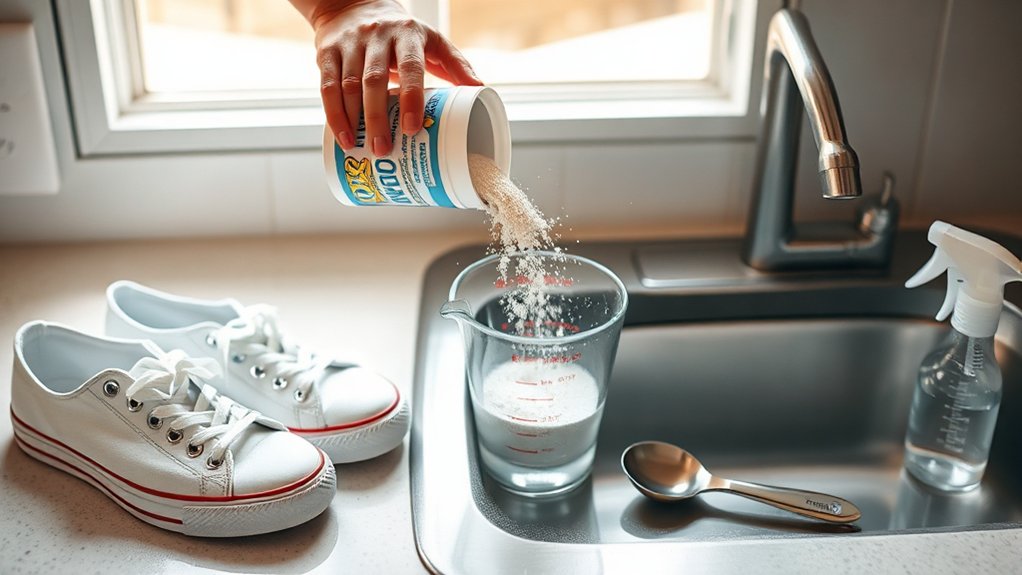
Follow the OxiClean package directions to mix the powder or solution, using the specified amount of product and cool water.
Check the label for the correct ratio and whether your product is intended for soaking or spot cleaning.
Don’t guess or add extra powder; a stronger mixture isn’t necessarily more effective and may leave residue or affect shoe materials.
Use a clean container large enough to hold the solution you need, and measure carefully with the scoop or other tool specified on the package.
Stir until the powder dissolves, if the directions call for it.
Wear gloves if the label recommends them, and avoid splashing the mixture onto nearby surfaces.
Never combine OxiClean with bleach or other cleaners.
Prepare only what you’ll use, and follow any label guidance for contact time and disposal.
Remove Laces and Brush Off Loose Dirt
First, take the laces out so you can clean the shoes more thoroughly.
Then, brush away any loose dirt with a soft brush before it gets worked into the material.
You can use a small brush to reach the seams and other tight spots.
Remove the Laces
Start by taking the laces out of your shoes so you can clean the tongue and eyelets more easily. Pull each lace through the eyelets carefully, loosening tight sections instead of yanking them. If your shoes have unusual lacing, note the pattern so you can rethread them the same way later.
Set the laces aside for separate cleaning; don’t leave them in the shoe. Keep each pair together so you won’t mix up laces from different shoes. Check for knots or frayed spots, and gently work knots loose with your fingers.
Place the laces in a small bowl or mesh bag while you prepare the shoes. Removing the laces exposes more of the fabric and makes it easier to reach narrow areas during cleaning. Keep them nearby, but wait to wash them until you’re ready to clean them separately.
Brush Away Loose Dirt
With the laces out, brush loose dirt from the shoes using a soft-bristled brush or dry cloth. Work over a trash bin or outdoors so dust and grit don’t spread around your home.
Brush the upper gently, following the material’s texture and using short strokes. Pay attention to the sides and toe area, where dirt often collects, but don’t scrub hard. Rough brushing can damage delicate fabric or push grime deeper.
Turn each shoe as needed to reach its visible surfaces. Then brush the soles to remove loose mud and debris. If dirt clings, let it dry completely before brushing again. Wipe away remaining dust with a clean, dry cloth.
Once the shoes look free of loose debris, you’re ready to prepare them for cleaning with OxiClean powder.
Clean Hard-to-Reach Areas
Before cleaning, take out the laces so you can reach the tongue, eyelets, and other tucked-away areas. Set the laces aside for separate washing, and open the shoe’s tongue to expose hidden spots.
Use a dry, soft-bristled brush to loosen dust and grit without pushing debris deeper into the fabric. Pay special attention to seams and creases, where dirt often collects.
Brush around each eyelet, moving gently to avoid scratching or loosening its finish. Sweep along the tongue’s edges and beneath its folds. Use a small toothbrush to reach narrow seams and corners. Tap the shoe lightly to dislodge loosened dirt before applying cleaner.
Don’t wet the shoes yet; dry brushing helps prevent mud from spreading. Once you’ve cleared these areas, you can prepare your OxiClean solution and clean the shoes evenly.
Scrub White Shoes Gently With OxiClean
OxiClean can lift stubborn stains from white shoes, but use it gently to protect the material. Mix the powder with water according to its label, then test the solution on a hidden spot. If the color and texture stay unchanged, dip a soft-bristled brush into the mixture and work over the stained areas.
| Shoe area | Gentle technique |
|---|---|
| Canvas | Use short, light strokes |
| Mesh | Dab with a soft brush |
| Rubber trim | Scrub lightly in small circles |
Keep your pressure low, especially on mesh, stitching, and printed details. Don’t use a stiff brush or grind the bristles into the fabric; that can fray fibers or loosen decorations. Focus on one small section at a time, and add solution sparingly so you can control the scrubbing. When a stain starts to fade, stop rather than overworking the material.
Rinse the Shoes Without Soaking Them
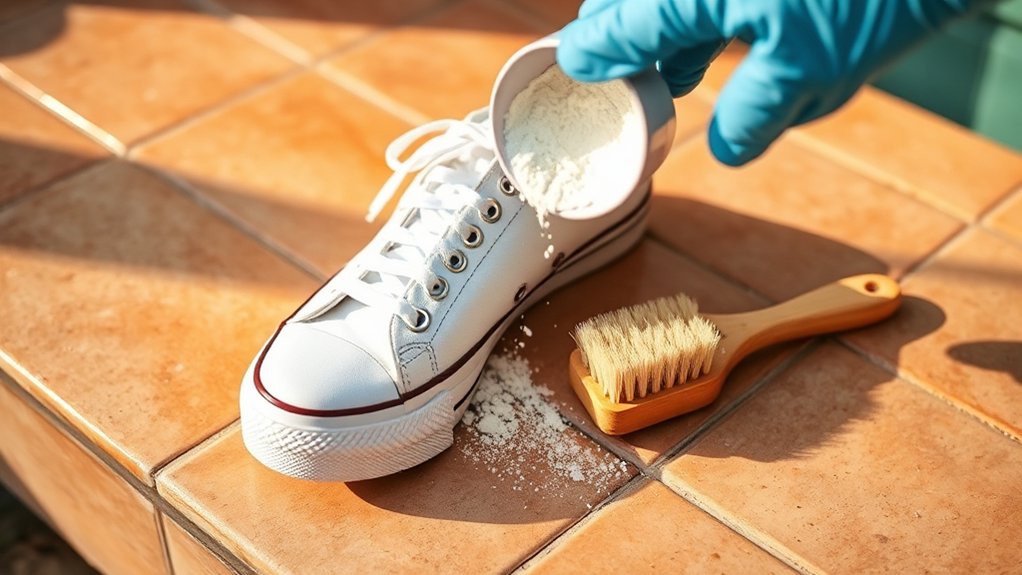
First, brush off any loose cleaner.
Then, grab a damp cloth and wipe your shoes to get rid of any leftover residue.
Just be careful not to soak them—submerging your shoes can damage the material.
Remove Loose Cleaner
Rinse the shoes with a damp cloth or a gentle stream of water to remove leftover cleaner, keeping the material from getting soaked. Work over a sink or basin so you can control the water and catch runoff. Focus on areas where powder or suds remain, and keep the rinse brief.
Don’t submerge the shoes or let water pool inside; excess moisture can loosen adhesives and lengthen drying time. Hold each shoe at an angle so water runs off the surface.
Check seams, eyelets, and sole edges for trapped cleaner. Turn the shoes as needed to reach all treated areas. Stop rinsing when no visible residue remains.
Afterward, let excess water drain naturally. Keep the shoes upright in a ventilated spot, away from direct heat, until you’re ready to continue cleaning.
This careful rinse clears residue without saturating the material.
Use A Damp Cloth
Use a clean, damp cloth to wipe away cleaner and loosened dirt without saturating the shoes. Work in small sections, rinsing the cloth often so you don’t spread residue across the fabric. Wring it out before each pass; it should feel moist, not drip.
Gently wipe the surface with short strokes, paying attention to seams, eyelets, and areas where cleaner may collect. For stubborn marks, press the cloth against the spot briefly, then lift and wipe again rather than scrubbing hard.
Use a fresh section of cloth as it picks up dirt, and replace the water when it turns cloudy.
After cleaning, make a final pass with a clean, damp cloth to remove any remaining Oxiclean residue. Check the shoes in good light, and repeat where needed.
Avoid Full Submersion
Once you’ve wiped away the cleaner, remove any remaining residue with a damp cloth rather than dunking the shoes in water. Full submersion can loosen adhesives, distort materials, and leave water trapped inside, where it may cause odors or damage. Rinse carefully, using only enough moisture to lift the OxiClean residue.
- Dampen a clean cloth with cool water, then wring it out well.
- Wipe each treated area gently, rinsing the cloth as it picks up cleaner.
- Use a soft toothbrush for seams or textured spots, keeping water away from saturated areas.
- Press a dry towel against the fabric to absorb excess moisture.
Check the shoes for suds or powder and repeat with a fresh damp cloth if needed.
Let them air-dry completely in a ventilated spot away from direct heat.
Air-Dry Your Shoes and Check the Results
Let your shoes air-dry at room temperature, away from direct sunlight and heat, which can discolor or warp them.
Remove excess moisture by pressing a clean towel against the fabric; don’t twist or wring your shoes.
Pull out the insoles and loosen the laces so air can reach every area.
To help the shoes keep their shape and dry faster, loosely fill them with white paper towels. Replace the paper if it becomes damp.
Check your shoes after they’ve dried completely. Compare them with their original appearance and look for lingering stains, yellowing, or detergent residue.
If you spot marks, treat those areas again with a small amount of cleaning solution, then wipe them with a damp cloth.
Let the shoes dry fully before wearing them or putting them away.
Frequently Asked Questions
Can Oxiclean Damage Colored Details on White Shoes?
Yes, OxiClean can fade or discolor colored details on white shoes, especially if you use a strong solution, soak them too long, or clean delicate materials.
Check the shoe’s care label first, and test a diluted mixture on a hidden spot.
Keep the cleaner off colored panels, logos, and stitching when possible.
Don’t soak the whole shoe; use a small amount, rinse thoroughly, and stop if you notice color bleeding or fading.
Is Oxiclean Safe to Use Around Pets and Children?
OxiClean can be safe around pets and children when you use it as directed, but keep them away during cleaning.
The American Association of Poison Control Centers handles millions of exposure cases annually, so prevention matters.
Store the powder in its original, closed container, out of reach.
Avoid breathing dust, wear gloves, and rinse treated shoes thoroughly.
Don’t let children or pets touch wet shoes or cleaning solution; follow the product label.
Can Oxiclean Remove Yellow Stains From White Shoes?
Yes, OxiClean can help remove yellow stains from white shoes, especially fabric or canvas.
Mix the powder with water according to the label, then test the solution on a hidden spot first.
Apply it gently with a soft brush, let it sit briefly, and rinse thoroughly.
Don’t use it on leather, suede, or delicate materials unless the care instructions allow it.
Avoid hot water, which can set some stains.
Dry your shoes away from direct sunlight.
How Often Can I Clean My Shoes With Oxiclean?
You can clean your shoes with OxiClean whenever they need it, but don’t use it routinely or more often than necessary.
Frequent soaking or scrubbing can weaken materials, loosen adhesives, or fade color.
Check your shoe’s care label first, and test the solution on a hidden spot.
For regular upkeep, brush off dirt and wipe shoes with mild soap and water.
Save OxiClean for stubborn stains, and let your shoes dry completely afterward.
What Alternatives Work if I Don’T Have Oxiclean?
You can clean white shoes with baking soda, mild dish soap, or laundry detergent.
Picture a gray scuff fading as you work: mix baking soda with a little water into a paste, then brush it gently onto the stain.
For general dirt, add a few drops of dish soap or detergent to warm water and scrub with a soft brush.
Rinse carefully, wipe away residue, and air-dry your shoes away from direct sunlight.
Conclusion
Cleaning white shoes with OxiClean powder can lift stubborn grime, but the right method depends on your shoe’s material. Check the care label, mix the solution as directed, and scrub gently after removing the laces and loose dirt.
Rinse without soaking, then let your shoes air-dry completely before checking the results. With a little patience, you can brighten dingy shoes without turning cleanup into a mountain-sized chore. Always test an inconspicuous spot first.