How Does Oxiclean Work – How It Works
If you’ve ever pulled laundry out of the washer only to find stubborn stains still hanging on, you’re not alone. Many people struggle with getting set-in spills, grease, and everyday messes to fully disappear, even after a good wash. That’s where OxiClean comes in, offering a simple way to give your cleaning routine a boost.
OxiClean works by releasing oxygen through sodium percarbonate, which targets and breaks down organic stains at a molecular level. Sodium carbonate creates an alkaline environment, softens water, and enhances detergent efficiency to boost grease breakdown. This combination lifts stains safely without harsh chemicals.
You’ll want to use hot water and fresh solutions to maximize effectiveness, carefully applying only to compatible fabrics. Understanding these actions helps optimize your stain removal success, and there’s more to uncover about its full capabilities and precautions.
What Is OxiClean Made Of?
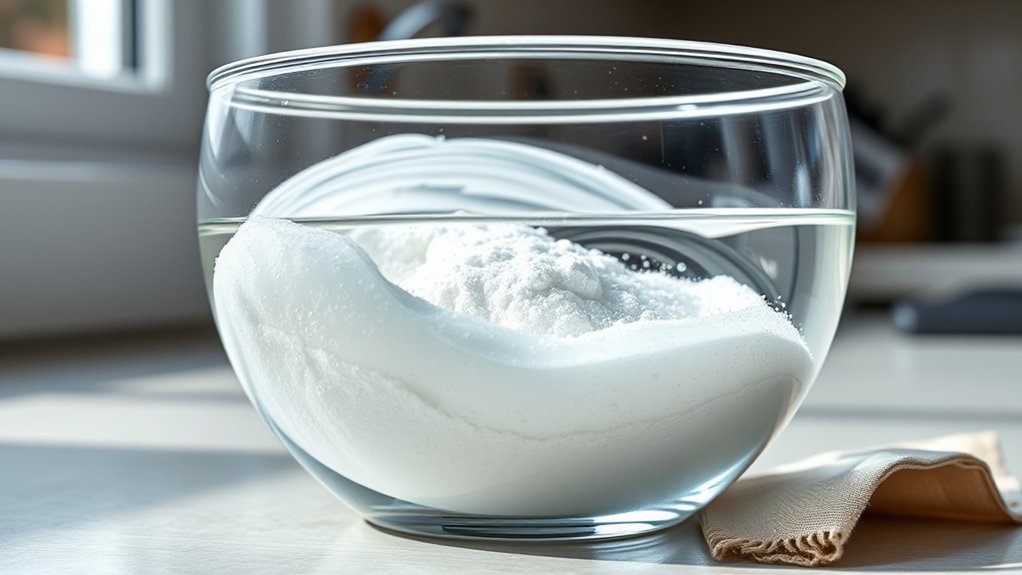
OxiClean’s effectiveness stems from its key ingredient, sodium percarbonate, which releases oxygen when dissolved in water to target stains.
Alongside this, sodium carbonate creates an alkaline environment, greatly boosting the cleaning power by increasing the pH level. You’ll notice OxiClean contains fine white granules and about 1% blue granules; these contribute to its overall stain-fighting capacity by promoting uniform dispersion and activation.
Additionally, a small amount of detergent enhances fabric wetting and fat dissolution, allowing the solution to penetrate stains more effectively.
The active hydrogen peroxide component further assists by breaking down organic compounds and deodorizing fabrics.
Together, these ingredients form a synergistic formula that optimizes stain removal through pH adjustment, wetting, and oxidative processes, setting the foundation for OxiClean’s cleaning performance.
How OxiClean Uses Oxygen To Remove Stains
This oxidation process explains why some stains fade faster than others.
Oxygen’s Stain Removal
Because sodium percarbonate releases oxygen upon dissolving in water, you get a powerful stain-fighting agent that breaks down complex stain molecules effectively. The oxygen molecules bind to organic compounds in stains, such as food or grass, disrupting their chemical structure and lifting them from fabric fibers.
This oxidative process also neutralizes odor-causing substances, deodorizing the material as it cleans.
OxiClean performs efficiently across various water temperatures, though warmer water improves solubility and enhances oxygen release, accelerating stain removal.
Importantly, this mechanism avoids harsh chemicals like chlorine bleach, making it safer for a wide range of fabrics while maintaining potent cleaning power.
Hydrogen Peroxide Action
Although hydrogen peroxide might seem simple, its role in OxiClean’s stain removal is highly effective and scientifically significant.
When OxiClean dissolves in water, sodium percarbonate decomposes, releasing hydrogen peroxide. This hydrogen peroxide then liberates oxygen molecules that actively target stain compounds.
These oxygen molecules chemically break the bonds within the stain molecules, effectively lifting them from fabrics or surfaces. This oxidative reaction not only disintegrates stains but also neutralizes odor-causing bacteria and organic residues, providing deodorization.
You’ll find this mechanism particularly efficient against organic stains like food, grass, and blood, where oxidative cleavage is essential.
How Sodium Carbonate And Detergents Boost Cleaning
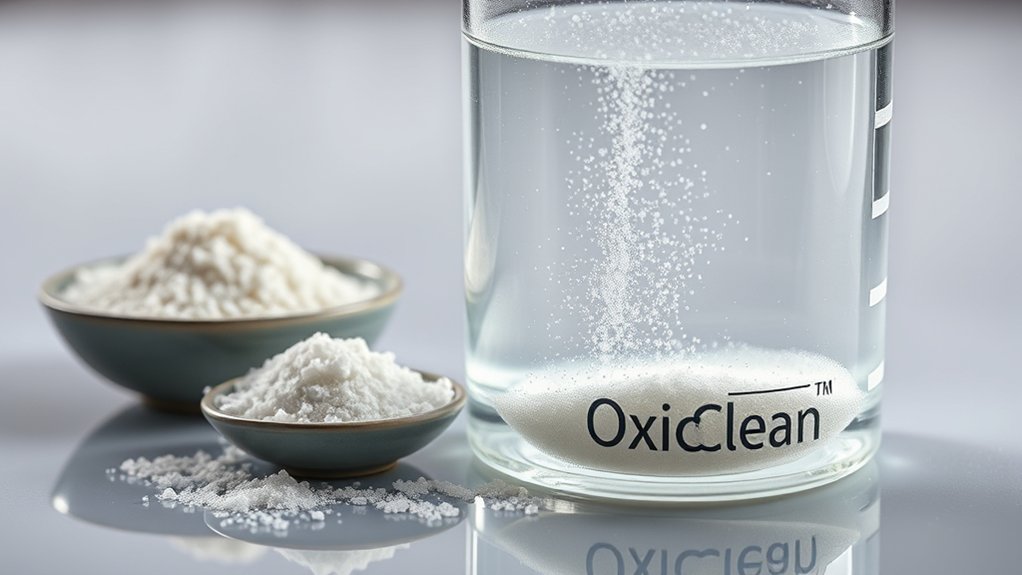
These cleaning agents work best when dissolved properly in warm water.
Role Of Sodium Carbonate
Sodium carbonate plays an essential role in enhancing detergent performance by softening water and creating an alkaline environment that improves stain breakdown. By binding with calcium and magnesium ions, it prevents these hardness minerals from interfering with detergent action.
This softening effect increases detergent efficiency and promotes better grease and fat dissolution, making oily stain removal more effective.
Additionally, sodium carbonate raises the pH, which accelerates the breakdown of organic stains. It also helps suspend dirt particles, preventing re-deposition during washing.
When combined with heat, sodium carbonate enhances the activation of cleaning agents like hydrogen peroxide in OxiClean, improving overall stain removal.
Understanding this role clarifies why sodium carbonate is critical for optimizing detergent-based cleaning systems.
Detergent Cleaning Enhancement
Building on its role in softening water and raising pH, sodium carbonate works in tandem with detergents to greatly enhance cleaning performance.
By softening hard water, sodium carbonate allows detergents to function more efficiently, preventing mineral interference. Its alkaline properties also break down grease and oily stains, facilitating detergent action.
Detergents encapsulate dirt particles, but with sodium carbonate increasing the wash solution’s pH, this encapsulation becomes more effective, improving stain removal.
This synergy particularly targets organic stains, boosting overall cleaning power. As a result, you get a more potent solution where sodium carbonate’s chemical environment optimizes detergent function, ensuring dirt and stains lift more easily from fabrics.
This combined effect markedly improves your laundry outcomes in challenging conditions.
Use OxiClean Effectively On Different Fabrics
Although OxiClean works effectively on fabrics like cotton and polyester, you should avoid applying it to wool, silk, or dry-clean-only materials to prevent damage or discoloration.
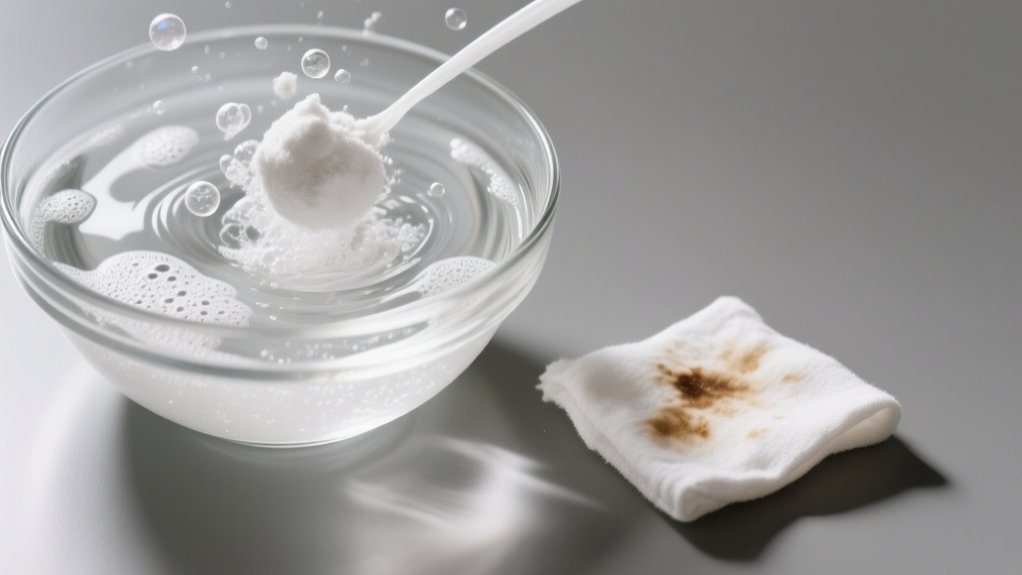
Before full application, always perform a spot test on an inconspicuous fabric area to detect adverse reactions. Dissolve OxiClean thoroughly in hot water to maximize stain removal effectiveness.
Avoid using it on delicate surfaces such as jewelry or latex paints, as its active ingredients can cause deterioration.
When treating carpets or upholstery, closely monitor the fabric to prevent unwanted alterations due to the formula’s strength.
Why Fresh OxiClean Solutions Work Best
Because OxiClean’s active hydrogen peroxide begins breaking down stains as soon as it contacts water, using a freshly mixed solution guarantees you harness its full cleaning power.
Once mixed, the active ingredients start degrading, diminishing potency over time. Solutions left for more than six hours experience chemical breakdown and pressure build-up, reducing effectiveness.
To maximize stain removal, dissolve OxiClean in hot water, which enhances solubility and activates the peroxide more efficiently.
Additionally, creating a paste immediately after mixing can intensify cleaning action on targeted stains.
By applying fresh solutions promptly, you verify the reactive oxygen species remain at peak concentration, optimizing oxidative stain degradation.
Delaying use compromises the solution’s chemical integrity, leading to suboptimal stain removal performance.
Best Stains For OxiClean And Why
OxiClean targets stains through its oxygen-releasing mechanism, making it especially effective on organic compounds such as red wine, blood, and grass. This process breaks down stain molecules by oxidizing their chemical bonds, facilitating removal.
You’ll find it excels in deodorizing laundry, since it also oxidizes odor-causing bacteria, neutralizing pet odors effectively.
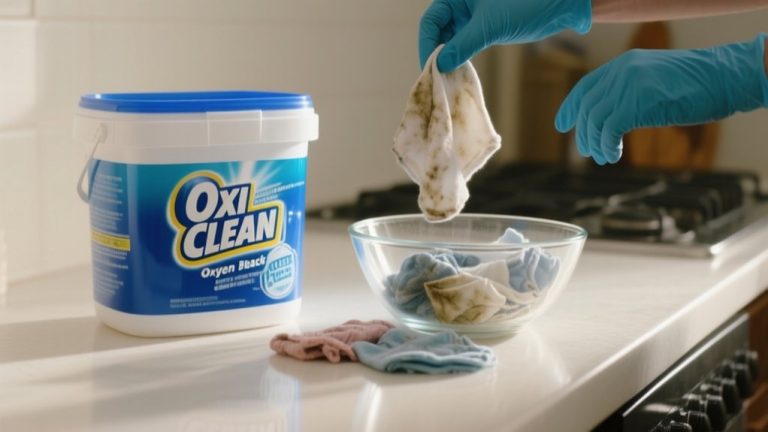
For non-organic stains like ink, pre-treating with OxiClean loosens particles, enhancing washout. Soaking fabrics in OxiClean solutions extends oxygen exposure, improving results on stubborn stains.
Importantly, OxiClean works safely on colored fabrics without the harsh effects of bleach, preserving fabric integrity while delivering powerful stain removal.
Understanding these stain-specific interactions lets you optimize OxiClean’s use for superior cleaning performance.
Avoid These Common OxiClean Mistakes
When you use OxiClean, certain mistakes can undermine its effectiveness and even cause safety hazards. Avoid mixing OxiClean with ammonia, bleach, or vinegar, as these combinations generate harmful gases.
Proper storage is essential; keep OxiClean in a sealed container to prevent moisture-induced clumping and avoid cardboard packaging for long-term storage.
Also, beware of fabric compatibility. Never apply it to wool, silk, or dry-clean-only materials to prevent damage.
Finally, use freshly mixed solutions within six hours to avoid pressure buildup and potential spray bottle ruptures.
Key mistakes to avoid:
- Mixing with incompatible chemicals.
- Improper storage leading to moisture absorption.
- Using on sensitive fabrics.
- Applying stale solutions past six hours.
Avoiding these errors guarantees safe, effective stain removal.
Tips For Getting The Most From OxiClean
Maximizing stain removal effectiveness often involves applying a concentrated paste of OxiClean directly to the affected area before soaking or washing.
To guarantee ideal results, dissolve OxiClean in hot water and use the solution fresh, as potency diminishes over time. For tough stains, extend soaking duration, but monitor closely to prevent fabric discoloration.
Adhere strictly to dosage guidelines; overuse risks unwanted color changes.
Additionally, leverage sunlight during or after treatment. UV rays enhance OxiClean’s oxidative action, accelerating stain breakdown.
By combining precise application, temperature control, dosage adherence, and natural UV activation, you can greatly improve OxiClean’s performance while preserving fabric integrity.
Following these analytical steps guarantees maximum stain removal efficiency without compromising material quality.
Frequently Asked Questions
Can Oxiclean Remove Stains From Upholstery and Carpets?
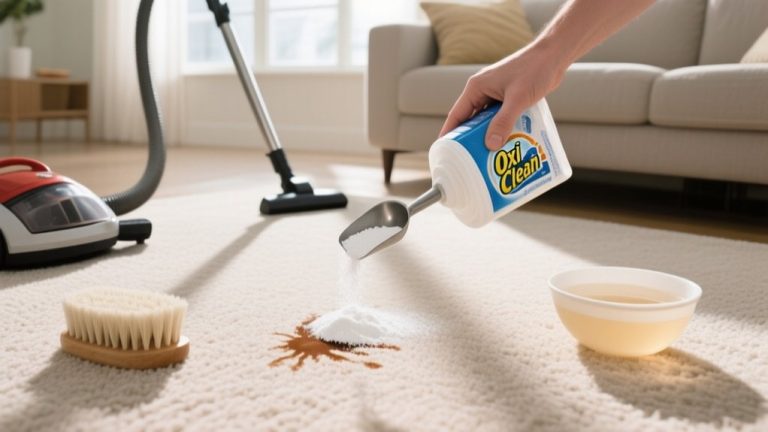
Yes, you can use OxiClean on upholstery and carpets, but test a hidden area first and avoid delicate fabrics to prevent damage or discoloration. Mix it with hot water and apply it carefully, then repeat treatments if needed.
Is Oxiclean Safe to Use on Colored Fabrics?
Yes, you can use OxiClean on colored fabrics, but you should spot-test first. Follow the dosage instructions carefully to help avoid fading, and do not use it on delicate materials like wool or silk if you want to preserve fabric integrity.
How Long Should Oxiclean Soak in the Solution Before Washing?
15 minutes is the minimum, and you can extend the soak to 30 minutes for tougher stains. Rinse the item thoroughly before washing, and avoid soaking it longer than needed, since extended soaking can damage fabric and may reduce cleaning effectiveness.
Can Oxiclean Be Used in Both Standard and High-Efficiency Washers?
Yes, you can use OxiClean in both standard and high-efficiency washers. Add a full scoop per load and follow the label instructions, along with the proper cycle settings for your machine type.
Does Oxiclean Have Any Antibacterial Properties?
Yes, OxiClean does have antibacterial properties. It uses hydrogen peroxide to help break down bacterial walls, but it works best when you dissolve it properly and follow the specific soaking times in your laundry routine.
Conclusion
Now that you understand how OxiClean’s oxygen-based action, combined with sodium carbonate and detergents, tackles stains efficiently, you can maximize its effectiveness.
Remember, “a stitch in time saves nine” – acting quickly with fresh solutions prevents stains from setting. Avoid common mistakes like using it on delicate fabrics or expired powder.
By applying these precise methods, you’ll guarantee peak stain removal and fabric care every time you use OxiClean.