How To Clean A Washing Machine Filter – Step By Step Guide
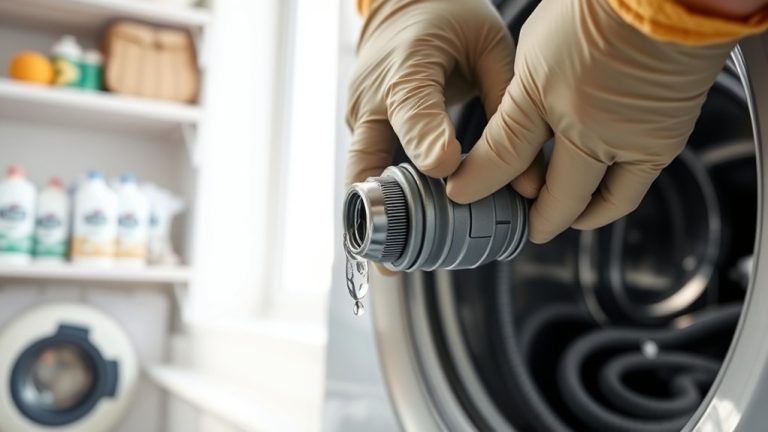
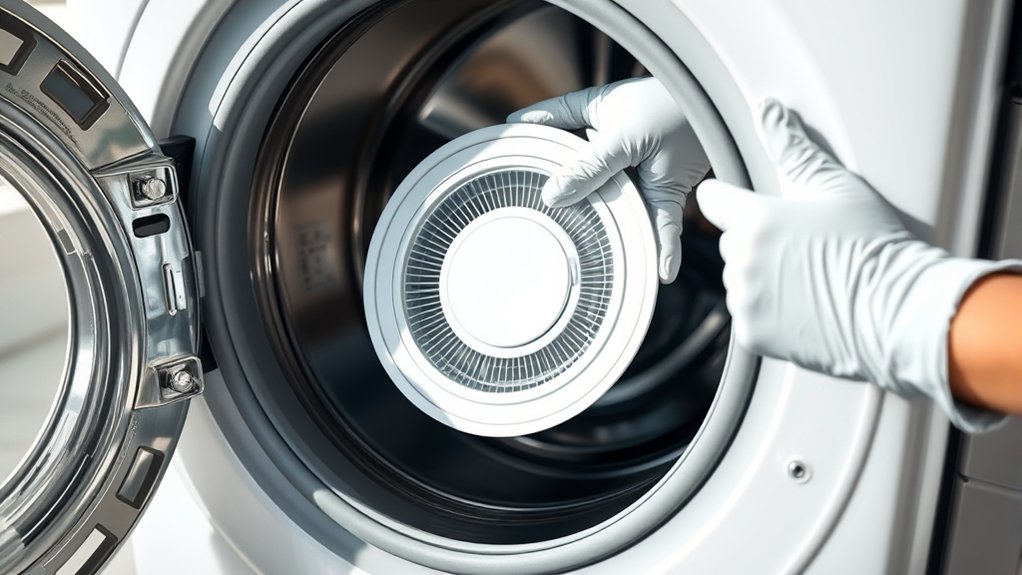
To clean your washing machine filter, first unplug the machine and locate the filter. It’s usually at the bottom right for front-loaders or inside the drum for top-loaders.
Place a shallow container beneath to catch any water. Then, twist the filter counterclockwise and remove it carefully. Rinse and scrub the filter and housing thoroughly with warm water and a soft brush.
Reinstall the filter securely and close the panel. After that, run a short cycle to test everything is working properly. Following these steps helps prevent clogs and ensures proper drainage.
If you want, more detailed guidance can help you troubleshoot common issues too!
Why You Should Clean Your Washing Machine Filter
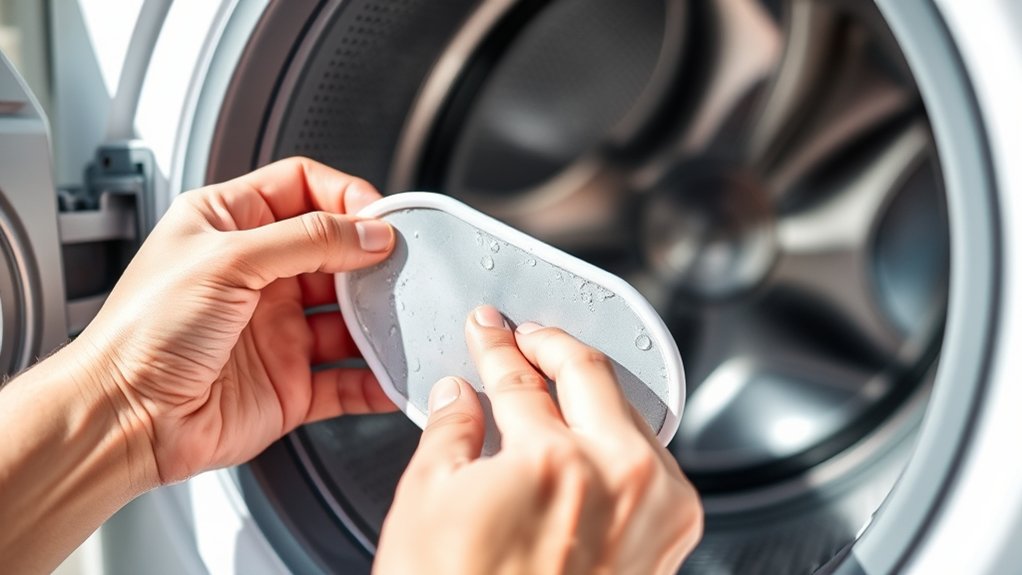
Although it’s easy to overlook, cleaning your washing machine filter regularly is essential to prevent clogs that cause drainage problems and reduce your machine’s lifespan. You need to clean the filter at least every three months to prevent lint, debris, and mold build-up that can impair drainage and cause inefficient operation.
Clogs restrict water flow, leaving your clothes soaking wet and forcing the machine to work harder. This increases wear and energy consumption. Neglecting to clean the filter can also lead to mold growth and potential mechanical failure, resulting in costly repairs.
Where to Find the Washing Machine Filter (Front-Load & Top-Load)
Where exactly can you find the washing machine filter? For front-load machines, the filter typically sits behind a hatch at the bottom right corner or at the drainage hose’s end. This placement allows easy exterior access.
In contrast, top-load washers usually house the filter inside the drum or near the agitator. You might need to remove a cover to reach the lint trap.
Keep in mind, some high-efficiency models don’t have a traditional filter at all, so it’s a good idea to check your user manual for the exact filter location and instructions.
Since filter placement varies by brand, age, and type, the user manual is always your best bet for accurate info.
Locating and accessing the filter correctly is key to maintaining your washing machine’s performance and avoiding drainage problems.
How Often to Clean Your Washing Machine Filter
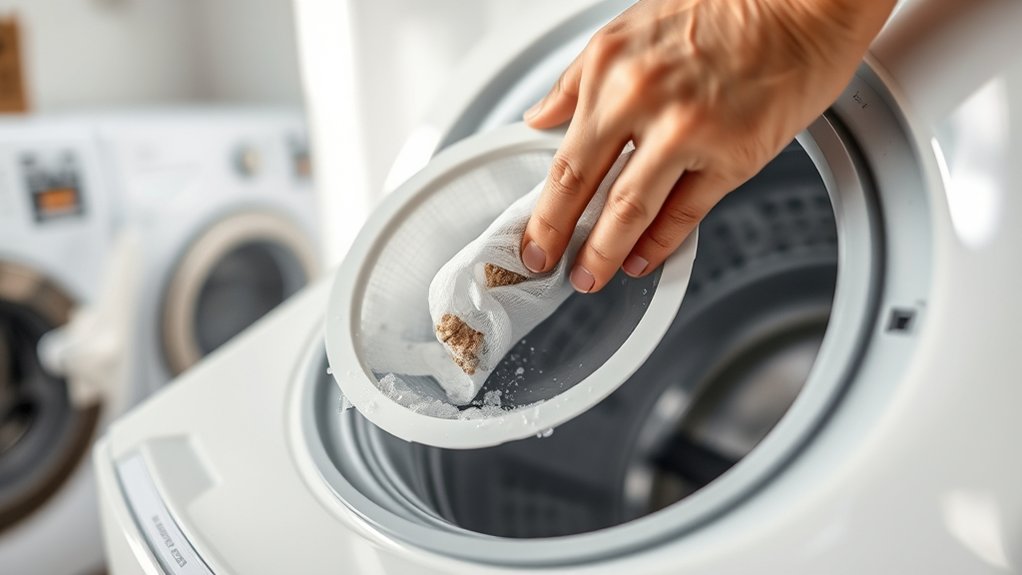
You should clean your washing machine filter at least every three months to keep it running smoothly.
But if you do a lot of heavy laundry or wash really dirty clothes, it’s a good idea to check and clean the filter every couple of weeks. That way, you can avoid clogs before they become a problem.
Regularly taking care of your filter not only helps your machine work better but also stops any funky smells from building up and can even help your washing machine last longer.
Recommended Cleaning Frequency
Since washing machine filters trap lint, debris, and residue, cleaning them regularly is crucial to maintain peak performance. The recommended cleaning frequency is at least once every three months to guarantee a clean filter and maximum performance.
However, if your household handles heavy laundry loads or heavily soiled items, you should clean the filter bi-weekly to prevent clogs and maintain efficiency. Always consult your owner’s manual for specific guidelines, as recommendations can vary by model.
Maintaining a clean filter not only avoids unpleasant odors but also prevents drainage issues and extends your machine’s lifespan.
Factors Affecting Schedule
The frequency of cleaning your washing machine filter depends on several key factors tied to your household’s laundry habits and machine usage.
If you handle heavy laundry loads or frequently wash heavily soiled items like towels and bedding, you should increase the cleaning frequency to monthly or bi-weekly.
Smaller households with lighter usage may only need to clean the filter every three months.
Always consult your machine’s user manual for manufacturer-recommended service intervals, as these can vary by model.
Neglecting timely filter cleaning can cause drainage issues and reduce washing efficiency.
Adjust your cleaning schedule based on how often you use your machine and the volume of laundry to maintain peak performance and prevent clogs.
Regular filter maintenance guarantees your washing machine operates effectively and extends its service life.
Benefits Of Regular Cleaning
A clean washing machine filter guarantees your appliance runs smoothly and prevents drainage blockages that can cause clothes to remain soaking wet. To maintain peak performance, clean the filter every month, or every two weeks if you frequently wash heavily soiled items or have a large household.
Regular cleaning prevents clogs that impair drainage and reduce washing efficiency. By sticking to the manufacturer’s recommended cleaning schedule, you can avoid unpleasant odors and mechanical failures.
Consistent maintenance not only guarantees effective water flow but also extends the lifespan of your washing machine. Neglecting this task risks costly repairs and poor washing results.
So, make it a habit to incorporate filter cleaning into your routine. This way, you keep your washing machines operating at peak efficiency and safeguard your investment over time.
It’s a small step that makes a big difference!
Tools and Supplies Needed for Cleaning
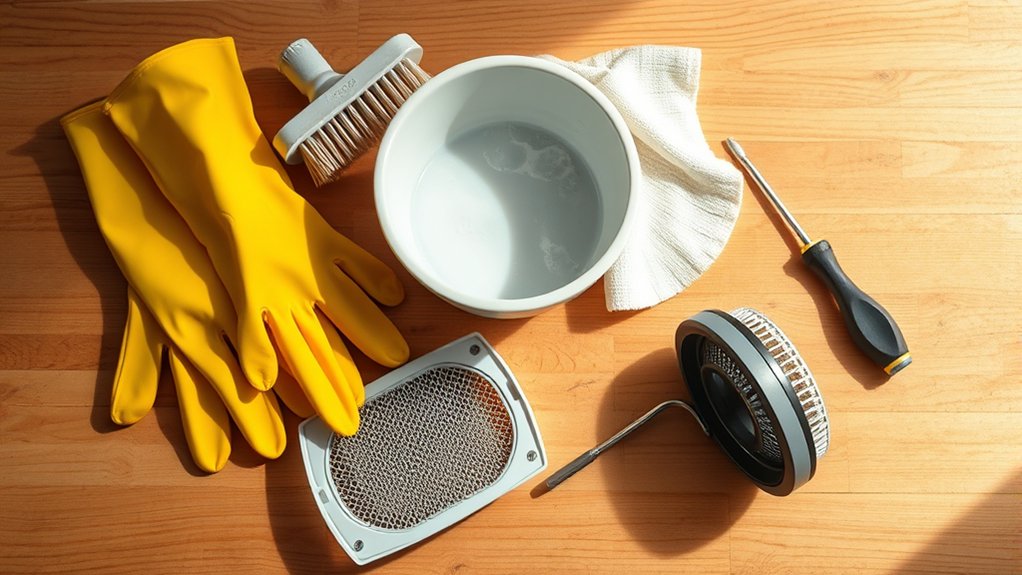
You’ll want to have a shallow container ready to catch any water that might drip out when you remove the filter.
It’s also a good idea to grab a screwdriver or a wedge tool to help you open the filter cover easily.
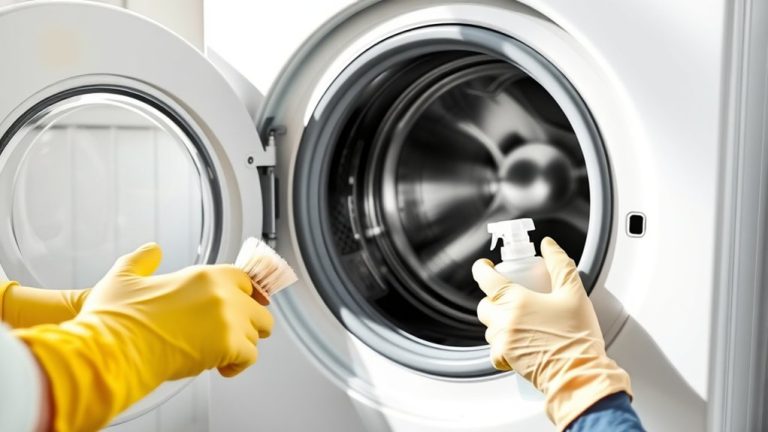
Don’t forget to wear gloves—they’ll protect your hands from any debris or sharp edges while you’re cleaning.
And keep some cleaning wipes or cloths nearby, along with a small towel to scrub the filter and handle any spills without a mess.
Essential Cleaning Tools
Five essential tools and supplies will streamline the process of cleaning your washing machine filter. First, use a screwdriver or wedge tool to remove any panels blocking access to the washing machine’s filter.
Next, place a shallow container or bowl underneath to catch water drained from the filter, preventing spills.
A soft brush to clean the filter’s mesh effectively dislodges lint and debris without damage. Cleaning wipes or cloths help remove stubborn grime from the filter housing and surrounding areas.
Finally, keep a small towel or rag nearby to quickly absorb any water spills during removal and cleaning.
Having these tools ready guarantees a precise, efficient cleaning process, maintaining your washing machine’s performance and longevity.
It really makes the whole task easier and faster, so you’re not left dealing with messes or missed spots.
Protective Gear Needed
Wearing protective gear is essential when cleaning your washing machine filter to safeguard your hands from debris, dirt, and sharp edges. First, put on gloves to protect your skin from contaminants and possible cuts.
Place a shallow container beneath the filter area to catch any residual water that may spill during removal, preventing mess and damage.
Keep cleaning wipes within reach for scrubbing the filter and wiping surrounding surfaces thoroughly. Also, have a small towel on hand to promptly absorb drips and spills throughout the process.
Using these protective tools not only maintains cleanliness but also guarantees your safety while handling potentially hazardous components.
Proper preparation with gloves, a shallow container, cleaning wipes, and a small towel makes the whole cleaning task easier and safer. It really helps you get the job done efficiently without any hassle.
Unplug and Prepare Your Washing Machine for Cleaning
Before you begin cleaning, always unplug your washing machine to eliminate any risk of electrical shock. Unplugging the machine is a critical safety step before you proceed.
Next, prepare your workspace by placing towels or shallow pans around the machine to catch any water spills during the cleaning process. Consult your owner’s manual to locate the filter and review any model-specific instructions.
Gather necessary tools such as a screwdriver, gloves, and a shallow container for draining water. Make sure all water is fully drained from the emergency drain hose before you try to access the filter.
Proper preparation minimizes mess and guarantees a safer, more efficient cleaning process. Following these steps will help you effectively prepare your washing machine for filter cleaning.
How to Remove the Washing Machine Filter
Start by locating the washing machine filter. It’s usually positioned at the front bottom for front-loaders or inside the drum for top-loaders.
Before you remove the filter, unplug the machine to guarantee safety.
If necessary, open any covering panels using a screwdriver to access the filter easily.
Place a shallow container beneath the drainage hose to catch water that may spill during removal.
To remove the filter, twist it counterclockwise carefully, then pull it out slowly to avoid damaging the drainage hose.
Once removed, you’re ready to clean your washing machine’s filter.
Make sure to handle the filter gently, as improper removal can harm the drainage system or surrounding components.
Always confirm the filter is fully detached before proceeding.
How to Clean the Filter and Filter Housing
Unplug your washing machine and drain any remaining water from the emergency drain hose to prevent spills during cleaning.
Locate the filter, usually at the front bottom for front-loaders or inside the agitator for top-loaders. Then remove any access panels.
Find the filter at the front bottom for front-loaders or inside the agitator for top-loaders before removing access panels.
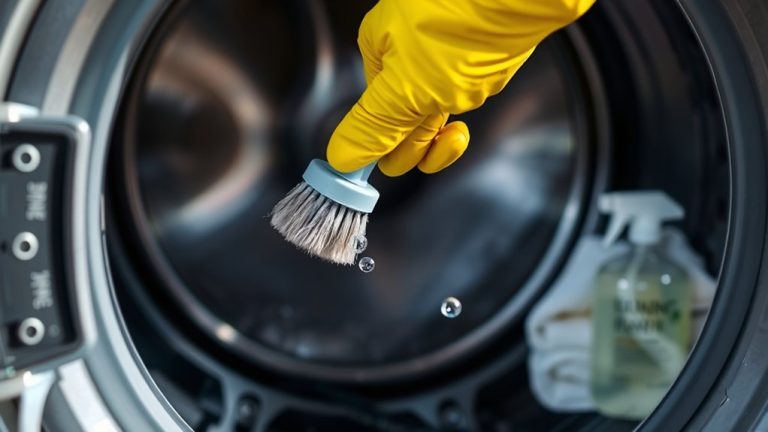
Rinse the filter under warm water, using a soft brush to gently scrub away stubborn debris. Make sure it’s completely clean.
Next, wipe the filter housing with a cloth to remove lint or residue that could cause blockages. Pay close attention to all crevices to keep the water flowing well.
Thoroughly cleaning both the filter and housing helps prevent future malfunctions and improves machine efficiency.
Once everything is clean, you can go ahead and reinstall the filter properly before closing the panels.
How to Reinstall the Filter and Test Your Washer
Align the cleaned filter carefully with the drain pump and twist it clockwise until it locks securely in place. Make sure the filter is fully seated to prevent leaks.
Next, close any filter panel or cover firmly to maintain a proper seal. Plug the washer back into the power source and select a short, empty wash cycle. This test run confirms the filter is installed correctly and the drain system functions properly.
During the cycle, keep an eye out for unusual noises or water pooling. These could mean the filter isn’t installed right or there’s a blockage. If everything runs smoothly, your filter is correctly reinstalled.
To keep your washer running efficiently, inspect the filter regularly. Clean it as needed to avoid future drain issues and keep your washer performing at its best.
Troubleshooting Common Washing Machine Filter Problems
Although regular filter cleaning prevents many issues, you might still encounter common problems like slow drainage or lingering odors.
If you notice slow drainage, first check the filter for clogs caused by lint, hair, or debris obstructing water flow. Remove and clean the filter thoroughly to restore proper drainage.
If cleaning the filter doesn’t help, persistent clogs may indicate a faulty drain pump or blocked hose. So, inspect these components as well.
In cases where the drain pump malfunctions, you’ll likely need professional repair.
Always refer to your washing machine’s user manual for model-specific troubleshooting instructions.
Consult your washing machine’s user manual for detailed, model-specific troubleshooting guidance and maintenance tips.
Addressing these problems promptly guarantees your washing machine operates efficiently and prevents damage caused by clogged filters or drain system failures.
Tips for Maintaining a Clean Washing Machine Filter
To keep your washing machine running smoothly, clean its filter at least once a month. If you have a large household or often wash heavily soiled clothes, aim to clean the filter every two weeks.
While you’re at it, always check the drain hose for any kinks or blockages. This helps make sure water drains properly. Use a soft brush to get rid of any stubborn debris.
After cleaning, dry the filter thoroughly before putting it back to prevent mold from growing. And don’t forget to check your machine’s manual for any specific cleaning tips or instructions.
| Task | Frequency |
|---|---|
| Clean washing machine filter | Monthly (or biweekly) |
| Inspect drain hose | Monthly |
| Remove debris with brush | Every cleaning |
| Dry filter before reinstall | Every cleaning |
| Follow manual guidelines | As specified |
Keeping up with filter maintenance not only boosts your machine’s performance but also helps avoid costly repairs down the road.
Frequently Asked Questions
Can a Washing Machine Filter Cause Bad Odors?
Yes, a washing machine filter can cause bad odors if you neglect filter maintenance tips. Debris and moisture trapped in the filter promote mold growth, which is a common filter issue leading to unpleasant smells.
To keep bad odors at bay, make sure to clean the filter regularly as part of your washing machine hygiene routine. This simple step prevents buildup that can decompose and cause odors.
Is It Safe to Use Bleach When Cleaning the Filter?
Yes, you can use bleach cautiously when cleaning the filter, but always check the filter materials and follow safety precautions.
Make sure to dilute the bleach properly, usually about a 1:10 ratio, to avoid any damage.
Try not to use bleach too often. Instead, you might want to cut down on how frequently you clean by choosing gentler alternatives like vinegar or baking soda for regular maintenance.
After using bleach, be sure to rinse the filter thoroughly. This helps prevent any residue buildup that could harm your clothes or the machine’s components.
Can a Damaged Filter Affect My Washing Machine’s Warranty?
Yes, a damaged filter can affect your washing machine’s warranty.
Manufacturers expect you to follow proper filter maintenance tips, like cleaning or replacing specific filter types regularly.
If you ignore this, it can lead to warranty issues because damage from neglect usually isn’t covered.
Taking good care of your filter helps your machine last longer and avoids costly repairs.
So, always check your warranty terms carefully.
It’s also a good idea to keep records of your maintenance to support any future claims related to filter problems.
How Do I Know if My Washing Machine Filter Needs Replacement?
You’ll know your washing machine filter needs replacement by spotting key filter indicators: persistent drainage issues, excess lint on clothes, and unusual noises during spinning.
Check for physical damage like cracks or breaks. Use a troubleshooting guide to assess these replacement signs accurately.
Follow maintenance tips from your user manual for your model, ensuring you address wear promptly. Regular inspection helps prevent bigger problems and keeps your machine running efficiently.
It’s a good idea to keep an eye on these things so you don’t get caught off guard. Taking care of the filter now saves you from costly repairs later.
Will Cleaning the Filter Improve Water Drainage Speed?
Yes, cleaning the filter directly improves drainage efficiency by removing blockages that hinder water flow.
Following filter maintenance tips like regular cleaning prevents water flow issues and enhances washing machine performance.
When you maintain the filter properly, you guarantee smooth drainage, reducing cycle times and preventing mold growth.
Consistent filter care helps your machine operate at peak performance.
It also avoids slow drainage problems and extends your machine’s lifespan considerably.
Conclusion
You might think cleaning your washing machine filter is a chore nobody enjoys, but ironically, skipping it invites clogs, leaks, and costly repairs. By following these precise steps, you’ll keep your washer running smoothly and avoid unexpected laundry day disasters.
Remember, a little routine maintenance saves you from a lot of frustration. Spending a few minutes on your filter beats spending hours fixing your machine. So, get to it!