How To Clean Eyelids For Dry Eyes – Safe Cleaning Tips
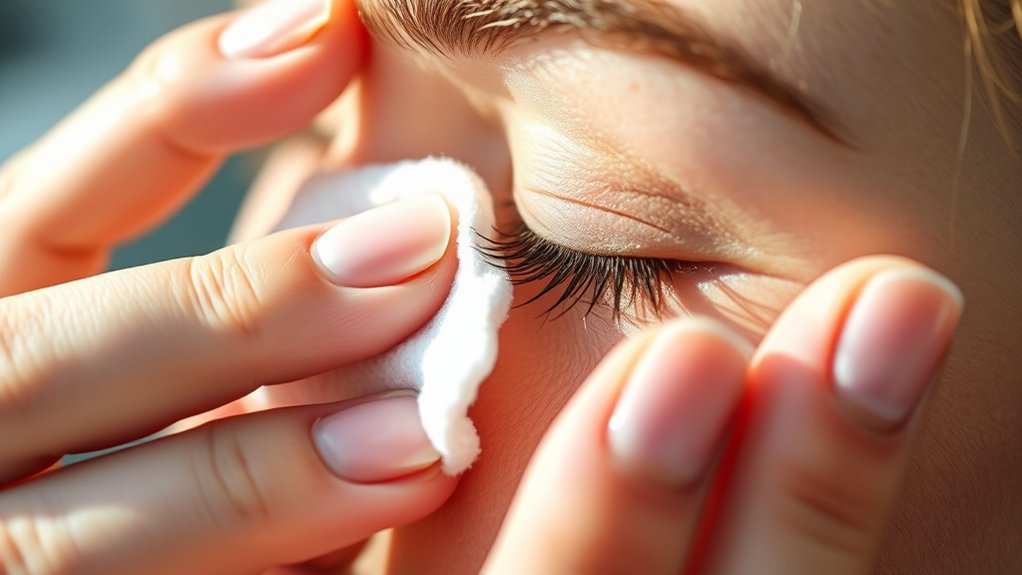
To clean your eyelids safely for dry eyes, start by washing your hands thoroughly. Use a warm compress for 5–10 minutes to loosen debris. Then gently cleanse your closed eyelids with a sterile cotton pad soaked in a mild, approved cleanser, massaging softly to avoid irritation.
Rinse with lukewarm water and pat dry without rubbing. Clean daily or as advised, avoiding harsh products or scrubbing. Following these steps improves gland health and comfort.
If you need more guidance, it can help you maintain ideal eyelid hygiene.
Why Eyelid Cleaning Matters for Dry Eye Relief
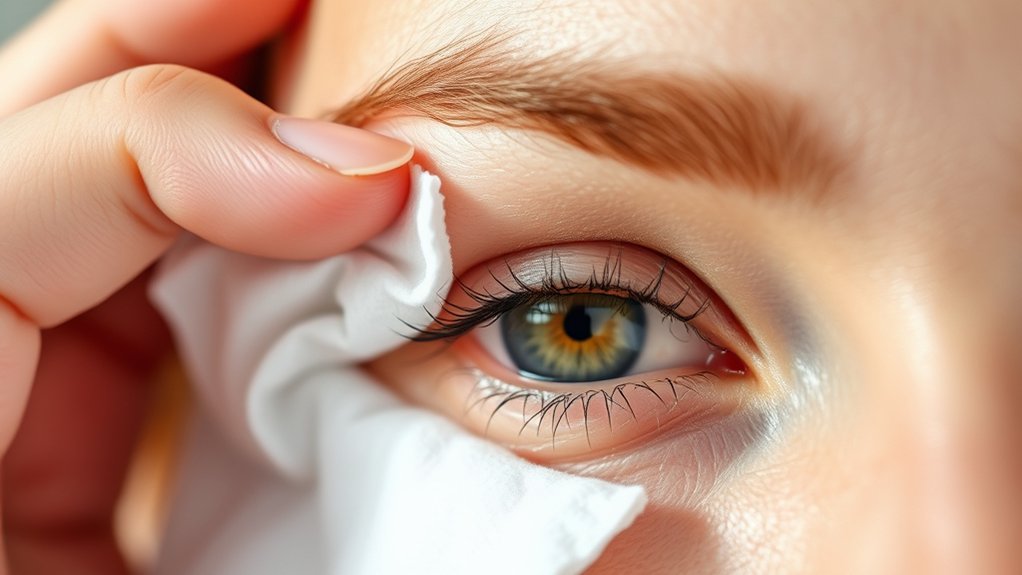
Because clogged oil glands can worsen dry eye symptoms, cleaning your eyelids plays a vital role in managing the condition. Eyelid hygiene removes debris and bacteria that block meibomian glands, which produce oils essential for tear stability.
Cleaning eyelids clears debris and bacteria, unblocking oil glands vital for stable, healthy tears.
When these glands are obstructed, oil secretion decreases, causing increased tear evaporation and dryness.
Regular eyelid cleaning prevents crust and biofilm buildup, reducing inflammation linked to blepharitis and maintaining gland health.
By supporting natural oil flow, you enhance the tear film’s integrity, reducing moisture loss and discomfort.
Consistent eyelid hygiene is thus a key intervention to alleviate dry eye caused by gland dysfunction or eyelid inflammation. It helps you maintain ideal eye surface health and improve overall comfort.
Getting Ready to Clean Your Eyelids Safely
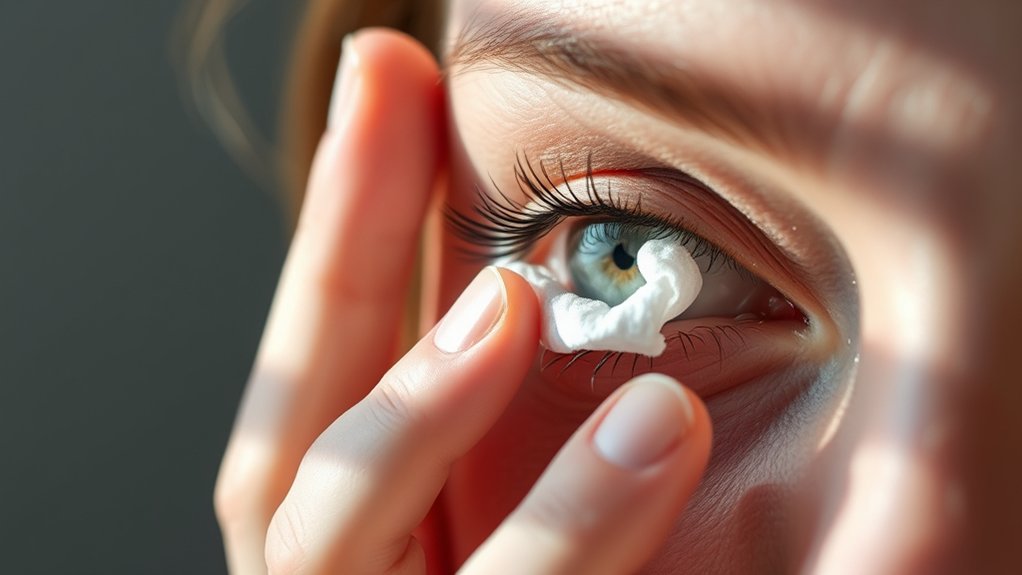
Before you start cleaning your eyelids, make sure to wash your hands thoroughly with warm, soap-free water. This helps reduce the chance of transferring bacteria.
Next, gather your recommended eyelid cleanser along with some cotton pads or swabs. It’s important to check that all your tools are clean and safe to use around your eyes.
Finally, apply a warm, damp cloth or a heated eye mask to your eyelids for about 5 to 10 minutes. This will help soften any debris along the eyelid margins, making the cleaning process easier.
Gather Necessary Supplies
To clean your eyelids safely, you’ll need to gather specific supplies designed for ocular hygiene. Proper eyelid hygiene is essential for managing dry eyes without irritating sensitive skin or affecting cosmetic applications.
Make sure to choose products that are free from oils, parabens, and harsh chemicals to avoid any adverse reactions.
Here’s what you’ll want to prepare:
- Gentle, approved eyelid cleansers or wipes formulated for ocular hygiene
- Soft, sterile cotton pads or applicators for precise, contamination-free application
- A clean, well-lit space with a mirror so you can monitor the cleaning process
- Optional: a warm compress or damp cloth to soften crusts and oils before cleaning
These supplies will help you maintain eyelid health while keeping cosmetic sensitivities in mind.
Plus, they make sure you effectively remove debris without hassle.
Practice Hand Hygiene
Washing your hands thoroughly for at least 20 seconds with warm water and soap is the most critical step in preparing to clean your eyelids safely. Proper handwashing techniques remove bacteria and debris, reducing the risk of eye infections.
After washing, dry your hands completely with a clean towel or air dry to avoid introducing moisture or contaminants.
It’s really important to keep up good hand hygiene by avoiding touching or rubbing your eyes with unwashed hands, especially if you have infections or skin conditions.
Also, keep your fingernails trimmed and clean to prevent accidental scratching during eyelid cleaning. Use a cotton pad or soft cloth to gently dry your hands, making sure no soap residue remains.
Following these steps ensures a safe, hygienic start to eyelid care for dry eyes. It’s a simple routine that helps protect your eyes and keeps them feeling comfortable.
Prepare Warm Compress
After thoroughly cleaning your hands, the next step involves preparing a warm compress to soften oils and debris on your eyelids. This step is essential for effective eyelid hygiene and supports gland function.
Follow these eye health tips to prepare your compress safely:
- Use a clean cloth dampened with warm water or a heated eye mask.
- Apply the compress gently to your closed eyelids for 5-10 minutes.
- Ensure the temperature is warm enough to loosen debris but not hot enough to cause discomfort or burns.
- Reheat the compress as needed to maintain consistent warmth throughout the application.
This preparatory step enhances debris removal, making subsequent eyelid cleaning safer and more effective. It’s a simple trick that really helps your eyes feel better and stay healthy.
Clean Your Eyelids Properly: Step-by-Step Guide
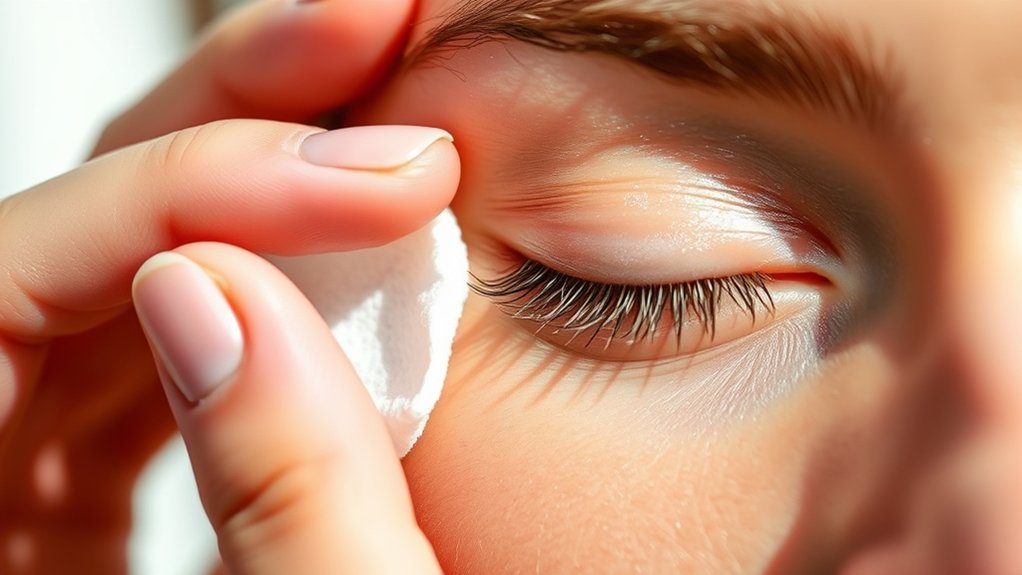
First, get your eyelids ready by applying a warm compress. This helps to loosen up any debris, making it easier to clean.
Next, take a gentle cleanser that’s recommended for your eyes and carefully wipe your eyelids using soft, controlled movements.
Once you’ve done that, rinse your eyes thoroughly and pat them dry. This final step helps to prevent any irritation and leaves your eyes feeling fresh.
Prepare Eyelids Safely
Before touching your eyelids, make sure you wash your hands thoroughly with warm, soapy water. This helps prevent transferring bacteria and keeps things clean. Proper eyelid hygiene is really important to avoid irritation and infection, especially if you’re dealing with dry eyes.
Try using natural remedies or gentle, recommended eyelid cleansers to keep chemical exposure to a minimum. Here’s how you can prepare your eyelids safely:
- Apply a warm compress or a damp cloth to your closed eyelids for 5 to 10 minutes. This softens oils and crusts, making them easier to clean.
- Use a cotton pad or your fingertip to apply a mild eyelid cleanser or a natural remedy.
- Close your eyes and gently massage your eyelids in circular and horizontal motions. This helps loosen any debris.
- Rinse your eyelids with lukewarm water to wash away residue, then pat them dry carefully.
Following these steps will help you get your eyelids ready safely before cleaning.
Gentle Cleaning Techniques
While keeping irritation to a minimum, you’ll want to use gentle cleaning techniques to effectively remove debris and maintain eyelid health. Begin by applying a warm, damp cloth or heated eye mask for 5-10 minutes to soften crusts and oils.
Next, gently massage your eyelids in small circular motions to loosen debris and stimulate oil flow, supporting proper eyelid hygiene. Use a recommended eyelid cleanser or wipes applied with a cotton swab. Avoid harsh scrubbing to prevent inflammation.
Clean along the lash line from the inner to outer corner with soft, horizontal strokes, making sure to remove all debris.
Finally, rinse your eyelids with lukewarm water and pat dry with a soft towel. Try not to rub, as this helps protect delicate skin and keeps your eyelids healthy.
Post-Cleaning Care
Although thorough cleaning is essential, proper post-cleaning care guarantees your eyelids remain healthy and free from irritation. Maintaining eyelid hygiene and promoting eye comfort don’t end with cleansing. Follow these steps for ideal results:
- Rinse your eyelids thoroughly with lukewarm water to remove any cleanser residue or debris.
- Gently pat the eyelid area dry with a soft, clean towel or tissue, avoiding rubbing to prevent irritation.
- Refrain from applying makeup or eye products immediately after cleaning to preserve eyelid hygiene benefits.
- If you used a warm compress before cleaning, make sure it was at a comfortable temperature to avoid burns and support gland function.
Consistent care promotes gland health, reduces dryness, and enhances overall eye comfort.
Recommended Products and Ingredients for Dry Eye
When managing dry eye, selecting the right products and ingredients for eyelid hygiene is essential to reduce inflammation and microbial load. Proper eyelid hygiene supports tear film stability and alleviates symptoms. Tea tree oil (5%) combats Demodex mites, while hypochlorous acid (0.7–0.9%) disinfects safely.
Baby shampoo diluted 1:10 is mild but may reduce mucin secretion if overused. Okra oil offers anti-inflammatory benefits and mite reduction. Boric acid (3%) provides antimicrobial and soothing effects.
| Product | Concentration | Benefits |
|---|---|---|
| Tea Tree Oil | 5% | Antiparasitic, antimicrobial |
| Hypochlorous Acid | 0.7–0.9% | Disinfectant, reduces biofilm |
| Okra Oil | N/A | Anti-inflammatory, mite reduction |
How Often Should You Clean Your Eyelids?
- Clean your eyelids daily to keep them fresh and prevent crust from forming. It’s a simple step that goes a long way in maintaining good hygiene.
- If you have blepharitis or meibomian gland dysfunction, your eye care professional might suggest cleaning your eyelids twice a day. This extra care can really help manage those conditions.
- Just be gentle—avoid over-cleaning or scrubbing too hard. Too much friction can irritate your sensitive eyelids and make things worse.
- When you have an active infection or inflammation, follow your doctor’s advice on cleaning more often. Stick with their recommendations until your symptoms calm down.
Regular, gentle eyelid hygiene helps prevent blockages and keeps your eyes comfortable. This is especially important if you deal with dry eyes or have sensitive eyelids.
Avoid Common Eyelid Cleaning Mistakes
Because your eyelid skin is delicate and sensitive, avoiding common cleaning mistakes is vital to prevent irritation and infection.
Gentle care is essential for delicate eyelid skin to avoid irritation and infection.
For effective eyelid hygiene, don’t use harsh soaps or shampoos, as they worsen inflammation and damage sensitive skin. Avoid scrubbing vigorously or applying excessive pressure to protect gland function and prevent skin injury.
Never share eyelid cleaning tools or products; this is essential for infection prevention by minimizing bacterial transfer.
Also, make sure to discard expired or dried-out eye makeup removers to avoid introducing harmful bacteria.
Steer clear of over-the-counter products containing oils or paraben preservatives, which may worsen dryness or cause allergic reactions.
When to Choose Professional Eyelid Cleaning (BlephEx)
If at-home eyelid hygiene fails to control persistent symptoms or you experience recurrent blepharitis or Demodex mite infestations, professional eyelid cleaning with BlephEx becomes a necessary option. BlephEx offers precise removal of bacterial biofilm, debris, and mites using a specialized rotating sponge. This delivers significant clinical benefits.
Consider professional cleaning with BlephEx if you:
- Suffer from severe or recurring blepharitis despite regular home care.
- Have persistent gland blockage affecting tear film stability.
- Experience chronic irritation linked to Demodex mite infestations.
- Want to prevent progression of eyelid inflammation and improve ocular surface health.
It’s a good idea to consult an eye care specialist to see if BlephEx is right for you. They can help evaluate your condition and ensure you get safe, effective treatment.
Protect Your Eyes From Makeup Irritation
Maintaining proper eyelid hygiene extends beyond cleaning techniques and professional treatments; how you handle eye makeup plays a significant role in preventing irritation and worsening dry eye symptoms. Apply makeup outside the eyelid line to avoid clogging the meibomian glands, which reduces irritation.
Make sure to thoroughly remove your makeup each night to prevent debris buildup that can inflame your eyelids and make dry eye issues worse. Also, regularly clean your makeup brushes to keep bacteria and infections at bay.
Avoid oil-based or paraben-containing eye makeup because these ingredients can block pores and trigger inflammation. And don’t forget to replace expired or dried-out eye products promptly to stop bacteria and toxins from causing problems.
Frequently Asked Questions
Can Eyelid Cleaning Help With Other Eye Conditions Besides Dry Eyes?
Yes, eyelid cleaning helps with other eye conditions by removing allergens and debris, reducing inflammation. It also provides cosmetic benefits by improving eyelid hygiene, preventing infections, and promoting a healthier, clearer eyelid appearance.
Keeping your eyelids clean can make a big difference. It not only soothes irritation but also helps stop problems before they start. So, it’s a simple step that’s really worth adding to your routine.
Is It Safe to Clean Eyelids if I Wear Contact Lenses?
Yes, you can safely clean your eyelids while wearing contacts by practicing proper eyelid hygiene and following contact lens safety guidelines.
But always remove your lenses before cleaning. Use gentle, approved cleansers to avoid irritation or infection.
Taking these simple steps helps keep your eyes healthy and comfortable.
Can Children Use Eyelid Cleaning Products for Dry Eyes?
You can use eyelid cleaning products designed specifically for children’s eye hygiene, making sure they’re safe and gentle.
It’s always a good idea to check with a pediatric eye care specialist before starting. They can recommend the right products and show you the best techniques for your child’s needs.
That way, you’ll feel confident that you’re doing what’s best for your child’s eyes.
Are Homemade Eyelid Cleansers Effective and Safe?
Homemade eyelid cleansers with natural remedies can be effective but require careful preparation. You should prioritize chemical safety, avoiding irritants or contaminants, to guarantee they’re safe and beneficial for managing dry eyes.
It’s really important to make sure what you’re using won’t cause any harm. Always check your ingredients and how you mix them. That way, you can keep your eyes feeling good and avoid any problems.
How Do I Store Eyelid Cleaning Products Properly?
Think of product storage as a fortress defending hygiene maintenance. You should keep eyelid cleaning products sealed tightly and stored in a cool, dry place away from sunlight.
Always use clean hands to prevent contamination. This helps guarantee safe use every time. It’s all about keeping things fresh and effective!
Conclusion
Think of your eyelids like windshield wipers. They clear away debris to keep your vision clear and comfortable. Just like neglecting wipers can mess with your view, skipping eyelid cleaning can make dry eye symptoms worse.
Consistent, gentle cleaning helps reduce inflammation and makes your eyes feel better. It’s a bit like how a well-maintained windshield makes your drive safer and smoother.
By following safe, regular eyelid hygiene, you protect your eyes effectively. This way, you can keep the clear, healthy vision you deserve.