How To Dry Clean A Rug At Home – Easy Cleaning Guide
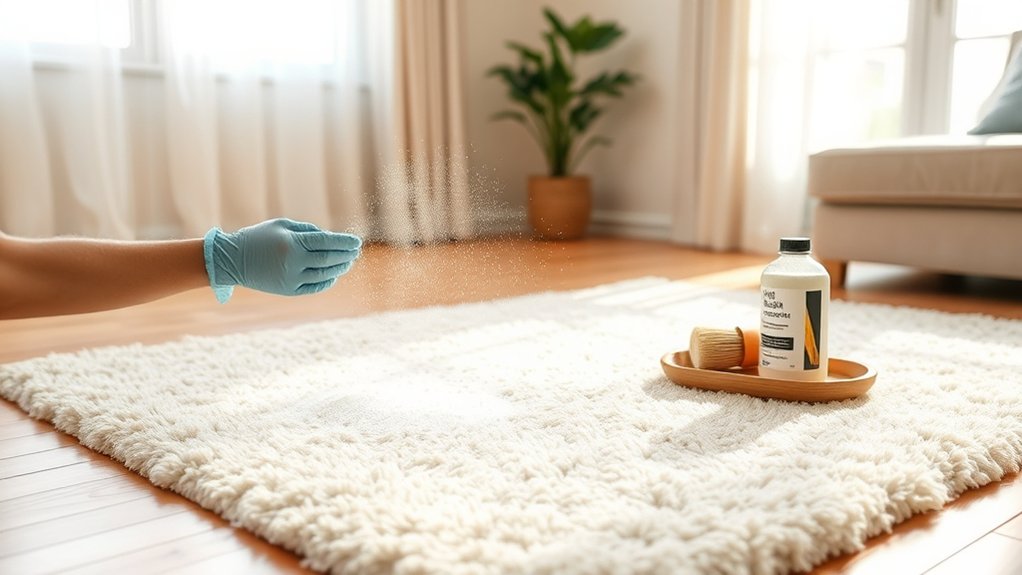
To dry clean your rug at home, start by evenly sprinkling baking soda, salt, or a dry powder over the surface. Let it sit for a few hours to absorb dirt and odors.
Then, gently loosen the particles by rolling or folding the rug before vacuuming it thoroughly. For stains, use a baking soda paste or mild detergent spot treatment without soaking.
Keep the rug in the shade to air dry and protect delicate fibers. You can explore further for care tips by material and maintenance.
When to Choose Dry Cleaning for Your Rug
When should you opt for dry cleaning your rug? Consider its history of rug weaving and cultural significance first. Rugs made from natural fibers like jute, sisal, or cotton often require dry cleaning because water can deform these materials.
If your rug is delicate, antique, or holds significant cultural value, wet cleaning might cause irreversible damage. Dry cleaning is also ideal when you need a quick refresh, neutralizing dust and odors without long drying times.
Placing rugs on wooden or parquet floors calls for dry cleaning to prevent moisture from seeping and damaging the floor.
Tools and Supplies for Dry Cleaning Rugs
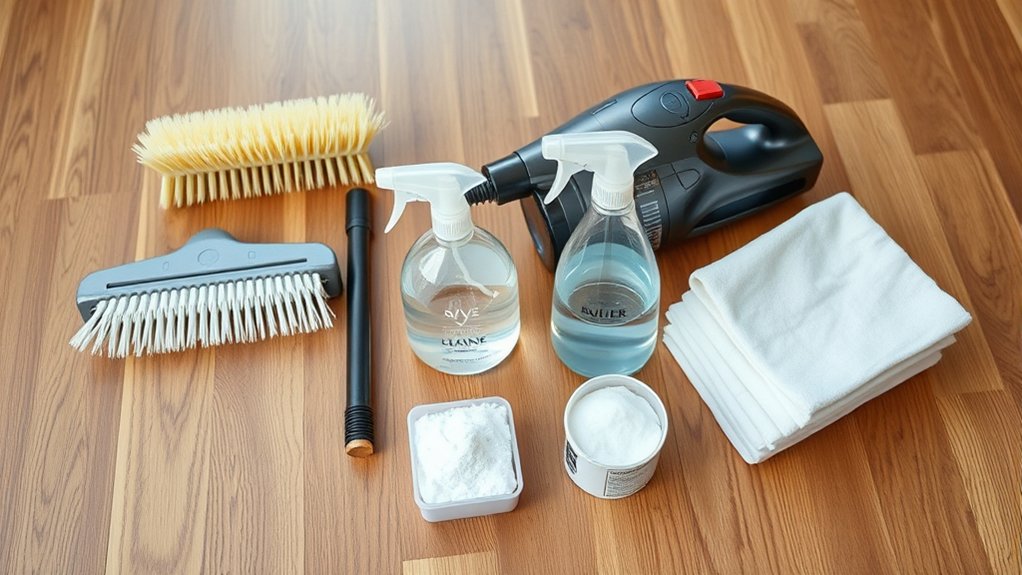
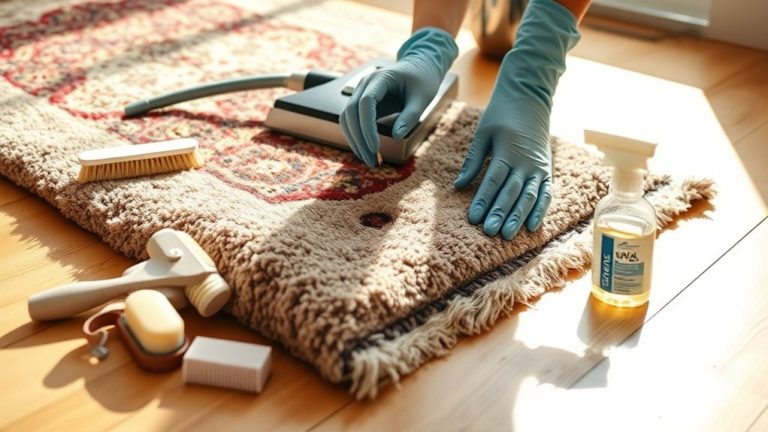
Before you begin dry cleaning your rug, gather all the necessary tools and supplies to guarantee an efficient and effective process. Confirm your cleaning agents suit the rug’s material, especially for colorfast fabrics. And if you have pets, opt for pet-safe solutions.
Focus on having soil extractors, encapsulant applicators, and soft-bristled brushes for precise dirt removal without damaging fibers. You’ll also want a sifter or measuring cup to evenly distribute powders or encapsulants.
Make sure your vacuum cleaners and spray pumps are clean and in good working order. This helps avoid recontamination and keeps the cleaning process smooth.
Consider using professional-grade upholstery tools and dry cleaning kits for targeted stains. Preparing these items beforehand makes the task easier and protects your rug’s integrity while ensuring a thorough, safe clean.
Dry Cleaning Rugs With Baking Soda, Salt, and Powders
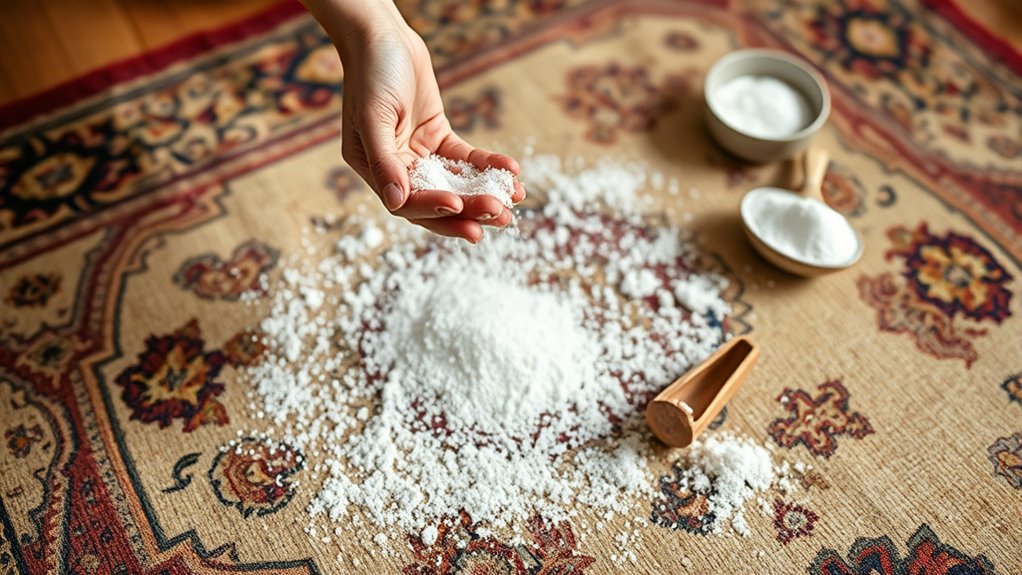
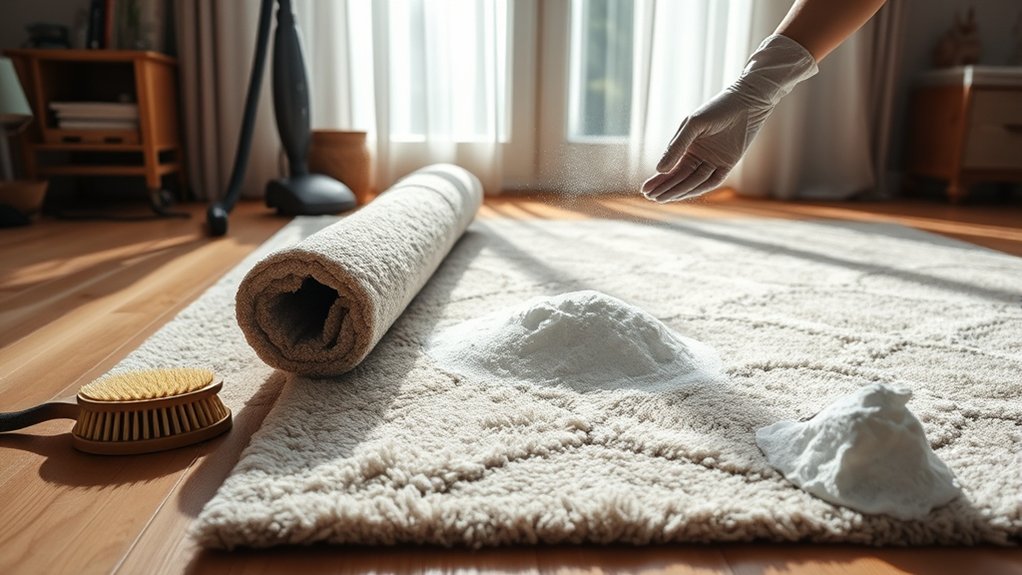
Although dry cleaning a rug might sound complex, using baking soda, salt, or commercial powders makes the process straightforward and effective. These powders absorb dirt and odors without risking color fading or damaging fringe preservation.
Here’s a methodical approach:
| Step | Action | Purpose |
|---|---|---|
| 1 | Sprinkle powder evenly | Targets embedded dirt, odors |
| 2 | Let sit 1–3 hours or overnight | Absorbs moisture and odors |
| 3 | Roll or fold rug | Loosens dirt trapped inside |
| 4 | Vacuum thoroughly | Removes residues and dirt |
| 5 | Optional: Add essential oils | Enhances fragrance |
Follow these steps carefully to maintain your rug’s vibrancy and fringe integrity while achieving a fresh, clean result. It’s easier than you might think, and your rug will thank you!
Spot Cleaning Rug Stains Without Water
You can easily tackle stubborn stains and odors on your rug without using any water. One great trick is to use natural absorbents like baking soda. It works wonders to lift grease and neutralize smells.
Just sprinkle the baking soda directly onto the stain and let it sit for several hours. This gives it time to soak up all the dirt and odors.
After that, gently brush the powder into the rug fibers to help it penetrate even deeper.
Finally, finish up by vacuuming thoroughly. This removes all the baking soda residue and brings back your rug’s fresh, clean look. It’s a simple and effective way to spot clean without any hassle!
Natural Stain Removal
When dealing with stains on your rug, opting for natural spot cleaning methods without water can protect the fibers and colors from damage. This approach minimizes risks like color bleeding and prevents attracting moth damage by avoiding moisture.
To effectively remove stains naturally, start by applying baking soda or cornstarch directly to absorb oils and dirt. For tougher stains, sprinkle baking soda, then lightly spritz white vinegar to loosen grime without soaking fibers.
Gently work the powders into the fibers with a soft brush, then let sit for several hours.
Afterward, vacuum thoroughly to remove residues and trapped dirt. This method preserves your rug’s integrity while efficiently addressing stains without introducing water or harsh chemicals. It’s a simple trick that really works!
Odor Neutralizing Techniques
Since odors can deeply embed themselves in rug fibers, tackling them without water requires targeted odor neutralizing techniques. Start by sprinkling baking soda generously over the affected area, allowing it to absorb odors overnight.
For spot cleaning, apply a paste of baking soda and white vinegar directly onto stains. This breaks down odor-causing bacteria without risking dye fading or damage to delicate fabric patterns.
For greasy spots, talcum or cornstarch works well to absorb oils and their odors.
Enzymatic odor neutralizers designed for pet stains effectively dissolve organic compounds and help preserve your rug’s colors and patterns.
Finally, regularly vacuum using a HEPA filter to remove embedded odor molecules. These methods maintain your rug’s integrity while efficiently neutralizing odors without introducing moisture.
Grease Spot Treatment
Although grease stains can be stubborn, treating them without water is both effective and safe for your rug’s fibers. Water can cause dye bleeding or damage delicate knot patterns, so dry methods are preferable.
To tackle grease spots, follow these steps: Sprinkle talcum powder or cornstarch directly onto the stain to absorb the oil. Let the powder sit for at least 30 minutes, then vacuum thoroughly to remove residue.
For persistent grease, apply a small amount of dish soap with a soft cloth, gently working it in. Always test on a hidden area first to avoid discoloration.
Avoid water or liquid cleaners to prevent spreading grease and damaging fibers. This method preserves your rug’s appearance while effectively lifting grease stains without risking dye bleeding or knot damage.
Caring for Different Rug Materials During Dry Cleaning
When you’re dry cleaning your rug, it’s important to tweak your approach depending on the material.
For example, wool rugs need a gentle, cold cleaning to keep them from shrinking.
On the other hand, jute and sisal rugs do best with dry methods since moisture can really damage them.
Synthetic rugs are a bit more forgiving and can handle mild detergents, but you still want to be careful and adjust your technique to protect the fibers.
Wool Rug Care
Because wool fibers are delicate and prone to damage, you need to handle your wool rug with extra care during dry cleaning. Begin by vacuuming both sides thoroughly to remove dirt and dust. This step is essential for effective fiber treatments.
Use cold water with a mild wool-safe detergent for spot cleaning. Avoid using too much moisture because it can lead to shrinking or felting. Always test a small hidden area first to make sure the colors won’t fade.
Avoid hot water or steam since they can damage the fibers. Instead, follow these key steps to keep your rug looking great:
- Vacuum thoroughly on both sides before cleaning.
- Use cold water and a wool-safe detergent for spots.
- Air dry completely in a ventilated, shaded area.
This method protects your wool rug’s integrity and keeps its vibrant colors intact.
Jute And Sisal
How do you care for jute and sisal rugs without damaging their natural fibers? Avoid wet cleaning because it can cause browning and damage the fibers. Instead, use dry cleaning methods like baking soda or dry shampoo to absorb dirt and odors.
Vacuum regularly using a gentle brush attachment to keep surface dust at bay. If you have stubborn stains, spot clean carefully with a damp cloth and mild detergent. Just try to keep water contact to a minimum.
Always air dry your rug flat or hung up, but avoid direct sunlight. This helps prevent color fading and keeps the fibers strong.
| Care Step | Method | Purpose |
|---|---|---|
| Dry cleaning | Baking soda, dry shampoo | Absorb dirt and odors |
| Vacuuming | Gentle brush attachment | Remove surface dust |
| Spot cleaning | Damp cloth, mild detergent | Treat stains with minimal water |
| Drying | Air dry, shaded area | Prevent color fading |
| Handling | Avoid moisture exposure | Fiber strengthening |
Synthetic Rug Tips
Although synthetic rugs like polyester and nylon are more water-resistant than natural fibers, you still need to be careful during dry cleaning to avoid damage. Using harsh chemicals or high heat can speed up fiber damage and cause colors to fade.
To protect your rug, follow these key tips:
- Use mild, pH-neutral cleaners made for synthetic fibers to prevent fiber breakdown and color fading.
- Avoid hot water and steam cleaning since they can melt or warp synthetic fibers.
- Make sure your rug dries thoroughly with fans or good air circulation to stop mold growth and keep the fibers strong.
Regular vacuuming and quick spot cleaning also help keep your synthetic rug looking great and lasting longer. Just handle it with care to keep it vibrant and intact.
Tips to Keep Rugs Fresh Between Dry Cleanings
To keep your rug fresh between dry cleanings, you’ll want to adopt a few consistent habits that prevent dirt buildup and odors. Regular vacuuming preserves rug color preservation by removing debris without harsh chemicals. Use eco friendly cleaning methods like sprinkling baking soda overnight to neutralize odors naturally.
Rotate your rug every 3-6 months to avoid uneven wear and discoloration. Improve air circulation with fans or dehumidifiers to prevent moisture buildup and musty smells.
| Action | Benefit |
|---|---|
| Vacuum twice weekly | Removes dirt, maintains color |
| Baking soda overnight | Neutralizes odors naturally |
| Rotate rug biannually | Prevents uneven wear, fading |
| Use fans/dehumidifiers | Reduces moisture, mold risk |
These simple steps keep your rug fresh and vibrant longer. Just a little effort regularly goes a long way!
When to Call a Professional for Rug Cleaning
Keeping your rug fresh with regular care is effective, but sometimes you really need to call in the pros. Rug weaving and dye stability are pretty delicate, so cleaning it the wrong way can cause damage.
You should call a professional when your rug is valuable, antique, or hand-knotted. These types need expert handling to preserve their structure and colors.
Also, if you’re dealing with stubborn stains like grease, wine, or persistent pet odors that just won’t go away after you’ve tried cleaning them yourself, it’s time to get help.
If the rug has damaged backing, fraying edges, deformities, or strong musty odors that might mean mold or microbial growth, don’t wait—call a professional.
Big or immovable rugs usually need special equipment and techniques that only professionals have. Trusting experts means your rug gets cleaned thoroughly without risking its integrity or color.
Knowing when to call in the experts helps you protect your investment and keep your rug looking great for years to come.
Maintaining Your Rug’s Appearance and Longevity
When you commit to regular dry cleaning and proper maintenance, your rug retains its vibrant colors and intricate patterns much longer. This consistent care guarantees effective rug color preservation by preventing dirt buildup and stains that dull the surface.
Proper drying techniques are essential. They stop mold growth and fiber deterioration, which protects the rug’s structure and enhances fiber strength. Maintaining a clean, dry environment also reduces allergens and microbial buildup, improving indoor air quality.
By scheduling regular cleanings, whether DIY or professional, you minimize wear on natural fibers like wool, jute, and sisal. This helps extend their functional life.
Ultimately, disciplined maintenance safeguards both your rug’s appearance and durability, allowing it to remain a centerpiece in your space for years to come.
Frequently Asked Questions
Can I Dry Clean a Rug With Pet Hair?
Yes, you can dry clean a rug with pet hair. Use rug cleaning techniques like sprinkling dry cleaning powder or baking soda. Then, vacuum thoroughly with a stiff brush to guarantee effective pet hair removal before deep cleaning.
It’s all about making sure the pet hair is loosened and lifted before you go for the deep clean. This way, your rug gets cleaner and lasts longer. Plus, it helps keep your cleaning process easier and more effective.
How Often Should I Dry Clean My Rug?
You should adjust your cleaning frequency based on rug material; delicate fibers demand more care. Generally, dry clean every 2-3 months, but increase if pets or high traffic affect your rug’s condition and longevity.
If you have pets or a busy household, you might need to clean your rug more often. It really depends on how much wear and tear your rug is getting. Keeping an eye on its condition helps you decide the best schedule for dry cleaning.
Is Dry Cleaning Safe for Antique Rugs?
Dry cleaning isn’t safe for antique rugs because it risks damaging fibers and colors. For proper antique preservation, you should prioritize chemical safety and consult professionals who use specialized methods that protect your rug’s integrity.
It’s really important to handle these rugs with extra care. So, instead of trying dry cleaning, look for experts who know how to treat antique materials gently. That way, you keep your rug looking beautiful without risking harm.
Can I Use Essential Oils With Dry Cleaning Powders?
Yes, you can use essential oils with dry cleaning powders to add pleasant cleaning fragrances. Just mix a few drops evenly and test first. This helps prevent residue buildup or fiber damage.
Doing this also enhances odor neutralization effectively and safely. It’s a simple way to make your cleaning routine smell great without any hassle. Give it a try and see how it works for you!
Will Dry Cleaning Remove Deep-Set Odors?
Think dry cleaning will fully handle deep-set odors? It usually can’t. Odor elimination depends on the chemical effectiveness and odor source.
For ingrained smells, you’ll likely need additional treatments or professional cleaning for best results. Sometimes dry cleaning alone just doesn’t cut it. So, it’s good to be prepared for that.
Conclusion
Dry cleaning your rug at home is simpler than you might think, and it’s perfect for delicate materials or quick freshening without water damage. You might worry it won’t be as thorough as professional cleaning, but using baking soda, salt, and spot treatments effectively removes odors and stains.
With the right tools and care, you can maintain your rug’s beauty and longevity between deep cleans. When in doubt, professionals are just a call away.