How Long Does A Load Of Laundry Take – Facts & Figures
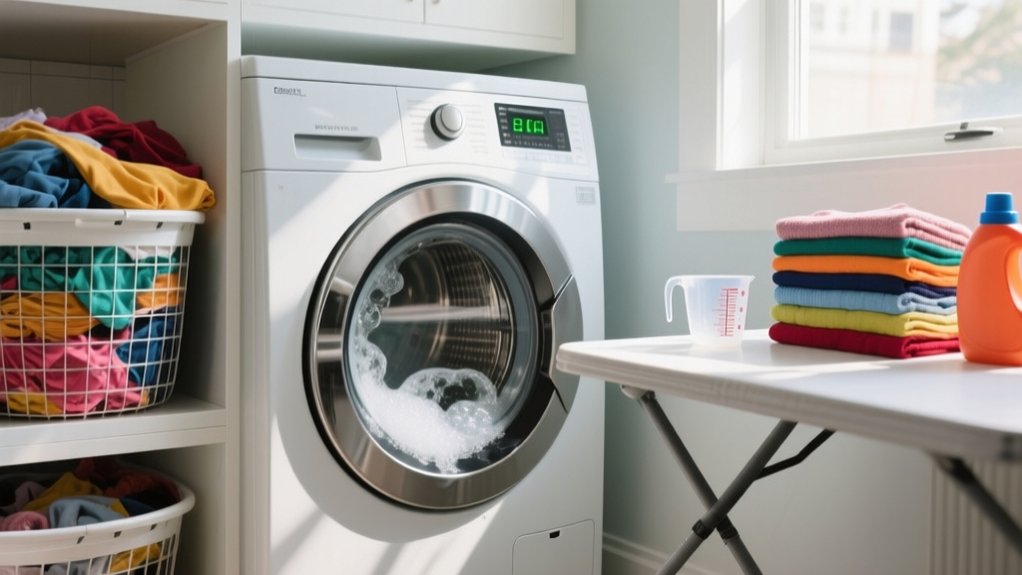
A typical laundry load takes 50 to 60 minutes for a normal cycle, but if your clothes are heavily soiled or bulky, it can stretch beyond two hours. Quick Wash options get you done in 15 to 40 minutes, while delicate cycles last up to 1 hour and 20 minutes.
Drying adds 20 to 50 minutes, depending on fabric weight. Factors like load size, washer type, and soil level influence times, so understanding these details helps optimize your laundry routine and timing.
Key Takeaways
- Typical wash cycles last between 50 to 60 minutes, with heavily soiled loads taking up to 2 hours and 15 minutes.
- Quick Wash cycles complete in 15 to 40 minutes, ideal for lightly soiled, smaller loads.
- Drying time varies from 20 to 50 minutes depending on fabric weight and load size.
- Load size, soil level, and washer type significantly influence the total laundry duration.
- Pre-sorting, high-efficiency washers, and high spin speeds help reduce overall wash and dry time.
How Long Does a Typical Wash Cycle Take?
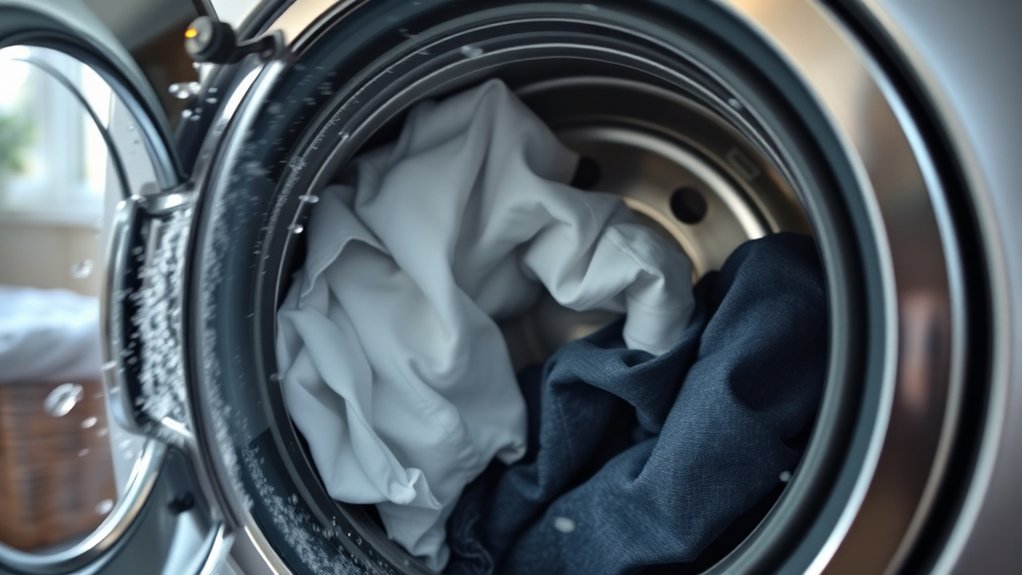
How long does a typical wash cycle take? For an average load, you can expect the wash cycle to last between 50 to 60 minutes. This duration efficiently balances cleaning performance and energy use for everyday laundry.
When dealing with heavily soiled clothes, the cycle extends, sometimes reaching up to 2 hours and 15 minutes to guarantee thorough cleaning.
Quick Wash options are available if you need a faster turnaround, taking as little as 15 to 40 minutes to complete, but these are best suited for lightly soiled items.
Delicate fabrics require gentler cycles lasting from 45 minutes to 1 hour and 20 minutes.
Understanding these time frames helps you plan your laundry efficiently without compromising cleaning quality.
Factors Affecting Wash Cycle Duration
Wash cycle duration doesn’t stay the same across all loads; several factors come into play that can either shorten or extend the time your laundry spends in the washer.
Key factors influencing wash times include the load size, soil level, and type of wash cycles you select.
Larger or bulkier loads, like comforters, naturally need longer wash times, often around 55 minutes, due to their weight and volume.
Heavily soiled items require extended cycles, sometimes up to 2 hours and 15 minutes on heavy-duty settings.
Your washer type, whether high-efficiency (HE) or standard, also affects cycle length.
How Long Do Quick and Delicate Cycles Usually Last?
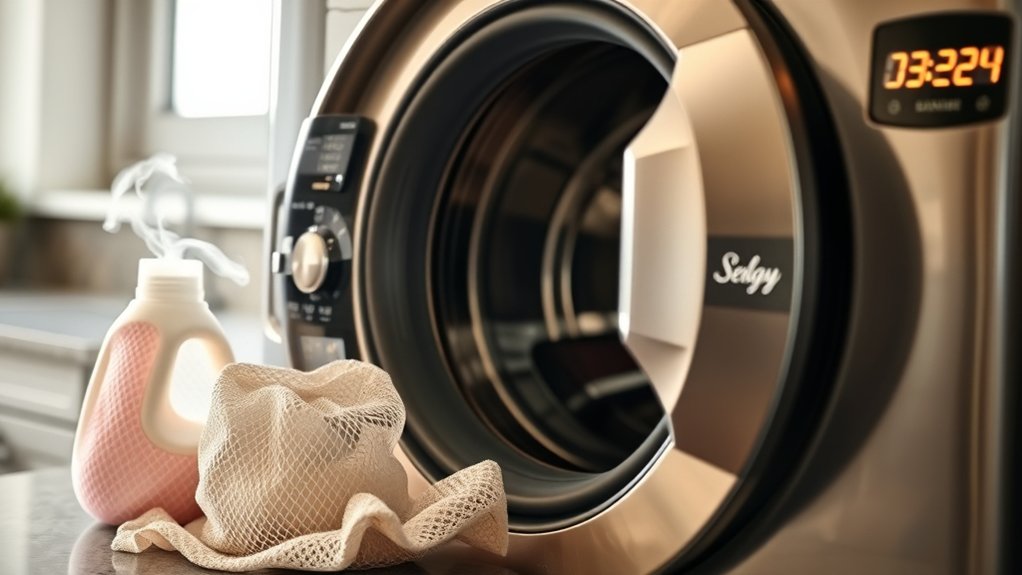
You’ll find that Quick Wash cycles usually take between 15 to 40 minutes. They’re perfect for lightly soiled clothes and smaller loads.
Delicate cycles, on the other hand, tend to run a bit longer—usually from 45 minutes up to 1 hour and 20 minutes. This helps protect sensitive fabrics with gentler agitation and lower temperatures.
Just keep in mind, things like load size and fabric type can influence the exact length of each cycle.
Typical Quick Cycle Duration
Quick and Delicate cycles vary greatly in duration, typically ranging from 15 to 40 minutes for Quick Washes and 45 minutes to 1 hour and 20 minutes for Delicate cycles. The Quick Wash cycle is designed for lightly soiled clothes, offering a shorter duration to save time without compromising cleanliness.
Its length depends on the load size and soil level but generally remains the fastest option.
| Cycle Type | Typical Duration | Best For |
|---|---|---|
| Quick Wash | 15–40 minutes | Lightly soiled garments |
| Delicate | 45–80 minutes | Sensitive fabrics |
| Standard | 60–90 minutes | Regular laundry loads |
Choosing the right cycle guarantees efficient cleaning while optimizing your laundry time.
Delicate Cycle Timing
How long should you expect to spend on delicate laundry cycles? Typically, a delicate cycle lasts between 45 minutes and 1 hour 20 minutes, designed specifically for gentle fabric care.
This duration guarantees your delicate items receive enough attention without harsh agitation or excessive spinning. When you select a delicate cycle for a load of laundry, the machine adjusts water temperature and spin speed to protect sensitive materials.
Compared to quick wash cycles, which run 15 to 40 minutes for lightly soiled clothes, delicate cycles prioritize fabric care over speed.
Understanding these timings helps you plan laundry loads more effectively, assuring each fabric type gets the proper treatment it needs.
Factors Affecting Cycle Length
Although cycle durations vary, understanding the factors that influence how long quick and delicate cycles last can help you manage your laundry time more effectively.
Quick Wash cycles typically take 15 to 40 minutes, ideal for lightly soiled clothes, while Delicate cycles range from 45 minutes to 1 hour and 20 minutes to protect sensitive fabrics.
Cycle length depends heavily on load size; larger loads require more time for thorough cleaning. Soil level also affects duration, as dirtier items need longer washing.
Different washer models vary in efficiency. HE washers often complete wash cycles faster than standard machines due to advanced technology.
Why Heavy Duty and Sanitize Cycles Take Longer
Because Heavy Duty and Sanitize cycles tackle more demanding cleaning tasks, they naturally require longer wash times to achieve ideal results.
Heavy duty cycles, lasting from 1 hour to over 2 hours, focus on heavily soiled fabrics by using intense agitation and extended rinse phases to remove embedded dirt thoroughly.
Heavy duty cycles use intense agitation and longer rinses to deeply clean heavily soiled fabrics.
Sanitize cycles, typically 1 hour 30 minutes to nearly 2 hours, prioritize germ elimination by maintaining higher water temperatures, which takes additional time to heat and sustain.
Both cycles address specific cleaning needs that standard washes can’t, explaining their longer wash durations.
When you choose these cycles, you’re ensuring your laundry receives the intensive treatment it requires, trading off time for superior cleanliness and hygiene.
Time Needed for Rinse, Spin, and Bulky Cycles
When you select rinse or spin cycles, you can expect shorter durations tailored to specific tasks like removing detergent residue or extracting excess water. The time needed varies by cycle and load size, impacting efficiency.
- A rinse cycle typically lasts about 25 minutes, effectively removing detergent and revitalizing clothes.
- The spin cycle varies: a rinse and spin cycle takes around 25 minutes, while a drain and spin cycle is shorter, about 10 minutes, focusing solely on water extraction.
- The bulky cycle, designed for large items like comforters, requires approximately 55 minutes to guarantee thorough cleaning.
- Load size influences these times, with larger loads often extending cycle duration to maintain effectiveness.
Understanding these cycles helps you optimize laundry time and care for varied fabrics.
Time to Wash and Dry a Full Load
You’ll notice that wash cycle times can really vary. Sometimes, you might’ve a quick 15-minute wash, while other times a normal cycle can take up to 60 minutes. It all depends on the fabric and how dirty your clothes are.
Drying times are a bit all over the place too. Lightweight items might only need about 20 minutes, but bulky things like comforters can take over an hour.
Knowing these time ranges, along with factors like how big your load is and what kind of fabric you’re washing, can help you plan your laundry better and make the process smoother.
Wash Cycle Durations
A full load of laundry can take anywhere from about 1 hour and 20 minutes to over 2 hours to wash and dry, depending on the selected cycle. Understanding wash cycle durations helps you plan your laundry time efficiently.
The average wash cycle time varies greatly:
- Quick Wash cycles last 15 to 40 minutes, perfect for lightly soiled clothes.
- Normal cycles take about 50 to 60 minutes, balancing thoroughness and speed.
- Heavy Duty cycles can extend from 1 hour to 2 hours and 15 minutes for heavily soiled loads.
- Drying typically adds 30 to 70 minutes, influenced by load weight and fabric type.
Drying Time Estimates
Understanding wash cycle durations gives you a solid foundation for estimating the full time your laundry will take, but drying times play an equally significant role.
The drying time varies based on fabric weight: lightweight clothes dry in 20-30 minutes, medium-weight items take 30-40 minutes, heavy garments require 40-50 minutes, and bulky items like comforters need 50-70 minutes.
Since the average American does several loads of laundry every week, knowing these estimates helps you plan efficiently.
Combining wash and dry cycles, a full load usually demands around 1 hour and 20 minutes total.
High spin speeds in washers reduce residual moisture, cutting drying time per load.
Using larger machines can further enhance efficiency, letting you complete more loads of laundry every session while maintaining ideal drying performance.
Factors Influencing Time
Although wash and dry times have general averages, several factors directly influence how long your laundry will actually take. Understanding these factors helps you manage your time efficiently.
- Cycle Type: Normal wash cycles last 50 to 60 minutes, but Quick Wash cuts time to 15 to 40 minutes.
- Soil Level: Heavily soiled laundry demands longer cycles, sometimes over 2 hours.
- Fabric Weight: Lightweight clothes dry in 20 to 30 minutes; heavy fabrics need 40 to 50 minutes or more.
- Washer Efficiency: High-efficiency (HE) washers use less water and can optimize cycle duration.
How Washer Type and Load Size Affect Cycle Duration
Because washer type and load size directly influence how long your laundry cycle takes, it’s important to contemplate both when planning your wash.
High-efficiency (HE) washers, especially front-loading models, generally offer shorter cycle durations than standard top-loaders due to their advanced technology and efficient water use.
Your load size also plays a vital role. Larger or bulky loads extend cycle duration since the washer needs more time to clean thoroughly.
For example, a normal cycle lasts about 50 to 60 minutes, but heavy-duty cycles for heavily soiled items can stretch beyond two hours.
Quick washes range from 15 to 40 minutes, varying with washer type and load size.
How to Speed Up Wash Cycle Times
If you want to cut down on your laundry time, taking a few strategic steps can make a significant difference. To speed up wash cycle times on laundry day, consider these efficient tips:
- Pre-sort your laundry at home to save 5-10 minutes during loading.
- Pre-treat stains to avoid extended cycles for heavily soiled items.
- Choose high-efficiency washers, which typically have shorter cycle durations and use less water.
- Start all washers simultaneously, synchronizing finish times for a seamless shift to drying.
Also, opt for larger machines at the laundromat, as they handle bigger loads faster.
Frequently Asked Questions
What Is the Average Energy Consumption per Laundry Load?
The average energy consumption per laundry load is about 0.25 kilowatt-hours (kWh), which equals roughly 500 watts for a 30-minute cycle.
If you use a high-efficiency washer, you’ll save around 25% energy compared to standard models.
Heating the water considerably impacts energy use, so choosing cold water cycles can cut costs.
How Much Water Does a Typical Laundry Load Use?
Coincidentally, the water your laundry load uses often depends on the washer’s type and efficiency.
A typical load consumes about 14 gallons if you’re using a high-efficiency (HE) washer, but it can jump to around 20 gallons with a standard one.
Front-loading HE washers tend to save even more water due to their design.
Keep in mind, the load size and wash cycle settings also affect water usage considerably.
Are There Laundry Detergents That Reduce Washing Time?
Yes, you’ll find laundry detergents designed to reduce washing time. Quick wash detergents contain enzymes and surfactants that clean effectively in shorter cycles, sometimes as fast as 15 to 30 minutes.
Using high-efficiency (HE) detergents lets you pick faster cycles without losing cleaning power.
Moreover, some detergents work well in cold water, allowing you to skip longer warm washes.
Just use the right amount to maximize efficiency and cut down rinse cycles.
How Often Should Washing Machines Be Cleaned for Efficiency?
You’ll want to give your washing machine a little spa day every 1 to 3 months to keep it running smoothly and smelling fresh.
Regularly cleaning it prevents soap scum, mildew, and bacteria buildup that can hamper performance.
Don’t forget to wipe down rubber seals and dispensers monthly, and run a hot water cycle with vinegar or a cleaner.
This routine preserves efficiency, extends your machine’s lifespan, and guarantees your laundry comes out spotless every time.
Can Adding Fabric Softener Affect Drying Time?
Yes, adding fabric softener can affect drying time. It leaves a thin coating on your clothes, trapping moisture and slowing evaporation. This can extend drying by 5 to 10 minutes, especially with liquid softeners.
Dryer sheets tend to have less impact.
To keep drying efficient, try using dryer balls. They improve airflow and can cut drying time by up to 25%.
Conclusion
When you start your laundry, imagine the drum spinning like a tiny storm, each cycle carefully balancing time and care. Quick cycles whisk through lightly soiled clothes, while heavy-duty ones take their time, like a slow dance ensuring deep clean.
By understanding these rhythms and adjusting load size or washer type, you’ll master efficiency without sacrificing cleanliness. So next time, you’ll know exactly how long your fabrics need to emerge fresh and ready.