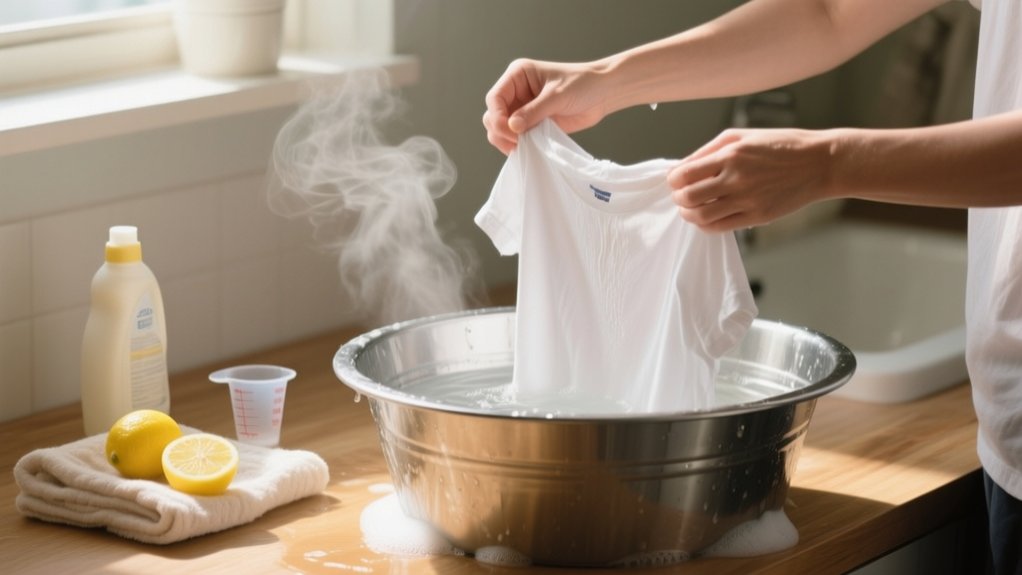
How To Get Laundry Detergent Smell Out Of Clothes – Guide
To remove detergent smells from your clothes, start by identifying fabric types since synthetics trap odors more stubbornly. Use laundry stripping by soaking in washing soda, Borax, and detergent to strip residues thoroughly.
Alternatively, neutralize odors with vinegar rinses or a baking soda soak. Make sure you avoid common mistakes like overusing detergent or washing at low temperatures. Proper drying and storage also prevent musty scents.
These steps provide a solid foundation, and you can explore more advanced techniques and preventative strategies ahead.
Key Takeaways
- Use laundry stripping with washing soda, Borax, and powdered detergent to remove stubborn detergent residues and odors.
- Soak clothes in a mixture of white vinegar and water to neutralize and break down strong detergent smells.
- Add 1/4 cup of white vinegar during the rinse cycle to reset fabric pH and eliminate lingering odors.
- Spray or soak clothes with equal parts vodka and water to deodorize and break down fragrance compounds safely.
- Avoid overusing detergent and wash clothes thoroughly on warmer cycles to prevent residue buildup and persistent smells.
Why Your Clothes Hold Onto Detergent Smells

Although you might expect detergent to leave your clothes smelling fresh, synthetic fragrances and chemicals can actually cling to fabric fibers, especially in synthetic materials, causing lingering odors.
Detergent smell often builds up when washing occurs at cooler temperatures, allowing residues to harden and embed deeper into fabrics.
Since about 60% of clothing contains synthetic fibers or blends, these materials tend to retain synthetic fragrance compounds more stubbornly than natural fibers.
Infrequent washing and the use of lower-quality detergents make this accumulation worse, which makes odor removal more difficult.
Trapped moisture and closed storage environments promote musty smells, and that just amplifies the perception of residual detergent smell.
Understanding these factors is vital to effectively addressing why your clothes hold onto detergent odors.
How Fabric Types Affect Odor Retention
Understanding why detergent odors linger on your clothes requires examining how different fabric types interact with these smells.
Synthetic fabrics, which account for about 60% of clothing, retain odors more effectively than natural fibers due to their dense structure and moisture-wicking properties.
Synthetic fabrics hold odors more stubbornly than natural fibers because of their dense weave and moisture control.
Fabrics like polyester and nylon trap sweat and bacteria, making persistent odors harder to remove with standard detergent washes.
In contrast, natural fibers such as cotton and linen promote better airflow and moisture evaporation, reducing odor retention.
Moreover, chemical treatments on synthetic fabrics can intensify detergent smells by trapping residues within coatings.
Wool, while able to absorb odors, tends to release them more efficiently during cleaning compared to synthetic blends.
Recognizing these fabric-specific behaviors helps you tailor your laundry routine to effectively manage detergent odors.
When to Use Laundry Stripping
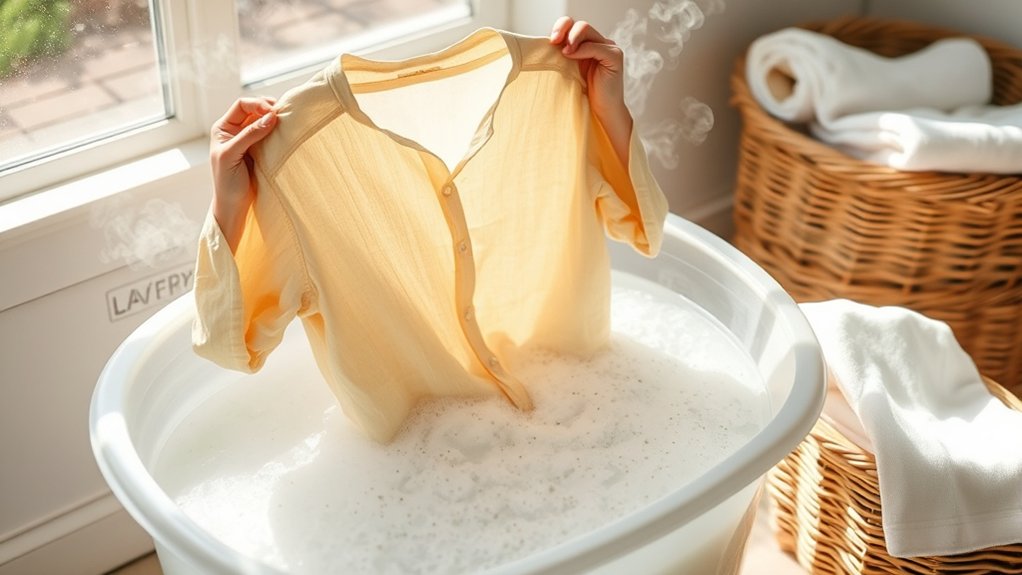
When conventional washing fails to eliminate stubborn detergent smells, you should consider laundry stripping as a targeted solution.
Laundry stripping effectively removes sweat, oils, and detergent residues trapped in synthetic or heavily soiled fabrics that conventional cycles can’t fully address.
This method involves soaking clothes in a combination of washing soda, Borax, and powdered detergent to break down buildup and neutralize odors.
If your items retain strong detergent smells after multiple washes, repeated laundry stripping sessions may be necessary for thorough odor removal.
For those sensitive to chemicals, using safer alternatives like EnviroKlenz Powdered Detergent during stripping can achieve effective results without irritation.
Employ laundry stripping when you need a precise, intensive approach to remove sweat and persistent scents conventional washing can’t resolve.
How to Laundry Strip Clothes at Home
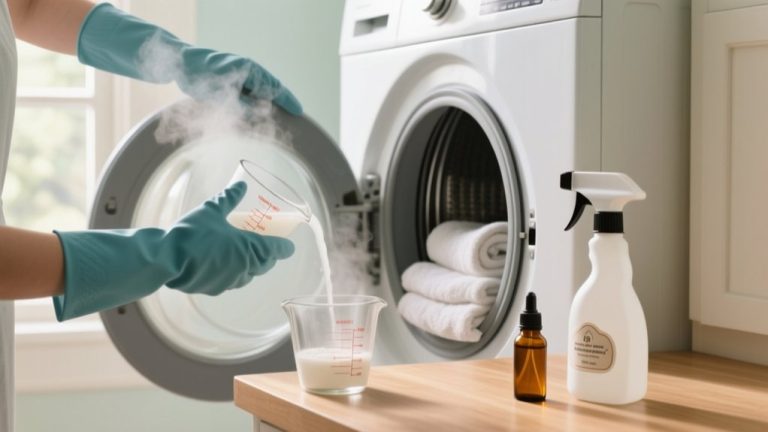
To laundry strip clothes at home effectively, start by preparing a soaking solution with four gallons of hot water, 1/4 cup washing soda, 1/4 cup Borax, and 1/2 cup powdered detergent. Submerge your garments fully in this mixture, ensuring even saturation.
Laundry stripping removes accumulated residues and helps eliminate strong scent build-up that regular washing misses. For those sensitive to harsh chemicals, consider using a fragrance-free powdered detergent like EnviroKlenz to minimize exposure during the process.
Let your clothes soak for four hours, agitating occasionally to enhance residue release. Depending on the intensity of the strong scent, multiple rounds may be necessary.
This method restores fabric freshness by thoroughly extracting embedded detergent and odor particles, improving overall garment cleanliness and comfort.
Neutralizing Odors With Vinegar and Baking Soda
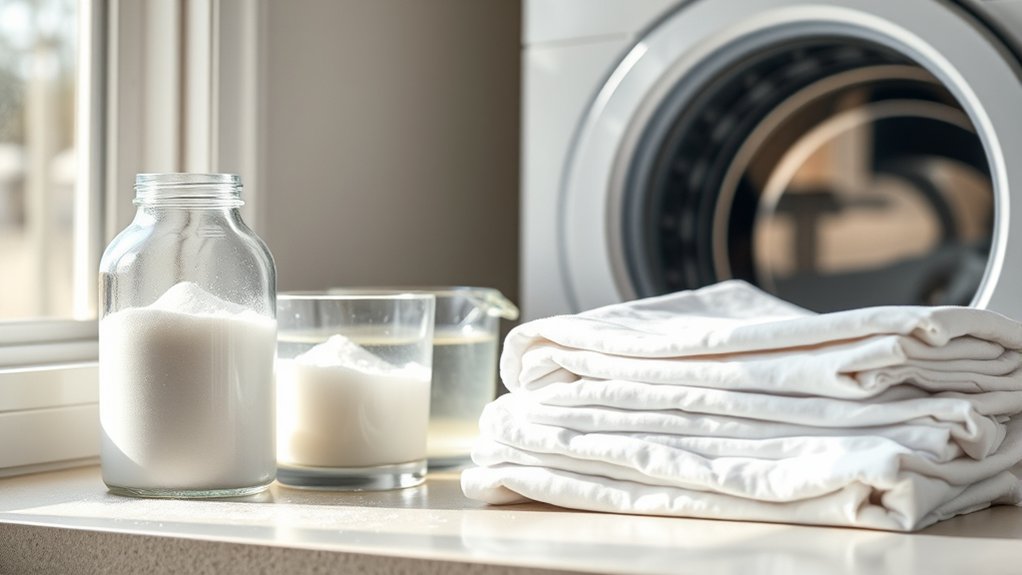
After stripping your clothes to remove detergent buildup, neutralizing lingering odors becomes the next step to restore fabric freshness.
White vinegar serves as a natural deodorizer, effectively neutralizing strong detergent smells when added during the rinse cycle or used in soaking solutions.
To enhance this effect, incorporate baking soda, which absorbs odors while vinegar breaks down residue.
For stubborn scents, soak clothes in a mixture of vinegar and water for several hours before washing.
During the rinse cycle, adding 1/4 cup of vinegar helps reset fabric pH and eliminates any remaining detergent odor.
This combination offers a chemical-free, precise approach to deodorizing, ensuring your clothes feel fresh and clean without synthetic fragrances or harsh chemicals.
Using Vodka to Remove Detergent Smells
You can use vodka as a great deodorizer because its high alcohol content breaks down the fragrance compounds in fabrics.
Just dilute the vodka with some water, and then either spray it on your clothes or soak them before washing.
This helps get rid of those stubborn detergent smells. Plus, it’s a safe and chemical-free method.
When you combine it with your regular washing routine, it really boosts how well odors are removed.
Vodka As Deodorizer
Although many people overlook it, vodka serves as an effective deodorizer for removing persistent laundry detergent smells due to its alcohol content. The alcohol in vodka breaks down the chemical compounds responsible for lingering fragrances embedded in fabric fibers.
Vodka acts as a non-toxic deodorizer, avoiding synthetic fragrances or harmful chemicals common in commercial products. When you use vodka, you target and neutralize unwanted detergent odors rather than masking them.
Regular use of vodka can prevent buildup of these odors over time, maintaining fresher-smelling clothes. Its deodorizing properties make it a practical addition to your laundry routine, especially if you want to reduce artificial scent layers.
Application Methods
When tackling detergent odors with vodka, start by mixing equal parts vodka and water in a spray bottle to guarantee even application.
Lightly mist the affected clothing, ensuring the solution saturates areas where the laundry detergent smell lingers.
Let the fabric sit for about 30 minutes to allow the vodka’s alcohol content to break down odor-causing compounds effectively.
Afterward, run the clothes through a regular wash cycle using a mild detergent to remove any residual smells and the vodka solution.
This method won’t bleach or alter fabric colors, making it safe for various materials.
For persistent odors, you can complement this process by incorporating white vinegar during washing, enhancing overall deodorization without compromising fabric integrity.
Effectiveness And Safety
Since vodka’s alcohol content acts as a solvent, it effectively breaks down and lifts lingering detergent odors from fabrics.
You’ll find its effectiveness increases when combined with white vinegar, as the acidic nature of vinegar enhances odor neutralization during soaking.
Using a simple spray of equal parts vodka and water allows you to target persistent smells before laundering.
Vodka’s safety profile is notable; it doesn’t bleach or discolor fabrics, making it suitable for most materials without risk of damage.
Incorporating vodka regularly into your laundry routine helps prevent detergent buildup, promoting fresher clothes over time.
The Role of Sunlight and Fresh Air in Deodorizing Clothes
Natural sunlight and fresh air play an essential role in deodorizing clothes by breaking down odor-causing compounds and helping remove embedded scents.
Sunlight’s ultraviolet (UV) rays degrade volatile organic compounds (VOCs) that cause unpleasant odors. They also provide antibacterial effects that sanitize fabrics.
When you hang clothes outside for 12 to 48 hours, fresh air promotes outgassing, which effectively flushes out trapped smells.
To prevent sun bleaching, turn garments inside out before exposing them to sunlight. Combining sunlight with a gentle breeze enhances deodorization and speeds up odor removal.
This method is especially effective for freshening thrifted or secondhand clothing.
Choosing Detergents for Odor Removal and Sensitive Skin
After using sunlight and fresh air to reduce odors, your choice of laundry detergent plays a big role in preventing unwanted smells and protecting sensitive skin.
Using sunlight and fresh air helps, but choosing the right detergent is key to fresh clothes and healthy skin.
Opt for detergents that are fragrance-free to minimize allergic reactions caused by synthetic scents. Prioritize products with the EPA Safer Choice seal to guarantee fewer harmful chemicals.
When selecting detergents, consider these key factors:
- Choose non-toxic, biodegradable detergents like Branch Basics or Ecos, which clean effectively without irritating residues.
- Select detergents labeled for sensitive skin, avoiding harsh chemicals, dyes, and fragrances.
- Always scrutinize ingredient labels for allergens such as phosphates, sulfates, and optical brighteners that worsen odors and skin reactions.
This strategic approach guarantees your clothes stay fresh while safeguarding your skin from potential irritants.
Avoiding Laundry Mistakes That Trap Detergent Smells
Even if you choose the right detergent, certain laundry mistakes can trap its smell in your clothes. Washing on cooler cycles may cause detergent residues to harden, embedding detergent smells in fabric. Opt for warmer water when fabric care allows to boost detergent effectiveness.
Avoid overloading your machine; a packed load prevents thorough rinsing, leaving residues behind. Using too much detergent also leads to buildup that traps odors.
Regularly clean your washing machine to remove accumulated detergent and fabric softener residues, which contribute to unwanted smells.
Incorporate an extra rinse cycle, or add white vinegar during rinsing, to neutralize detergent smells and soften fabrics. These steps help guarantee your laundry comes out fresh, free of trapped detergent odors.
How to Prevent Detergent Smells From Returning After Washing
To keep detergent smells from returning, you need to use the right amount of detergent for each load. Excess detergent causes residue buildup that traps odors. To effectively prevent detergent smells, follow these steps:
- Clean your washing machine regularly by running an empty cycle with vinegar or a specialized cleaner. This helps remove odor-causing residues.
- Fully dry clothes after washing to avoid damp conditions. Dampness promotes musty odors and can reactivate detergent smells.
- Store clothes in a cool, dry environment to minimize moisture exposure. Moisture can trigger lingering scents.
Additionally, avoid fragranced products like fabric softeners containing synthetic fragrances. These may worsen unwanted odors.
Instead, opt for fragrance-free detergents to maintain odor neutrality and prevent detergent smells from returning after washing.
Frequently Asked Questions
Can Fabric Softeners Worsen Detergent Smells on Clothes?
Yes, fabric softeners can worsen detergent smells on clothes. When you use them, they leave a waxy residue on fibers that traps odors instead of removing them.
This residue can also inhibit detergent effectiveness, causing incomplete odor elimination.
Furthermore, synthetic fragrances in softeners may chemically interact with detergents, intensifying unpleasant scents.
Over time, these residues build up, making your clothes harder to clean and increasing persistent detergent smells.
Is It Safe to Use Ammonia on All Fabric Types?
You shouldn’t use ammonia on all fabric types; you shouldn’t use it on wool, silk, or dry-clean-only items.
You must dilute it properly, test it first, and avoid mixing it with bleach.
You need to apply it in a well-ventilated space and rinse thoroughly afterward.
Ammonia can damage delicate fabrics and produce harmful fumes if handled incorrectly, so always prioritize safety and fabric care when deciding to use it.
How Often Should I Deep Clean My Washing Machine?
You should deep clean your washing machine every 1 to 3 months to prevent detergent and grime buildup.
If you have a high-efficiency model, consider cleaning more frequently because it uses less water.
Focus on the detergent drawer and seals where mold and odors can build up.
Running a hot water cycle with vinegar or a specialized cleaner helps disinfect the drum.
Always follow your machine’s manual for model-specific instructions to keep it running at its best.
Will Detergent Smells Affect Baby Clothes Differently?
Absolutely, detergent smells affect baby clothes differently. Imagine a Victorian nursery where delicate skin demanded utmost care. That’s how sensitive infants’ skin and lungs are today.
You’ll want to avoid synthetic fragrances and harsh chemicals since they can trigger irritation or eczema.
Always choose hypoallergenic, fragrance-free detergents and wash baby clothes separately to prevent cross-contamination. This approach guarantees your baby’s garments stay gentle, safe, and free from potentially harmful detergent residues.
Can Hard Water Contribute to Detergent Odor Retention?
Yes, hard water can contribute to detergent odor retention in your clothes. The minerals in hard water bind with detergent, creating soap scum that clings to fabric fibers.
This buildup traps odors and reduces detergent effectiveness, making it harder to rinse residues completely.
To combat this, you should add a water softener or washing soda to your wash cycle.
Also, maintain your machine regularly to prevent mineral deposits that cause lingering smells.
Conclusion
By balancing your basics like fabric types, baking soda, and bright sunlight, you’ll banish bothersome detergent odors efficiently. Avoid accumulation and always apply appropriate amounts of detergent to prevent persistent, pungent smells.
Regularly refresh your routine with vinegar and ventilation. Remember, removing residues requires routine rinsing and responsible rinses. With these simple steps, you’ll secure a fresh, flawless finish, freeing your fabrics from foul fragrances for good.