How To Clean Up Spilled Laundry Detergent – Easy Steps
To clean up spilled laundry detergent quickly, first blot the area with absorbent towels to soak up the liquid. Use a squeegee or dustpan to gather pooled detergent, then rinse the spot with warm water to remove soap residue.
For large spills, sprinkle kitty litter before sweeping it up. Blot carpets gently and repeat rinsing until no suds remain. Using these simple tools and steps can keep your space clean and safe.
If you want to explore more detailed tips, there’s plenty more to discover.
Key Takeaways
- Blot spilled detergent with clean towels to absorb excess liquid quickly.
- Use a squeegee or dustpan to gather pooled detergent before rinsing.
- Rinse the affected area with warm water to dissolve soap residue and prevent slipperiness.
- For carpets, blot gently and spray warm water repeatedly until suds disappear.
- Sprinkle kitty litter on large spills to absorb detergent, then sweep or vacuum it up.
How To Quickly Soak Up A Laundry Detergent Spill
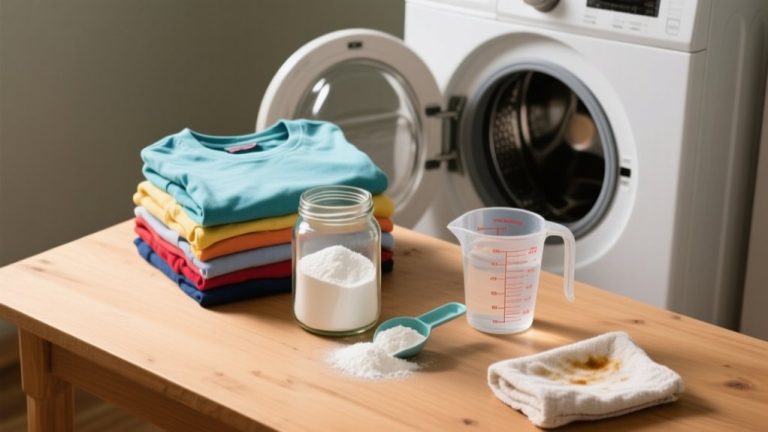
When you spill laundry detergent, start by immediately blotting the area with clean, absorbent towels to soak up as much liquid as possible without rubbing it deeper into the fabric.
If the spill is large, use a squeegee or dustpan to gather the pooled detergent before it spreads further.
Next, divide any remaining detergent among fresh towels to manage the mess effectively, then wash these towels with your next laundry load.
After soaking up the detergent, rinse the area with warm water using a spray bottle or damp cloth to dissolve soap residue.
Continue blotting until no suds remain.
This quick method helps you clean up spilled laundry detergent efficiently and prevents stains or damage to the surface or fabric.
The Best Tools To Clean Up Liquid Detergent Spills
After soaking up most of the spilled detergent with towels, gathering the remaining liquid efficiently is key to preventing further mess. Use a squeegee first to push excess detergent into one area. Then, mop up with towels for strong absorption. Finally, a dustpan helps scoop up any leftover detergent, ensuring a thorough clean up detergent process.
| Tool | Purpose | Tip |
|---|---|---|
| Squeegee | Collect excess liquid | Use firm, even strokes |
| Towels | Absorb detergent | Use washable, thick cloths |
| Dustpan | Scoop residual detergent | Sweep detergent gently |
For stubborn spots, apply liquid fabric softener, then wipe clean. A water-vinegar mix removes residue, leaving floors spotless.
Step-by-Step Cleanup For Detergent On Hard Floors And Carpets
Start by quickly wiping up spilled detergent on hard floors with clean rags to prevent slippery residue.
After removing as much liquid as possible, mop the area with warm water until no suds remain.
If the spill is large, sprinkle kitty litter first to absorb excess detergent and liquid, then sweep it up.
For detergent on your carpet, blot the spill gently with a clean cloth to soak up excess detergent without rubbing it deeper.
Next, spray warm water on the area and continue blotting until the soap suds disappear.
Once both floor and carpet are cleaned, dry the surfaces thoroughly using a towel or fan to avoid slips and residue buildup.
Finally, check nearby spots for any leftover detergent and properly dispose of used cleaning materials to keep your space safe and clean.
DIY Solutions To Remove Detergent Stains From Carpet And Fabrics
Two simple DIY solutions can effectively remove detergent stains from carpet and fabrics.
First, blot excess clean laundry detergent immediately with a clean, absorbent cloth to prevent deeper soaking.
Blot excess laundry detergent immediately with a clean cloth to stop it from soaking deeper.
Then, mix equal parts white vinegar and water in a spray bottle. Lightly apply this solution to the stain and blot with a cloth.
For stubborn stains, create a baking soda paste using a small amount of water and gently scrub the area to lift detergent residue.
Next, spray warm water to rinse until no soap suds remain, blotting continuously.
If stains persist, combine hydrogen peroxide with a small amount of dish soap for a stronger solution. Apply carefully and blot.
These practical steps help you restore your carpet and fabrics efficiently without harsh chemicals.
Using Commercial Cleaners For Detergent Spills
When tackling detergent spills, choosing the right commercial cleaner is essential for effective removal. Start by selecting commercial carpet cleaners labeled for detergent or soap stain removal to guarantee they target detergent residues effectively.
Apply a spot remover directly to the affected area, following the product’s instructions carefully to avoid damaging carpet fibers.
For larger spills, dilute carpet shampoos as directed to prevent excess suds, which can worsen the problem.
Foam carpet cleaners work well at breaking down detergent buildup, so consider using them for thorough cleaning.
Before applying any cleaner extensively, always test a small, hidden area of the carpet to check for discoloration or damage.
These steps will help you use commercial cleaners safely and efficiently to restore your carpet.
How To Clean Detergent From Clothes And Fabrics
Start by blotting any excess detergent off the fabric—this helps stop it from soaking in deeper.
Then, rinse the area with cold water.
If you notice any stubborn stains, try treating them with natural solutions like vinegar or baking soda.
After that, just wash the item as you normally would to get rid of all the detergent residue completely.
Removing Detergent Residue
Although detergent residue can be stubborn, you can remove it effectively by acting quickly. Start by rinsing the affected area with cold water to dilute and flush out the soap.
If residue remains, mix equal parts white vinegar and water, apply it to the fabric, and let it sit for 5-10 minutes before rinsing again.
For tougher buildup, create a baking soda paste with a little water and gently scrub the area to lift the residue.
Finally, wash the entire item in the machine, adding a cup of white vinegar to the rinse cycle to eliminate leftover detergent.
Always check the fabric’s care label before applying any cleaning solution to avoid damage. These steps make removing detergent residue straightforward and effective.
Treating Stains Immediately
If you catch detergent spills on your clothes right away, you can prevent stains from setting in and damaging the fabric. Start by blotting excess detergent with a clean cloth, then rinse the area with cold water to dissolve detergent without suds.
Next, gently dab a vinegar-water solution to neutralize residue. For stubborn stains, apply a baking soda paste to scrub gently before rinsing. Always test solutions on a hidden fabric spot first.
| Step | Action | Tip |
|---|---|---|
| 1. Blot Excess | Use clean, absorbent cloth | Prevents stain setting |
| 2. Rinse | Apply cold water directly | Avoids suds formation |
| 3. Neutralize | Dab vinegar-water solution | Removes leftover detergent |
| 4. Scrub Stubborn | Use baking soda paste | Gentle on fabric, effective clean |
Treating stains immediately is key to saving your fabrics.
Washing Tips For Fabrics
When you spill laundry detergent on clothes or fabrics, quickly blot the area with a clean, absorbent cloth. This lifts excess liquid without pushing it deeper into the fibers.
To clean detergent from clothes effectively, follow these steps:
- Rinse the stained area under cold running water to dissolve detergent and prevent setting.
- For stubborn detergent spills, apply a 1:1 mix of white vinegar and water, then blot gently until the residue lifts.
- If your detergent contains brighteners or dyes, use a color-safe stain remover or a baking soda paste to scrub gently.
- Finally, wash the fabric on the recommended cycle per care label instructions to remove all detergent traces.
Following these tips helps you tackle laundry detergent spills quickly and keeps fabrics fresh.
Tips For Preventing Laundry Detergent Spills In Your Laundry Area
To keep your laundry area clean and avoid detergent spills, store your detergent in a secure, designated spot away from busy walkways. Use clear, labeled containers to prevent confusion and opt for spill-proof bottles with secure caps.
You can also switch to detergent sheets or pods, which reduce spill risks. Regularly inspect the storage area for leaks and clean up immediately to prevent bigger messes. These simple steps help you prevent laundry detergent spills effectively.
| Tip | Description | Benefit |
|---|---|---|
| Secure Storage | Keep detergent in a fixed location | Reduces accidental knocks |
| Clear Labeling | Use labeled containers | Avoids misuse |
| Spill-proof Containers | Use bottles with secure caps | Prevents leaks |
| Use Sheets or Pods | Switch to solid detergent forms | Minimizes spills |
| Regular Checks | Inspect for leaks regularly | Early spill detection |
Safe Disposal And Environmental Tips For Detergent Cleanup
When you have extra detergent to get rid of, make sure to seal it in a container first.
Then, take it to a hazardous waste site so it doesn’t harm the environment.
If you happen to spill some detergent, grab something absorbent like kitty litter to soak it up.
This helps keep the detergent from getting into drains or the soil.
And don’t forget—always check your local disposal rules and wear gloves to protect yourself while cleaning up.
Proper Detergent Disposal
Three key steps will help you dispose of spilled laundry detergent safely and responsibly. Proper detergent disposal protects your home and the environment from harmful effects.
Follow these practical tips:
- Check local regulations to confirm you comply with specific disposal rules for detergent and its containers.
- Seal detergent bottles tightly before placing them in recycling bins to prevent leaks and contamination.
- Never pour excess detergent down the drain because it harms aquatic life and pollutes water systems.
- Absorb small detergent spills with towels or cat litter, then dispose of these materials in the trash to avoid liquid waste hazards.
Eco-Friendly Cleanup Practices
Although spilled laundry detergent can be tricky to clean, you can minimize environmental impact by using eco-friendly cleaning agents like vinegar or baking soda. Start by carefully applying these agents to absorb and neutralize the detergent spill.
Next, wipe the area with reusable towels or rags, making sure to handle them according to your local waste disposal rules to avoid contamination. Afterward, rinse the surface thoroughly to remove any detergent residue, preventing dirt buildup and protecting the environment.
Whenever possible, choose biodegradable cleaning products to further reduce your ecological footprint.
Finally, store leftover detergent in a sealed container to prevent future spills. Following these eco-friendly cleanup practices helps keep your home safe while safeguarding ecosystems and aquatic life.
Why Switching To Detergent Sheets Can Prevent Spills
Because detergent sheets come pre-measured and solid, you won’t have to worry about spills or messes like you do with liquid detergents.
Detergent sheets are pre-measured and solid, eliminating spills and messes common with liquids.
Switching to detergent sheets offers clear benefits that make laundry easier and cleaner:
- You eliminate spills entirely, so no more slippery floors or stained surfaces.
- You save space since detergent sheets are lightweight and compact, perfect for small laundry areas or travel.
- You reduce environmental impact by choosing eco-friendly ingredients and zero-plastic packaging.
- You avoid overusing detergent because each sheet is precisely portioned for one load, which saves money and protects sensitive skin.
How To Use Laundry Detergent Sheets For Spill-Free Laundry
You’ll love how laundry detergent sheets simplify your routine by eliminating spills and overuse thanks to their pre-measured design.
Just toss one sheet into the washing drum. If you have a smaller load, simply break the sheet in half.
And for extra dirty clothes, feel free to use two sheets—easy, right?
Plus, these eco-friendly sheets fit all machines and help reduce plastic waste.
That means your laundry routine becomes greener and a whole lot easier.
Benefits Of Detergent Sheets
When you want a hassle-free laundry routine, detergent sheets offer a simple solution that eliminates spills and messes.
These pre-measured sheets make laundry straightforward and neat. Here are four key benefits you’ll appreciate:
- Mess-Free Use: No spills or sticky residue since you don’t measure or pour liquid detergent.
- Eco-Friendly: Made from gentle ingredients and packaged without plastic, they reduce environmental impact.
- Space-Saving: Their compact size frees up room in your laundry area and suitcase.
- Skin-Safe: Free from harsh chemicals like sulfates and parabens, they’re perfect for sensitive skin.
Easy Usage Instructions
Although laundry detergent sheets simplify your routine, knowing how to use them correctly guarantees a spill-free experience. To start, take one pre-measured detergent sheet and place it directly into the drum of your washing machine before adding clothes.
For smaller loads, simply break the sheet in half to avoid overuse. These sheets dissolve completely in water, ensuring even detergent distribution without excess suds.
You won’t need measuring cups, so you can skip the mess and guesswork tied to liquid detergent. By following these easy steps, you’ll avoid spills and keep your laundry area clean.
Using detergent sheets not only saves time but also reduces the chance of over-pouring, making your laundry process efficient and tidy every time.
Eco-Friendly Laundry Alternative
How can you make your laundry routine more eco-friendly and spill-free? Switch to laundry detergent sheets, a simple, effective alternative. Here’s how to use them:
- Add one pre-measured sheet to your laundry drum per load. Break it in half for small loads or use two for heavily soiled clothes.
- Enjoy spill-free handling since there’s no liquid to leak or drip.
- Choose sheets made from biodegradable, safe ingredients. They’re perfect for sensitive skin and free from harmful chemicals.
- Benefit from zero-plastic packaging, reducing environmental waste and promoting sustainability.
This eco-friendly laundry detergent option not only protects your clothes but also the planet.
You’ll save time cleaning spills and contribute to greener living, making every wash easier and cleaner.
Frequently Asked Questions
Can Spilled Detergent Damage Hardwood Floors Over Time?
Yes, spilled detergent can damage hardwood floors over time. You should clean it up immediately to prevent slippery residue and potential discoloration.
Detergent chemicals can weaken the finish, attract dirt, and impair moisture resistance. This can cause swelling or warping.
To protect your floors, wipe spills quickly and use a damp cloth to remove residue.
Also, perform regular deep cleaning. Staying proactive helps maintain your hardwood’s appearance and durability.
How Long Does Detergent Residue Last if Not Cleaned Immediately?
If you don’t clean detergent residue immediately, it can stick around forever, like that one song you can’t get out of your head.
In reality, detergent residue can last days, weeks, or even months if left untreated.
To avoid this, wipe spills right away with a damp cloth, rinse the area thoroughly, and dry it well.
The sooner you act, the easier it’s to prevent stubborn stains and damage.
Are There Any Health Risks From Inhaling Powdered Detergent Dust?
Yes, inhaling powdered detergent dust can irritate your respiratory system, causing coughing, sneezing, or shortness of breath.
If you have lung problems, be extra careful.
To protect yourself, clean spills promptly in a well-ventilated area and avoid creating dust clouds.
If you inhale a lot and feel unwell, get fresh air right away and see a doctor if symptoms stick around.
Always handle detergent with care to stay safe.
Can Pets Be Harmed by Walking on Detergent Spills?
Absolutely, pets can be hurt by walking on detergent spills. It’s like walking through a minefield for their paws. You should act fast: first, keep your pets away from the spill.
Next, wipe up the detergent with a damp cloth, then mop the area thoroughly with water.
Finally, dry the floor completely so your furry friends don’t get irritated or ingest harmful chemicals. Quick cleanup protects their health and keeps your home safe.
What Is the Best Way to Store Detergent to Avoid Spills?
To avoid detergent spills, store liquid detergent upright on a sturdy shelf or inside a cabinet where it won’t get knocked over.
Use a sealable container for powdered detergent to keep it dry and secure.
Keep all laundry products away from high-traffic areas and regularly check bottles for cracks or leaks.
Consider using dispensers with secure lids to minimize spills while pouring and maintain a tidy storage space for safety.
Conclusion
Cleaning up detergent spills quickly keeps your space safe and stain-free. For example, imagine you accidentally tipped over a bottle on your hardwood floor. Using absorbent cloths and a vinegar-water solution can save your floor from sticky residue and damage.
By following these steps and considering detergent sheets, you’ll prevent future messes and protect your home. Stay prepared, act fast, and keep your laundry area tidy with these practical tips.