How To Use Citric Acid In Laundry – The Right Way
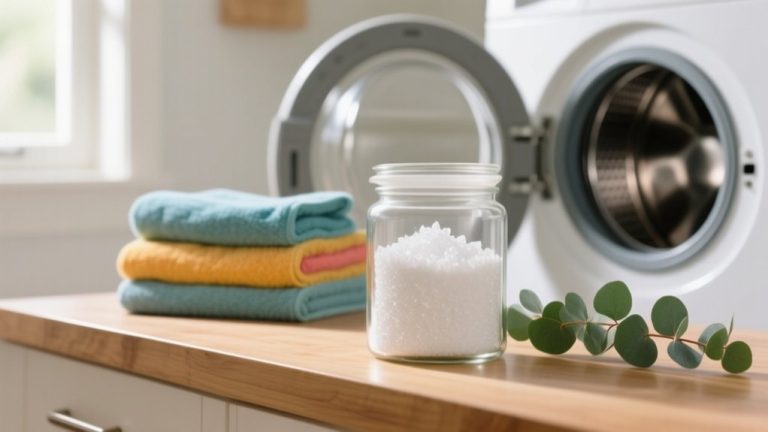
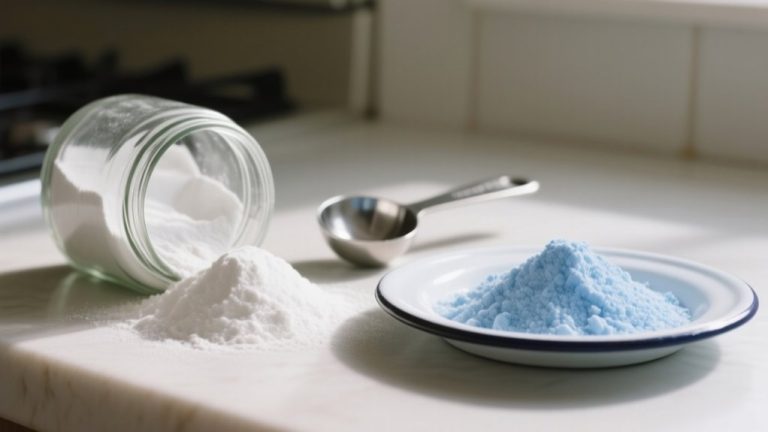
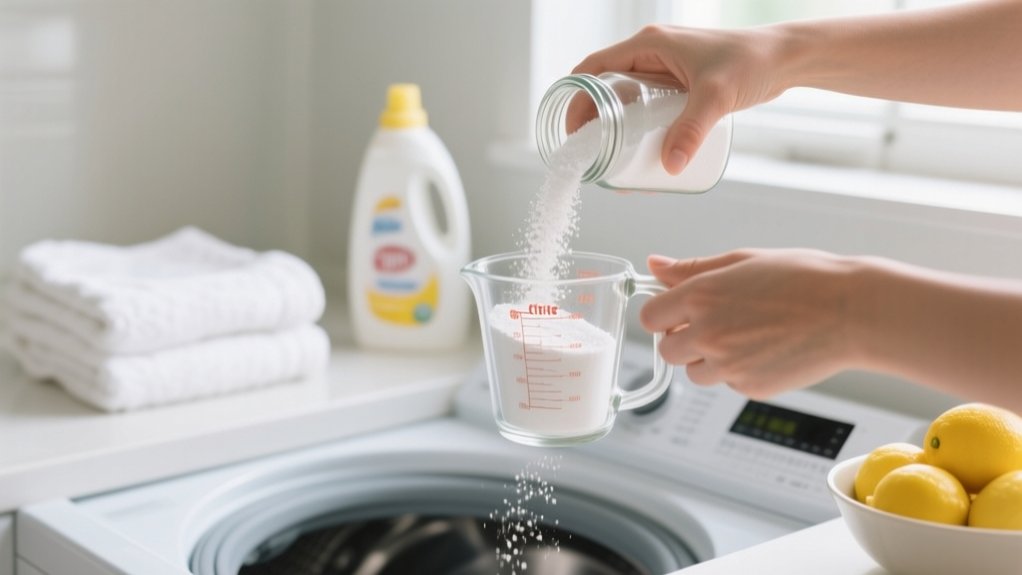
To use citric acid in laundry the right way, add 1 tablespoon to your fabric softener compartment for standard loads, or 2 tablespoons for larger loads or hard water. It works best during the rinse cycle to neutralize detergent residue and soften fabrics like towels and activewear without buildup.
You can also prepare a batch solution for convenience. Citric acid naturally cleans your machine and clothes better than vinegar.
Keep exploring for tips on maximizing its benefits and maintaining your washer efficiently.
Key Takeaways
- Add 1 tablespoon of citric acid to the fabric softener compartment for standard loads, or 2 tablespoons for larger loads or hard water.
- Use citric acid during the rinse cycle to neutralize detergent residues and soften fabrics effectively.
- Dissolve 1/4 cup citric acid in 4 cups warm distilled water to make a batch solution; use 1/4 cup per load in the softener dispenser.
- Citric acid removes mineral buildup and detergent residues without leaving odors or coatings, keeping fabrics fresh and vibrant.
- Regularly run an empty wash cycle with citric acid solution every few months to maintain washing machine cleanliness and efficiency.
How To Use Citric Acid In Laundry For Best Results
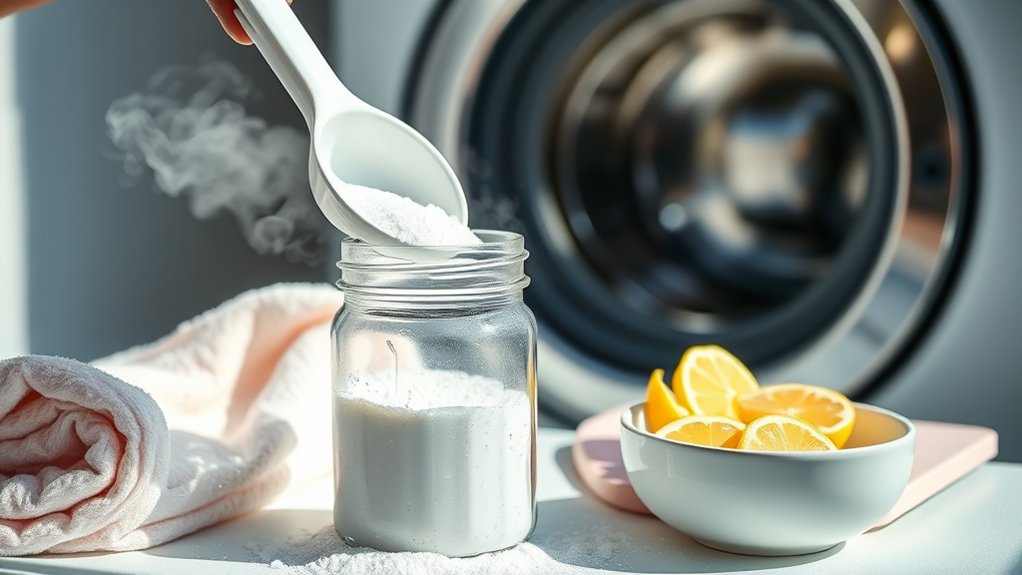
To get the best results using citric acid in your laundry, start by adding 1 tablespoon to the fabric softener compartment for standard loads, or 2 tablespoons for larger loads or if you have hard water.
Use citric acid during the rinse cycle to neutralize detergent residues and soften hard water. This helps fabrics stay absorbent and odor-free.
Add citric acid in the rinse cycle to remove detergent residues and soften water for fresh, absorbent fabrics.
Unlike commercial softeners, citric acid won’t leave any coating, making it perfect for towels and activewear.
If you prefer a batch method, dissolve 1/4 cup of citric acid in 4 cups of warm distilled water and add 1/4 cup of this solution per load.
Its chelating properties bind minerals, enhancing cleaning efficiency and improving overall wash performance.
Use citric acid to keep your laundry fresh and soft without buildup.
Adjust Citric Acid Dosage For Laundry Load And Water Hardness
You should use about 1 tablespoon of citric acid for a standard laundry load.
But if you have a larger load or your water is hard, it’s a good idea to increase that to 2 tablespoons. Adjusting the dosage like this helps neutralize detergent residues and softens the water, which protects your fabrics.
It’s best to add the citric acid during the rinse cycle. Doing so maximizes these benefits and keeps your clothes feeling fresh.
Dosage Based On Load
One tablespoon of citric acid per standard load softens clothes effectively and neutralizes detergent residues when added to the fabric softener compartment.
For larger loads, increase the dosage to two tablespoons to guarantee ideal softening and prevent mineral buildup on fabrics.
If you prefer the batch method, dissolve 1/4 cup of citric acid in 4 cups of warm distilled water. Then add 1/4 cup of this solution per load in the softener dispenser.
Remember, citric acid works best during the rinse cycle, so adding it at this stage maximizes its benefits.
Using the right dosage based on load size helps maintain your machine’s performance and keeps fabrics soft without the coating effect of commercial softeners.
Adjust For Water Hardness
Adjusting citric acid dosage according to water hardness can greatly improve your laundry results. For standard loads, 1 tablespoon of citric acid in the fabric softener compartment softens clothes and neutralizes detergent residues effectively.
However, if you’re dealing with hard water or larger loads, double the amount to 2 tablespoons. Hard water contains minerals that reduce cleaning efficiency, but citric acid’s chelating properties bind these minerals, preventing buildup and fabric gunk.
For easier dosing, dissolve 1/4 cup of citric acid in 4 cups of warm distilled water to create a batch solution.
Always add citric acid during the rinse cycle to maximize fabric softening and minimize mineral deposits.
This simple adjustment guarantees your laundry stays cleaner and softer.
Make A Batch Fabric Softener Solution With Citric Acid
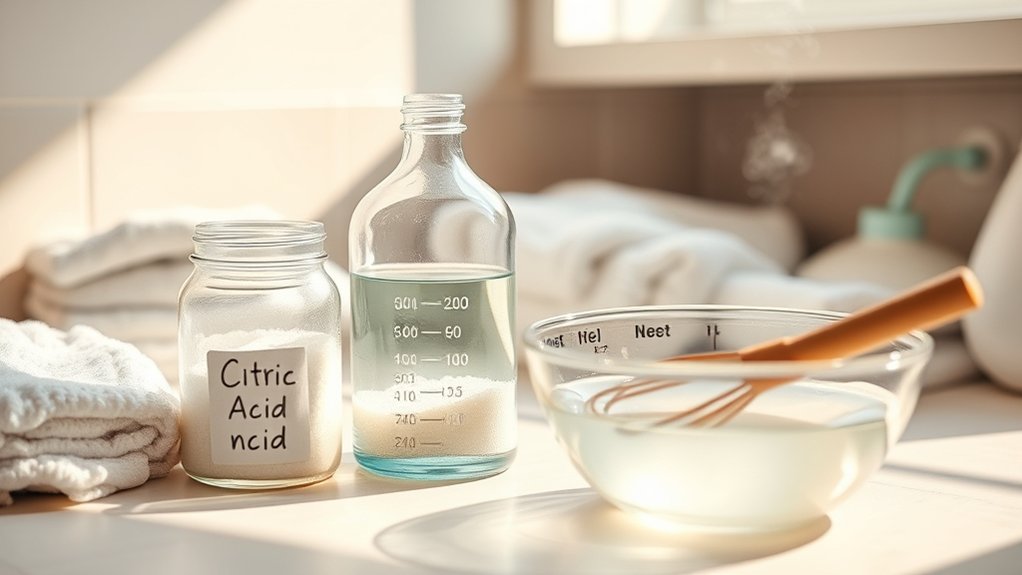
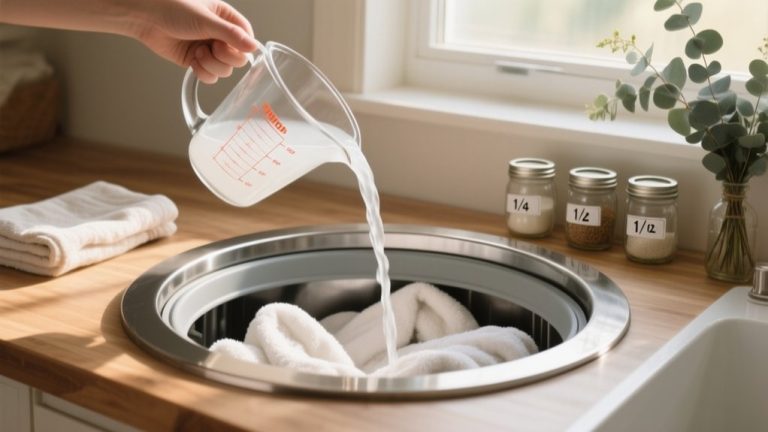
To make a batch fabric softener solution, start by dissolving 1/4 cup of citric acid in 4 cups of warm distilled water.
Keep stirring until the mixture is clear.
When you’re ready to use it, just pour 1/4 cup of this solution into your fabric softener dispenser for each load.
If you have larger loads or hard water, you might want to adjust the amount.
You can add up to 2 tablespoons of citric acid directly into the softener compartment to get better results.
Batch Solution Preparation
Mixing a batch fabric softener solution with citric acid is simple and efficient. Start by dissolving 1/4 cup of citric acid in 4 cups of warm distilled water.
Stir or shake the mixture until it becomes clear, confirming the citric acid is fully dissolved.
Next, label the container clearly for easy identification. This solution works especially well for larger laundry loads or if you’re dealing with hard water.
When it’s time to do laundry, use 1/4 cup of your prepared solution in the fabric softener dispenser.
Store any leftover solution in a cool, dry place to keep it effective for future use.
Preparing this batch saves time and guarantees consistent softening results every wash.
Usage And Dosage
You’ll want to use 1/4 cup of the citric acid batch solution in your fabric softener dispenser for each laundry load to achieve ideal softening and odor neutralization.
This solution is made by dissolving 1/4 cup of citric acid in 4 cups of warm distilled water until clear.
Store it in a labeled bottle for easy access.
For larger loads or if you have hard water, add 2 tablespoons of citric acid directly into the softener compartment instead.
Make certain the citric acid is released during the rinse cycle to maximize its effectiveness.
Using the right dosage guarantees your fabrics stay soft, fresh, and free of mineral buildup without risking damage or residue.
Use Citric Acid Safely On Towels And Activewear Laundry
Using 1 to 2 tablespoons of citric acid in your laundry routine can safely soften towels and activewear without the drawbacks of traditional fabric softeners.
Add 1 tablespoon to the fabric softener compartment for regular loads, or 2 tablespoons for larger loads or hard water.
Citric acid removes mineral and detergent residues, boosting absorbency and preventing fabric damage.
It doesn’t leave a residue that traps odors or dulls colors, keeping your fabrics fresh and vibrant.
Use citric acid during the rinse cycle to protect fabric integrity and extend garment life.
- Softens towels and activewear naturally
- Enhances absorbency by removing buildup
- Avoids sticky residues common in softeners
- Protects washing machines from buildup
Citric acid is your safe, effective choice for these fabrics.
What Makes Citric Acid A Great Natural Fabric Softener
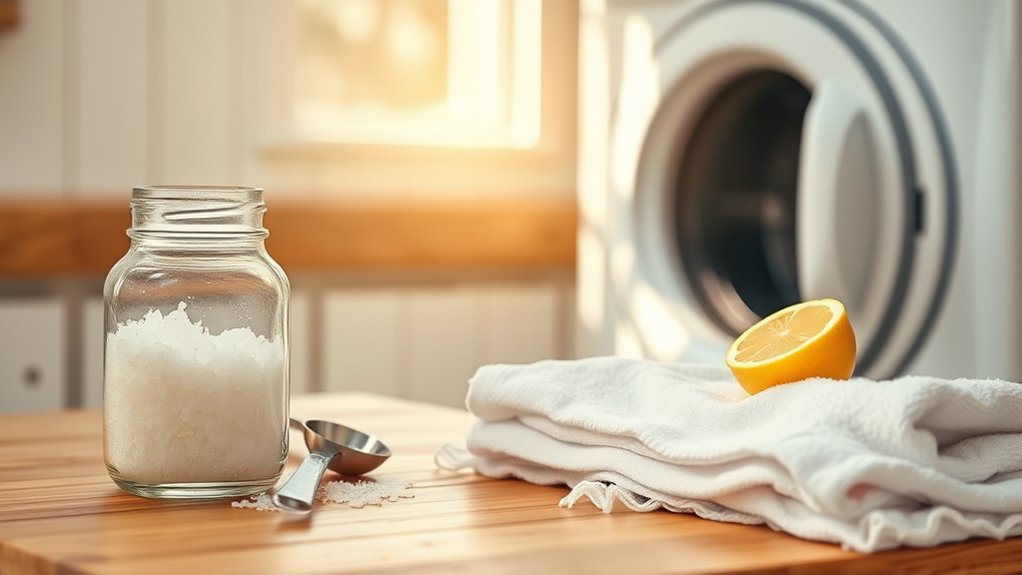
Although commercial fabric softeners may seem convenient, citric acid offers a natural, effective alternative that softens your laundry without leaving residues or odors.
Citric acid neutralizes detergent buildup and softens hard water, preventing fabric stiffness and preserving towel absorbency.
You can add it directly to the fabric softener compartment. Use 1 tablespoon for standard loads and 2 tablespoons for larger or hard water loads. Its chelating properties bind minerals, enhancing cleaning and maintaining fabric softness.
Unlike commercial softeners, citric acid doesn’t leave a lubricating film, so your clothes stay fresh and breathable. This makes citric acid a practical, gentle choice for fabric care that’s also kinder to your washing machine.
You get soft, odor-free laundry every time without harsh chemicals.
Why Citric Acid Beats Vinegar For Your Laundry
When you want to tackle hard water minerals and detergent buildup effectively, citric acid outperforms vinegar thanks to its three acid sites that provide stronger chelation.
This means citric acid cleans deeper and more efficiently, leaving your laundry fresher and your machine protected.
Compared to vinegar, citric acid neutralizes detergent residues without leaving odors or damaging fabrics.
Here’s why citric acid beats vinegar for your laundry:
- Stronger chelation removes mineral buildup better
- Neutralizes detergent without harmful residues
- Controls odors and dinginess longer
- Prevents gunk formation inside your washing machine
Keep Your Washing Machine Clean With Citric Acid
Citric acid doesn’t just improve your laundry’s cleanliness. It also keeps your washing machine running smoothly. To descale and remove mineral buildup, dissolve 1/4 cup of citric acid in water and pour it into the detergent compartment during an empty wash cycle.
Regular use prevents detergent residues and limescale from accumulating. This helps your machine perform effectively and last longer. Thanks to its chelating properties, citric acid binds hard water minerals, reducing gunk inside your washer’s components.
Unlike commercial cleaners, citric acid avoids harmful residues that can trap odors or dull your clothes’ colors.
For best results, run a citric acid cleaning cycle every few months to maintain a fresh, efficient washing machine and keep your laundry smelling and looking great.
Frequently Asked Questions
Can Citric Acid Remove Mildew Smells From Laundry?
Yes, citric acid can remove mildew smells from your laundry effectively. It lowers the pH and targets bacteria causing the odor, helping to neutralize unpleasant smells.
To get the best results, add about a tablespoon to your fabric softener compartment per load or use a diluted batch solution for larger loads.
This not only fights mildew smells but also prevents residue buildup, keeping your fabrics fresh and clean over time.
Is Citric Acid Safe for Use in All Washing Machines?
They say, “Don’t throw the baby out with the bathwater,” and you shouldn’t when using citric acid. It’s safe for all washing machines, including HE models. You can use it without worrying about excessive suds or damaging residues.
It helps descale and neutralizes detergent buildup, keeping your machine efficient and your clothes fresh.
How Does Citric Acid Affect Laundry Detergent Performance?
Citric acid boosts your laundry detergent’s performance by neutralizing alkaline residues and chelating hard water minerals that usually hinder cleaning.
You’ll notice better stain removal because it keeps the wash cycle’s pH balanced, helping surfactants work efficiently.
Plus, its strong binding ability surpasses vinegar, ensuring detergents perform at their best.
Adding citric acid during rinsing also removes detergent buildup, keeping your fabrics soft and absorbent.
Can Citric Acid Whiten Yellowed Fabrics?
Yes, citric acid can whiten yellowed fabrics by breaking down mineral and detergent buildup that causes discoloration.
To do this, mix three tablespoons of citric acid in four liters of warm water and soak your yellowed white or light-colored items overnight.
After soaking, wash them in your machine to boost whitening and remove residues.
Avoid using citric acid on colored fabrics, as it might dull their colors.
Does Citric Acid Help With Water Stain Removal on Clothes?
Yes, citric acid helps remove water stains on clothes. It chelates hard water minerals, breaking them down and preventing residue buildup.
When you add about 1 tablespoon per load, or 2 for larger or hard water loads, it neutralizes detergent residue that causes stains.
Using citric acid regularly also keeps minerals from accumulating, so your fabrics stay cleaner and fresher while brightening whites naturally.
Conclusion
Using citric acid in your laundry not only softens fabrics naturally but also helps keep your washing machine clean. Did you know that 85% of households experience hard water issues that reduce detergent effectiveness?
Adjusting your citric acid dosage accordingly guarantees your clothes come out fresh and residue-free. By switching to citric acid, you get a safer, eco-friendly alternative to vinegar, perfect for towels and activewear.
Start using it today for cleaner laundry and a longer-lasting machine.