Can You Use Dawn Dish Soap As Laundry Detergent – Find Out
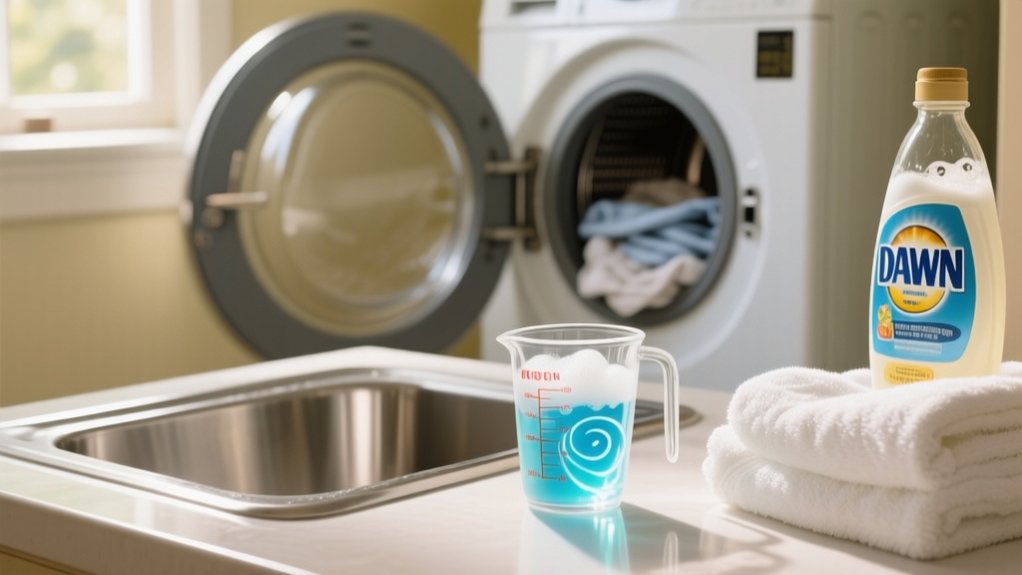
You can use Dawn dish soap as a laundry detergent occasionally, but you need to control the amount carefully. Limit it to one tablespoon and apply it to a dry rag before adding it to the wash to avoid excessive suds that can harm your machine and fabrics.
Dawn works well for tough grease stains but lacks enzymes for typical laundry needs. It may also dull fabrics if used too often. Keep following for tips on safe use and alternatives.
Key Takeaways
- Dawn can be used occasionally as a laundry detergent but is best suited for spot treating grease and oil stains.
- Use only one tablespoon of Dawn applied to a dry rag to avoid excessive suds and machine damage.
- Dawn lacks enzymes found in traditional detergents, limiting its effectiveness on common fabric stains.
- Frequent use of Dawn may weaken fabric fibers, dull colors, and cause suds overflow in washers.
- Combining Dawn with regular detergent or homemade soap mixtures improves cleaning while minimizing suds risks.
Can You Use Dawn Dish Soap in Your Washing Machine?
How safe is it to use Dawn dish soap in your washing machine? Using Dawn dish soap in a washing machine requires caution. It can create excessive suds, leading to overflow and damage to pumps and drains if you use too much.
Using Dawn dish soap in your washing machine can cause excessive suds and potential damage if not used sparingly.
To avoid problems, stick to small amounts of dish soap, just a tablespoon applied to a rag before adding it to the wash. This approach helps tackle common laundry stains without overwhelming your machine.
However, Dawn isn’t formulated like laundry detergents, so it won’t clean as effectively. Overusing it can leave soap scum on fabrics, causing dinginess and skin irritation.
While occasional, careful use might help with specific stains, it’s best to avoid frequent use in your washing machine to prevent operational issues and maintain fabric quality.
Pros and Cons of Using Dawn as Laundry Detergent
While using Dawn dish soap occasionally in your washing machine can help tackle tough grease stains, it’s important to weigh its benefits against potential drawbacks. Dawn effectively removes grease and oil-based stains, making it handy for spot treatment.
However, as a laundry detergent, it lacks enzymes designed for breaking down typical fabric stains, which may lessen its overall cleaning power. Using Dawn regularly can create excessive suds, risking damage to your washer’s pumps and drains.
Furthermore, prolonged use might weaken fabric fibers and dull colors, especially on delicate fabrics. For these reasons, Dawn dish soap works best as an occasional stain remover rather than a routine laundry detergent.
You should avoid relying on it long-term to keep your clothes in good condition.
How to Safely Use Dawn in Your Washing Machine
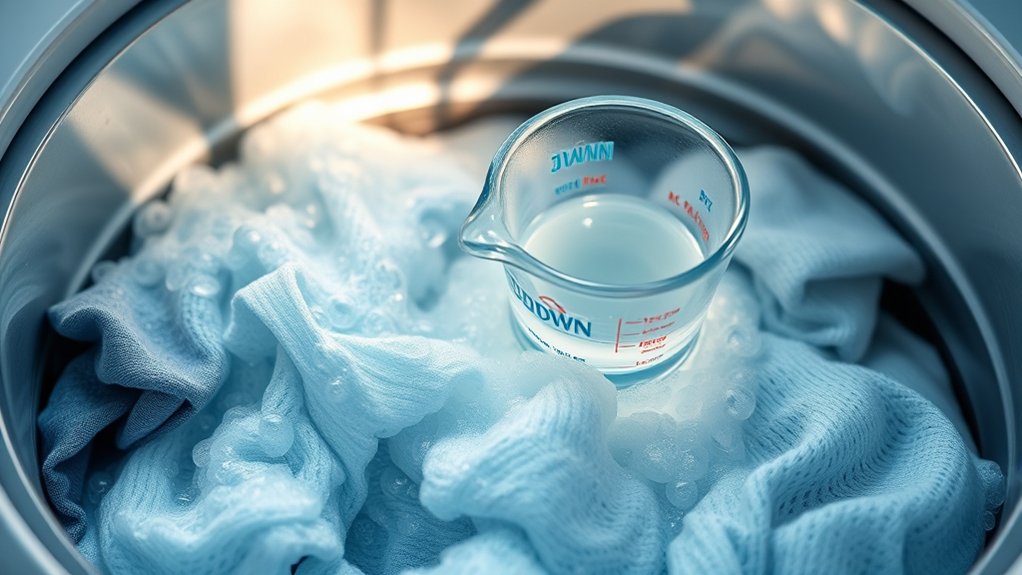
If you decide to use Dawn dish soap in your washing machine, it’s essential to limit the amount to just one tablespoon to prevent excessive suds that can damage your machine.
Always apply Dawn to a dry rag or washcloth before adding it to the wash. This helps control suds during the cycle.
Avoid placing Dawn directly in the detergent dispenser to prevent sudsy overflow and pump issues. For best results, combine small amounts of dish soap with your regular laundry detergent. This boosts cleaning power without risking damage.
When using a top loader, fill the machine with water before adding the rag with Dawn. This guarantees even distribution and minimizes suds.
Following these steps lets you safely harness Dawn’s cleaning power in your washing machine.
When to Use Dawn Dish Soap for Pretreating Laundry Stains
Whenever you encounter stubborn grease or oil stains on cotton or polycotton fabrics, applying Dawn dish soap directly can make a significant difference. Dawn’s grease-fighting formula helps break down tough stains before your regular laundry cycle.
To pretreat effectively, follow these steps: Apply less than two teaspoons of Dawn dish soap directly to the stain. Gently rub the soap into the fabric with your fingers for better penetration.
Let the soap sit for a few minutes to maximize stain removal before washing. Avoid reapplying Dawn to the same spot to prevent excess suds and potential washing machine damage.
Using Dawn dish soap this way targets stains upfront, improving your laundry’s overall cleanliness without replacing your regular detergent.
Homemade Laundry Soap Recipes With Dawn
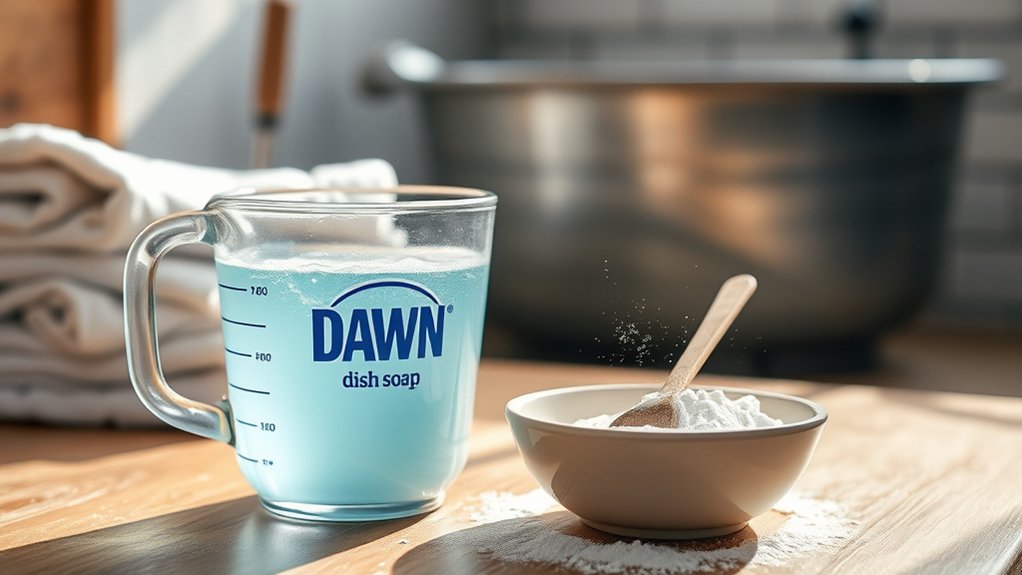
After using Dawn dish soap to target stubborn stains, you might consider making your own laundry detergent with it.
A simple homemade laundry soap recipe combines 1/3 cup washing soda, 1/4 cup borax, and 2 tablespoons of Dawn mixed into 1 gallon of hot water.
Mix 1/3 cup washing soda, 1/4 cup borax, and 2 tablespoons Dawn in 1 gallon hot water.
Using small amounts of dish soap guarantees the best results without excess suds. For regular loads, use 1/2 cup of this mixture, while HE machines only need 1/4 cup.
To avoid separation and improve cleaning, stir well and use hot water during mixing. You can also add 20 drops of lemon essence or essential oils for a pleasant scent.
This homemade laundry soap yields about 32 loads, making it an economical and effective alternative to commercial detergents.
Risks of Regular Dawn Dish Soap Use in Washing Machines
Although Dawn dish soap can effectively tackle tough stains, using it regularly in your washing machine can cause significant problems.
Dawn’s formula isn’t designed for laundry, and the risks of frequent use include damage to your appliance and less effective cleaning. Here are key risks to take into account:
Excessive suds can overflow, damaging pumps and drains, especially in high-efficiency washing machines.
Dawn may leave soap scum on fabrics, causing dinginess and potential skin irritation.
Many washing machine manufacturers advise against using dish soap, emphasizing laundry-specific detergents for proper machine care.
To protect your washing machines and maintain fabric quality, it’s best to avoid regular use of Dawn dish soap as a laundry detergent.
How Does Dawn Compare to Traditional Laundry Detergents?
When you use Dawn for laundry, you’ll notice it cuts grease really well.
However, it doesn’t have the enzymes and fabric care ingredients that traditional detergents usually include.
Also, Dawn tends to produce more suds, which can actually be tough on your washing machine since it’s not designed for that kind of low-sudsing performance.
Cleaning Power Differences
Two key differences set Dawn dish soap apart from traditional laundry detergents: its cleaning components and its sudsing behavior.
Dawn primarily acts as a surfactant, excelling at lifting grease and oil but lacking enzymes that target protein or carbohydrate stains.
Traditional laundry detergents combine surfactants and enzymes for a broader cleaning power.
When you use Dawn as laundry detergent, consider these points:
- Dawn is effective for spot cleaning greasy stains but less thorough on general dirt and sweat.
- Laundry detergents are formulated to remove a wider range of stains and prevent soap scum buildup.
- Over time, Dawn may leave clothes dingy due to residue from its dish soap formulation.
For ideal fabric care and stain removal, traditional laundry detergents outperform Dawn in cleaning power.
Suds Production Impact
Beyond cleaning power, how a detergent interacts with your washing machine matters a lot, especially when it comes to suds production.
Dawn dish soap creates excessive suds compared to traditional laundry detergents. These detergents are formulated to produce minimal suds while effectively cleaning.
This high sudsing can overwhelm your machine’s drainage system, particularly in High Efficiency (HE) washers. That can cause overflow and potential damage.
Using Dawn regularly may also cause soap scum buildup on clothes, leading to dinginess and fabric damage over time.
Traditional laundry detergents balance suds with cleaning efficiency to protect both your machine and garments.
Formulation and Ingredients
Understanding the key differences in formulation between Dawn dish soap and traditional laundry detergents helps explain why Dawn isn’t ideal for laundry use.
Dawn’s primary ingredients, like sodium lauryl sulfate, excel at cutting grease but lack enzymes that target common laundry stains such as proteins or carbohydrates.
In contrast, laundry detergents are carefully formulated to break down a wider range of soils and maintain fabric care.
Key distinctions include:
- Dish soap’s concentrated surfactants create excessive suds, unlike laundry detergents designed for machine compatibility.
- Laundry detergents contain enzymes and additives that improve stain removal beyond grease.
- Laundry detergents often include fabric softeners and brighteners, absent in dish soap, affecting color and texture.
Expert Tips for Using Dawn Dish Soap in Laundry
Anyone looking to use Dawn dish soap in their laundry should start by using just a tablespoon to prevent excessive suds that can harm your washing machine.
Start with one tablespoon of Dawn dish soap in laundry to avoid harmful excess suds in your washer.
Apply Dawn to a dry rag or washcloth before adding it directly to the wash. Never use the detergent dispenser.
For regular laundry, consider making a homemade soap combining Dawn, washing soda, and borax. Use 1/2 cup per load for effective cleaning.
To tackle tough stains, mix Dawn with hydrogen peroxide to boost grease removal.
Always spot test delicate fabrics first to avoid damage and guarantee the soap works well with your machine.
Following these expert tips helps you safely and effectively use Dawn dish soap without compromising your laundry’s quality or your washer’s performance.
Frequently Asked Questions
Can Dawn Dish Soap Remove Pet Odors From Clothes?
Yes, you can use Dawn dish soap to remove pet odors from clothes. It breaks down oils and fatty compounds in pet dander and urine effectively.
Apply a small amount to the stained area, rub gently, and let it sit before washing as usual.
For better results, mix Dawn with vinegar to neutralize odors.
Just make sure you rinse thoroughly to avoid residue that might attract dirt or irritate skin.
Is Dawn Safe for Washing Delicate Fabrics Like Silk or Wool?
No, you shouldn’t use Dawn for washing delicate fabrics like silk or wool. Its strong surfactants can damage fibers, cause shrinkage, or distort the garment’s shape.
Plus, Dawn’s high sudsing may leave residue, irritating your skin or dulling delicate materials.
Instead, choose specialized detergents or mild soaps designed specifically for these fabrics.
That way, you’ll keep your delicate clothes looking great without risking damage.
How Does Dawn Dish Soap Affect Water Hardness in Laundry?
Think of water hardness as a stubborn gatekeeper, blocking soap’s full power.
When you use Dawn in hard water, it struggles against minerals like calcium and magnesium, causing excessive suds that don’t rinse well.
This can leave soap scum on your clothes and washing machine.
To keep your laundry fresh, you’ll need extra rinse cycles or a detergent designed for hard water, ensuring your fabrics come out clean and residue-free.
Can Dawn Dish Soap Be Used in Cold Water Laundry Cycles?
Yes, you can use Dawn dish soap in cold water laundry cycles, but you’ll need a bit more soap to get good cleaning results since it dissolves slower.
It’s great for cutting grease and oil stains even in cold water, but tough stains might need extra help.
Make sure to mix it well to avoid excess suds, and consider adding vinegar to boost stain removal for the best results.
Does Dawn Dish Soap Discolor or Fade Colored Clothing?
Yes, Dawn dish soap can discolor or fade colored clothing. Its strong surfactants, designed to cut grease, may strip color or dull fabric over time.
You’ll want to avoid repeated use on vibrant clothes and always spot test on a hidden area first.
Instead, stick to laundry detergents made to protect colors. They’re gentler and better at maintaining your clothes’ appearance without risking damage or fading.
Conclusion
You can use Dawn dish soap in your laundry as a quick fix, but it’s not a long-term substitute for traditional detergents. Think of it as a trusty sidekick. It’s great for spot-treating stains or emergencies but not built for the heavy lifting of regular washes.
Use it carefully to avoid suds overload, and stick to small amounts. When in doubt, expert advice and proper laundry detergents will keep your clothes and machine happy.