How Much Vinegar To Add To Laundry – Full Breakdown
You should add between ¼ and 1 cup of distilled white vinegar per laundry load, adjusting by load size and fabric type. Use ½ cup for standard loads, 1 cup for larger or smelly loads, and ¼ cup for delicates.
Add it during the rinse cycle, either in the fabric softener compartment for front-loaders or directly in the drum for top-loaders. Avoid mixing vinegar with detergent or bleach.
Understanding these details helps you optimize vinegar’s cleaning power and fabric care.
Key Takeaways
- Use ½ cup distilled white vinegar for standard laundry loads to boost cleaning and soften fabrics.
- Increase to 1 cup for larger or smelly loads, and ¾ cup for heavily soiled items to break down buildup.
- Add vinegar during the rinse cycle: use the fabric softener compartment in front-loaders or directly in the drum for top-loaders.
- For high-efficiency washers, limit vinegar to ¼ to ½ cup in the fabric softener dispenser to avoid damage and odors.
- Avoid exceeding recommended amounts to prevent lingering smells, fabric stiffness, and potential washing machine damage.
How Much Vinegar To Add Per Laundry Load
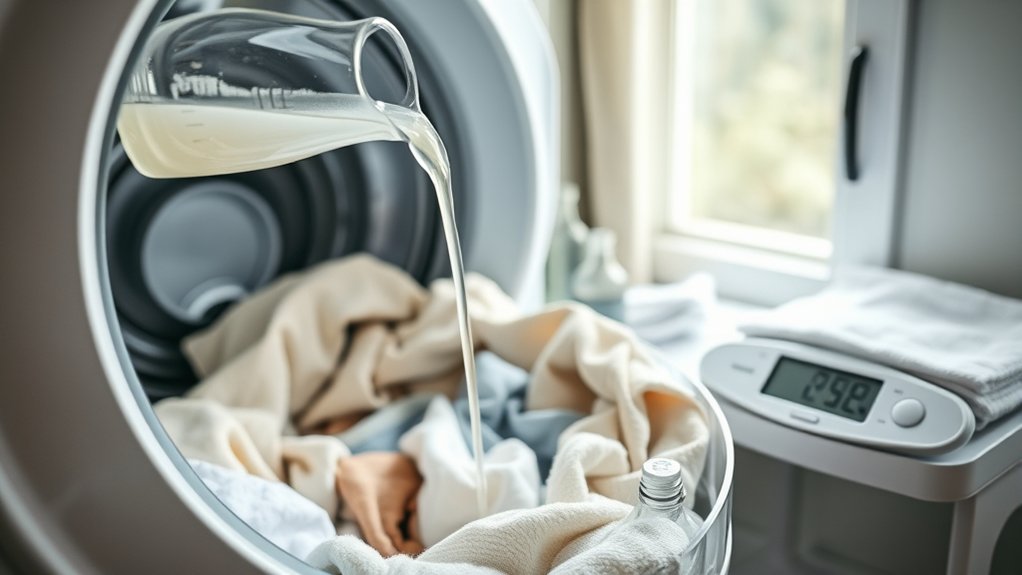
When adding vinegar to your laundry, start with ½ cup of distilled white vinegar per load to soften fabrics and neutralize odors effectively.
If you’re dealing with larger or especially smelly loads, you can increase that to 1 cup for better results.
For larger or particularly odorous loads, increasing vinegar to 1 cup enhances freshness and odor control.
Always add vinegar during the rinse cycle to avoid interfering with detergent performance.
For front-loading machines, pour the vinegar into the fabric softener compartment, ensuring it releases at the right time.
If you use a top-loader, simply add vinegar directly to the drum during the rinse.
It’s important to avoid using more than the recommended amounts, as too much vinegar can reduce rinsing efficiency and leave a lingering smell.
Knowing exactly how much vinegar to add helps you get the best laundry results every time.
When To Add Vinegar In The Wash Cycle
Although adding vinegar during the main wash cycle might seem convenient, you should wait until the rinse cycle to pour it in. Adding vinegar to the rinse guarantees it won’t interfere with detergent cleaning performance or cause unwanted chemical reactions.
To safely use vinegar, always add ½ cup of distilled white vinegar per load during the rinse. For top-loading machines, pour vinegar directly into the drum, while front-loaders require adding it to the fabric softener compartment for even distribution.
Vinegar helps remove detergent buildup, softens fabrics, and eliminates odors effectively when used this way. Using white vinegar is safe on most fabrics and won’t cause staining.
Adjusting Vinegar Amounts For Load Size And Odor
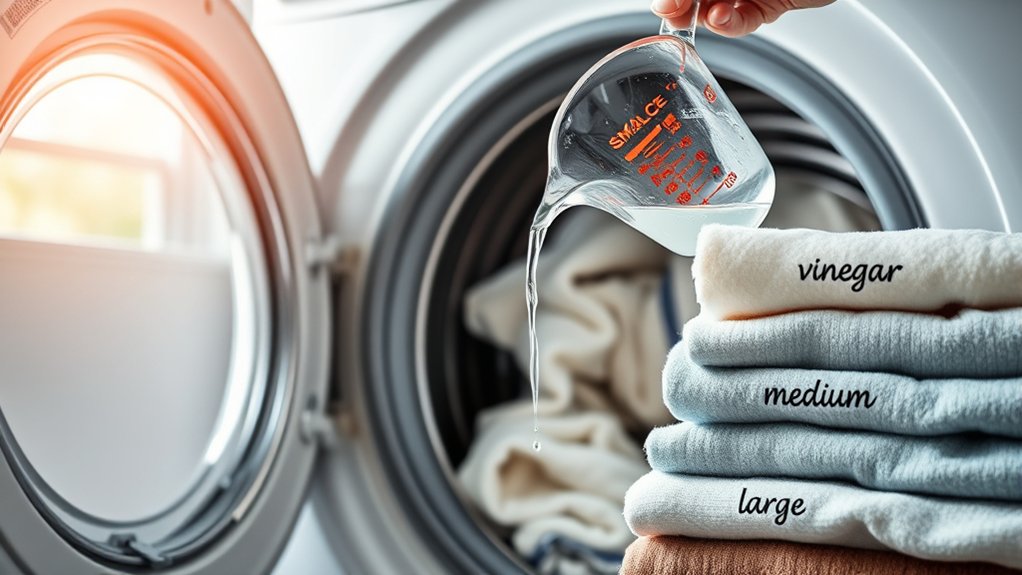
Knowing the right amount of vinegar to add during the rinse cycle can make a significant difference in your laundry results. When adjusting vinegar amounts for load size and odor, use ½ cup of distilled white vinegar for standard loads.
For larger or particularly odorous loads, increase to 1 cup to boost deodorizing power. Towels or heavily soiled items with stubborn buildup benefit from ¾ cup. Delicate fabrics need only ¼ cup to stay safe.
Remember, always avoid adding vinegar to the main wash; it works best in the rinse cycle.
| Load Size | Vinegar Amount | Purpose |
|---|---|---|
| Standard | ½ cup distilled white vinegar | Softens, removes odors |
| Larger/Odorous | Up to 1 cup | Enhanced deodorizing |
| Heavily Soiled | ¾ cup | Breaks down stubborn buildup |
| Delicate Fabrics | ¼ cup | Gentle softening |
Using Vinegar Safely On Laundry Fabrics
Since vinegar is acidic, you should always use distilled white vinegar with a 5-6% acetic acid concentration to avoid damaging your fabrics.
Before applying vinegar broadly, perform a compatibility test on a small, hidden area, especially with new or delicate items.
Test vinegar on a hidden spot first, especially with delicate or new fabrics.
Avoid using vinegar on sensitive fabrics like silk, acetate, or rayon, as it can cause discoloration or weaken fibers.
Be cautious with elastic materials, as vinegar may degrade elasticity over time, so dilute it and limit its use.
Never mix vinegar with bleach or ammonia, as this combination produces toxic gases harmful to your health.
Adding Vinegar In HE And Standard Washing Machines
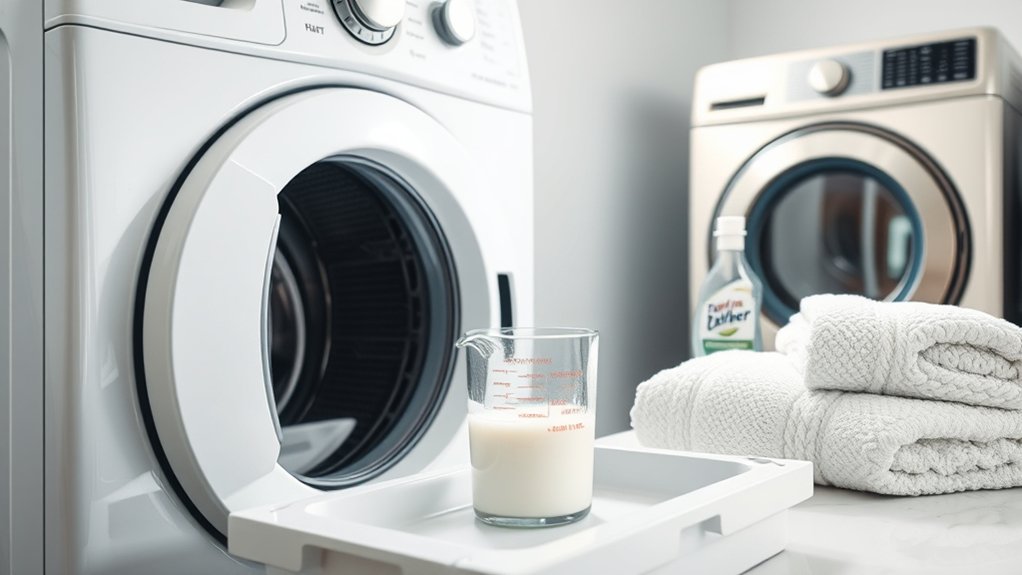
When you’re adding vinegar to your laundry, go for about half a cup to a full cup if you’re using a standard machine. The best time to add it’s during the rinse cycle.
If you have a high-efficiency (HE) machine, it’s a little different. You’ll want to pour the vinegar into the fabric softener dispenser or directly into the drum. This helps prevent too many suds from forming.
Just remember to always add the vinegar after the detergent cycle has finished.
And never mix vinegar with bleach — that can damage your clothes and your washer.
Keeping these tips in mind will help you get the best results and protect your laundry gear.
Vinegar Dosage Guidelines
Adding the right amount of vinegar to your laundry can make a big difference in fabric softness and odor removal. Follow these vinegar dosage guidelines to get the best results.
For standard washing machines, add 1/2 to 1 cup of distilled white vinegar during the rinse cycle.
In high-efficiency washers, pour 1/4 to 1/2 cup of vinegar into the fabric softener dispenser or directly into the drum during the rinse cycle.
Avoid mixing vinegar with detergent in the main wash cycle, as vinegar works best during rinsing for odor neutralization and softening.
Using more than the recommended amount can cause residue buildup on fabrics and the machine.
Stick to these guidelines to maintain freshness and protect your washer’s performance.
Adding Methods Comparison
Knowing the right amount of vinegar to use sets the foundation, but how you add it can impact its effectiveness.
For high-efficiency (HE) front-loading machines, adding vinegar to the fabric softener dispenser guarantees it’s released during the rinse cycle. This maximizes cleaning power without interfering with detergents.
In standard top-loading machines, pour ½ to 1 cup of vinegar directly into the wash drum during the rinse cycle. Avoid mixing vinegar with detergent in the main wash since detergents are formulated to work best without acidic additives.
Using the fabric softener dispenser in front-loading machines and HE washers allows vinegar to distribute evenly when it’s most effective during rinsing.
Always check your machine’s manual for specific advice, as some models may have unique guidelines for adding vinegar safely and efficiently.
What Happens If You Use Too Much Vinegar In Laundry?
If you use too much vinegar in your laundry, you’ll likely notice a lingering vinegar smell on your clothes that requires extra rinsing to remove. Using excessive vinegar not only affects the clothes’ smell but can also disrupt the rinse cycle, leaving fabrics feeling stiff rather than soft.
Adding more than the recommended amount, typically 1/2 to 1 cup, can reduce detergent effectiveness. This prevents your cleaning products from properly removing dirt and stains. Overuse also diminishes vinegar’s stain-fighting properties, making it less effective as a laundry aid.
Using over 1 cup of vinegar can hinder detergent action and reduce stain removal effectiveness.
Moreover, excessive vinegar may damage your washing machine’s rubber seals and hoses over time due to its acidity.
To maintain ideal cleaning and fabric care, it’s essential to stick to the advised quantity of vinegar in your laundry routine.
Combining Vinegar With Detergents And Boosters In Laundry
Too much vinegar can interfere with your detergent’s effectiveness, so it’s important to use them correctly together. Add vinegar during the rinse cycle, typically ½ to 1 cup, so it doesn’t mix with laundry detergents in the wash cycle.
If you use baking soda as a booster, add it separately during the wash to avoid chemical reactions. Distilled white vinegar works best and won’t stain. For best results, combine vinegar with natural laundry detergents and avoid adding it to bleach compartments. Use the fabric softener dispenser or pour directly into the drum.
| Product | When to Add | Purpose |
|---|---|---|
| Vinegar | Rinse cycle | Softens fabrics, removes odors |
| Laundry Detergent | Wash cycle | Cleans clothes |
| Baking Soda | Wash cycle | Boosts cleaning power |
| Fabric Softener | Rinse cycle | Adds softness and fragrance |
| Bleach | Wash cycle (separate) | Whitens and disinfects |
Avoiding Vinegar Smell And Boosting Laundry Results
To keep that vinegar smell from sticking around, try using just half a cup to one cup of distilled white vinegar per load. It’s best to add it during the rinse cycle. That way, you get the benefits without the strong odor.
Also, if you want your laundry to come out smelling fresh, avoid mixing vinegar and baking soda in the same wash cycle—they cancel each other out. Instead, add a few drops of your favorite essential oil. This little trick not only smells great but helps boost the cleaning power.
Follow these tips, and you’ll notice your clothes come out clean, soft, and free of any overpowering vinegar scent. It’s an easy way to get the most out of your laundry routine!
Minimizing Vinegar Odor
Although vinegar is a powerful natural cleaner for laundry, you’ll want to keep its odor in check by using no more than half a cup per load.
To minimize vinegar odor and avoid a lingering scent, follow these steps:
- Add vinegar during the rinse cycle to reduce the chance of a strong vinegar smell.
- Mix a few drops of essential oils with vinegar to mask the vinegar odor and add a pleasant fragrance.
- Incorporate a small amount of baking soda in the wash; it neutralizes odors and helps eliminate any residual vinegar scent.
- Confirm clothes are fully dry after washing, as moisture can trap odors, including vinegar.
Enhancing Laundry Effectiveness
When you add 1/4 to 1/2 cup of distilled white vinegar during the rinse cycle, you enhance your laundry’s cleanliness without leaving a strong vinegar smell.
Use vinegar as a natural fabric softener, especially if you deal with hard water that can make clothes feel stiff.
To tackle stubborn odors, pre-soak clothes in a solution of 1 cup vinegar and warm water for 30 minutes before washing. This helps break down odor-causing residues effectively.
If you want to boost results further, combine vinegar with baking soda. Use baking soda in the wash and vinegar in the rinse to neutralize smells without harsh chemicals.
Finally, running an extra rinse cycle guarantees any lingering vinegar scent fully dissipates, leaving your clothes fresh and soft.
Proper Vinegar Usage
Adding between ½ and 1 cup of distilled white vinegar during the rinse cycle softens fabrics and removes odors without leaving a persistent vinegar smell.
For proper vinegar usage, follow these steps to boost laundry results and avoid vinegar scent:
- Use only the recommended cup of vinegar in the rinse cycle to guarantee natural deodorizing without overdoing it.
- Pre-soak heavily soiled items in 1 cup of vinegar and warm water for 30 minutes to enhance odor removal.
- Run an extra rinse cycle after adding vinegar to rinse away any residual smell and detergent buildup.
- Fully dry clothes after washing to help reduce lingering vinegar odors.
Following this advice from *How Much Vinegar To Add To Laundry – Full Breakdown* guarantees fresh, soft laundry every wash cycle.
Frequently Asked Questions
Can Vinegar Replace Fabric Softener Completely?
Yes, you can completely replace fabric softener with vinegar. It softens fabrics, breaks down detergent residue, and removes odors naturally.
Just add about 1/2 cup of distilled white vinegar during the rinse cycle for most loads.
It’s safe for most clothes but use it sparingly on delicate fabrics like silk or elastic.
Plus, the vinegar smell disappears when clothes dry, leaving them fresh and soft without any harsh chemicals.
Does Vinegar Help Remove Mold From Washing Machines?
If you notice a musty smell in your washer, vinegar can help remove mold effectively.
For example, one homeowner ran a cycle with 1 cup of distilled white vinegar and hot water, which broke down mold spores and cleaned rubber seals.
You’ll find vinegar’s acetic acid penetrates mold, sanitizing and preventing regrowth.
Just make sure you ventilate the area to avoid strong odors while it works its magic.
Is Vinegar Safe for All Types of Laundry Detergents?
Vinegar is safe with most laundry detergents, especially natural ones, and can boost their cleaning power.
However, you shouldn’t mix vinegar with detergents containing bleach or ammonia, as this creates harmful fumes.
To avoid interfering with your detergent’s effectiveness, add vinegar during the rinse cycle.
Always check your detergent’s label first, since some brands may react negatively to vinegar due to unique ingredients or formulations.
How Does Vinegar Affect Colored Versus White Clothes?
Back in the days of powdered wigs, you’d find vinegar brightening whites without harsh bleach damage. For your whites, vinegar gently lifts stains and brightens fabric.
With colored clothes, it removes detergent residue and odors but can fade colors if overused. You should add less vinegar to colored laundry, about half a cup, to protect vibrancy.
Always test on a hidden spot first to avoid surprises.
Never go overboard to keep colors vivid.
Can Vinegar Damage Washing Machine Seals Over Time?
Yes, vinegar can damage washing machine seals over time if you use too much or apply it too frequently.
Its acidity may wear down rubber gaskets and seals, especially in older machines.
To protect your washer, stick to about 1/2 cup per load and add vinegar during the rinse cycle to limit contact time.
This way, you’ll get the benefits without risking seal deterioration or costly repairs.
Conclusion
When you add vinegar to your laundry, you’re inviting a gentle powerhouse to brighten your clothes and soften fabrics without harsh chemicals. Just a half to one cup per load is enough to steer your wash toward freshness.
Remember, timing and moderation are your allies. Too much vinegar can tip the balance. Use it wisely, like a skilled artist blending colors, and your laundry will come out vibrant, odor-free, and wonderfully clean every time.