How To Strip Laundry – Easy Steps
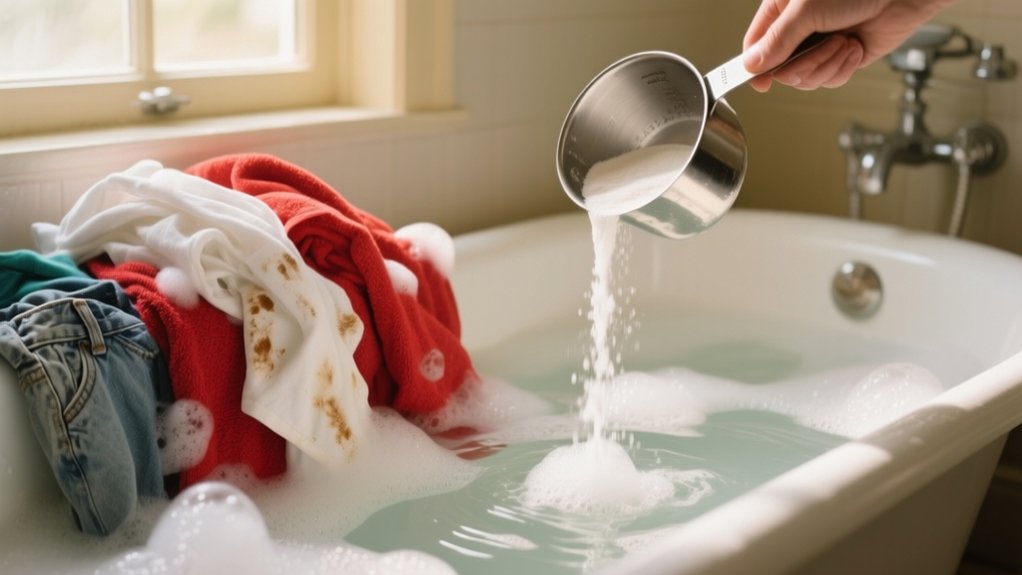
To strip your laundry, start by filling a tub with hot water and add ¼ cup washing soda, ¼ cup Borax, and ½ cup powdered detergent. Soak thick fabrics like towels or sheets for 4-5 hours, stirring occasionally. Then run a full wash cycle without detergent.
This method removes built-up residue that regular washing misses and restores softness and absorbency. Checking fabrics for hot water safety helps avoid damage. Explore further tips to maximize results and avoid common mistakes.
Key Takeaways
- Soak thick fabrics like towels and blankets in hot water with Borax, washing soda, and powdered detergent for 4-5 hours.
- Use a ratio of 2 parts detergent, 1 part Borax, and 1 part washing soda, typically ¼ cup each per soaking tub.
- Stir occasionally during soaking and wait for murky water, which indicates residue removal.
- After soaking, drain, wring out, and run a wash cycle without detergent to rinse thoroughly.
- Check fabric care labels beforehand and avoid stripping delicate materials like silk, wool, and spandex.
What Laundry Stripping Is and Why It Helps
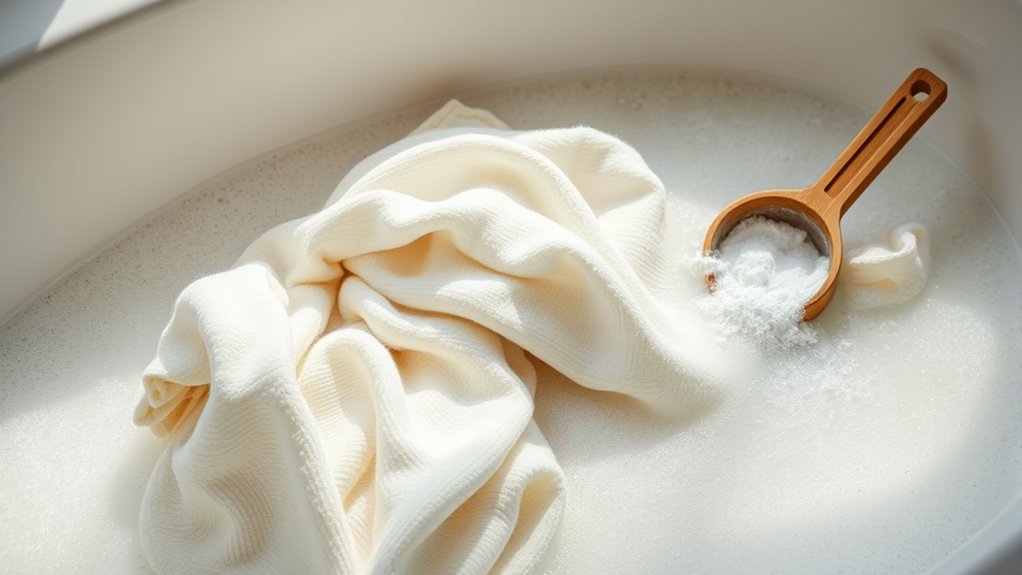
Although you may regularly wash your laundry, residues from detergents, fabric softeners, body oils, and hard water minerals can build up over time. This buildup reduces freshness and absorbency.
Laundry stripping is a deep-cleaning method designed to remove these built-up residues thoroughly. You soak towels and sheets in hot water mixed with Borax, washing soda, and powdered detergent for several hours. This process breaks down and lifts away the grime that regular washing misses.
Laundry stripping uses hot water, Borax, washing soda, and detergent to deeply remove stubborn residue from fabrics.
As you strip your laundry, the murky water signals successful residue removal. By eliminating these deposits, laundry stripping restores absorbency and softness, especially in thicker fabrics like towels and sheets.
This method effectively revitalizes textiles, helping them regain their original freshness and performance.
Laundry Items That Benefit Most From Laundry Stripping
You’ll want to focus on thicker fabrics like towels, blankets, and mattress pads when stripping laundry because they trap the most residue.
These items really hold onto detergent, body oils, and other buildup, so giving them a good strip can make a big difference.
That said, common items like sheets and pillowcases can also benefit from stripping.
It helps them regain their softness and brightness, making your bedding feel fresh and clean again.
Just keep in mind that delicate materials are best avoided.
Stripping can be too harsh for them and might cause damage, so it’s safer to stick with sturdier fabrics.
Best Fabrics For Stripping
Thick, durable fabrics like bath towels, hand towels, and washcloths benefit most from laundry stripping because they absorb more residue over time.
The best fabrics for laundry stripping are those made of durable materials that can withstand hot water and harsh treatments without damage.
Cotton comforters and duvet covers fit this category well, as they often accumulate body oils and fabric softener buildup that diminish freshness.
Light-colored sheets and pillowcases also respond well to stripping, regaining brightness by removing embedded residues.
Avoid delicate fabrics or those prone to color bleeding.
Focus on these sturdy, colorfast items since their fibers trap oils and residues more, making stripping an effective deep-cleaning step.
Common Laundry Items
After identifying the best fabrics for stripping, it’s helpful to know which specific laundry items benefit the most from this process.
Towels, like bath, hand, and washcloths, are prime candidates because they absorb significant residue from detergent and fabric softeners. This buildup reduces their absorbency.
Sheets and pillowcases also benefit from stripping, especially when they appear dingy or dull. Stripping removes built-up residue and restores freshness.
Thick fabrics like blankets, duvet covers, and mattress pads accumulate sweat and body oils over time, making stripping essential to maintain cleanliness.
Bathrobes often collect fabric softener and detergent residue that impact their softness and absorbency, so don’t overlook them.
Keep in mind that stripping removes residue but won’t eliminate stains. Pre-treat those before stripping for the best results.
Avoid Delicate Materials
Although laundry stripping works wonders on many household items, you should avoid delicate materials like silk, wool, and spandex. These fabrics are sensitive and can shrink or degrade when exposed to the harsh chemicals and hot water used in laundry stripping. Always check care labels before attempting this process.
Laundry stripping is most effective on thicker fabrics such as towels, sheets, and blankets, which have higher absorptivity and accumulate more buildup over time. Cotton comforters and duvet covers also tolerate stripping well due to their durability.
Delicate materials lack this resilience and may suffer damage instead of benefiting. To safely remove buildup, reserve laundry stripping for colorfast, sturdy items. This method restores brightness and absorbency without compromising fabric integrity when used appropriately.
How to Tell If Your Towels and Sheets Need Stripping
How can you tell when your towels and sheets need stripping? Towels may feel less absorbent or stiff because of residue buildup. Sheets might look dingy or yellowed. Musty odors trapped in your linens also signal that buildup from body oils and detergent is present.
Pay attention to these signs:
- Towels losing absorbency or feeling rough
- Sheets appearing dull or discolored
- Persistent musty or sour odors in fabrics
- Residue buildup causing stiff texture
These indicators show your towels and sheets have accumulated residue and odors, reducing their freshness and performance.
Stripping helps restore their absorbent quality and brightness by removing this buildup effectively.
Monitoring these signs regularly guarantees your linens stay clean and comfortable.
Best Ingredients for Laundry Stripping
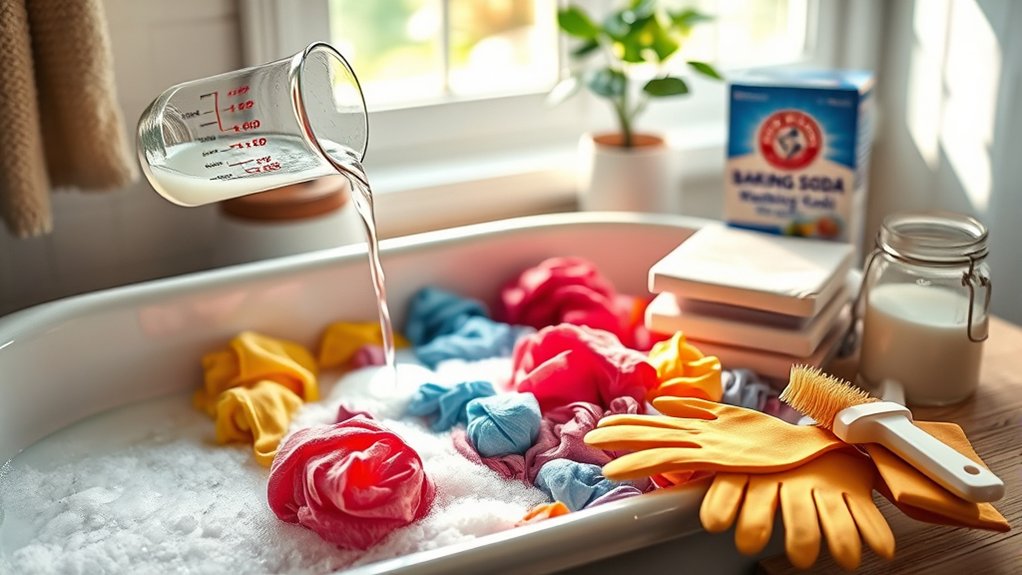
To strip your laundry effectively, try using a mix of sodium borate (Borax), sodium carbonate (washing soda), and powdered laundry detergent.
A good rule of thumb is to go with 2 parts detergent, 1 part Borax, and 1 part washing soda for the best results.
Just a heads up—make sure to avoid powdered detergents that contain bleach, as they can damage your fabrics during the process.
This way, your clothes get a thorough clean without any unwanted wear and tear.
Essential Stripping Ingredients
When you want to effectively strip your laundry, using the right combination of ingredients is essential. The deep cleaning method relies on a soaking solution that breaks down residue build-up trapped in fabrics.
Key ingredients include sodium borate (Borax), sodium carbonate (washing soda), and a powdered laundry detergent. Here’s what you need to know:
- Sodium borate helps soften water and enhances cleaning power.
- Sodium carbonate lifts stains and loosens fabric buildup.
- Powdered laundry detergent targets oils and dirt without bleach.
- Hot water soaking solution makes certain ingredients penetrate fibers deeply.
Mixing these in the proper way creates a powerful formula that removes stubborn residues.
Avoid bleach in your powdered detergent to protect fabric integrity. This combination guarantees effective laundry stripping every time.
Ingredient Ratios Explained
Although choosing the right ingredients is important, using them in the correct ratios guarantees maximum effectiveness when stripping laundry. For ideal laundry stripping, combine 1 part Borax, 1 part washing soda, and 2 parts powdered detergent, commonly ¼ cup of each in a standard soaking tub.
Borax softens water and boosts cleaning power, helping break down residue. Washing soda enhances grease and dirt removal trapped in fabric fibers, intensifying the detergent’s effect.
Make sure you use powdered detergent free of bleach to avoid damaging fabrics.
Dissolve all ingredients thoroughly in hot water, which is essential for penetrating fabric fibers and loosening buildup.
Sticking to these precise ratios and conditions guarantees you strip laundry effectively, restoring freshness and cleanliness without harming your clothes.
Avoid Bleach Detergent
Choosing the right powdered detergent plays a key role in effective laundry stripping. You should avoid bleach detergent because bleach can damage fabric quality and hinder residue removal.
Instead, opt for a non-bleach powdered laundry detergent, which is gentler and safer for colors.
Enzyme-based and color-safe detergents enhance the stripping process without compromising your clothes.
Keep these points in mind:
- Avoid bleach detergent to preserve fabric integrity
- Use enzyme-based detergents for effective build-up breakdown
- Choose color-safe formulas to prevent fading
- Select non-bleach powdered laundry detergent for delicate fabrics
Following these guidelines guarantees a thorough, safe stripping process that protects your laundry while removing deep stains and residues efficiently.
How to Strip Your Laundry Step-by-Step
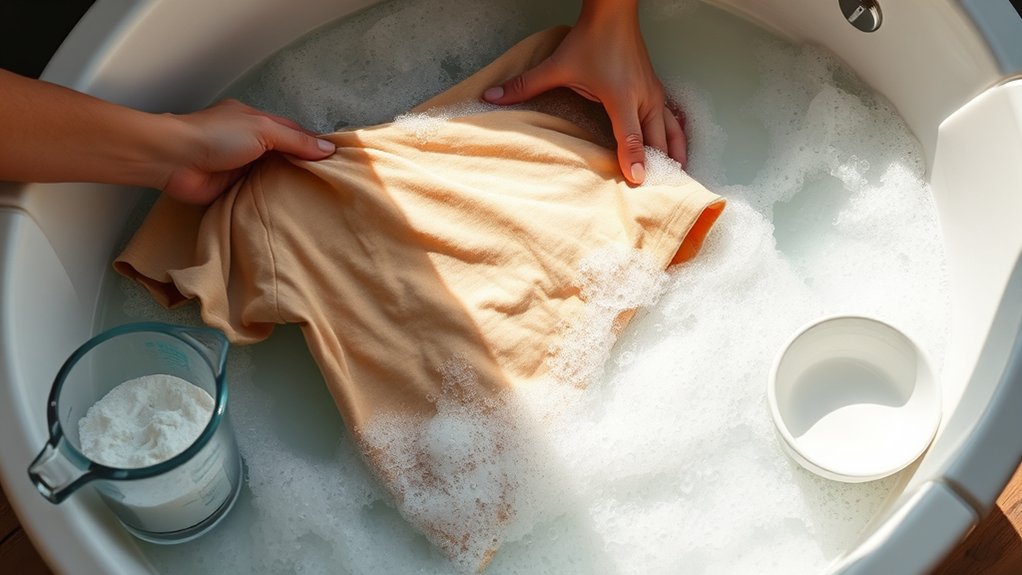
To strip your laundry effectively, start by gathering all suitable items that can withstand hot water. Avoid delicate fabrics that might get damaged.
Fill a bathtub or large container about halfway to three-quarters full with hot water, making sure all items will be submerged. Add ¼ cup washing soda, ¼ cup Borax, and ½ cup powdered laundry detergent. Stir gently until dissolved.
Submerge your laundry and let it soak for 4-5 hours, stirring occasionally to help loosen buildup.
After soaking, drain the water and wring out the laundry.
Finally, run the items through a full wash cycle without detergent or fabric softener to remove any remaining residue. This method guarantees thorough laundry stripping and restores freshness effectively.
Laundry Care Tips During Stripping
When stripping your laundry, you should always check care labels to confirm that items can handle hot water without damage. Proper laundry stripping requires careful attention to guarantee you effectively remove built-up residue without harming your clothes.
Always verify fabric care labels to ensure safe hot water use when stripping laundry to avoid damage.
Use a mixture of ¼ cup Borax, ¼ cup washing soda, and ½ cup powdered detergent dissolved in hot water. Then, soak items for 4-5 hours, stirring occasionally to help loosen buildup.
After soaking, run the rinse cycle thoroughly and wash items without detergent to remove any remaining residue.
Keep these tips in mind:
- Confirm fabric safety for hot water before starting.
- Stir the solution well to dissolve ingredients fully.
- Soak items long enough for cloudy water to appear.
- Use a rinse cycle without detergent to finalize cleaning.
Following these steps guarantees effective, safe laundry stripping.
Common Laundry Stripping Mistakes and How to Avoid Them
Although laundry stripping can restore dingy fabrics, many people make avoidable mistakes that reduce its effectiveness or damage their clothes. To avoid common mistakes, always check care labels before starting laundry stripping, as some fabrics can shrink or get damaged from hot water soaking.
Never mix colors with whites to prevent dye transfer and discoloration. Avoid overcrowding the soaking container; give clothes enough space to absorb the solution thoroughly.
Use the correct ingredients in proper proportions: 1/4 cup Borax, 1/4 cup washing soda, and 1/2 cup detergent. This guarantees effective residue removal without harming fabrics.
Finally, pay attention to frequency. Don’t strip laundry too often, as overuse can degrade fabrics and isn’t necessary if good washing habits are followed.
Following these steps will help you strip laundry safely and effectively.
How Often to Strip Laundry for Best Results
How often should you strip your laundry to maintain freshness and absorbency? The frequency depends on factors like water hardness, fabric use, and detergent choice. Typically, laundry stripping every 1-3 months works well to remove build-up and restore absorbency.
Hard water minerals accelerate residue accumulation, so you might need to strip more often if you’re in a hard water area.
Consider these points when deciding your stripping frequency:
- Towels and sheets used daily usually require more frequent stripping.
- Watch for signs like musty odors or reduced absorbency as indicators.
- Using the right detergent in appropriate amounts lowers build-up and delays stripping.
- Less frequently used items can go longer between laundry stripping sessions.
Adjust your routine accordingly to keep fabrics fresh and absorbent.
Preventing Residue Build-Up to Reduce Stripping
Since residue buildup on fabrics leads to frequent stripping, you can reduce this by managing detergent use carefully and optimizing your wash routine.
To prevent build-up, use only the recommended amount of detergent and avoid overuse, which leaves trapped detergent or fabric softener on clothes.
Use the recommended detergent amount to avoid residue buildup that traps detergent or fabric softener on clothes.
Incorporate an extra rinse cycle in your washing to thoroughly remove trapped detergent or fabric softener, ensuring fabrics stay clean.
Also, avoid using fabric softener on towels and workout clothes, as it creates a waxy residue that hinders absorbency.
Don’t overload your washer, since crowded loads prevent proper rinsing and leave detergent behind.
Consider detergents formulated to prevent residue accumulation.
Frequently Asked Questions
Can I Strip Laundry in a Washing Machine Instead of Soaking?
You can’t effectively strip laundry in a washing machine because it doesn’t maintain the high temperature or soaking time needed to break down residues.
The agitation and partial submersion also prevent thorough cleaning.
Instead, you should soak your laundry in a tub or bucket with hot water and the right mixture.
This method guarantees complete immersion and better residue removal, giving you cleaner, fresher results than a washing machine can provide.
Is Laundry Stripping Safe for Colored Fabrics?
No, laundry stripping isn’t safe for colored fabrics. You risk dye bleeding and color fading because hot water and strong detergents can damage colors.
Always check care labels before you try stripping, and avoid mixing colors with whites to prevent dye transfer.
Instead, reserve stripping for white or colorfast items that can handle harsh treatment.
For colored clothes, stick to gentle washing methods to preserve their vibrancy.
How Do I Dispose of the Used Soaking Water Safely?
Better safe than sorry: pour your used soaking water down the drain, not outside.
First, check local regulations for disposing of cleaning wastewater.
Rinse your container and tools thoroughly to remove residue.
If you can, dilute the soaking water with extra clean water to reduce chemical concentration.
Avoid dumping it on plants or soil, as it can harm them.
Following these steps keeps your environment safe and clean.
Can Laundry Stripping Help Remove Pet Odors?
Yes, laundry stripping can effectively remove pet odors by breaking down oils and residues trapped in fabrics.
You’ll soak items like pet beds and blankets in a mixture of Borax, washing soda, and detergent, which helps release stubborn smells ordinary washing misses.
Just remember, it targets odors, not stains, so pre-treat any visible marks before stripping.
This method revitalizes fabrics and restores freshness, giving your pet’s belongings a deep clean.
What Alternatives Exist if I Don’T Have Borax or Washing Soda?
Think of Borax and washing soda as keys releasing grime. If you don’t have them, grab baking soda. It softens water and neutralizes odors.
Mix baking soda with vinegar to mimic washing soda’s power. This combo breaks down detergent build-up. Epsom salt also softens water and boosts cleaning.
White vinegar alone cuts fabric softener residue and freshens fabrics.
Always test alternatives on a small fabric patch to avoid damage before full use.
Conclusion
Stripping your laundry is like hitting the reset button, giving your towels and sheets a fresh start by removing built-up residue. By following these clear steps and using the right ingredients, you’ll restore softness and absorbency efficiently.
Just remember to strip only when necessary and avoid common mistakes to keep your laundry in top shape. With regular care, your fabrics will stay clean and fresh without the need for frequent stripping.