What Do Laundry Symbols Mean – Meaning & More
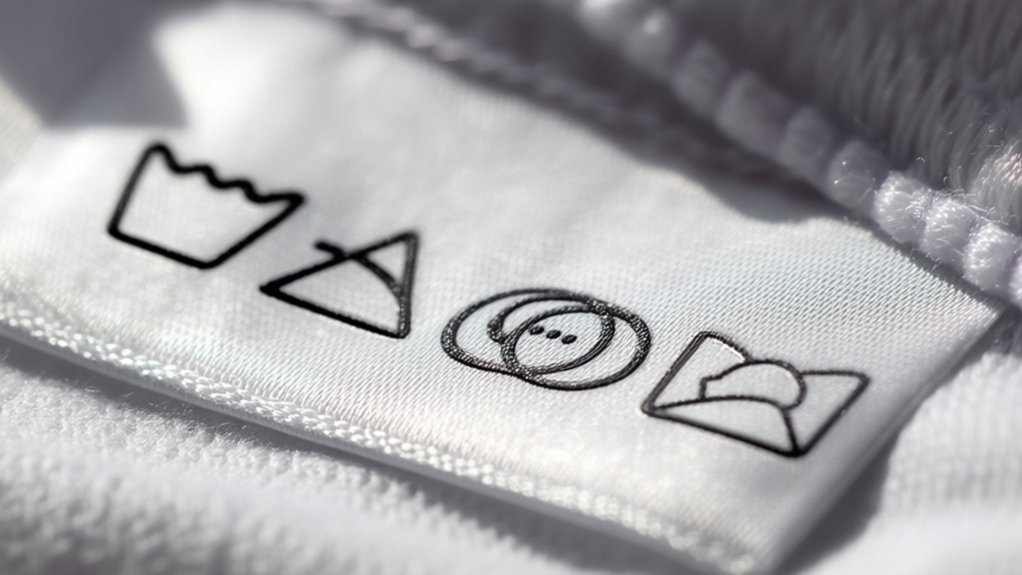
Laundry symbols guide how you should wash, dry, bleach, iron, or dry clean your clothes to avoid damage. They use icons like water tubs with dots for temperature, lines for cycles, and circles or squares for drying and cleaning methods.
Ignoring these can cause shrinkage, fading, or weakening. Understanding these symbols helps you select the right process to protect your fabric and keep garments lasting longer.
Explore further to master caring for different fabrics and situations. It’s easier than it sounds once you get the hang of it!
What Are Laundry Symbols and Why They Matter
Although you might overlook them, laundry symbols on clothing labels provide essential, standardized instructions for washing, drying, ironing, and dry cleaning. These universal pictograms communicate specific care requirements to help you avoid damaging garments and extend their lifespan.
Laundry symbols offer clear, essential care instructions to protect your garments and extend their life.
By correctly interpreting these symbols, you’ll use the appropriate water temperature, cycle type, and cleaning method, minimizing the risk of permanent fabric damage.
International standards guarantee these symbols transcend language barriers, enabling clear care instructions worldwide. Understanding and following laundry symbols is vital not only for maintaining garment quality but also for promoting sustainable laundry practices by reducing unnecessary wear and energy use.
Recognizing these symbols empowers you to care for your clothes precisely as intended, preserving both appearance and functionality over time.
How to Read Laundry Washing Symbols
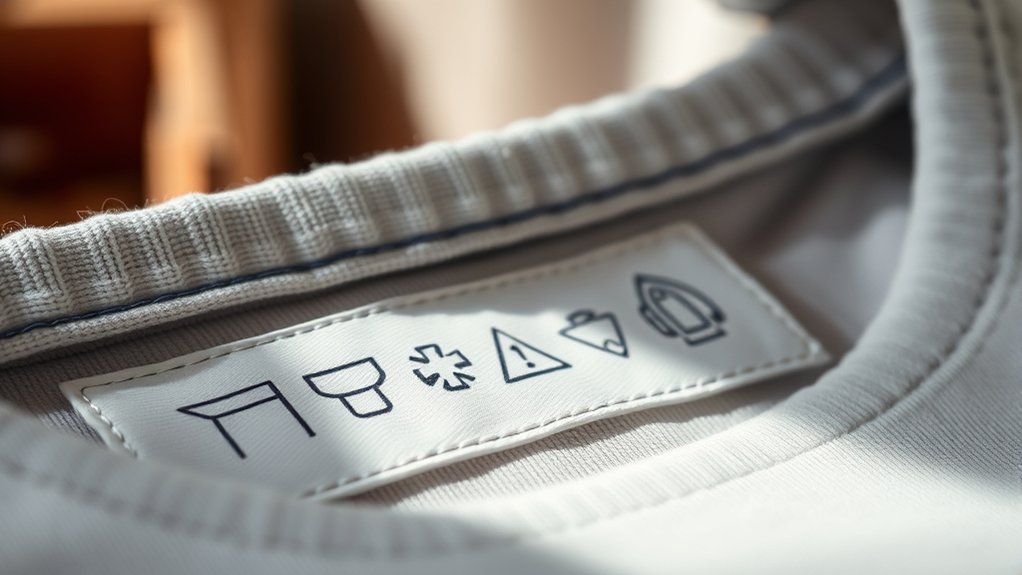
You’ll recognize washing tub symbols as a tub filled with water. The dots inside the tub indicate the maximum safe water temperature. One dot means cold water, two dots stand for warm, and three dots allow hot water.
On top of that, lines beneath the tub tell you the recommended cycle type. These lines help guide you to wash your garments properly, so you don’t accidentally damage them.
Washing Tub Symbols
How do you determine the correct washing method for your clothes using laundry symbols? Focus on the washing tub symbol, which looks like a rectangle with wavy lines. This shows if the item is machine washable or if it needs hand washing.
Inside the tub, dots tell you the maximum water temperature. One dot means cold, two dots mean warm, and three dots mean hot washes. Lines beneath the tub describe the cycle type. No lines mean normal, one line means permanent press, and two lines mean delicate or gentle cycles.
If the tub is crossed out, it means washing isn’t allowed. So, the garment might need dry cleaning or special care.
Knowing these symbols helps you pick the right washing method. This way, you protect your fabrics from damage and make them last longer.
Water Temperature Indicators
Where do you find the key to setting the right water temperature for your laundry? It lies in the dots inside the washing tub symbol on your garment’s care label. One dot indicates cold water, ranging from 65°F to 85°F, ideal for delicate fabrics.
Two dots mean warm water, up to 105°F, suitable for everyday clothing. Three dots denote hot water, approximately 120°F, used for heavily soiled items or whites.
Symbols with six or more dots represent even higher temperatures, often for specialized or sanitizing washes.
Accurately interpreting these dots prevents fabric damage caused by incorrect water temperatures and guarantees effective cleaning. By following these indicators, you optimize care for each fabric type and prolong your clothes’ lifespan. It’s pretty simple once you get the hang of it!
Understanding Water Temperature and Cycle Lines

You’ll recognize water temperature by the number of dots inside the washing tub symbol—one for cold, two for warm, and three for hot. It’s pretty straightforward once you get the hang of it.
Then, look at the lines beneath the tub; they tell you about the cycle type. No lines mean a normal cycle, one line stands for permanent press, and two lines are for delicate cycles.
Water Temperature Indicators
Although selecting the proper water temperature might seem straightforward, understanding the symbols on laundry labels is essential for preserving your garments. Water temperature indicators are shown as dots inside the washing tub icon: one dot for cold, two for warm, and three for hot water.
These dots correspond to specific temperature ranges, helping you avoid fabric damage, shrinkage, or color fading. It’s pretty handy once you get the hang of it.
| Dots | Temperature Range (°F) | Recommended Use |
|---|---|---|
| ● | 65 – 85 | Delicate fabrics, cold wash |
| ●● | Up to 105 | Regular wash, warm water |
| ●●● | Up to 120 | Heavy soils, hot wash |
Picking the right temperature means your clothes get cleaned effectively without wearing out too soon. It’s all about keeping your wardrobe looking great for longer!
Cycle Line Meanings
When selecting a washing cycle, the number of lines beneath the washing tub symbol shows you the right agitation and rinse settings. These lines help you pick a cycle that protects your fabric’s integrity by adjusting the mechanical action just right.
Here’s what the lines mean:
- No lines: Normal cycle with standard agitation and rinsing, good for regular fabrics.
- One line: Permanent press cycle with less agitation and rinse, perfect for fabrics that need gentler care.
- Two lines: Delicate or gentle cycle with minimal agitation and rinsing, made for sensitive or fragile garments.
It’s pretty simple once you know what to look for! Just match the lines to your fabric type, and you’re set.
Matching Temperature With Fabric
How do you guarantee your laundry routine protects your clothes while delivering a thorough clean? By matching water temperature with fabric type and cycle lines on the label. Dots inside the tub symbol indicate temperature: one dot means cold (65°F-85°F), two dots warm (up to 105°F), and three dots hot (up to 120°F).
Cycle lines below the tub show the wash cycle: no line for normal, one line for permanent press, two lines for delicate. Using the correct combination avoids shrinkage, fading, and damage.
| Temperature | Cycle Type | Fabric Example |
|---|---|---|
| ● (Cold) | 〰〰 (Delicate) | Silk, lace |
| ●● (Warm) | 〰 (Permanent) | Polyester |
| ●●● (Hot) | No line (Normal) | Cotton towels |
| ● (Cold) | No line (Normal) | Wool |
| ●● (Warm) | 〰〰 (Delicate) | Blends |
Decoding Laundry Drying Symbols and Methods
Understanding laundry drying symbols helps you protect your garments from damage caused by improper drying methods. These symbols guide you in selecting the correct drying technique and heat level. That way, you can keep your fabrics looking great and lasting longer.
Understanding drying symbols prevents fabric damage and ensures your clothes stay fresh and durable longer.
A square with a circle inside means tumble drying. The dots inside show whether to use low, medium, or high heat. Lines under the square tell you if a gentle or permanent press cycle is needed.
Key drying symbols include air drying icons, like a square with horizontal lines for flat drying or a curved line for hanging. Sometimes these symbols are shaded to indicate drying in the shade.
Tumble drying indicators use dots for heat settings and lines for cycle types. You might also see prohibition marks (an X) over drying symbols, which mean no tumble or air drying is allowed.
Always follow these symbols to keep your fabrics in good shape during drying. It really makes a difference!
Bleaching Symbols: Safe Whitening Tips
Three common bleaching symbols can guide you in safely whitening your clothes without causing damage. A plain triangle means you can use any bleach, while a crossed-out triangle prohibits bleaching altogether.
If you see a triangle with two diagonal lines, only oxygen-based (non-chlorine) bleach is safe.
A triangle marked “CL” allows chlorine bleach specifically. Using the wrong bleach type risks fabric damage, discoloration, or weakening fibers.
Always check the symbol before applying bleach to maintain your garment’s color, texture, and longevity.
Following these clear indicators guarantees your whitening process is both effective and fabric-friendly. Recognizing and adhering to bleaching symbols protects your clothes and extends their lifespan without compromising quality.
Ironing Symbols: Heat Levels and Restrictions
While ironing can smooth out wrinkles and enhance your garment’s appearance, it’s vital to follow the fabric’s specific heat requirements. Ironing symbols guide you in selecting the correct temperature and restrictions to avoid damaging your clothes. The iron symbol includes dots indicating heat levels: one dot for low, two for medium, and three for high heat.
Ironing symbols help you choose the right heat to protect your clothes while removing wrinkles effectively.
Additionally, crossed-out iron symbols mean you shouldn’t iron the fabric at all.
Key points to remember:
- Dots inside the iron symbol indicate maximum temperature settings for different fabrics.
- A crossed-out iron symbol prohibits ironing to prevent damage.
- Steam lines or crossed-out steam indicate whether steam can be used during ironing.
Following these symbols ensures you maintain your garment’s quality and longevity. It’s a simple way to keep your clothes looking great for longer. Just pay attention to those little symbols, and you’ll be all set!
Laundry Dry Cleaning Symbols: What They Mean
When you see a circle on your garment’s care label, it indicates that dry cleaning is an option. But it’s important to pay attention to the letters and symbols inside or around it.
A plain circle means your item can be dry cleaned, while a crossed-out circle means you shouldn’t.
Letters inside the circle tell you which solvents are okay to use. For example, “A” means any solvent is allowed. “P” lets you use any solvent except trichloroethylene, and “F” means you should stick to petroleum-based solvents.
You might also notice one or more bars below the circle. These signal that increased precautions or special cleaning methods are needed when the professional cleans your garment.
Knowing what these symbols mean helps you pick the right cleaning process and keeps your clothes safe from damage.
Using Laundry Symbols to Protect Your Clothes
If you want to keep your clothes in ideal condition, you need to understand and follow laundry symbols accurately. These symbols guide you on the proper washing, drying, and ironing methods. This helps prevent damage and preserves fabric integrity.
Ignoring these symbols risks shrinking, fading, or fabric thinning. So, it’s really important to pay attention to them.
To protect your clothes effectively, focus on a few key things:
Follow temperature and cycle recommendations to maintain fabric strength and lifespan. Also, use gentle or delicate cycle symbols for fragile textiles like silk or lace. This helps avoid excessive wear.
And don’t forget to stick to dry cleaning and bleaching instructions. They’re there to prevent chemical damage on sensitive fabrics. Just a little care goes a long way!
Common Laundry Symbol Mistakes to Avoid
Properly interpreting laundry symbols plays a vital role in safeguarding your garments, but common mistakes can still happen. Misreading temperature indicators often leads you to use too high a heat setting, which can cause delicate fabrics to shrink or deteriorate. It’s an easy slip to make, but one that can really damage your clothes.
Understanding laundry symbols is key to preventing damage from excessive heat and preserving your delicate fabrics.
Ignoring the “dry clean only” symbol and washing at home is another risky move that can cause irreversible damage. Using the wrong tumble dry cycle, especially high heat on sensitive items, often results in shrinkage, wrinkles, or weakened fibers. So, it’s important to pay attention to those little details.
Applying bleach despite the “do not bleach” instruction can lead to discoloration and fabric weakening. Overlooking “do not iron” symbols means exposing delicate fibers to excessive heat, which leads to permanent damage.
To protect your clothes, just take the time to follow each symbol’s guidance carefully. By doing this, you’ll avoid these typical errors that compromise fabric integrity and garment longevity. It’s really worth the effort to keep your clothes looking their best for longer.
Frequently Asked Questions
Can Laundry Symbols Vary by Country or Brand?
Yes, laundry symbols can vary by country or brand because of different textile standards and unique designs.
It’s a good idea to always check local guidelines and the specific care labels on your clothes. That way, you’ll be sure you’re interpreting the symbols correctly for each garment.
Doing this helps you avoid any laundry mishaps and keeps your clothes in great shape.
How Do I Interpret Symbols on Delicate or Specialty Fabrics?
Think of symbols as a map guiding fragile treasures. Hand wash icons mean gentle care, low-temperature dots signal cool cycles, and specific dry-clean letters indicate solvent types.
Follow these cues to keep your delicate fabrics pristine. It’s like getting a little insider tip on how to treat your special clothes right. Just a bit of attention can make all the difference!
Are There Digital Tools to Help Decode Laundry Symbols?
Yes, you can use mobile apps and online tools that scan laundry symbols to provide instant care instructions.
Some smart washers and AI-powered platforms also interpret symbols, recommending ideal washing, drying, ironing, and dry cleaning methods for you.
These tools make laundry care easier, especially if you’re unsure what the symbols mean. It’s like having a personal laundry assistant right on your phone or appliance!
What Do Symbols Mean for Hand-Washing Versus Machine Washing?
Like a delicate handshake, hand-wash symbols show a tub with a hand. This means you should wash gently by hand at low temperatures.
Machine wash symbols display a tub with waves. These indicate safe machine cycles and specific settings you can use. It’s a handy way to know how to treat your clothes without guessing.
How Should I Care for Clothes With Missing or Faded Symbols?
When symbols are missing or faded, you should default to gentle cycles or hand wash. Use lower temperatures to be safe. It’s always a good idea to test a hidden area first.
If you’re still unsure, consult the retailer. This way, you can avoid damaging delicate fabrics. Taking these extra steps really pays off in the long run.
Conclusion
So, next time you boldly toss your favorite shirt into the wash ignoring those tiny hieroglyphs, remember: laundry symbols aren’t just cryptic art. They’re your clothes’ secret survival guide. Decoding them saves you from tragic shrinkage, color disasters, and iron scorch marks.
Embrace these little icons like a pro scientist decoding alien language. Your wardrobe—and your sanity—will thank you. After all, who needs mystery when you’ve got precise fabric care instructions?