How To Sort Laundry By Color – Quick Guide
To sort laundry by color, separate whites, lights, and darks to prevent dye transfer and keep your clothes bright. Wash whites separately in hot water, and wash lights and darks in cold to help preserve their colors.
Be extra careful with new or dark items. Wash them alone the first time, turn them inside out, and use color catcher sheets to absorb any loose dyes.
Choose a color-safe detergent for the best results. Following these steps helps protect your clothes. Plus, learning more tips can keep them looking vibrant for longer.
How To Identify Color Groups For Laundry Sorting
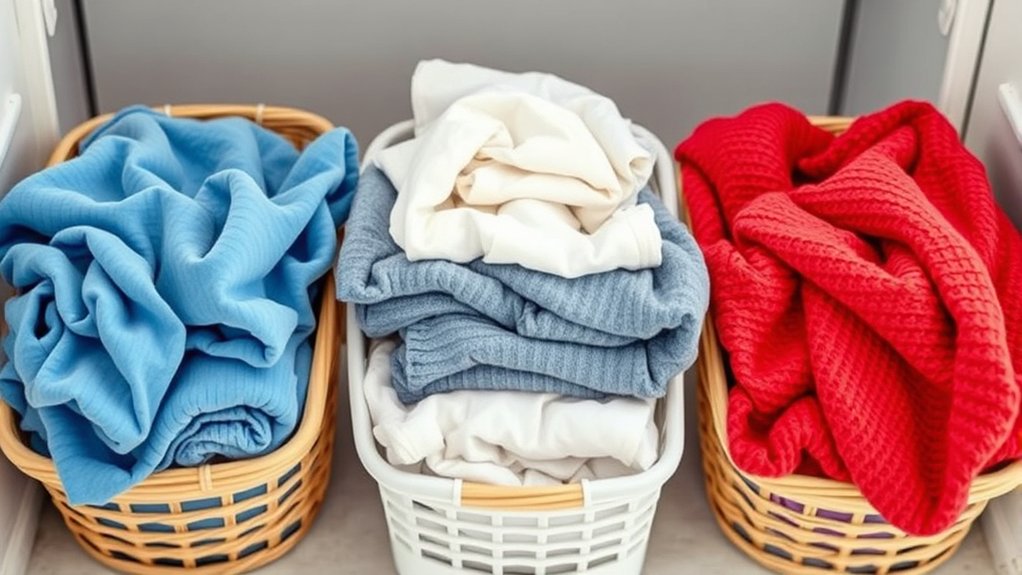
How do you guarantee your laundry colors stay vibrant and separate? Start by sorting your clothes into clear color groups: whites, lights, and darks. Keep deep, dark colors like navy, black, and burgundy apart from lighter shades to avoid dye bleeding.
Group bright and vivid colors such as red, royal blue, and emerald together to preserve their intensity. Before washing new or brightly colored items, test their colorfastness by dampening a hidden area and checking for dye transfer.
When you’re unsure about a load’s color safety, use color catchers or dye transfer sheets to prevent unwanted bleeding.
Understand How Sorting Laundry Prevents Color Damage
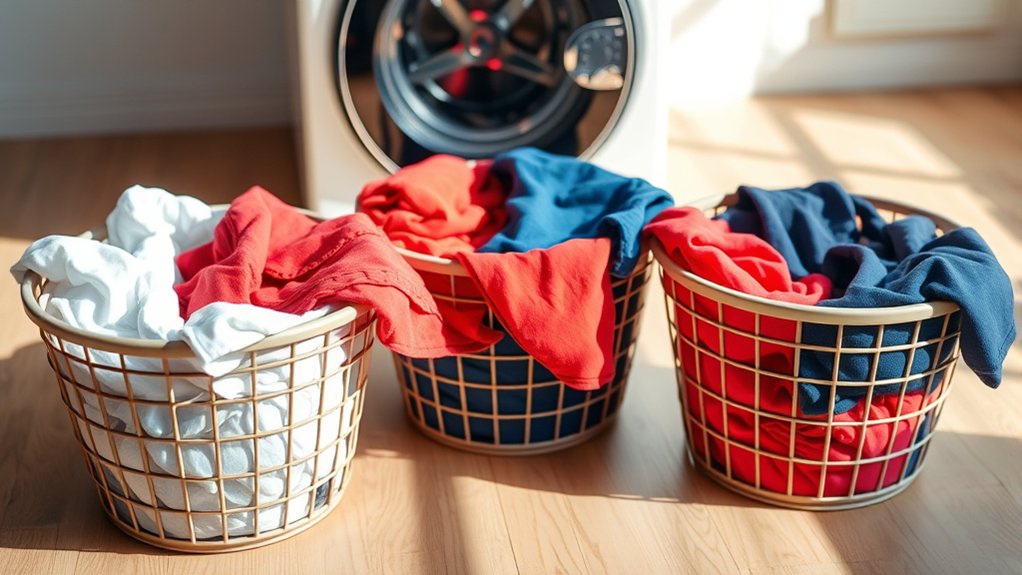
Once you’ve sorted your laundry into clear color groups, you protect your clothes from dye transfer that can cause staining and dullness. Separating whites, lights, and darks prevents dyes from bleeding onto lighter fabrics, preserving brightness and avoiding unwanted discoloration.
Sorting laundry by whites, lights, and darks prevents dye transfer and keeps fabrics bright and vibrant.
This method guarantees vivid colors stay vibrant and don’t fade prematurely, maintaining the original hue and quality of your garments. By washing similar colors together, you extend the lifespan of your clothes and keep them looking fresh longer.
Additionally, using tools like color catchers can further absorb loose dyes during washing, adding an extra layer of protection.
Adopting these sorting practices helps you maintain your wardrobe’s appearance efficiently and prevents costly color damage caused by improper laundry sorting.
How To Handle New And Dark Laundry Items Safely
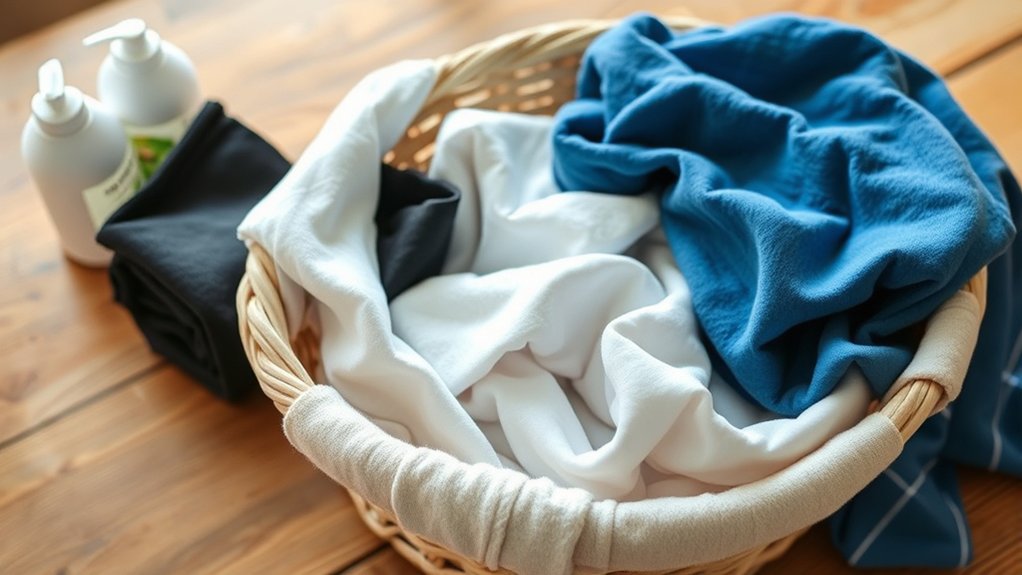
When you wash new and dark laundry items, it’s super important to separate them for their initial cycles. This helps stop dye from bleeding onto lighter fabrics.
Always turn new garments inside out to reduce dye transfer and keep the surface colors looking fresh.
Use cold water and pick a gentle cycle to keep color loss and bleeding to a minimum.
Adding color catcher sheets is a smart move—they absorb any loose dyes and help prevent stains on your other clothes.
Try not to overload your washing machine either. Too much friction can make dye transfer worse.
If you follow these simple steps, you’ll protect your lighter laundry and keep your new and dark items looking vibrant and great for many washes.
Washing Whites, Lights & Darks Separately: Essential Tips
Although it might seem tedious, washing whites, lights, and darks separately is essential for keeping your fabrics in great shape and maintaining their color vibrancy.
Always wash whites alone to prevent dye transfer and keep them bright. Use hot water for whites to get rid of stains and bacteria effectively.
Sort light-colored items, like pastels and beige, into their own loads to avoid accidental bleeding from darker clothes. Wash lights and darks in cold water to help preserve their colors.
Pre-treat stains on whites before washing to keep them looking bright.
Avoid mixing new dark or bright garments with whites until you’re sure they won’t bleed. Following these steps helps protect your fabrics, keeps colors true, and extends the life of your laundry.
It might take a bit more effort, but your clothes will thank you for it!
How To Use Color Catchers And Choose The Right Detergent
Even if you’ve carefully sorted your laundry by color, using color catchers can provide extra protection against dye transfer. This is especially helpful when washing mixed or new garments. These sheets absorb loose dyes released during washing, preventing colors from bleeding onto lighter fabrics.
Color catchers help prevent dye transfer, especially with mixed or new laundry loads.
For best results, add one color catcher to each load, especially when mixing dark and light clothes. When choosing detergent, go for non-bleach or color-safe formulas. These are designed to maintain fabric brightness and reduce fading.
Always follow the manufacturer’s instructions for both color catchers and detergents to get the most out of them. By combining careful sorting with the right products, you’ll keep your clothes vibrant and looking new longer.
That way, you don’t have to worry about unwanted color runs.
Simple Ways To Avoid Color Bleeding In Mixed Loads
To prevent color bleeding in mixed loads, you should separate new or dark-colored clothes from lighter items and turn vivid garments inside out.
Always use cold water when washing different colors together, as it reduces dye transfer compared to warm or hot water.
Avoid overloading your washing machine; cramped loads increase friction, which raises the risk of colors bleeding.
Incorporate color catchers into your laundry. They absorb loose dyes and protect other clothes from staining.
Following these simple steps guarantees your clothes maintain their original vibrancy and prevents unwanted dye transfer.
By methodically controlling water temperature, load size, and using protective tools like color catchers, you make mixed-color washing safer and more effective.
It’s easier than you might think to keep your clothes looking great!
Why Turning Clothes Inside Out Protects Colors
When you turn clothes inside out before washing, you reduce friction on their outer surfaces, which helps preserve the fabric’s color and print. This simple step minimizes abrasion caused by the washing machine drum and contact with other garments. It prevents fading and wear on patterns.
It also protects seams from whitening and reduces pilling, both of which can dull colors. Ultimately, washing clothes inside out extends their vibrant appearance and lifespan.
| Benefit | Effect on Clothes |
|---|---|
| Reduced friction | Preserves fabric color and print |
| Less abrasion | Minimizes fading |
| Protects surface designs | Prevents color wear |
| Prevents seam whitening | Maintains garment appearance |
| Reduces pilling | Keeps colors vibrant |
Frequently Asked Questions
Can I Mix Towels and Clothes in the Same Load?
You shouldn’t mix towels and clothes in the same load. Towels shed lint and usually need hotter water and longer cycles. This can end up damaging your clothes.
Washing them separately helps protect the quality of your fabrics. It also makes sure both towels and clothes get properly cleaned. So, it’s definitely worth the extra effort!
How Often Should I Replace My Washing Machine’s Filter?
You probably love scrubbing filters daily, right? Actually, replace your washing machine’s filter every 3 to 6 months based on usage.
Check for reduced water flow or odors. That’s your cue to clean or swap it for peak performance.
What Water Temperature Is Best for Saving Energy During Laundry?
You should use cold water for laundry to save energy. It uses up to 90% less electricity than hot water, effectively cleans most clothes, lowers utility bills, and reduces your household’s carbon footprint.
Using cold water is a simple change that can make a big difference. Plus, your clothes will last longer since cold water is gentler on fabrics. So, why not give it a try and see the savings for yourself?
Are There Special Detergents for Sensitive Skin and Color Care?
Yes, you’ll find detergents specially formulated for sensitive skin that are hypoallergenic and dye-free. These options help reduce irritation and keep your skin comfortable.
You can also choose color-safe detergents designed to preserve fabric vibrancy while being gentle on your skin and clothes. They work well to keep your favorite outfits looking fresh without harsh chemicals.
How Do I Remove Color Stains After Accidental Mixing?
You should rinse the stain with cold water quickly. Then, apply a stain remover or a baking soda paste to the affected area.
After that, soak the item in oxygen-based bleach. This helps to lift the color stain more effectively.
Finally, wash the garment separately with cold water and use a color-safe detergent. This way, you avoid any further color mixing and keep your clothes looking fresh.
Conclusion
So, if you enjoy surprise tie-dye disasters, feel free to toss all your laundry together. But if you prefer your whites white, your darks dark, and your colors unmuted, sorting by color isn’t just a chore—it’s your laundry’s lifeline.
Follow these steps precisely, use color catchers, and turn clothes inside out. Trust me, your wardrobe will thank you. You’ll avoid looking like you lost a fight with a paint bucket.