How To Dry Cleaners Clean Clothes – Explained
When you take clothes to a dry cleaner, they use specialized chemical solvents, not water, to clean delicate fabrics without damage. Garments are gently agitated in a closed machine with solvents like perchloroethylene that dissolve tough stains, especially oil-based ones.
The solvent is filtered and distilled for reuse, then warm air dries your clothes safely. Finally, pressing restores shape and look.
If you want to understand the entire process and choose the best service, there’s more to explore.
What Is Dry Cleaning and Why Use It?
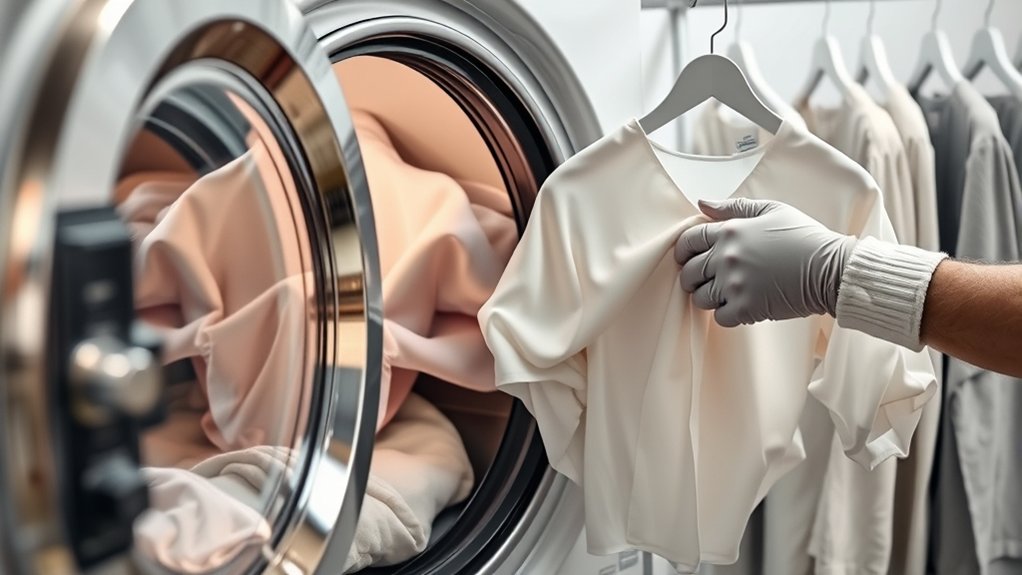
Although you might think dry cleaning involves no liquids, it actually uses chemical solvents instead of water to clean clothes and textiles. This cleaning process is ideal for delicate fabrics like silk and wool, which water can damage.
Dry cleaning uses chemical solvents, not water, making it perfect for delicate fabrics like silk and wool.
Professional dry cleaners primarily use perchloroethylene, a solvent highly effective in stain removal, especially for oil-based stains.
Unlike traditional washing, dry cleaning prevents shrinkage, fading, and fabric weakening. This helps preserve your garments’ appearance and longevity.
When you have items labeled “Dry Clean Only,” relying on this method guarantees the fabrics maintain their integrity without the risks associated with water-based cleaning.
How Dry Cleaning Machines Get Your Clothes Clean
How exactly do dry cleaning machines get your clothes clean without using water? These machines use specialized solvents that protect delicate fabrics from damage. Your garments go into a closed drum where the cleaning cycle begins.
Solvents circulate and agitate the fabrics, absorbing stains effectively. Next, filtration removes dirt and impurities from the solvent. Distillation then purifies the solvent, allowing it to be reused efficiently.
During drying, warm air evaporates any remaining solvent, which is condensed and filtered. Modern dry cleaning machines also feature vapor recovery systems to capture and recycle solvent vapors, minimizing emissions.
This precise process guarantees your clothes are cleaned thoroughly using solvents instead of water. It preserves fabric integrity while eliminating stains safely and effectively.
Dry Cleaning Solvents: Types, Uses, and Impact
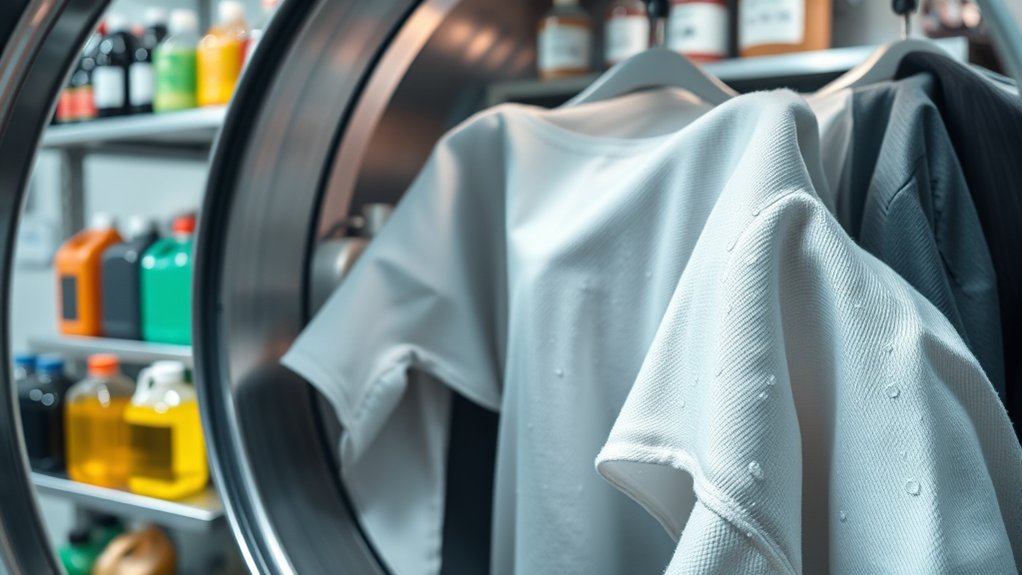
You’ll find that dry cleaning relies on several key solvents, each with its own unique uses and environmental impacts. Perchloroethylene is the most common solvent in the industry, but it’s facing regulatory phaseout because of its health risks.
On the other hand, alternatives like hydrocarbon solvents and liquid silicone come with their own sets of pros and cons when it comes to safety and eco-friendliness.
When you understand these solvents, it’s easier to see how cleaners strike a balance between effective garment care and being environmentally responsible.
Common Dry Cleaning Solvents
What makes dry cleaning solvents so essential to the process? They’re the agents that dissolve stains without damaging fabrics, ensuring effective cleaning in the dry cleaning machine.
Perchloroethylene, or PERC, dominates as the most common solvent. It’s prized for its effectiveness on oil-based stains.
Hydrocarbon solvents offer a petroleum-based alternative. They’re less flammable and designed for safer handling.
Liquid silicone, known as GreenEarth, is an environmentally friendly option gentle on fabric care but comes at a higher cost.
Emerging alternative solvents like glycol ethers and liquid carbon dioxide provide new possibilities. Liquid CO2 is notable for being reusable and nonflammable, though it requires specialized equipment.
Choosing the right dry cleaning solvent balances cleaning power, fabric safety, and environmental considerations.
Environmental And Health Impacts
Why should you care about the environmental and health impacts of dry cleaning solvents? Perchloroethylene (PERC), the most common solvent, poses significant health risks, including probable carcinogenicity.
Hydrocarbon solvents, although safer in some respects, release volatile organic compounds (VOCs) and require strict chemical safety measures due to flammability.
Eco-friendly alternatives like liquid silicone reduce some risks but raise concerns about bioaccumulation and aquatic toxicity.
Regulatory bodies, such as the EPA, are phasing out persistent solvents like D5 to minimize environmental impact.
Emerging low-toxicity solvents, including glycol ethers and liquid carbon dioxide, offer safer options but demand specialized equipment and higher costs.
Proper solvent disposal is critical to prevent contamination.
Understanding these factors helps you make informed choices about dry cleaning solvents and their broader implications.
How Dry Cleaning Removes Stubborn Stains Without Water
Although it might seem counterintuitive, dry cleaning removes stubborn stains without using water by relying on specialized organic solvents like perchloroethylene (perc). These solvents target oil-based stains and grease stains by dissolving non-polar substances that water can’t break down.
During the dry cleaning process, your garments are gently agitated in a closed machine where perc lifts and dissolves stubborn stains such as ink and food residues. This detergent-free cleaning method prevents fabric swelling, shrinkage, and color bleeding that are common with traditional washing.
After stain removal, the solvent undergoes filtration and distillation, allowing for efficient solvent removal and reuse.
Safe Drying and Finishing: Protecting Your Garments
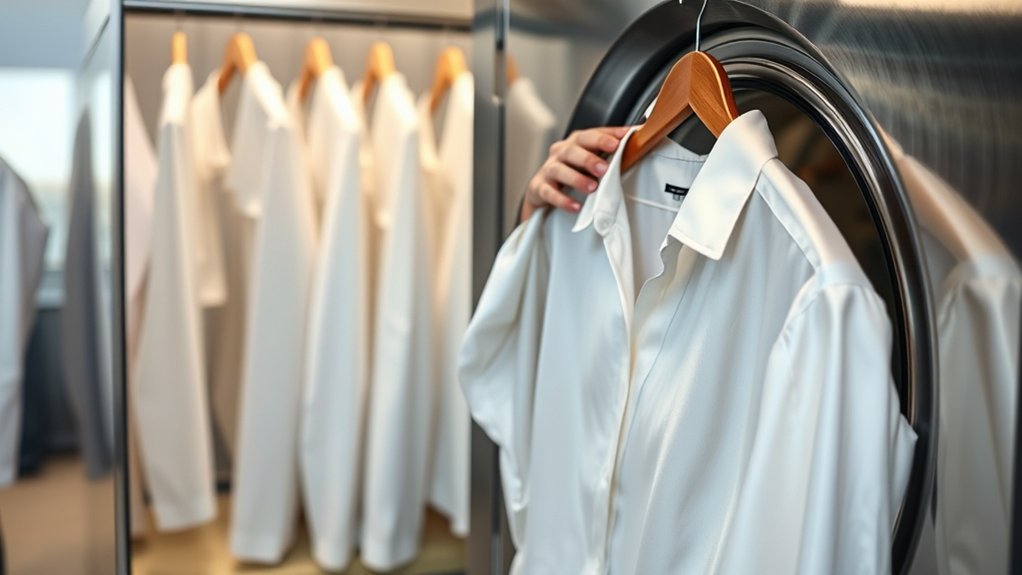
Once the cleaning cycle is complete, dry cleaners carefully dry your garments using warm air heated to around 60–63°C. This temperature helps evaporate any residual solvents without damaging the fabric. It’s a safe drying process that preserves the fabric’s integrity while preventing damage or shrinkage.
Before finishing, they inspect each garment to ensure it holds its proper shape and check for any remaining stains.
Pressing comes next, using specialized equipment designed to smooth fabrics and restore their appearance without compromising garment protection. Well-maintained drying and pressing tools help deliver consistent results and keep your clothes looking great.
Plus, vapor recovery systems remove solvent fumes during drying. This promotes environmental safety and protects worker health.
These precise finishing steps make sure your garments look their best, extending their lifespan while safeguarding both fabric and the environment.
Why Dry Cleaning Is Best for Delicate Fabrics
Because delicate fabrics like silk and wool require special care, dry cleaning offers the best solution by using gentle solvents instead of water. This method prevents damage such as shrinking and preserves shape retention, which water-based cleaning often compromises.
Dry cleaning avoids harsh agitation and high temperatures that can weaken fragile fibers or embellishments. Through specialized chemical treatments, it safely achieves effective stain removal without causing bleeding or fading common with water washing.
When you choose dry cleaning, you maintain the texture, color vibrancy, and intricate details like embroidery or sequins on your garments. Regular dry cleaning extends the lifespan of delicate fabrics, protecting them from wear and tear that home washing or improper cleaning methods might cause.
This makes dry cleaning essential for maintaining your fine clothing’s quality and appearance. It’s really the best way to keep your delicate pieces looking their best for longer.
How to Choose a Reliable Dry Cleaning Service
When selecting a dry cleaning service, you should prioritize reputation and expertise to guarantee your garments receive the best care. Start by checking customer reviews and the service’s reputation for consistent fabric care and stain removal.
Then, verify the dry cleaner’s certification and adherence to industry standards for safely managing hazardous chemicals.
Also, confirm they use environmentally friendly solvents that comply with environmental regulations, ensuring safety and sustainability.
Finally, ask about their experience with your specific fabrics and stains to ensure expert garment care.
By focusing on these points, you’ll choose a reliable dry cleaning service that protects your clothes and the environment while offering transparent pricing and quality results.
It’s all about finding a place that takes care of your garments like you would.
Frequently Asked Questions
Can Dry Cleaning Remove Odors From Clothes?
Yes, dry cleaning can effectively remove odors from clothes. It uses special solvents that break down and dissolve odor-causing molecules, eliminating smells like smoke or sweat.
You’ll notice your garments come out fresher because dry cleaning also includes deodorizing cycles with cool air and filtration to clear any lingering odors.
For stubborn smells, additional treatments are available to guarantee your clothes smell clean and fresh every time.
How Long Does the Dry Cleaning Process Take?
Think of dry cleaning like a chef preparing a complex dish. It usually takes 1 to 3 hours to get your clothes just right.
If your garment’s heavily stained or needs special care, it might take longer, even up to two weeks for intricate repairs.
Same-day service is often available, wrapping up in 4 to 6 hours.
Are All Garments Suitable for Dry Cleaning?
Not all garments are suitable for dry cleaning. You should avoid dry cleaning clothes labeled “Machine Wash” or “Hand Wash Only,” as they may get damaged. Delicate fabrics like silk, wool, or velvet really benefit from dry cleaning.
On the other hand, natural fibers like cotton usually don’t need dry cleaning unless they’ve special finishes. It’s always best to follow care labels carefully.
If it says “Dry Clean Only,” don’t risk washing it at home. That way, you protect your garment’s quality.
What Should I Do if My Clothes Get Damaged?
If your clothes get damaged, notify your dry cleaner immediately and ask them to document the issue. Take clear photos of the damage to support any claims. Review your receipt and their liability policy carefully.
Request the cleaner to inspect the garment and determine if the damage came from their process. For minor issues, consider professional repairs.
But if negligence caused the damage, pursue compensation accordingly.
Act promptly to protect your rights. It’s always better to address these things sooner rather than later.
How Often Should I Dry Clean My Clothes?
You might be surprised, but how often you dry clean your clothes depends on what you wear and how you use it. Generally, aim for every 4 to 6 wears, but delicate fabrics like silk or wool need more frequent care.
For suits and formal wear, dry cleaning after each use preserves their shape.
If your clothes get heavy soil or stains, clean them sooner. This keeps your garments looking sharp and lasting longer.
Conclusion
Think of dry cleaning as a skilled gardener tending delicate blooms, your clothes. It gently removes stains without harsh water, using specialized solvents that preserve the fabric’s beauty. The machines act like careful hands, cleaning and drying with precision to protect every thread.
By choosing a trusted dry cleaner, you make sure your garments get expert care, just like a garden thrives under attentive hands. Dry cleaning isn’t just cleaning. It’s fabric preservation at its finest.