What Does Green Dry Clean Mean – Explained
Green dry cleaning means using safe, eco-friendly solvents like liquid CO₂ or water-based detergents instead of harmful chemicals such as perchloroethylene (Perc). You minimize exposure to toxic vapors and prevent environmental damage while keeping your clothes fresh and vibrant.
These methods use advanced technology that protects fabric quality and supports sustainability by cutting water, energy, and chemical waste. Choosing a certified green cleaner guarantees genuine care for your health and the planet.
Explore how these alternatives truly outperform traditional methods. It’s a smarter choice for both your wardrobe and the environment.
What Green Dry Cleaning Means and Why It Matters

What exactly makes dry cleaning “green,” and why should you care? Green dry cleaning uses environmentally safe solvents like liquid carbon dioxide or water instead of hazardous chemicals such as perchloroethylene.
This shift helps reduce toxic exposure risks for workers and consumers while supporting eco-friendly cleaning practices.
Certified green dry cleaners rely on specialized equipment designed to minimize chemical use and environmental impact without compromising cleaning quality.
By choosing green dry cleaning, you actively protect water sources, improve air quality, and contribute to overall environmental health.
Avoiding perchloroethylene and similar substances means less pollution and a safer planet.
In short, green dry cleaning offers you a responsible alternative that balances effective garment care with sustainability, making a positive difference every time you clean your clothes.
Why Perc and Traditional Chemicals Harm Health and Environment
While green dry cleaning offers a safer alternative, traditional methods rely heavily on perchloroethylene, or Perc. This solvent is linked to serious health and environmental problems.
Perc is a toxic chemical classified as a carcinogen by the EPA, exposing you to significant health risks like respiratory issues, skin irritation, and potential liver and kidney damage.
Perc, a carcinogen per the EPA, poses serious health risks including respiratory problems and organ damage.
In traditional dry cleaning, Perc vapors don’t just disappear. They can travel through buildings, affecting workers and residents long after cleaning.
Even worse, Perc contamination seeps into soil and water, creating ongoing environmental hazards that threaten nearby communities.
By understanding these dangers, you can see why relying on Perc in traditional dry cleaning isn’t just outdated. It’s harmful.
Choosing alternatives is essential to protect your health and the environment from this toxic chemical’s lasting impact.
Eco-Friendly Solvents Used in Green Dry Cleaning
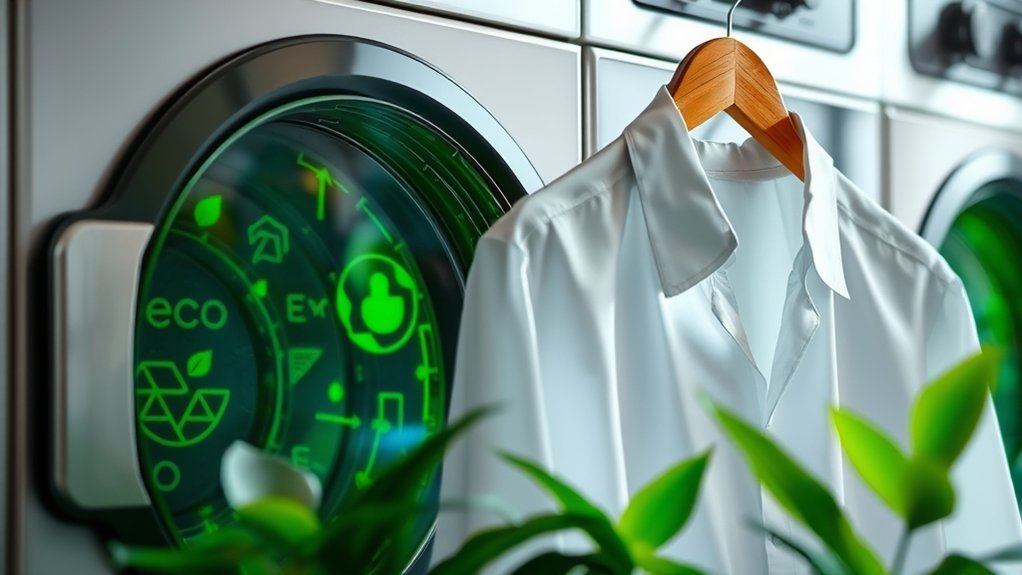
How do green dry cleaners protect your clothes and the planet without using harmful chemicals like perchloroethylene? They rely on eco-friendly solvents such as liquid CO2, biodegradable wet cleaning solutions, and silicone-based solvents. Liquid CO2 is a non-toxic gas recycled from industrial by-products and dissolves dirt effectively at room temperature.
Wet cleaning uses water-based, biodegradable detergents that avoid hazardous VOCs. Some cleaners use silicone-based solvents like GreenEarth, which break down into sand, water, and CO2. Though their production can release dioxins, they remain low in toxicity.
| Solvent Type | Environmental Benefit |
|---|---|
| Liquid CO2 | Non-toxic, recycles industrial CO2 |
| Wet Cleaning | Biodegradable, no VOCs |
| Silicone-Based | Breaks down naturally, low toxicity |
| Biodegradable Agents | Reduce water and air pollution |
These solvents guarantee safe, sustainable garment care without compromising cleaning power. It’s great to know your clothes get cleaned thoroughly while keeping the environment safe.
Wet Cleaning: A Safe Green Dry Cleaning Alternative
You’ll find that wet cleaning uses advanced, computer-controlled machines to safely clean garments with water and biodegradable detergents.
It avoids harmful solvents like PERC, which is great news for both your clothes and the environment.
This method not only protects your clothes better but also helps reduce environmental impact by cutting down on water and energy use.
Plus, it’s recognized by the EPA as one of the safest and most eco-friendly alternatives to traditional dry cleaning.
How Wet Cleaning Works
Because wet cleaning uses specialized, computer-controlled machines, it gently cleans your garments with water and biodegradable detergents. It avoids the toxic chemicals you find in traditional dry cleaning. These machines carefully adjust water temperature, agitation, and detergent levels to match each fabric’s needs.
This precision protects delicate fabrics, even those with beads, sequins, and other embellishments. It ensures your clothes get cleaned effectively without any damage.
Plus, by relying on biodegradable detergents, wet cleaning stays environmentally friendly and minimizes harmful waste.
The process uses less water and energy compared to conventional methods, which makes it a more sustainable choice.
When you opt for wet cleaning, you’re choosing a safe, green alternative to dry cleaning. It refreshes your wardrobe while keeping your fabrics intact and reducing your environmental footprint.
Environmental Benefits Explained
While traditional dry cleaning relies on harsh chemicals like perchloroethylene (Perc) that release harmful volatile organic compounds (VOCs), wet cleaning offers an environmentally safer alternative by using water and biodegradable detergents. You’ll reduce air and water pollution considerably since wet cleaning avoids toxic chemical solvents.
Plus, it cuts hazardous waste and supports safer working conditions. Modern, computer-controlled wet cleaning machines are also energy-efficient, which makes its environmental benefits even better.
| Aspect | Traditional Dry Cleaning | Wet Cleaning |
|---|---|---|
| Chemicals Used | Perc (a chemical solvent) | Water & biodegradable detergents |
| Pollution Risk | High air & water pollution | Minimal air & water pollution |
| Waste Produced | Hazardous waste | Environmentally friendly wastewater |
Choosing wet cleaning means you’re making a greener, safer choice.
Fabric Care Advantages
How does wet cleaning protect your delicate fabrics better than traditional methods? Wet cleaning uses water combined with biodegradable detergents specifically designed for fabric care. It avoids the harsh chemicals found in conventional dry cleaning.
Computer-controlled machines precisely adjust water temperature, agitation, and drying to gently clean delicate garments like silk, wool, and beaded items. This helps preserve their texture and appearance.
This environmentally friendly process leaves no chemical residues or odors, making your clothes safer and more comfortable to wear. Recognized by the EPA as one of the safest green dry cleaning alternatives, wet cleaning not only safeguards your fabrics but also supports sustainable practices.
Choosing wet cleaning means you’re protecting both your wardrobe and the environment with a scientifically advanced, gentle method. It’s a smart choice that cares for your clothes and the planet at the same time.
Liquid CO2 Cleaning: Eco-Friendly and Effective
When you choose liquid CO2 cleaning, you’re opting for a method that harnesses pressurized, recycled carbon dioxide to clean your garments without relying on harmful chemicals. This eco-friendly technique uses liquid CO2 as a non-toxic solvent, dissolving dirt, fats, and oils at room temperature inside a rotating chamber.
Because CO2 is naturally occurring, non-flammable, and recycled from manufacturing by-products, it makes liquid CO2 cleaning an environmentally safe option. Compared to traditional dry cleaning, it minimizes water and energy waste, supporting sustainable dry cleaning practices.
This green cleaning method effectively cleans delicate fabrics while eliminating health and environmental risks linked to chemical solvents like PERC.
Choosing liquid CO2 cleaning means you’re embracing a precise, eco-conscious approach to garment care.
Spotting a True Green Dry Cleaner Near You

Choosing liquid CO2 cleaning shows you care about eco-friendly garment care, but finding a truly green dry cleaner means you need to look closely. Make sure they use eco-friendly solvents like liquid CO2 or professional wet cleaning instead of perchloroethylene.
Don’t hesitate to ask about their green cleaning methods. Also, check if they have certifications proving their practices are environmentally safe. Equipment designed for green cleaning is another good sign that they’re the real deal.
| Criteria | What to Look For | Why It Matters |
|---|---|---|
| Solvent Type | Liquid CO2 or Wet Cleaning | Avoids harmful perchloroethylene |
| Transparency | Specifies cleaning methods | Ensures no toxic chemicals |
| Certification | Displays green dry cleaner credentials | Confirms eco-friendly standards |
| Equipment | Uses advanced green cleaning machines | Supports sustainable processes |
| Claims | Avoid vague “green” without detail | Prevents misleading marketing |
Use this checklist to spot a certified green dry cleaner near you.
Avoiding Misleading ‘Green’ Dry Cleaning Claims
Although many dry cleaners promote themselves as “green” or “organic,” you should be cautious about accepting these claims at face value. Some use solvents in dry cleaning like the chemical called Perc or D-5 siloxane, which still raise environmental concerns.
To prevent misleading “green” dry cleaning claims, always verify the methods and solvents used. Ask if they employ truly eco-friendly solvents such as CO2 or water-based wet cleaning methods instead.
Here’s what you should do:
- Request detailed information about the cleaning process and solvents used.
- Confirm if the cleaner uses wet cleaning methods rather than harmful chemicals.
- Be skeptical of vague “green” labels without transparency.
Choosing a verified green dry cleaner ensures you’re supporting environmentally responsible practices. It’s worth taking a little extra time to check before you decide.
Benefits of Green Dry Cleaning for Your Clothes
Because green dry cleaning uses eco-friendly solvents like CO2 or water instead of harsh chemicals, it protects your clothes from damage while delivering thorough cleaning.
This method preserves fabric integrity and reduces chemical residues, lowering the risk of skin irritations.
You’ll notice your garments retain softness and vibrant colors longer, thanks to environmentally safe processes that prioritize gentle garment care.
Choosing green dry cleaning means extending your clothes’ lifespan without sacrificing cleanliness.
How Green Dry Cleaning Supports Sustainability
Green dry cleaning doesn’t just care for your clothes. It actively supports sustainability by cutting down on harmful chemicals and waste.
By using eco-friendly solvents like CO2 or water, it drastically reduces chemical waste and pollution.
You’ll also notice a drop in energy consumption compared to traditional methods, making the process more environmentally responsible.
Plus, it generates far less hazardous waste, easing the strain on landfills and water systems.
Here’s how green dry cleaning supports sustainability:
- Cuts toxic chemical use, protecting ecosystems and human health
- Lowers energy consumption, reducing carbon footprint
- Minimizes hazardous waste, preserving natural resources
Choosing green dry cleaning means you promote a cleaner environment and encourage the industry toward sustainable practices.
It’s a simple way to make a positive impact.
Choosing the Right Green Dry Cleaning Method for You
When selecting a dry cleaning service, you should prioritize those using eco-friendly solvents like liquid CO2 or professional wet cleaning. These options offer safer, more sustainable alternatives to traditional perc-based methods.
Check if the cleaner explicitly avoids harmful chemicals such as Perc and hydrocarbon solvents. They should opt instead for non-toxic, environmentally friendly cleaning methods.
Consider your garment types. Wet cleaning works great with delicate fabrics, beads, and sequins because it preserves quality without damage.
Don’t hesitate to ask about their equipment. Energy-efficient machines reduce water and chemical consumption, which boosts sustainability.
Be cautious of vague “green” claims and ask for clear details on solvents and processes. This way, you can guarantee you’re choosing a genuinely eco-friendly service.
This approach ensures effective cleaning while minimizing environmental impact.
Frequently Asked Questions
How Much Does Green Dry Cleaning Typically Cost Compared to Traditional Methods?
You’ll typically pay 10-20% more for green dry cleaning compared to traditional methods, which usually means about $2 to $5 extra per item. This price difference really depends on where you live. Urban areas often charge higher premiums.
Some cleaners include eco-friendly methods in their regular pricing, so the costs might be similar for certain garments.
Keep in mind that specialized equipment and solvents drive these costs. But choosing green cleaning supports safer, sustainable practices, which is a big plus.
Are There Any Special Care Instructions After Green Dry Cleaning?
Yes, after green dry cleaning, you should gently press or steam your garments to remove wrinkles without damaging them.
Avoid tumble drying delicate fabrics; instead, let them air dry to keep their shape intact.
Always follow the care label’s instructions, especially for sensitive materials.
Don’t expose freshly cleaned clothes to direct sunlight to prevent fading.
Store your garments in a cool, dry place, and steer clear of harsh chemicals for lasting quality.
Taking these steps will help your clothes look great for longer.
How Long Does the Green Dry Cleaning Process Usually Take?
You might expect green dry cleaning to take forever, but it usually doesn’t. In fact, it typically lasts between 30 minutes to an hour, just like traditional methods. The exact time depends on your garment’s fabric and soil level.
Wet cleaning often runs about 45 minutes.
Liquid CO2 cleaning varies from 20 to 60 minutes.
Can Green Dry Cleaning Remove All Types of Stains Effectively?
Green dry cleaning can remove most common stains like grease, dirt, and food spills effectively, thanks to advanced detergents and controlled processes.
You’ll find it works well even on delicate fabrics that need gentle care.
However, some stubborn or heavy oil-based stains might need extra treatment or multiple cycles.
Is Green Dry Cleaning Safe for All Fabric Types?
You wouldn’t want to clean your silk blouse with medieval potions, right? Green dry cleaning is safe for most fabrics, including delicate ones like silk, wool, and lace. It avoids harsh chemicals that damage fibers, preserving both texture and color.
However, not every fabric suits it perfectly. Always check care labels or ask your cleaner.
Conclusion
So, next time you see “green dry cleaning,” don’t just nod and assume it’s a miracle cure for your wardrobe and the planet. Unless you want your clothes treated with chemicals that scream “eco-friendly” but act otherwise, dig deeper.
Choose truly green methods like wet cleaning or liquid CO2. They actually protect your health and the environment.
Because saving the earth isn’t just a trendy label; it’s about smart, serious choices that make a real difference.