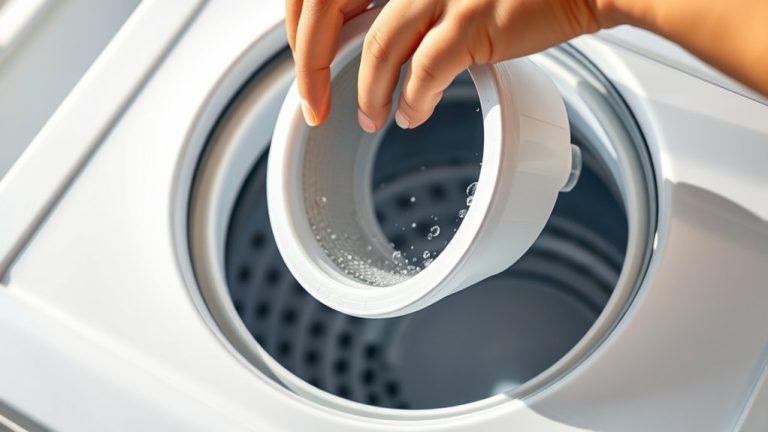
How To Clean Bosch Washing Machine – Guide
To clean your Bosch washing machine, run a monthly high-temperature drum clean cycle using Bosch cleaner or citric acid. This helps remove residue and odors.
Regularly wipe the VarioDrum interior, door gasket, detergent tanks, and drain pump filter with mild solutions. Doing this prevents mold and blockages.
Make sure to use approved tools and disconnect the power beforehand for safety. Keep the exterior and control panel clean with a damp cloth.
Following these steps maintains performance and prevents issues. If you want, there’s more guidance available that covers detailed maintenance and troubleshooting.
Run the Bosch Washer Drum Clean Cycle
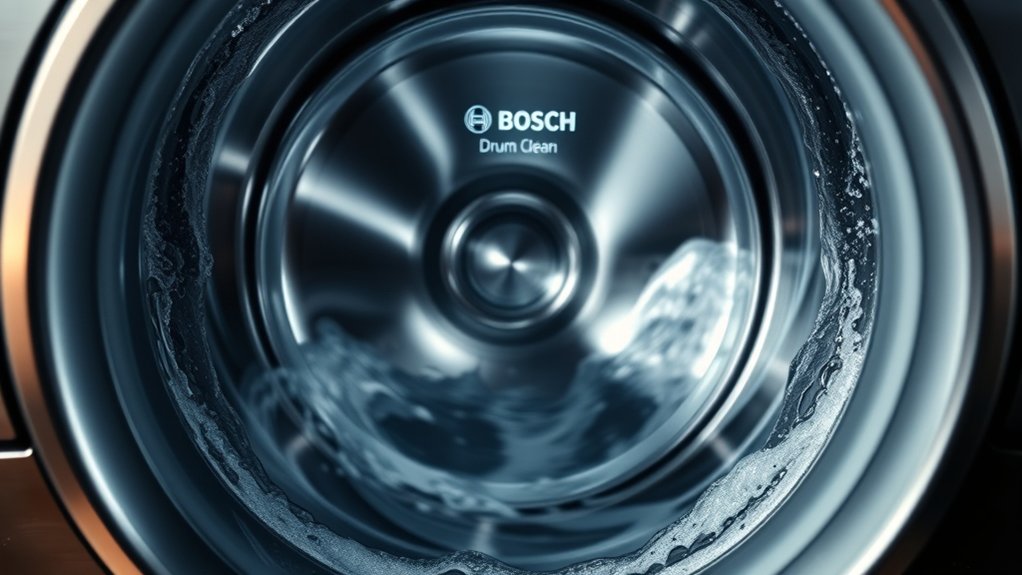
While maintaining your Bosch washing machine, you should run the Drum Clean cycle regularly to eliminate residue, mold, and odors from the drum and internal parts. This dedicated program performs a deep clean by operating at high temperatures, typically 90°C or the hottest cotton setting.
Before starting, add 2 tablespoons of citric acid or a Bosch-approved cleaner into the empty drum to enhance cleaning and odor removal. Make sure the drum is empty, with no laundry or detergent, to prevent further buildup.
Running the Drum Clean cycle monthly or after about every 20 wash cycles guarantees ideal maintenance and machine hygiene. This routine cleaning prolongs your Bosch washer’s lifespan and maintains efficient performance by targeting stubborn residues and internal contaminants effectively.
Essential Tools and Supplies for Bosch Washer Cleaning
You’ll want to have a few specific tools on hand, like a Torx T20 screwdriver, a soft-bristle toothbrush, and some microfiber cloths. These will help you get into all the nooks and crannies for a precise clean.
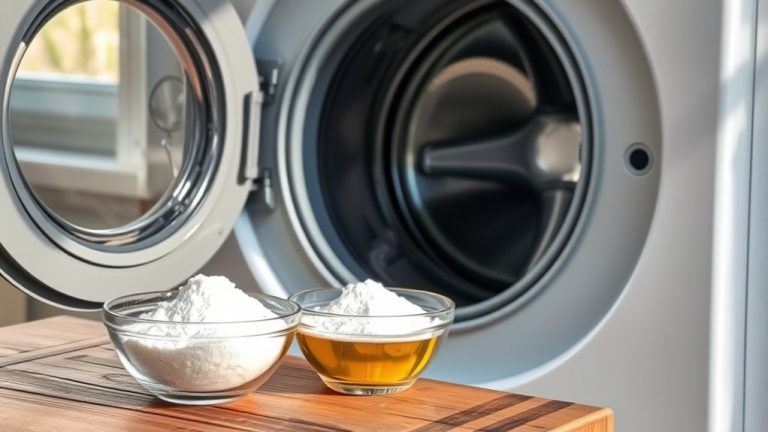
When it comes to supplies, stick to approved options like white vinegar, baking soda, a Bosch-specific cleaner, or citric acid. Just make sure to measure everything carefully with a cup so you don’t accidentally cause any damage.
And don’t forget—always follow safety precautions to keep both yourself and your washer safe throughout the cleaning process.
Recommended Cleaning Tools
Before tackling the cleaning process, gather essential tools like a Torx T20 screwdriver, a flathead screwdriver, a soft-bristle toothbrush, and microfiber cloths to handle various components of your Bosch washing machine.
The Torx T20 screwdriver is vital for removing panels or accessing internal parts, while the flathead screwdriver helps with delicate prying tasks.
Use the soft-bristle toothbrush to scrub tight spots such as the detergent drawer, gasket, and filters without causing damage.
Microfiber cloths efficiently wipe surfaces and absorb moisture, guaranteeing a streak-free finish.
For cleaning solutions, Bosch-specific cleaner or citric acid provide targeted effectiveness without harming machine parts.
Having these precise cleaning tools on hand guarantees thorough maintenance, safeguards your appliance, and optimizes cleaning results.
It’s all about making the job easier and keeping your machine running smoothly.
Approved Cleaning Supplies
Gathering the right tools sets the stage for effective cleaning, but selecting approved cleaning supplies guarantees you protect your Bosch washing machine’s components during maintenance. Use only approved cleaning agents like Bosch cleaner or citric acid to remove buildup without harming delicate rubber parts.
Incorporate microfiber cloths for gentle surface cleaning that avoids scratches.
For effective descaling and gasket care, household items such as white vinegar and baking soda are safe when used properly. Here’s a concise list of essential approved supplies:
- Bosch cleaner or citric acid for residue removal
- Microfiber cloths for non-abrasive wiping
- White vinegar and baking soda for descaling and gasket cleaning
- Soft-bristle toothbrushes to reach tight areas without damage
These materials ensure thorough cleaning while preserving your washer’s longevity. Using the right stuff really makes a difference!
Safety Precautions
Although cleaning your Bosch washing machine is essential for maintenance, you must disconnect it from power to eliminate the risk of electrical shock. Always follow safety precautions by unplugging the unit before starting any cleaning task.
Use only approved cleaning agents, such as Bosch cleaner or citric acid, to prevent surface damage.
Gather essential tools like a Torx T20 screwdriver, soft-bristle toothbrush, microfiber cloths, white vinegar, baking soda, and measuring cups for precise application.
Adhere strictly to all safety warnings and manufacturer instructions when handling tools and cleaning products. This guarantees safe, effective maintenance without compromising the washer’s components or your personal safety.
This simple step of disconnecting power and using proper supplies makes all the difference in keeping both your Bosch washer and yourself in good shape!
Safely Cleaning the Bosch Washer’s VarioDrum Interior
When you want to maintain your Bosch washing machine’s VarioDrum, start by removing any laundry and running a hot water cycle with a Bosch Washer Cleaner or citric acid. This helps effectively break down residues.
Next, follow these steps to clean the interior safely: Use a microfiber cloth or soft-bristle toothbrush dipped in a vinegar solution to gently scrub the VarioDrum, targeting residue and buildup. Avoid abrasive pads or harsh chemicals that could damage the drum’s coating.
It’s a good idea to regularly wipe the interior after each cycle. This prevents mold, mildew, and greasy residue from accumulating.
Try to perform a deep cleaning monthly or at least every 20 wash cycles, especially if you wash frequently in cold water.
Don’t forget to clean the detergent drawer regularly, as detergent buildup can affect how clean the drum stays.
Cleaning the Bosch Washer Door Gasket to Remove Mold
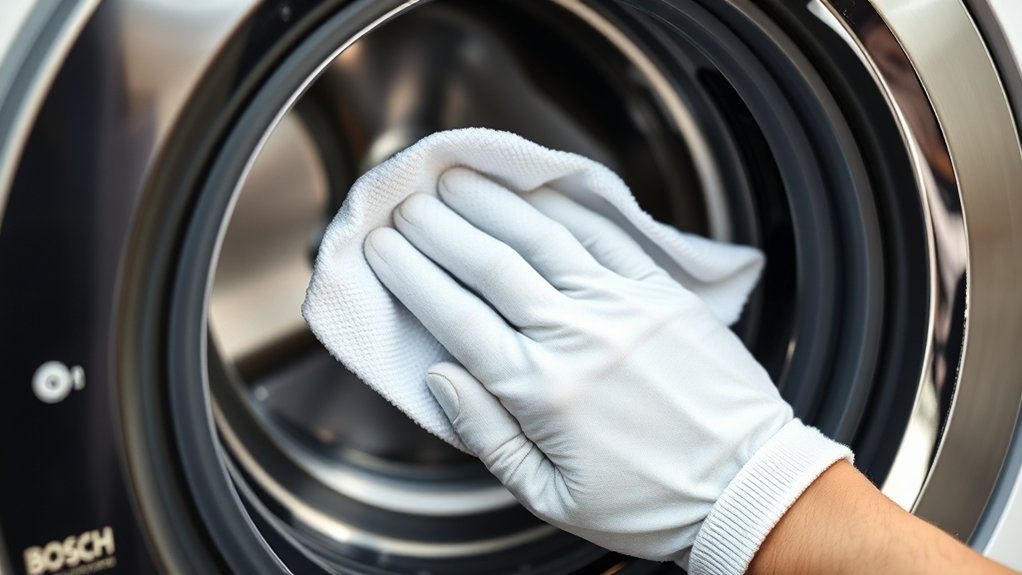
Keeping the VarioDrum clean reduces residue inside your Bosch washer, but the door gasket also demands attention. Mold and detergent residue accumulate in the gasket’s folds and crevices. So, it’s important to remove mold regularly to keep things in good shape.
Peel back the gasket’s front lip to get to the hidden areas. Use a microfiber cloth dampened with a vinegar-water solution to wipe the inner folds. For stubborn spots, especially along the bottom fold, a soft toothbrush works great.
After cleaning, make sure to dry the gasket thoroughly. Then, leave the door slightly open to help with ventilation and stop mold from coming back.
| Task | Recommended Method |
|---|---|
| Accessing gasket | Peel back front lip to inspect |
| Mold removal | Vinegar-water solution + brush |
| Post-cleaning care | Dry gasket, leave door ajar |
Flushing the i-DOS Detergent Tanks and Drain Pump Filter
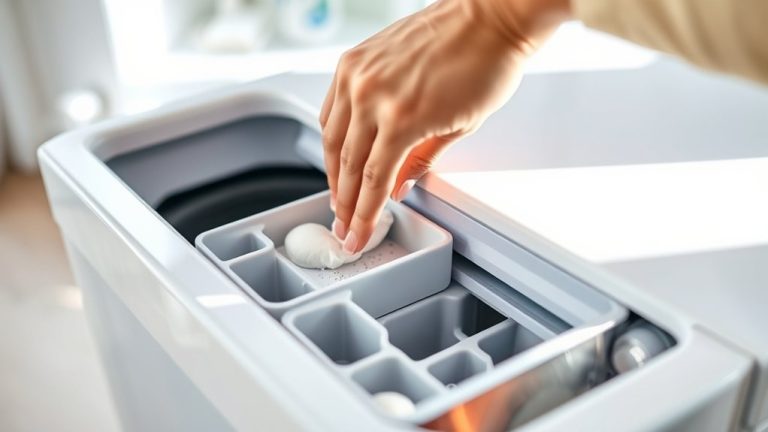
Start by taking out the i-DOS detergent tanks and giving them a good rinse with warm water to get rid of any leftover residue. You might want to use a soft brush to clean the nozzles too, which helps keep the detergent flowing smoothly. Once they’re nice and clean, pop the tanks back into place securely.
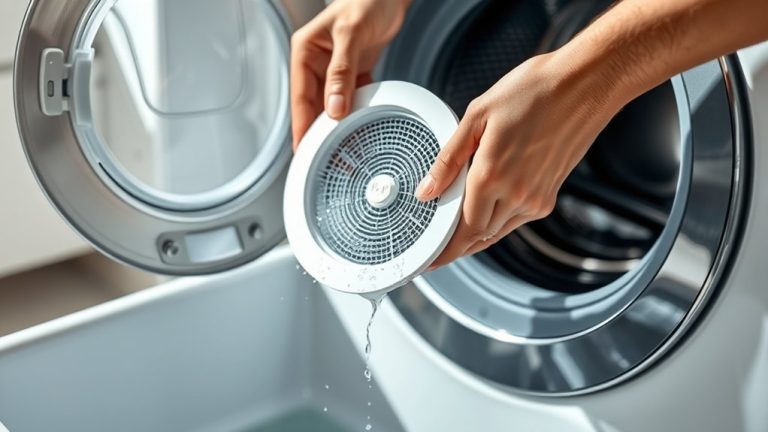
Next, open up the service panel so you can reach the drain pump filter. Take some time to clean and rinse it thoroughly, making sure to remove any debris.
This step is important because it helps keep the drainage working perfectly.
Removing And Rinsing Tanks
Although it requires careful handling, removing and rinsing the i-DOS detergent tanks and drain pump filter is essential for maintaining peak machine performance. To carry out this vital cleaning process, follow these steps:
- Unplug the machine and open the small access panel to reach the drain pump filter.
- Remove the filter carefully, placing a container underneath to catch residual water.
- Extract the i-DOS detergent tanks and rinse thoroughly with warm water to eliminate detergent buildup and residue.
- Use a soft brush or toothbrush to remove debris from filter nozzles and siphon tubes, ensuring excellent function during maintenance.
This routine prevents clogging and preserves the dispensing accuracy of the i-DOS detergent tanks. It also safeguards your Bosch washer’s longevity.
Clearing Clogs And Debris
After removing and rinsing the i-DOS detergent tanks and drain pump filter, focus on flushing out any clogs and debris that might block detergent flow and drainage. Take a close look at the siphon tubes connected to the detergent tanks. Clear any blockages you find to stop detergent buildup that can mess with dispensing.
For the drain pump filter, be sure to remove all visible debris, lint, or foreign objects that could slow down drainage. Use a toothbrush or a soft brush to scrub the filter’s impeller area. This helps get rid of stubborn residue and ensures thorough cleaning.
Doing this regularly is key to keeping detergent flowing smoothly and drainage working well. Tackling these blockages often will help prevent malfunctions and keep your Bosch washing machine running longer.
Reassembling And Testing Filter
When you’ve thoroughly cleaned the drain pump filter and i-DOS detergent tanks, reassemble the filter by inserting it back into its housing and turning it clockwise until it clicks securely.
Next, flush the i-DOS tanks by rinsing them with warm water and clearing nozzle clogs with a toothbrush before refilling and reseating them properly.
Proceed with testing to guarantee everything functions correctly:
- Reinsert the drain pump filter and turn clockwise until secure.
- Refill and seat the i-DOS detergent tanks accurately.
- Run a short wash cycle to monitor for leaks or drainage issues.
- Confirm the filter and tanks operate without leaks or malfunctions.
This testing phase assures your Bosch washing machine’s filter and detergent system perform at their best after cleaning and reassembly. It’s a simple step that makes sure everything is working smoothly.
Wiping Down the Exterior and Control Panel
To maintain your Bosch washing machine’s appearance and functionality, you should regularly wipe down the exterior and control panel using a damp microfiber cloth. This gentle wipe removes dust and grime without damaging the surfaces. Avoid abrasive cleaners or harsh chemicals, as they can harm the exterior surfaces and control panel.
Regular cleaning prevents residue buildup that may interfere with touch-sensitive buttons or the display. For stubborn stains, slightly dampen the cloth with mild soap, then wipe. Always keep the exterior dry to avoid water splashes that could cause electrical issues.
| Step | Tool/Material | Purpose |
|---|---|---|
| 1. Prepare cloth | Damp microfiber cloth | Safe, effective cleaning |
| 2. Wipe exterior | Microfiber cloth | Remove dust, grime |
| 3. Clean control panel | Soft cloth + mild soap | Eliminate residue buildup |
| 4. Avoid chemicals | None | Prevent surface damage |
| 5. Dry surfaces | Dry microfiber cloth | Prevent electrical issues |
Bosch Washer Cleaning Schedule for Best Results
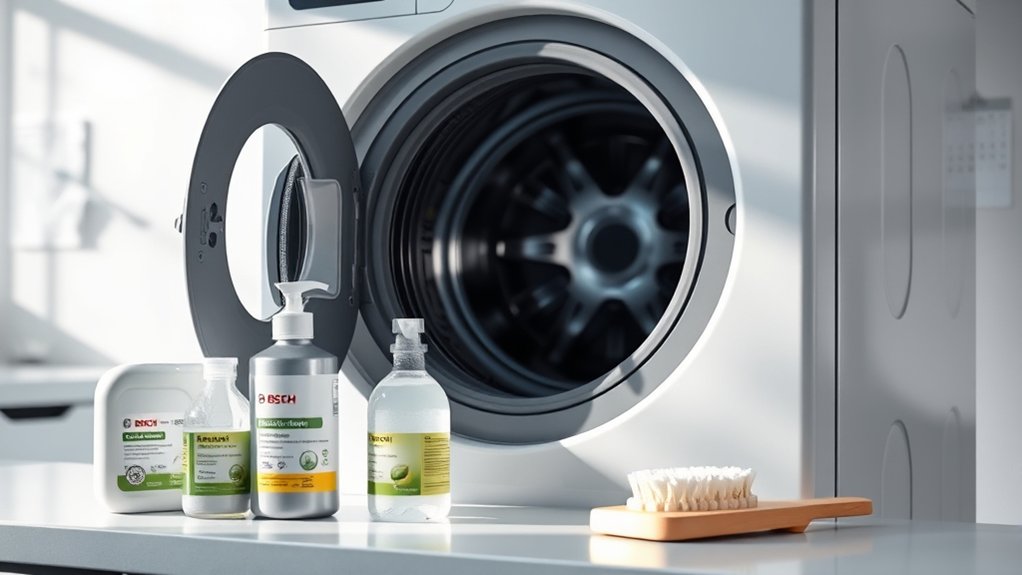
Although regular surface cleaning keeps your Bosch washing machine looking good, maintaining its internal components requires a consistent cleaning schedule. To optimize appliance care and prolong efficiency, follow this maintenance schedule:
- Run the Bosch drum clean cycle once a month to eliminate mold and residue buildup.
- Perform descaling every 2-3 months if you live in a hard water area to prevent mineral deposits.
- Clean the detergent drawer and door gasket every 3 months to avoid detergent residue and mildew.
- Use Bosch Cleaner or citric acid periodically to enhance deep cleaning and maintain internal hygiene.
If you stick to this routine, your Bosch washer will operate at its best and last longer. It’s really worth the effort to keep things running smoothly!
Troubleshooting Common Cleaning Issues and When to Call a Pro
Following a strict cleaning schedule helps maintain your Bosch washing machine, but some issues may still arise that require more than routine care. Persistent mold behind the outer tub or gasket often demands professional disassembly and specialized cleaning tools.
A strict cleaning schedule is essential, but persistent mold may require professional disassembly and specialized tools.
If foul odor or mold returns despite your cleaning efforts, it’s time to consult a certified Bosch repair technician.
Error codes such as E12 or unusual grinding noises typically indicate faulty sensors or damaged parts needing expert diagnosis.
Excessive vibration after cleaning suggests worn shock absorbers or shifted internal weights, also requiring professional attention.
Regular, scheduled professional servicing prevents complex problems and ensures efficient operation. When cleaning issues persist beyond standard maintenance, relying on a professional diagnosis and repair technician is vital for safe, effective resolution.
Frequently Asked Questions
Can I Use Bleach to Clean My Bosch Washing Machine?
You shouldn’t use bleach to clean your Bosch washing machine. Bleach can damage the rubber seals and drum over time, causing leaks and mold buildup.
Instead, use Bosch-recommended cleaners like citric acid or their specific washer cleaner to safely remove residues and limescale.
Regularly cleaning with approved products keeps your machine running smoothly and protects your warranty.
Always follow Bosch’s instructions to make sure your machine lasts longer and works at its best.
It’s a simple way to avoid problems and save yourself some trouble down the line.
How Often Should I Replace the Washing Machine Filter?
You should replace your Bosch washing machine filter every 12 to 18 months, depending on usage and water quality. Check it every 3 months and clean as needed to prevent buildup.
In hard water areas, inspect more frequently.
If you notice persistent drainage issues or odors despite cleaning, consider replacing the filter sooner.
Always consult your model’s manual for specific guidance on replacement intervals and procedures to maintain peak performance. It’s a good way to keep your machine running smoothly!
Is It Safe to Use Vinegar for Cleaning My Bosch Washer?
Sure, you can bathe your Bosch washer in vinegar if you want to audition for a rubber seal horror story. Technically, occasional diluted vinegar (about a cup in a hot cycle) helps remove deposits and odors.
But don’t overdo it. Vinegar’s acetic acid can degrade hoses and seals, risking costly damage and voiding warranties.
Stick to Bosch’s recommended cleaners to keep your machine running smoothly and your warranty intact.
Can I Clean My Bosch Washer While It’s Still Under Warranty?
Yes, you can clean your Bosch washer while it’s under warranty, but you need to follow Bosch’s cleaning instructions exactly. Use only Bosch-recommended cleaning products and methods to avoid voiding the warranty.
Routine tasks like cleaning the drum or gasket won’t affect your coverage if you do them correctly. Just make sure to keep detailed records of your maintenance.
If you need to do any complex cleaning or repairs, it’s best to contact Bosch support or authorized technicians. That way, you can be sure your warranty stays intact.
What Causes Unpleasant Odors in My Bosch Washing Machine?
You’d think a machine designed to clean wouldn’t smell like a science experiment gone wrong, right? Unpleasant odors in your Bosch washing machine come from mold and mildew lurking in the door gasket and drum, thanks to leftover moisture.
Bacteria thrive on detergent and fabric softener residues, especially if you use low-temp cycles.
Don’t forget mineral buildup from hard water and trapped dirt in vents or filters that create that musty, unwelcome smell. It’s pretty common but totally fixable once you know what’s causing it.
Just a little regular maintenance can keep your washer smelling fresh.
Conclusion
Now that you’ve learned how to clean your Bosch washing machine thoroughly, you can see why neglecting this routine leads to mold buildup and poor performance. Regular maintenance not only preserves your washer’s efficiency but also extends its lifespan, saving you costly repairs.
By following these precise steps and schedules, you’re ensuring peak hygiene and function. Don’t wait for problems to arise. Stay proactive, and your Bosch will keep running like new.