Why Did Oxiclean Stained My Clothes – Here’s Why
OxiClean probably stained your clothes because its oxygen-based bleach reacted with the fabric’s dye, rather than leaving a removable mark. A strong solution, long soaking time, hot water, or residue can increase fading, especially on dark, bright, or non-colorfast fabrics.
Mixing it with chlorine bleach or other cleaners can also damage fibers and color. Rinse the garment with cool water, wash it separately, and air-dry it to assess the damage. Here’s what else you should know about preventing and repairing discoloration.
Why Did OxiClean Discolor My Clothes?
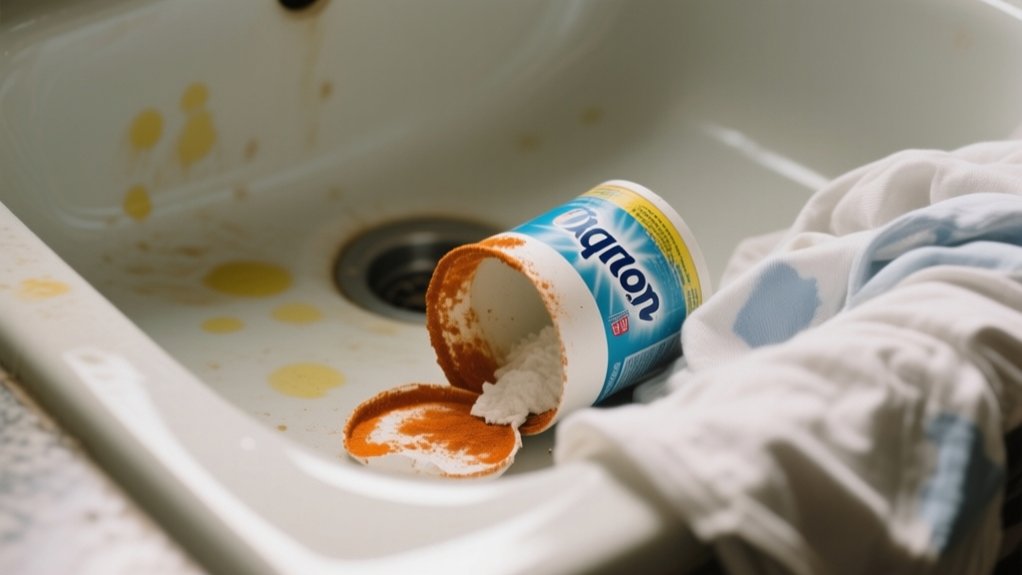
Why did OxiClean discolor your clothes? The product contains oxygen-based bleach, which can lighten dyes when it’s too concentrated, left on fabric too long, or used on colors that aren’t colorfast.
You may notice faded patches where powder or solution sat directly on a garment. Hot water can speed up the bleaching action, while a long soak increases exposure.
Mixing OxiClean with chlorine bleach or other cleaning products can also damage fabric and create hazardous reactions, so don’t combine them.
Some materials, including wool, silk, and leather, aren’t suitable for oxygen bleach; check the care label before treating any item.
To reduce the risk, follow the package directions, dissolve the powder fully, and test the solution on a hidden area first.
Don’t assume every washable garment can tolerate it.
Can You Fix OxiClean Damage to Clothing?
Can you fix OxiClean damage to clothing? Sometimes, but it depends on what happened.
If the product left residue or a temporary mark, you may be able to remove it. If it stripped dye from the fabric, the color loss is usually permanent because the cleaner can’t restore missing pigment.
You might improve a small faded spot with a fabric dye that matches the garment, though an exact match can be difficult. For a larger area, dyeing the entire item may create a more even result, provided the fabric accepts dye.
A professional cleaner or clothing repair specialist can assess delicate materials and suggest realistic options.
Check the garment’s care label before attempting any treatment, and test products on a hidden area first. Some damage can be disguised, but complete restoration isn’t always possible.
What to Do After OxiClean Discolors Clothing
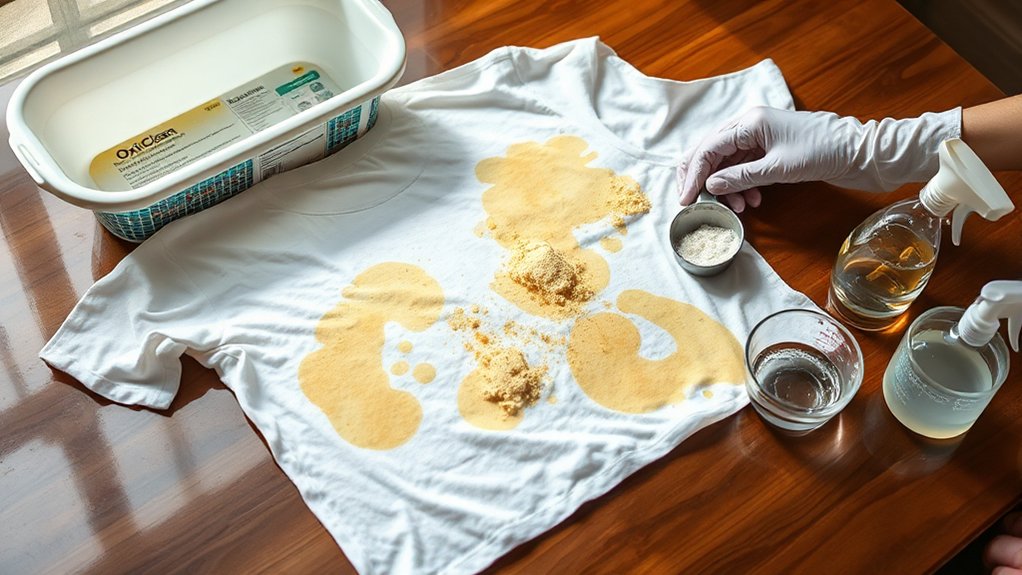
If OxiClean discolors your clothing, rinse the affected area thoroughly with cool water and stop using the product. Don’t rub or apply heat; either can make the damage harder to address. Check the care label, then wash the garment separately with a mild detergent. Let it air-dry so you can assess the color before deciding what to do next.
| What you notice | What you can do |
|---|---|
| A small pale patch | Ask a cleaner about safe options. |
| Uneven color | Avoid another treatment for now. |
| Delicate fabric | Contact a professional cleaner. |
| No change after rinsing | Keep the garment out of the dryer. |
You may feel upset, especially if the item matters to you. Take a photo and keep the product packaging. These details can help a cleaner advise you. If the color loss remains, consider a fabric dye or a visible repair, but test any treatment on an inconspicuous spot first.
How OxiClean Causes Fading and Discoloration
Understanding what causes fading can help you prevent further damage. OxiClean contains sodium percarbonate, which releases hydrogen peroxide when mixed with water. This oxygen-based bleach breaks apart stains through oxidation, but it can also alter dye molecules.
When the product sits too long, stays concentrated, or doesn’t dissolve fully, its bleaching action may become uneven. You might then see pale patches, streaks, or a changed shade after rinsing.
Heat and prolonged soaking can intensify the reaction, while residue left in the fabric may continue affecting color until you wash it out.
Using more cleaner than the label recommends won’t necessarily improve stain removal; it can increase the chance of discoloration.
Follow the package directions, dissolve the powder completely, and rinse or wash promptly to limit unwanted bleaching.
Which Fabrics and Colors Are Most at Risk?
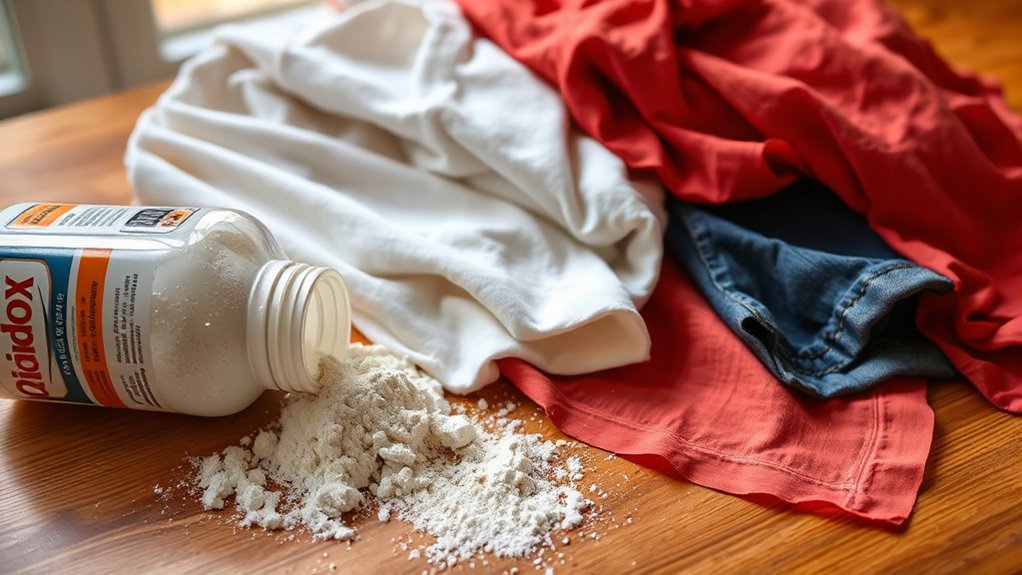
Although OxiClean is safe for many washable items when used as directed, delicate fabrics and unstable dyes are more likely to fade or discolor. Your garment’s fiber, dye, and finish affect how it responds to oxygen bleach. Check the care label and consider these higher-risk categories:
- Wool and silk: These protein fibers can weaken or change texture when exposed to harsh cleaning agents.
- Leather and suede: Their finishes and colors may become damaged, leaving stiff, faded, or uneven patches.
- Bright or dark garments: Reds, blues, blacks, and vivid prints may lose color if their dyes aren’t colorfast. New clothes can be especially vulnerable because excess dye may remain in the fabric.
Vintage pieces, embellished items, and garments with mixed fibers also deserve extra caution. If you’re unsure about a fabric or dye, don’t assume it’ll withstand oxygen bleach.
How to Use OxiClean Without Damaging Clothes
To keep your clothes safe, start by checking the care label on each fabric before you use OxiClean.
It’s important to measure the product carefully—using too much can cause damage.
Once you’ve applied it, make sure to rinse and wash your garments promptly to prevent any harm.
This way, your clothes stay fresh and intact!
Check Fabric Care Labels
Before using OxiClean, check your garment’s care label for washing instructions and warnings. The label helps you decide whether the fabric can handle an oxygen-based cleaner and which cleaning methods are safe. Don’t assume that a garment’s color or sturdy appearance means it’s suitable for every treatment.
- Check the fiber content. Wool, silk, leather, and fabrics containing these fibers may be damaged by OxiClean. If the label lists them, choose a cleaner made for that material.
- Follow washing directions. Respect temperature limits and instructions such as “hand wash” or “dry clean only.” Don’t use OxiClean on items the label says not to wash.
- Look for special finishes. Water-repellent coatings, delicate trims, and dyes may react poorly. When the label doesn’t clarify, test an inconspicuous area first and check for color changes.
Measure OxiClean Carefully
After confirming your fabric can handle OxiClean, measure the product according to its package directions. Using too much won’t necessarily clean better, and concentrated solution can leave residue or affect dyes.
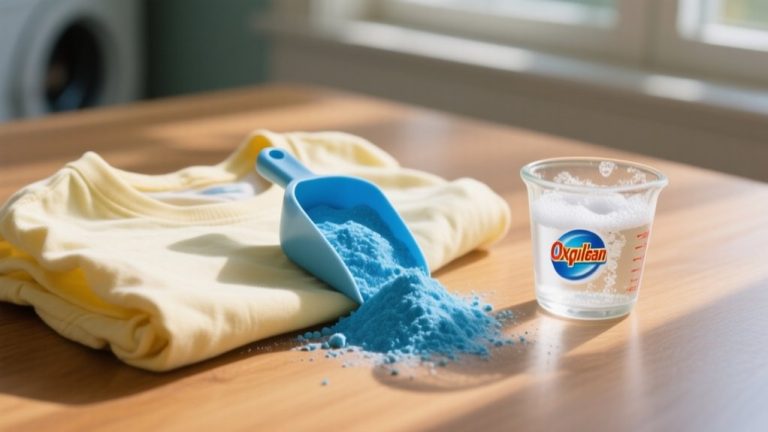
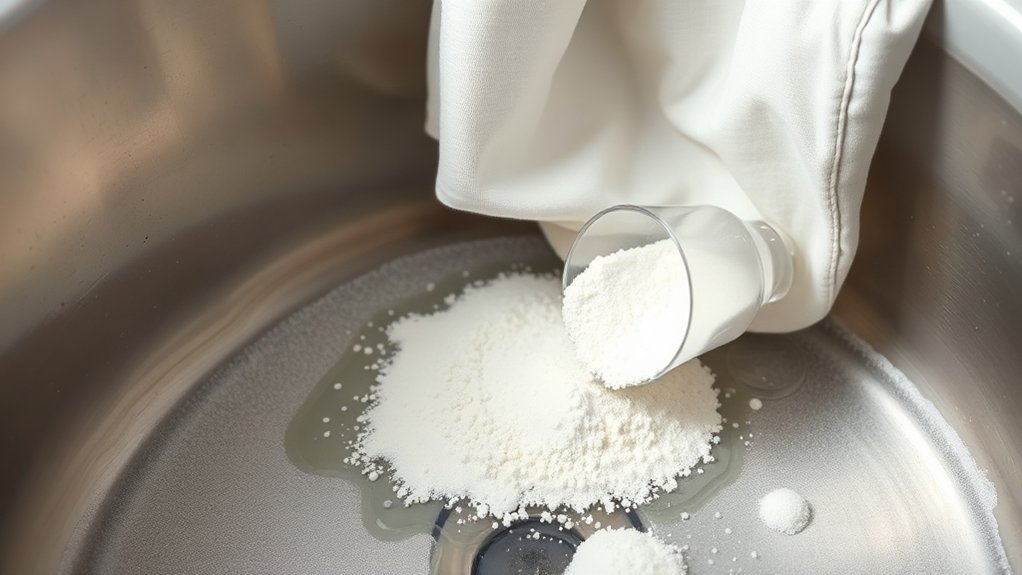
Check the label for the correct amount for your load size and water level, since instructions can vary by product. Use the scoop or measuring lines provided, and don’t estimate by eye.
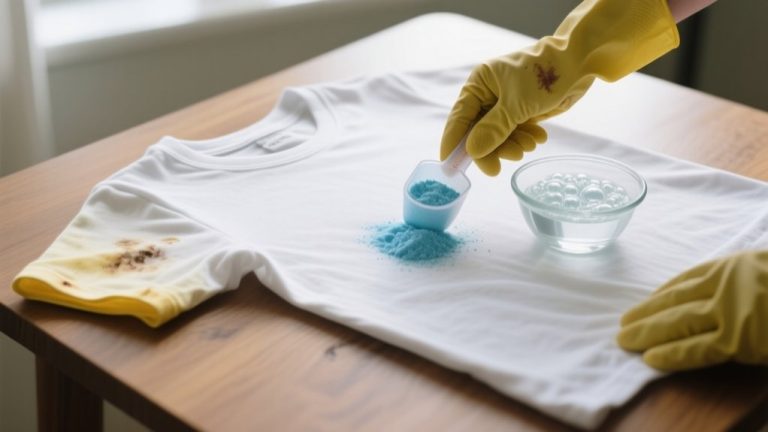
If you’re treating a small area, dilute the cleaner as directed rather than applying extra powder directly to the fabric.
For colored clothing, choose a formula labeled safe for colors and follow its specific directions. Don’t combine OxiClean with other cleaners, especially chlorine bleach, unless the product label explicitly says it’s safe.
Keep the container dry and close it securely after measuring, so moisture doesn’t cause clumping or make future doses inaccurate.
Rinse and Wash Promptly
Once the recommended soak time is up, rinse the garment thoroughly with cool water, then wash it promptly according to its care label. Don’t let the fabric sit with OxiClean residue. Prolonged contact can affect dyes or fibers, especially on delicate items.
Use the temperature and cycle recommended for the garment, and add your usual detergent.
- Check the care label before choosing a wash cycle or water temperature.
- Wash the treated item promptly, either alone or with similar colors.
- Inspect the stain before drying; heat can set remaining marks.
If the stain remains, repeat the treatment only as directed on the OxiClean package. Rinse and wash again, then air-dry until you’re sure the mark has disappeared.
Don’t use OxiClean on wool, silk, leather, or other materials the label excludes.
Frequently Asked Questions
Is Oxiclean Safe to Use in Septic Systems?
Yes, you can generally use OxiClean in a septic system when you follow the label directions and use normal laundry amounts.
Its oxygen-based ingredients break down, but excessive use of any cleaner can disrupt the system’s beneficial bacteria or overload it.
Don’t pour concentrated product directly into the tank, and avoid combining it with other chemicals.
If your system is delicate or you’re unsure, check the product label and ask a septic professional.
Can Oxiclean Remove Odors From Clothing?
Yes, OxiClean can help remove odors from clothing, sweeping away smells like a fresh breeze through a stuffy room.
Add the recommended amount of powder to your wash, following the product label and your garment’s care instructions.
For stubborn odors, soak washable items in a solution before laundering.
Don’t mix OxiClean with chlorine bleach or other cleaners, and test it on a hidden area first, especially with delicate or colored fabrics.
Does Oxiclean Expire or Lose Effectiveness Over Time?
Yes, OxiClean can lose effectiveness over time, especially if moisture gets into the powder or you store it in heat.
Its oxygen-based cleaning ingredients gradually break down, so older product may work less well.
Keep your OxiClean tightly sealed in a cool, dry place, and avoid using damp scoops.
Check the package for a best-by date; if you notice clumping or reduced cleaning results, replace it.
Liquid formulas may degrade faster after opening.
Can Oxiclean Be Used on Carpets and Upholstery?
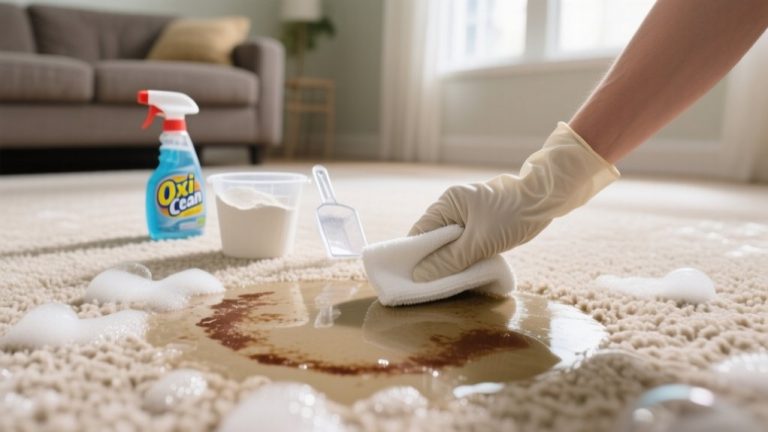
Yes, you can use some OxiClean products on carpets and upholstery, but check the label first because formulas and directions vary.
Test the cleaner on a hidden spot to check for color changes or damage. Then follow the package’s dilution and application instructions.
Don’t soak the material, and blot rather than scrub to avoid spreading stains or harming fibers.
Keep children and pets away until the treated area is completely dry.
Is Oxiclean Safe to Use Around Pets?
Keep your pets out of harm’s way. OxiClean can be used around pets if you follow the label and prevent contact with the product.
Store it securely, and don’t let animals lick or walk on treated surfaces until they’re fully rinsed or dry.
Keep pets away while you mix or apply it, since powder and splashes can irritate eyes, skin, or airways.
If your pet swallows any, contact a veterinarian or poison-control service promptly.
Conclusion
If OxiClean discolored your clothes, don’t panic: you may be able to lessen the damage, but permanent fading can’t always be reversed. Rinse the garment promptly, avoid heat, and test any repair method on a hidden area first.
Next time, follow the label, dilute the product, and check colorfastness before soaking. Treat delicate fabrics and dark colors with extra care. A little caution can keep your laundry from becoming a colorless cautionary tale and help your clothes stay bright.