When Do You Put Downy In The Washer – Best Timing
Many people want their laundry to come out smelling fresh and feeling soft, but timing the fabric softener just right can be confusing. If you’ve ever wondered when to put Downy in the washer, you’re not alone. A small timing mistake can keep it from working as well as it should.
You should add Downy during the rinse cycle for the best softening and fragrance results. If your washer has a fabric softener dispenser, put it there, not directly on clothes, to avoid greasy spots. For machines without a dispenser, wait until the rinse cycle starts and then add diluted Downy around the drum. Use the right amount based on your load size and machine type. Following these steps improves results and prevents buildup. Keep going to discover more helpful tips and tricks.
Best Time To Add Downy In Your Wash Cycle
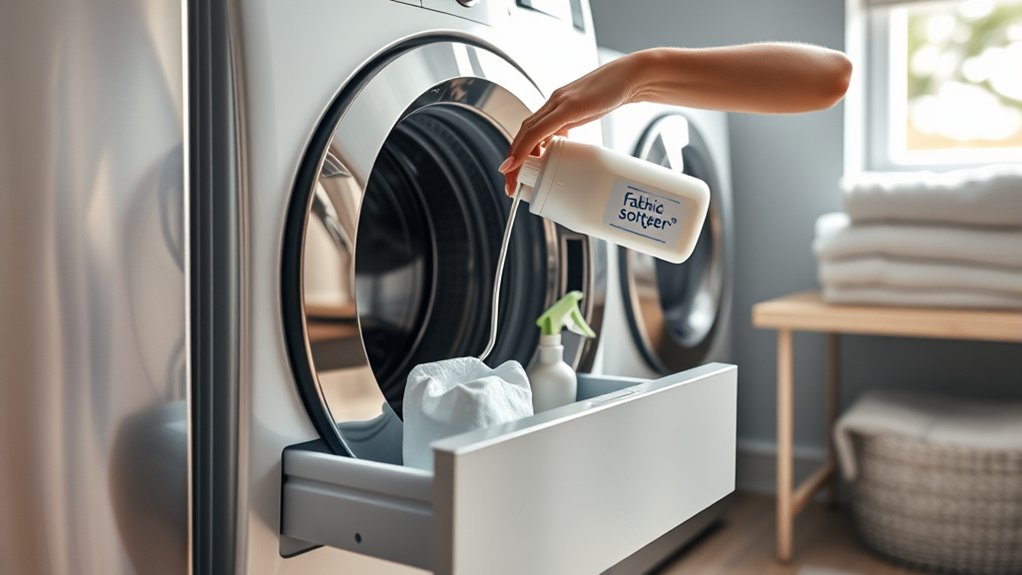
Although it might be tempting to add Downy fabric softener at the start of your wash, you should wait until the rinse cycle to get the best results.
Adding it during the rinse cycle guarantees the softener doesn’t interfere with detergent’s cleaning power. If your machine lacks a dedicated dispenser, wait until you see the cycle indicator change as the washer fills with rinse water, then add Downy manually.
Add Downy during the rinse cycle to avoid interfering with detergent, or add manually when rinse water appears.
Use about 1/4 cup per standard load to avoid residue buildup, which can affect fabric quality.
This timing lets the softener distribute evenly and release its fragrance while softening your clothes effectively. Avoid mixing Downy with detergent or adding it too early to maintain the fabric’s softness and freshness throughout your laundry.
Using Your Washer’s Fabric Softener Dispenser
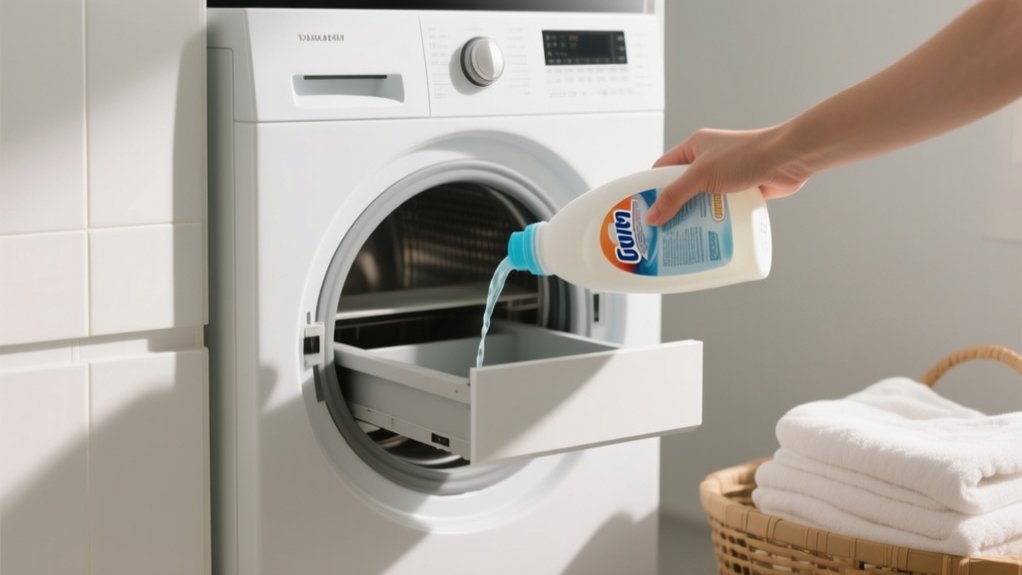
When you use your washer’s fabric softener dispenser, you guarantee Downy releases evenly during the rinse cycle for consistent softening and fragrance.
Locate the dispenser, usually found on the top or side of the detergent drawer, marked with a fabric softener symbol. Add the recommended amount of Downy directly into this compartment, not onto your clothes, to avoid uneven application or residue buildup.
If you have a high-efficiency (HE) washer, use the designated HE compartment and reduce the amount of Downy by half to prevent excessive buildup.
Always check your washer’s manual for specific instructions on using the fabric softener dispenser. Following these steps assures your clothes get a uniform softening treatment and keeps your washer running smoothly.
How To Add Downy Manually Without A Dispenser
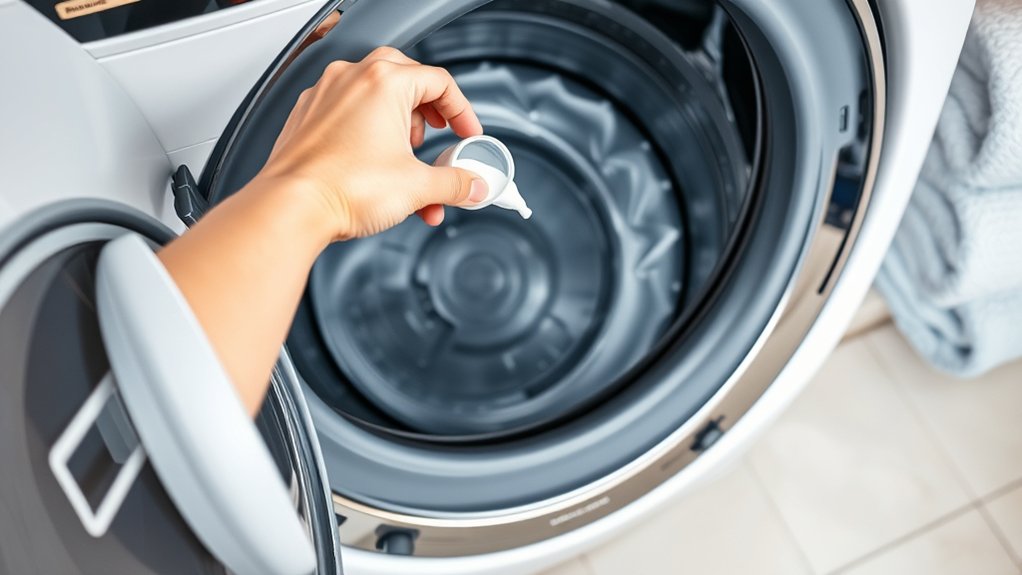
If your washer lacks a dispenser, the next step is timing the rinse cycle correctly.
Adding Downy During Rinse
Two key steps guarantee you add Downy fabric softener effectively during the rinse cycle without a dispenser.
First, wait until your washer signals the rinse cycle has started—this usually happens right after the wash cycle ends.
Second, pour about 1/4 cup of Downy directly into the rinse water, not onto your clothes, to avoid residue buildup.
Adding it at this stage assures the softener distributes evenly, enhancing softness and fragrance.
Be sure to adjust the amount based on load size and soil level.
While diluting promotes better dispersion, save that for the next step.
Diluting Fabric Softener First
Although your washer mightn’t have a fabric softener dispenser, you can still achieve even distribution by diluting Downy before adding it.
Mix one part Downy with at least three parts water in a separate container. This dilution prevents concentrated spots on your clothes and guarantees the softener spreads evenly.
When the rinse cycle starts, pour the diluted Downy directly into the drum, distributing it around the sides instead of pouring it onto the fabrics.
Avoid adding fabric softener during the wash cycle or into the detergent compartment, as this reduces its effectiveness.
Adding it at the right time and in diluted form helps the softener coat fibers properly, leaving your laundry soft without residue buildup.
This simple step improves results when your machine lacks a dispenser.
How Much Downy To Use Per Load Size
Load size also affects how evenly the liquid distributes through fabrics and rinse cycles.
Dosage Recommendations By Load
Using the right amount of Downy fabric softener guarantees your clothes come out soft and fresh without wasting product.
To get the best results, adjust the amount based on your load size:
- For a small load, use about 1/8 cup of Downy to confirm effective softness and fragrance.
- A medium load needs roughly 1/4 cup (half a capful) for ideal softness.
- Larger or extra soiled loads require between 1/3 to 1/2 cup to handle the extra fabric and dirt.
Always check your product label for specific instructions.
Sticking to these guidelines helps you get the perfect balance, soft, fresh clothes without overusing fabric softener or clogging your washer.
Adjusting For Machine Type
When adjusting how much Downy to use, consider your washing machine type carefully, as standard and high-efficiency (HE) machines require different amounts for best results.
For standard machines, add Downy during the rinse cycle through the designated dispenser. Use 1/3 to 1/2 cup for large or heavily soiled loads to maintain softness and scent.
HE machines need about half the amount: start with 1/8 cup for small loads and 1/4 cup for medium loads.
Always check the product label, since different Downy formulas may suggest varying amounts. Avoid overpouring to prevent buildup and greasy residue on clothes and inside your machine.
Adjust your Downy amount based on your washer type and load size for the best fabric care.
Avoiding Overuse Consequences
Although fabric softeners like Downy enhance softness and scent, applying too much can cause unwanted buildup on clothes and your washer. To avoid these issues, it’s essential to use the right amount for each load size. Here’s a quick guide:
- For small loads, use about 1/8 cup; medium loads need 1/4 cup, and large or heavily soiled loads require 1/3 to 1/2 cup.
- If you have a high-efficiency (HE) washer, start with half the recommended amount to prevent residue buildup.
- Overusing Downy can leave greasy or waxy residue, stiffening fabrics and reducing towel absorbency.
Always check the product label for specific dosage instructions to maintain fabric quality and avoid skin irritation.
Why Add Downy During The Rinse Cycle
Since adding Downy during the rinse cycle prevents it from mixing with detergent, you’ll get a more even distribution of fabric softener that properly coats your clothes.
This timing guarantees the softener can work effectively, enhancing softness and reducing static cling. When you add Downy during rinsing, it minimizes residue buildup on both your clothes and washer, keeping garments fresh and your machine cleaner.
It also helps reduce wrinkles, making your laundry easier to handle after washing.
Plus, this method locks in the scent better, so your clothes smell pleasant longer. By waiting for the rinse cycle, you maximize Downy’s benefits, improving fabric feel and extending the freshness of your laundry.
Adjusting Downy Dosage For High-Efficiency Washers
Because high-efficiency (HE) washers use less water than traditional models, you need to adjust your Downy dosage accordingly to avoid buildup and guarantee ideal fabric softening. Start with half the usual amount, about 1/8 cup for a medium load, to prevent excess residue.
Here’s how to fine-tune your Downy use:
- Always add Downy to the HE washer’s designated softener compartment for even distribution during the rinse cycle.
- If your washer lacks a dispenser, pour Downy directly into the rinse water to avoid stains and buildup on clothes.
- Check the Downy label for HE-specific dosage recommendations, as formulas may vary.
Following these steps helps maintain your washer’s performance and keeps your laundry soft without overusing fabric softener.
Common Downy Usage Mistakes And How To Fix Them
Properly adjusting your Downy dosage is a good start, but many people still make common mistakes that affect fabric softness and washing machine health.
For instance, avoid pouring Downy directly onto clothes, as this causes greasy patches and uneven softness. Instead, always add it during the rinse cycle for even distribution.
Using too much Downy can create buildup inside your washer, leading to odors and malfunctions, so stick to the recommended dosage based on your load size.
Overuse also reduces fabric absorbency and may irritate skin. To fix these issues, measure your softener carefully and add it at the right time.
Additionally, clean your washing machine regularly to prevent residue buildup and maintain peak performance.
Following these steps will keep your clothes soft and your washer running smoothly.
Tips To Get The Most From Your Downy Fabric Softener
When you want to get the most from your Downy fabric softener, timing and dosage are key. Adding it during the rinse cycle guarantees the softener distributes evenly without being washed away.
To maximize results, follow these tips:
- Use about 1/4 cup for regular machines, but only half that for high-efficiency washers to avoid buildup.
- Don’t overload your machine; giving clothes space helps the softener absorb fully and enhances fragrance longevity.
- Clean the fabric softener dispenser regularly to prevent residue, which can reduce effectiveness and scent release.
Sticking to these practical steps will help you enjoy softer, fresher clothes every wash without wasting product or harming your machine.
Frequently Asked Questions
Can Downy Fabric Softener Be Used With All Types of Detergent?
Yes, you can use Downy with most detergents, including liquid, powder, and pods. Avoid mixing it with bleach-containing detergents, and check the product labels for compatibility before using them together.
This helps prevent residue buildup and reduced fabric softener effectiveness.
Is Downy Safe for Use on Baby Clothes and Sensitive Skin?
Yes, Downy Free & Gentle is hypoallergenic and safe for baby clothes. Use the recommended amount and wash babies’ items separately to help protect sensitive skin and keep clothes soft.
Can Downy Prevent Colors From Fading in Laundry?
Yes, Downy can help slow color fading by coating fibers and reducing dye loss during washing. For best results, use it with cold water washes to help keep clothes vibrant and fresh longer.
Does Downy Work Effectively in Cold Water Washes?
Yes, Downy works effectively in cold water washes. You can still get soft, static-free clothes while saving energy. Add it during the rinse cycle or use the fabric softener dispenser for best results.
How Long Does the Downy Fragrance Typically Last on Clothes?
Up to 12 weeks. The fragrance is strongest on fresh, air-dried fabrics, and dryer heat can boost it. Consistent use can also help the scent last longer on clothes.
Conclusion
Now that you know the best time to add Downy is during the rinse cycle, are you ready to make your laundry softer and fresher? Using the fabric softener dispenser or adding it manually at the right moment guarantees ideal results.
Remember to adjust the amount based on your load size and washer type to avoid residue or stiffness. With these tips, you’ll get the most out of your Downy every wash, easy, effective, and hassle-free!