Is Oxiclean Toxic To Cats – Health Facts
Yes, OxiClean can harm your cat if they swallow it, inhale its dust, or get it on their skin or in their eyes. Sodium percarbonate, alkaline builders, surfactants, and fragrances may irritate delicate tissues. Concentrated solutions can pose greater risks.
Move your cat away from the product, prevent grooming, and rinse exposed areas with lukewarm water. Contact a veterinarian or pet poison-control service if symptoms appear. You’ll also find practical steps for safer use and recognizing warning signs.
Is OxiClean Toxic to Cats?
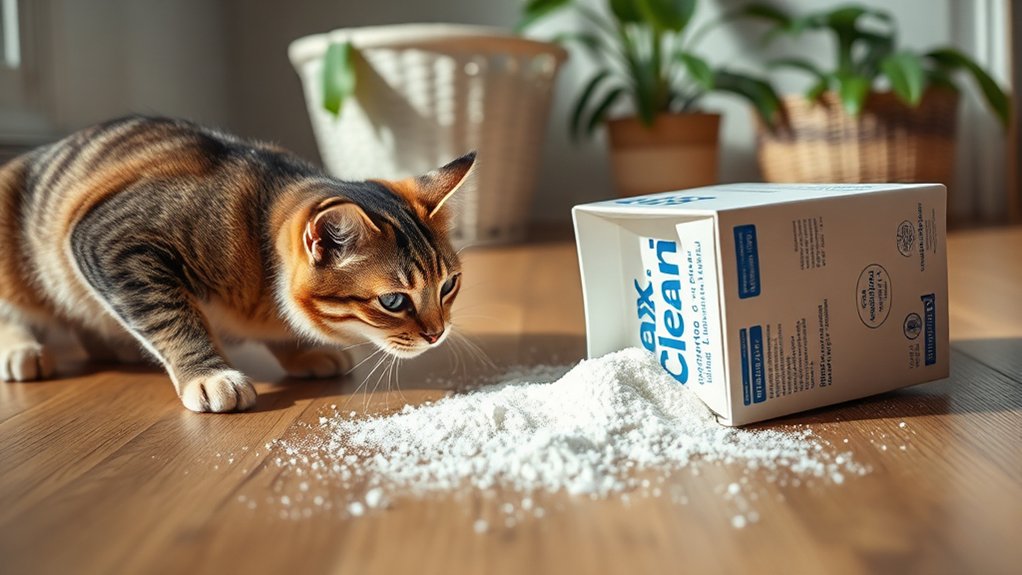
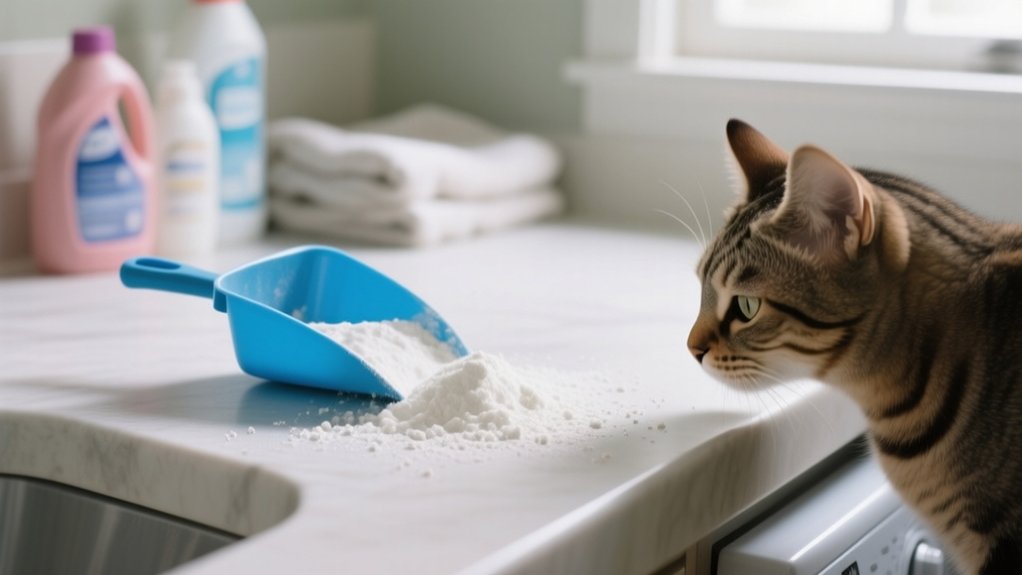
Yes, OxiClean can be harmful to cats, especially if they lick the powder or wet cleaner, walk through it and groom their paws, or inhale dust. The risk depends on the product’s ingredients, concentration, and amount of exposure.
Many OxiClean products contain sodium percarbonate, which releases hydrogen peroxide when mixed with water. This can irritate or injure your cat’s mouth, throat, stomach, skin, or eyes.
Some formulas also include surfactants, fragrances, or other ingredients that may cause irritation or illness if swallowed.
Dry powder can irritate your cat’s airways, while concentrated solutions may pose greater risks than diluted residue.
Don’t assume a product is safe just because it’s marketed for household use. Check the specific label: OxiClean formulas differ, and their ingredients and hazards can vary.
What Should You Do After OxiClean Exposure?
If your cat may have contacted OxiClean, move them away from the product and prevent them from grooming any residue. Stay calm, check the label, and note when and how exposure happened.
Don’t induce vomiting or use home remedies unless a veterinarian directs you.
On fur or paws: Wear gloves and rinse the affected area thoroughly with lukewarm water. Keep your cat warm and stop them from licking until you’ve cleaned the residue.
In the eyes: Flush gently with clean, lukewarm water for several minutes. Don’t rub or apply eye drops without veterinary advice.
Swallowed or showing symptoms: Call your veterinarian or an animal poison-control service promptly. Share the product label, estimated amount, and exposure time.
Seek urgent veterinary care for breathing trouble, repeated vomiting, severe drooling, weakness, or worsening irritation. Bring the package if you go in.
Which OxiClean Ingredients Can Harm Cats?
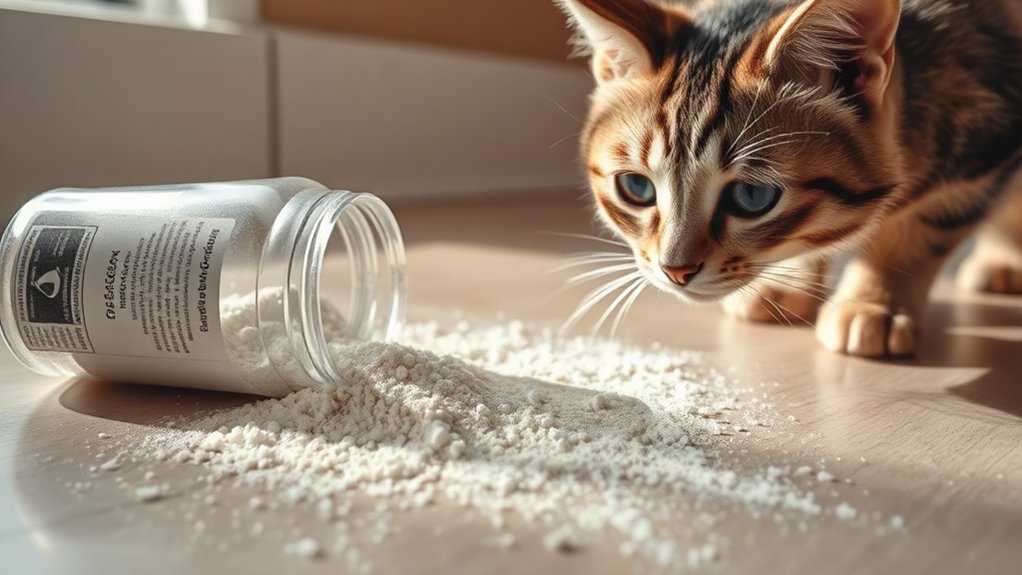
The risk depends on the specific OxiClean formula, but several ingredient types can irritate or harm cats. Check the product label, since formulas vary.
Sodium percarbonate, a common oxygen-based bleaching agent, releases hydrogen peroxide when mixed with water. Concentrated powder or solution can irritate tissue if your cat contacts or ingests it.
Some products also contain surfactants, which help lift stains but may irritate the mouth, skin, or eyes. Alkaline builders, such as sodium carbonate, can be harsh on delicate tissues.
Fragrances, dyes, and other additives may also cause irritation or sensitivity. Don’t assume a product is safe because it’s labeled “oxygen cleaner” or “color-safe.”
Keep the container and wet cleaning solution away from your cat, and follow the label’s handling and storage directions.
What Are the Signs of OxiClean Exposure?
Signs of OxiClean exposure vary with the product, amount, and route of contact. If your cat licks or swallows a cleaner, you may notice drooling, nausea, vomiting, or diarrhea.
Contact with the eyes or skin can cause irritation, redness, and discomfort. Breathing dust or spray may trigger coughing or labored breathing. Watch for these signs:
- Mouth or stomach irritation: Your cat may paw at its mouth, refuse food, or vomit.
- Eye or skin irritation: You might see squinting, watering, redness, or persistent licking.
- Breathing problems: Coughing, wheezing, or difficult breathing can signal a serious reaction.
Symptoms can range from mild to severe, and they may not appear immediately. If you suspect exposure, contact your veterinarian or an animal poison-control service promptly.
Seek urgent veterinary care for breathing trouble, repeated vomiting, severe weakness, or collapse.
How Can You Use OxiClean More Safely Around Cats?
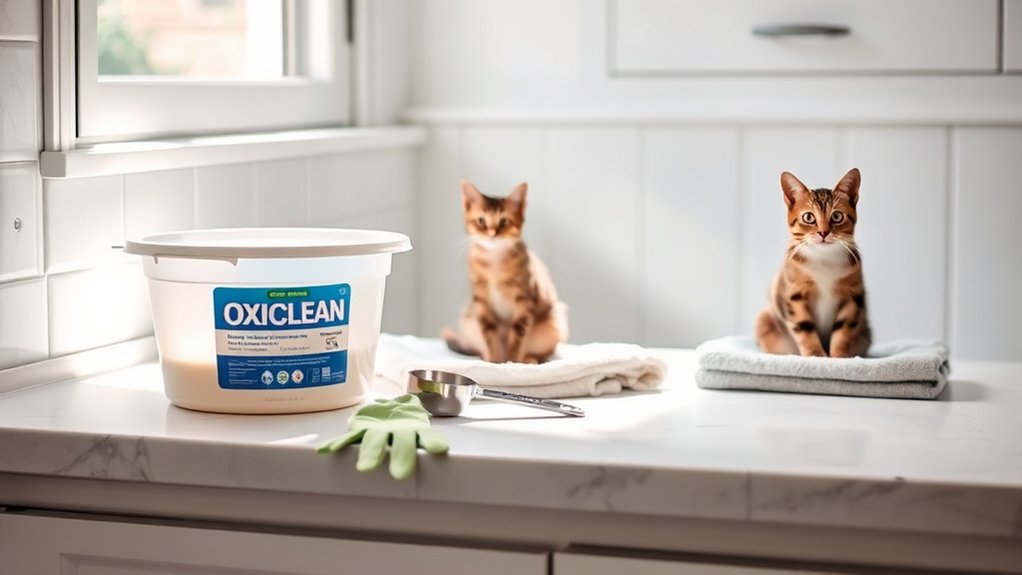
To reduce the risk to your cat, use OxiClean only as directed and keep your pet away while you mix, apply, or rinse it. Read the label first, wear gloves if instructed, and never combine the product with other cleaners.
Open windows or run a fan to improve ventilation. Keep your cat out until treated surfaces are rinsed or fully dry, and store the container securely.
| Safety step | What you should do |
|---|---|
| Mixing | Prepare only the amount you need; prevent splashes. |
| Laundry | Keep pods, powder, and wet items inaccessible. |
| Storage | Seal the container and place it in a locked cupboard. |
Clean spills promptly while your cat stays elsewhere. If exposure occurs, follow the label’s first-aid directions and contact your veterinarian or a pet poison service.
Frequently Asked Questions
Can Dried Oxiclean Residue on Laundry Harm Cats?
Dried OxiClean residue on laundry is unlikely to harm your cat through brief contact, but licking or chewing treated fabric could cause irritation or illness.
Rinse items thoroughly and let them dry completely before your cat uses them.
Keep laundry and cleaning products out of reach, and don’t let your cat lick wet fabric.
If your cat ingests residue or develops drooling, vomiting, or irritation, contact your veterinarian or a pet poison hotline promptly.
Is Oxiclean Safe to Use in Homes With Kittens?
Use OxiClean cautiously around kittens; it isn’t automatically unsafe when you follow the label.
Keep curious kittens away while you mix or apply the product, and prevent them from licking powder, solution, or wet surfaces.
Rinse treated items thoroughly and let them dry before kittens touch them.
Store the container securely.
If a kitten swallows any or develops irritation, contact your veterinarian or a pet poison service promptly.
Can Cats Be Allergic to Oxiclean?
Yes, cats can develop irritation or an allergic-type reaction to OxiClean, though true allergies are uncommon.
If your cat contacts wet product or residue, you might notice redness, itching, drooling, vomiting, or breathing trouble.
Rinse exposed skin or paws thoroughly with lukewarm water, and prevent licking.
Don’t induce vomiting. Contact your veterinarian or a pet poison hotline for guidance, especially if symptoms appear or your cat swallowed any product.
How Long Should Cats Stay Away After Oxiclean Use?
Keep your cat away until the treated area is completely dry and you’ve rinsed away any residue, following the product label.
Ventilate the room while you clean, and don’t let your cat lick or walk across wet surfaces.
Drying time varies by product and conditions, so don’t rely on a fixed number of hours.
If your cat contacts the cleaner or develops symptoms, move them to fresh air and call your veterinarian or a pet poison hotline.
Are Pet-Safe Alternatives Available for Cleaning Cat Bedding?
Yes, gentler options are available, so you can give your cat’s bedding a fresh start without bringing harsh cleaners into the mix.
Wash it with fragrance-free, dye-free detergent, following the care label, and rinse thoroughly.
For odors, add a little baking soda to the wash, but don’t leave it where your cat can eat it.
Avoid essential oils and strongly scented products.
Let bedding dry completely before your cat uses it again.
Conclusion
OxiClean can be risky for cats, especially if they lick wet cleaner, powder, or contaminated paws. If exposure happens, move your cat away and rinse affected skin or fur with lukewarm water. Then contact your veterinarian or a pet poison hotline; don’t wait for symptoms.
Trouble breathing, vomiting, drooling, or burns need urgent care. Store products securely, follow label directions, and keep your cat out of treated areas until they’re fully rinsed and dry. A little caution can prevent a cleaning mishap from becoming a catastrophe.