Is It Safe To Use Downy Fabric Softener On Hair – The Truth
Many people look for quick hair fixes that promise softness, shine, and manageability, especially when their hair feels dry, frizzy, or damaged. If you’ve ever wondered whether using Downy fabric softener on hair could help, you’re not alone.
It’s not safe to use Downy fabric softener on your hair since it contains harsh chemicals, synthetic fragrances, and preservatives that can irritate your scalp and cause dryness or breakage. Its pH level isn’t suited for hair, leading to buildup and greasy strands over time. Fabric softeners aren’t designed for rinsing out, so damaging residues linger.
Instead, you should consider safer, nourishing alternatives and tailored hair care options that protect and improve your hair’s health and texture.
Risks of Using Downy Fabric Softener on Hair
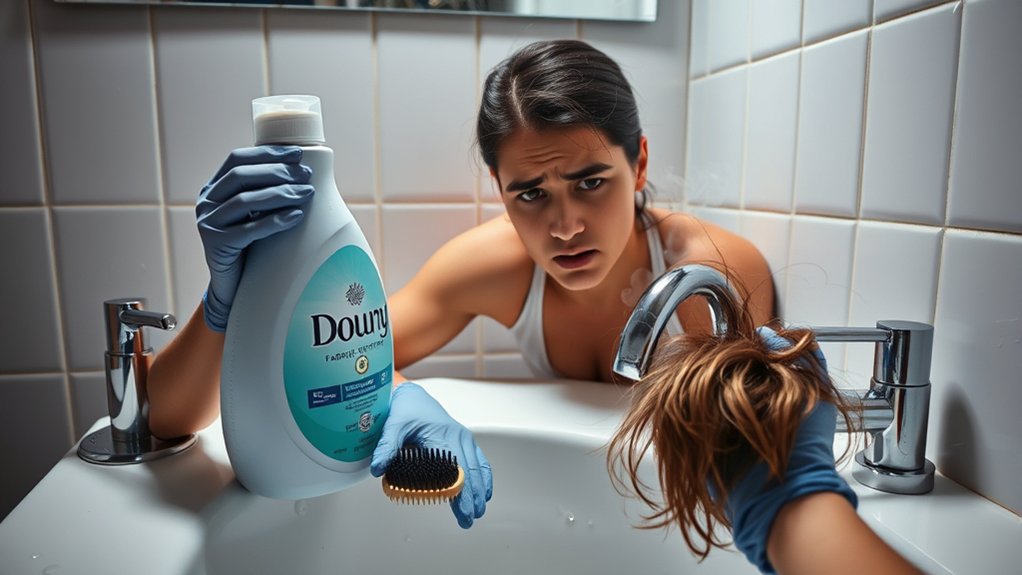
While it might seem convenient, using Downy fabric softener on your hair carries several risks you should consider. The chemicals and fragrances in Downy can irritate your scalp and trigger allergic reactions.
Its pH level isn’t designed for hair, which can cause dryness and damage to your hair cuticles. Unlike hair conditioners, fabric softeners aren’t formulated to be rinsed out, so harmful ingredients may stay on your hair longer than they should.
This can lead to buildup, making your hair look greasy and weighed down. Additionally, the lubricating agents in fabric softeners might soften your hair temporarily, but they don’t supply the essential nutrients your hair needs to stay healthy and strong over time.
Common Dangers of Fabric Softener for Your Scalp and Hair
Beyond the general risks of irritation and damage, fabric softeners like Downy introduce specific dangers to your scalp and hair health. The cationic surfactants they contain can trigger scalp irritation and allergic reactions when applied directly to your skin or hair.
Additionally, fragrances and preservatives in these products may cause sensitivities or allergic contact dermatitis for some people.
Over time, chemical buildup from fabric softeners can dry out your hair, reduce shine, and impair moisture retention. Using fabric softener can also disrupt your scalp’s natural pH balance, potentially leading to dandruff and an unhealthy environment.
Furthermore, residues left on your hair attract dirt and pollutants, leaving it greasy or weighed down. For these reasons, fabric softeners pose notable risks to maintaining healthy hair and scalp.
What Harmful Chemicals in Downy Affect Your Hair and Scalp
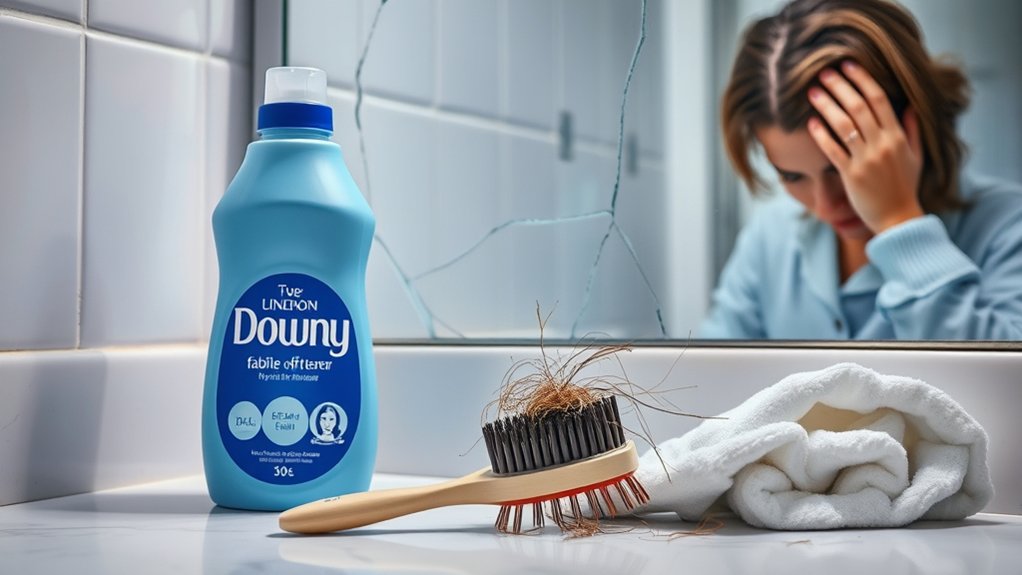
These ingredients can leave residue on your hair, making proper rinsing especially important.
Harmful Chemicals Overview
Because Downy fabric softeners contain chemicals not meant for hair care, they can negatively impact your scalp and hair health.
Key ingredients like quaternary ammonium compounds (quats) can build up on your hair, causing it to feel greasy and heavy over time.
Synthetic fragrances in Downy may irritate your scalp or trigger allergic reactions if you have sensitive skin.
Preservatives such as methylisothiazolinone pose additional risks of skin irritation and allergic dermatitis when they come into contact with your scalp.
Dyes present in the formula can also cause color fading, especially if your hair is dyed.
Additionally, these chemicals aren’t designed to maintain the scalp’s natural pH balance, potentially disrupting it and affecting overall hair quality.
Using Downy on hair is, consequently, not advisable.
Effects On Scalp Health
Although Downy fabric softener is designed for laundry, its chemical ingredients can seriously impact your scalp health when applied to hair. Quaternary ammonium compounds in Downy strip your scalp of natural oils and disrupt its pH balance, causing dryness and irritation.
Fragrances and preservatives may trigger allergic reactions or sensitivities, leading to redness, itching, or flaking.
Additionally, silicones in the formula can build up on your scalp, making hair look dull and lifeless over time. Since fabric softeners aren’t formulated for skin, surfactants in Downy could worsen existing scalp conditions like eczema or psoriasis.
This residue also blocks hair care products from absorbing properly.
Using Downy on your hair compromises scalp health, so it’s best to avoid it to maintain a balanced, irritation-free scalp environment.
Hair Damage Risks
Beyond its impact on scalp health, Downy fabric softener poses significant risks to the condition of your hair itself. It contains cationic surfactants that can weigh your hair down and cause buildup, leaving it greasy or limp.
Chemicals like quaternary ammonium compounds strip away your hair’s natural oils, leading to dryness and increased damage over time.
Additionally, fragrances and preservatives in Downy may irritate your scalp, potentially triggering allergic reactions or dermatitis. Since fabric softeners aren’t formulated for hair, they disrupt your scalp’s natural pH balance, contributing to dandruff and oily hair issues.
Using Downy can also interfere with hair treatment products, reducing their effectiveness and causing further harm.
How Fabric Softener Harms Hair Texture and Health
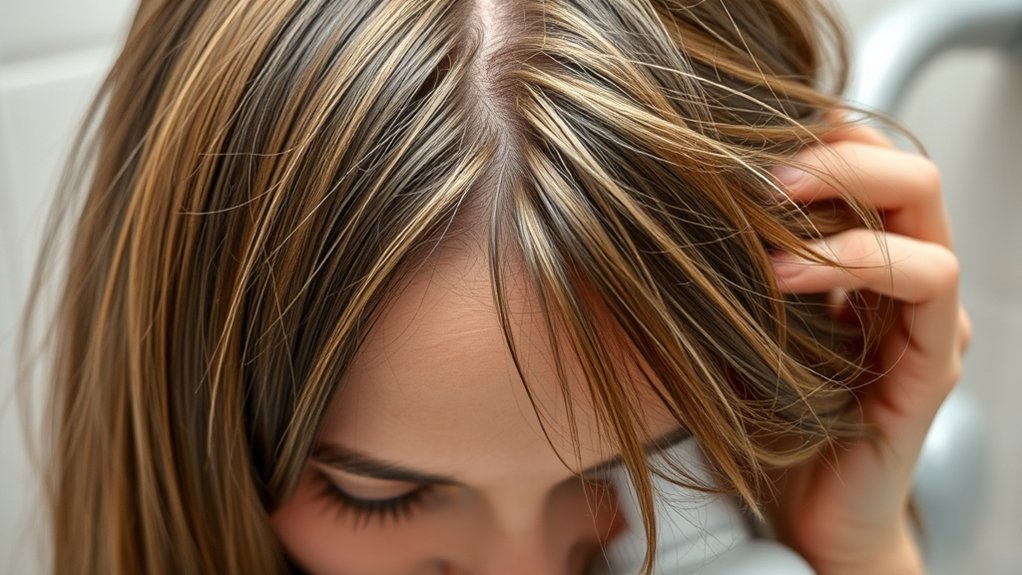
When you apply fabric softener like Downy to your hair, the silicones and chemicals it contains can quickly build up, leaving your strands greasy and weighed down. This buildup strips your hair of natural moisture, making it dry and brittle. The altered pH balance damages the hair cuticle, causing frizz and split ends.
Additionally, fragrances and additives may irritate your scalp, triggering allergies or sensitivity. Unlike conditioners designed for hair, fabric softeners lack essential nutrients and proteins for strength and elasticity.
| Harmful Effect | Impact on Hair |
|---|---|
| Chemical buildup | Greasy, weighed-down strands |
| Moisture stripping | Dryness, brittleness |
| pH imbalance | Frizz, split ends |
Safe Alternatives to Downy Fabric Softener for Hair
If dryness persists, the next section explains safer alternatives for conditioning and detangling hair.
Natural Hair Conditioning Options
Although some might consider using fabric softeners like Downy on hair, safer and more effective natural alternatives exist that nourish and condition without harmful chemicals.
You can rely on these proven options to maintain healthy hair:
- Natural oils (argan, coconut): Moisturize and condition hair deeply without risks.
- Aloe vera gel: Hydrates and promotes softness and shine naturally.
- Apple cider vinegar rinse: Balances hair’s pH, reduces frizz and smooths strands.
- Honey mixtures: Acts as a humectant, attracting moisture and providing deep conditioning.
These natural choices support your hair’s health safely, unlike fabric softeners that may contain harmful ingredients.
Essential Oils For Hair
Why settle for fabric softeners like Downy when essential oils offer a safer, more natural way to nourish your hair?
Essential oils such as lavender, jojoba, and argan provide hydration and promote softness without harsh chemicals. Lavender oil not only soothes but can reduce stress and improve your sleep quality, enhancing overall hair health.
Jojoba oil mimics your scalp’s natural oils, balancing oil production and moisturizing without clogging pores.
Argan oil is packed with antioxidants and fatty acids, effectively repairing damage, reducing frizz, and adding shine. Using these oils enhances your hair’s manageability and scent, all while avoiding the synthetic additives and fragrances found in fabric softeners like Downy.
Choosing essential oils supports healthier, more vibrant hair through a gentle, evidence-backed approach.
Homemade Softening Treatments
When seeking safe alternatives to commercial fabric softeners like Downy for your hair, homemade softening treatments offer effective and natural solutions. These treatments nourish and condition your hair without exposing it to harsh chemicals. You can easily prepare them at home using common ingredients known for their hair benefits.
Consider these options:
- Coconut oil deeply hydrates and smooths hair, improving softness naturally.
- A diluted apple cider vinegar rinse balances hair’s pH, detangles, and adds shine.
- Honey mixed with water works as a humectant, locking in moisture and enhancing elasticity.
- Avocado or olive oil masks provide essential fatty acids that soften and improve manageability.
Using these alternatives supports healthier hair care routines, reducing damage risks linked to fabric softeners like Downy.
Hair Care Products That Nourish Hair Instead of Downy
Since fabric softeners like Downy contain synthetic chemicals that aren’t designed to benefit hair, you should opt for hair care products formulated with natural oils, proteins, and vitamins to nourish your strands effectively.
Ingredients such as argan oil and shea butter provide deep hydration and enhance shine, something Downy can’t offer. Protein treatments specifically designed for hair strengthen strands and reduce breakage, improving hair structure.
Additionally, many hair care products address concerns like frizz control and scalp health, which fabric softeners don’t target.
Using conditioners tailored for hair helps maintain moisture balance and repair damage, ensuring healthier, more resilient hair.
Choosing the Right Conditioner for Your Hair Type
How do you guarantee your conditioner truly meets your hair’s unique needs? Understanding your hair type is essential to choose a product that nourishes without harm. Different textures and conditions demand specific formulations.
Ensuring your conditioner suits your hair type is key to nourishing strands without causing damage.
For instance:
- Fine hair benefits from lightweight conditioners that avoid weighing strands down.
- Coarse hair requires richer, creamier products for deep hydration.
- Color-treated hair needs sulfate-free conditioners to protect and prolong color vibrancy.
- Oily hair responds best to oil-free or lightweight conditioners that hydrate without adding excess oil.
Curly hair often thrives with conditioners rich in natural oils and butters to define curls and reduce frizz.
Frequently Asked Questions
Can Downy Fabric Softener Cause Hair Color to Fade Faster?
Yes, using Downy fabric softener can cause your hair color to fade faster because its chemicals may strip color and create buildup, which can dull vibrancy. For better results, use hair products made for color-treated hair instead.
Is It Safe to Use Downy on Synthetic Hair Extensions?
No, you shouldn’t use Downy on synthetic hair extensions. Its chemicals can damage the fibers, cause buildup, and dull the shine.
Use products made specifically for synthetic hair instead to help keep the extensions soft, vibrant, and long-lasting.
How Does Downy Fabric Softener Affect Hair Styling Products?
Yes. Using Downy can leave a barrier on your hair, which may keep styling products from absorbing properly. That can make them less effective and throw off scent balance over time, so it works best to avoid mixing the two on the same hair routine.
Can Fabric Softener Make Hair More Prone to Dandruff?
Yes. It can disrupt your scalp’s natural oils and cause irritation, which may leave your scalp dry and flaky. The risk is higher if you have sensitive skin or an existing scalp condition.
Does Downy Build up on Hair After Multiple Uses?
Yes, Downy can build up on your hair after multiple uses. The synthetic ingredients can coat strands, leaving them heavy and dull. Over time, that buildup can disrupt your hair’s moisture balance, so you may need a clarifying shampoo to remove the residue.
Conclusion
Using Downy fabric softener on your hair is like applying engine oil to your skin. It’s not designed for that purpose and can cause more harm than good.
The harmful chemicals in Downy can irritate your scalp, damage your hair texture, and strip natural oils. Instead, choose products formulated specifically for hair care.
Nourishing conditioners tailored to your hair type provide safe, effective moisture and protection, supporting healthy, vibrant hair without unnecessary risks.