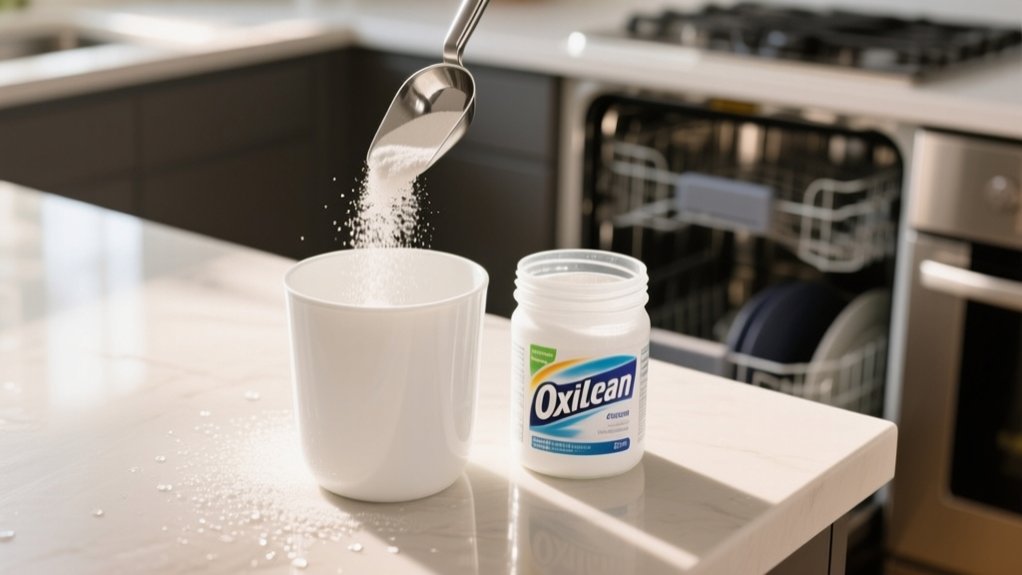
How To Use Oxiclean Powder In Dishwasher – Made Easy
You shouldn’t use OxiClean powder as a substitute for automatic dishwasher detergent. It may leave residue or cause suds and appliance problems. First, check the OxiClean label and your dishwasher manual to confirm the product’s approved use and compatibility.
If both allow it, follow the package’s exact amount and directions, keeping powder away from delicate dishes and machine parts. Otherwise, choose dishwasher-labeled detergent.
If residue or poor cleaning occurs, stop using OxiClean and clean the affected areas. The steps below explain your safest options.
Can You Use OxiClean Powder in a Dishwasher?
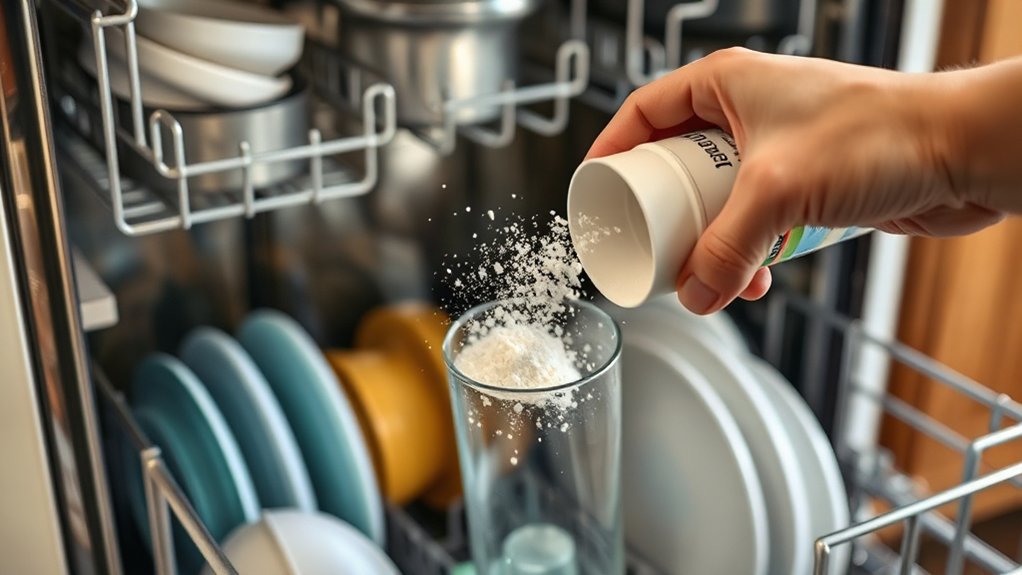
Can you use OxiClean powder in a dishwasher? It’s generally not a good idea to use it as a substitute for automatic dishwasher detergent.
OxiClean is an oxygen-based stain remover designed for specific cleaning tasks, while dishwasher detergent is formulated to wash dishes and rinse away cleanly in the machine. The powder may not dissolve or rinse as intended during a short cycle, leaving residue on dishes or inside the dishwasher.
It also may create excess suds, which can leak from the appliance or interfere with its operation. For routine dishwashing, use a detergent made for automatic dishwashers.
If you’re considering OxiClean for a particular cleaning purpose, don’t assume it’s suitable just because it works in laundry or other household applications. Using the wrong product can leave you with extra cleanup.
Check the OxiClean Label and Your Manual
Before using OxiClean, take a moment to read the label to see if it’s okay for dishwashers.
Then, have a quick look at your dishwasher manual to find out which cleaners are recommended and where exactly to put them.
If either the label or the manual says not to use OxiClean, it’s best to skip adding it to your machine.
Read the OxiClean Label
Check the OxiClean package and your dishwasher manual before using the powder, since formulas and appliance guidance can vary. Read the label on your specific product, not just general advice online. OxiClean makes different formulations, and their ingredients, directions, and intended uses may differ.
Confirm that the package lists dishwasher use as an approved application before adding any powder to your machine. Follow the label’s dosage and handling instructions exactly. Don’t assume that more product will clean better; using too much can leave residue or create excess suds.
Check any warnings about mixing OxiClean with other cleaners, and never combine products unless the label explicitly permits it. Note the label’s storage and safety guidance too, especially if children or pets could reach the package.
If the label doesn’t clearly approve dishwasher use, choose a product intended for dishwashers instead.
Check Your Dishwasher Manual
Even if the OxiClean label permits dishwasher use, your appliance manual may not. Check the manual before adding any powder to your machine.
Look for guidance on detergents, cleaning additives, and products containing oxygen bleach. Your manufacturer may prohibit them or limit what you can use because certain ingredients can damage seals, hoses, interior finishes, or other components.
If you can’t find the manual, search the manufacturer’s website using your dishwasher’s model number, usually printed on a label inside the door. You can also contact customer support for clarification.
Don’t assume that a product is safe just because it’s labeled for dishwashers or because another model allows it.
Follow the stricter direction if the OxiClean label and your manual conflict. If either source says not to use it, choose a dishwasher-approved cleaner instead.
Protect Dishes and Dishwasher Parts
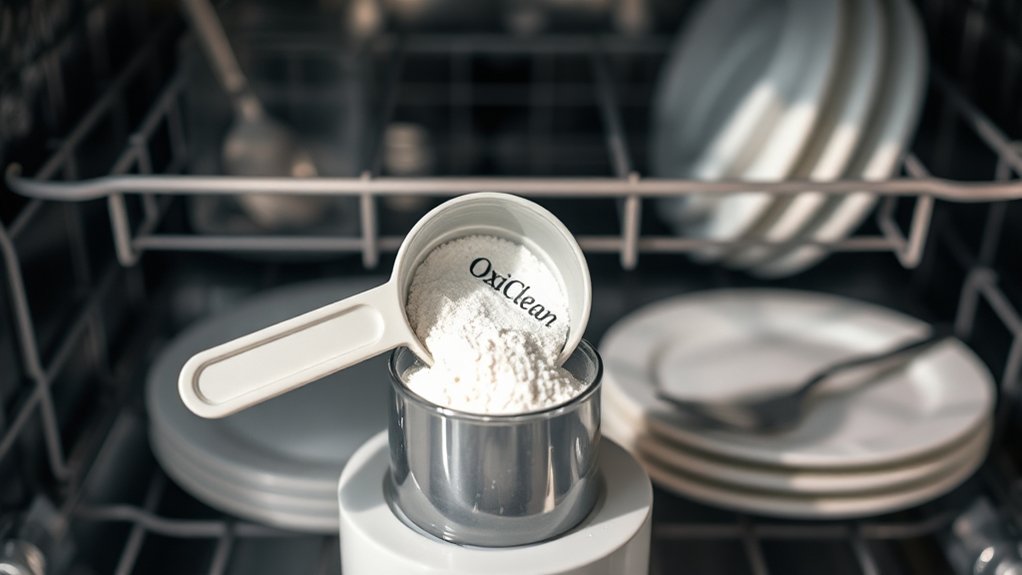
Because OxiClean powder isn’t formulated for dishwashers, using it can damage finishes, leave residue, or harm appliance parts. Protect your dishes by keeping the product away from delicate materials like aluminum, silver, and hand-painted or antique pieces.
Check each item’s care label, and don’t assume a dishwasher-safe marking means it can tolerate an unapproved cleaner. If you’re unsure, wash the item by hand with mild dish soap instead.
Follow each item’s care label; when in doubt, hand-wash with mild dish soap rather than using an unapproved cleaner.
Your dishwasher also contains seals, coatings, filters, and metal components that may react poorly to unsuitable products. Don’t let powder sit on the door, racks, or interior surfaces. Wipe away any accidental spills promptly with a damp cloth.
Avoid mixing OxiClean with other cleaners since combinations can create harmful reactions or fumes. Stop if you notice discoloration, unusual residue, or damage.
Measure OxiClean Powder for One Load
Check the package directions to confirm the amount for your dishwasher.
Just measure one scoop as directed, and try not to overfill the dispenser.
Easy enough, right? This way, you’ll get the best results without any mess.
Check the Package Directions
Before adding OxiClean to a dishwasher, read the package directions to confirm it’s suitable for your machine and dishes. Check the product label carefully, since formulas and intended uses can differ. Don’t assume that a laundry product is safe for dishware or dishwasher parts just because it cleans effectively.
Look for clear guidance about using the powder around items that contact food. Follow any warnings, restrictions, or required precautions listed on the package. If the label doesn’t specifically support dishwasher use, choose a detergent made for dishwashers instead. You can also check the dishwasher manual for ingredients or products the manufacturer advises you to avoid.
Before proceeding, confirm these details:
- The label permits the intended use.
- Your dishes and machine meet any stated conditions.
- You understand the package’s safety warnings.
When directions are unclear, contact the manufacturer rather than guessing.
Measure One Scoop
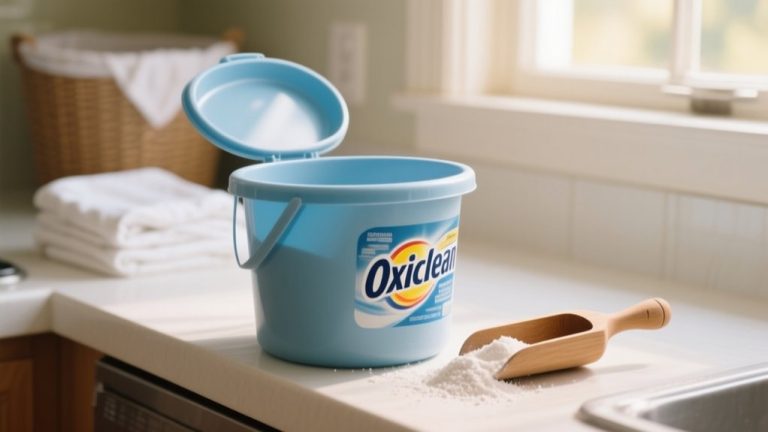
If the label explicitly permits dishwasher use, measure only the amount it specifies for one load. Don’t assume that a scoop included with the product equals the correct dishwasher dose; scoop sizes and directions can vary.
Check the package’s measurement details, then use a clean, dry measuring scoop or spoon to portion the stated quantity. Keep the powder level rather than heaped, and follow any guidance about whether to use a full or partial scoop.
If the label doesn’t provide a dishwasher-specific amount, don’t guess or adapt a laundry dose. Choose a detergent intended for dishwashers instead.
Measuring carefully helps you follow the product directions and avoid using more cleaner than the manufacturer recommends.
Confirm the quantity each time you use the product, especially if you switch package sizes or formulations.
Avoid Overfilling the Dispenser
Leave enough room in the dispenser for the compartment to close properly. Measure OxiClean powder for one load, and don’t pack extra into the cup or detergent compartment. Too much powder may spill, prevent the lid from latching, or leave residue on dishes.
Check your dishwasher’s manual and the OxiClean package directions before adding any product; not every powder is suitable for dishwashers. Use the amount specified for your model and load, rather than assuming a full dispenser is best.
- Fill only to the marked line, if your dispenser has one.
- Keep powder below the compartment’s rim so the lid can shut.
- Brush away any loose granules around the latch before starting.
If the recommended dose doesn’t fit, don’t force the lid closed. Reduce the amount or choose a product approved for your dishwasher.
Add OxiClean Without Blocking the Dispenser
To keep OxiClean from clogging the dispenser, add only a small amount of powder and make sure it stays dry and loose. Use a clean, completely dry measuring spoon to transfer it. Don’t scoop with a damp utensil or let moisture enter the container; wet powder can clump and stick to the dispenser walls.
Pour the powder gently into the compartment, keeping it away from the hinge, latch, and edges. If any grains spill, wipe them up before closing the door so they don’t interfere with the mechanism.
Check that the dispenser opens and closes freely, and remove any compacted residue with a dry cloth.
Keep the powder container sealed between uses and store it in a dry place. These simple habits help the dispenser release its contents without obstruction.
Choose a Dishwasher Cycle and Temperature
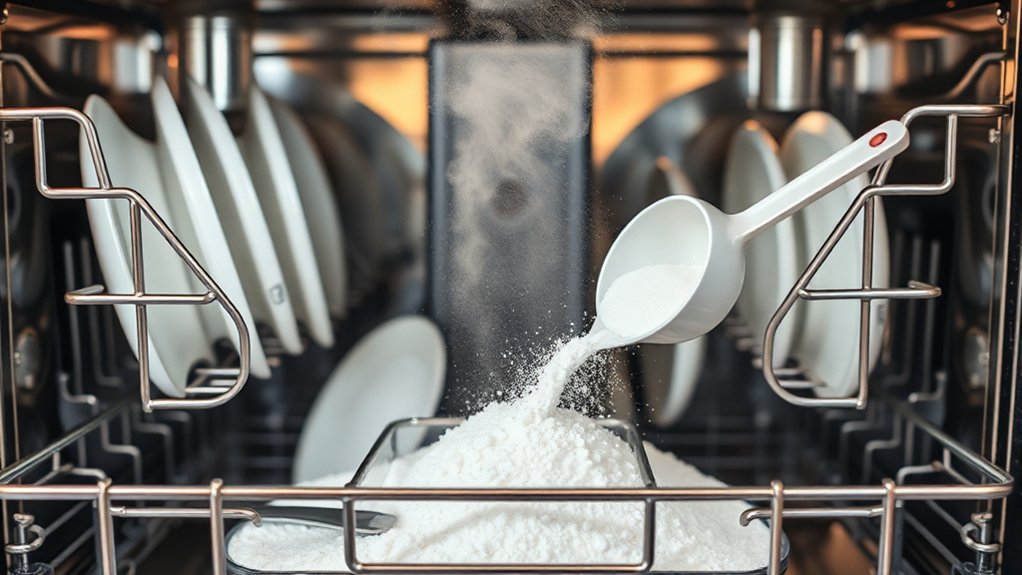
Choose a normal or heavy cycle based on how dirty your dishes are, and use the water temperature recommended by your dishwasher’s manual. OxiClean works with water, so select a cycle that gives it enough time to dissolve and wash through the load.
Check your appliance guide before choosing a temperature; settings and recommendations vary by model. Don’t assume the hottest option is best, since excessive heat may affect dishes or finishes.
Choose a normal cycle for everyday loads with light food residue. Select a heavy cycle for cookware or dishes with stuck-on food. Use the manual’s recommended temperature rather than changing the water heater.
Load dishes so water can reach their surfaces, then start the selected cycle. Follow the product label and dishwasher instructions, and don’t add extra powder to compensate for a shorter program.
Fix OxiClean Residue, Odors, or Poor Cleaning
If residue, odors, or poor cleaning remain after the cycle, stop using OxiClean in the dishwasher and check the product label and appliance manual. Don’t run another cycle with the powder until you confirm it’s approved for your machine and use.
Remove any visible residue from the detergent dispenser and dishwasher interior with a damp cloth. Check the filter and spray arms for buildup or blocked openings. Follow your manual’s instructions to clean them.
Wipe away visible residue, then check and clean the filter and spray arms according to your manual.
Make sure dishes aren’t crowding the racks or blocking the spray arms, and load items with soiled surfaces facing the spray.
If an unpleasant smell persists, inspect the filter and door seals for trapped food, then clean those areas as directed by the manufacturer.
If cleaning remains poor or the odor continues, contact the appliance maker or a qualified technician.
Choose a Dishwasher-Safe Cleaning Alternative
For reliable dishwasher cleaning, use a detergent labeled for automatic dishwashers and follow its package directions. You’ll get formulas designed to dissolve in the machine, rinse away cleanly, and work with your water conditions.
Choose powder, gel, or tablets based on your preference, then measure or place the product as directed.
Don’t substitute OxiClean laundry powder, hand dish soap, or other household cleaners; they may leave residue, create excess suds, or affect appliance performance.
Powder: Add the specified amount to the detergent dispenser.
Gel: Fill the dispenser to the marked line.
Tablets or packs: Place one in the dispenser or designated spot, as the label instructs.
If you need extra cleaning, select a dishwasher-approved cleaner and use it only as directed.
Check your dishwasher manual before trying unfamiliar products.
Frequently Asked Questions
Can Oxiclean Powder Remove Tea and Coffee Stains From Dishes?
Yes, OxiClean powder can help remove tea and coffee stains from dishes.
Check the product label first, since formulas and directions vary. Don’t assume every OxiClean product is approved for dishware or dishwasher use.
For stained cups, soak them in a solution only if the label permits, then rinse thoroughly.
Don’t mix OxiClean with other cleaners, and avoid using it on delicate or incompatible materials.
Is Oxiclean Powder Safe for Septic Systems?
Yes, you can generally use OxiClean powder with a septic system when you follow the product label. A little care keeps your household wastewater routine on track.
Don’t pour concentrated powder directly into a drain, and avoid using more than directed; excessive cleaning products may disrupt the helpful bacteria in your tank.
Check the specific OxiClean formula’s ingredients and instructions, since products vary.
If your septic professional advises otherwise, follow their guidance.
Can Oxiclean Damage Stainless Steel Flatware?
Yes, OxiClean can damage stainless steel flatware if you use it incorrectly. Prolonged soaking, strong concentrations, or repeated exposure may dull the finish, cause discoloration, or encourage corrosion, especially on lower-quality pieces.
Check your flatware manufacturer’s care instructions and OxiClean’s label before use. Don’t mix the powder with other cleaners, and rinse utensils thoroughly afterward.
For routine cleaning, use dishwasher detergent instead.
Avoid OxiClean on silver-plated or delicate handles.
How Should Oxiclean Powder Be Stored Safely?
Store OxiClean powder in its original, tightly sealed container in a cool, dry, well-ventilated place.
Keep it away from moisture, heat, and direct sunlight since dampness can make the powder clump or react.
Place the container out of children’s and pets’ reach, and don’t transfer it to food or drink containers.
Keep it separate from other chemicals, especially acids, ammonia, and chlorine bleach.
Always follow the product label’s storage instructions.
What Should I Do if Someone Accidentally Swallows Oxiclean?
If someone swallows OxiClean, call Poison Control immediately.
In the U.S., dial 1-800-222-1222 or contact your local poison center.
Don’t induce vomiting or give anything unless a medical professional advises you.
If the person is unconscious, having trouble breathing, or experiencing seizures, call emergency services now.
Keep the product container handy so responders can identify its ingredients.
Rinse their mouth gently if they’re alert, and follow the poison center’s instructions while you wait for help.
Conclusion
Before you use OxiClean powder in your dishwasher, check the product label and your appliance manual. Some formulas aren’t intended for dishwashers. If both allow it, measure carefully, keep powder out of dispenser openings, and choose a suitable cycle.
For example, if you spot residue after a test load, stop using the powder and switch to a dishwasher-safe cleaner. You’ll protect your dishes and machine by following directions instead of guessing and get cleaner results with less hassle.