How To Use Oxiclean In Dishwasher – Quick Guide
Don’t put OxiClean in your dishwasher unless the specific product label explicitly approves dishwasher use. Laundry boosters and general-purpose cleaners may create suds, leave residue, or damage parts. You should never mix OxiClean with bleach, ammonia, or other cleaners.
If the label permits dishwasher use, remove dishes, clear debris, check the filter, and follow its exact amount, placement, and cycle directions. Run an empty cycle, then inspect the interior.
A dishwasher cleaner may be a safer choice; more guidance follows.
Check Your OxiClean Product Label
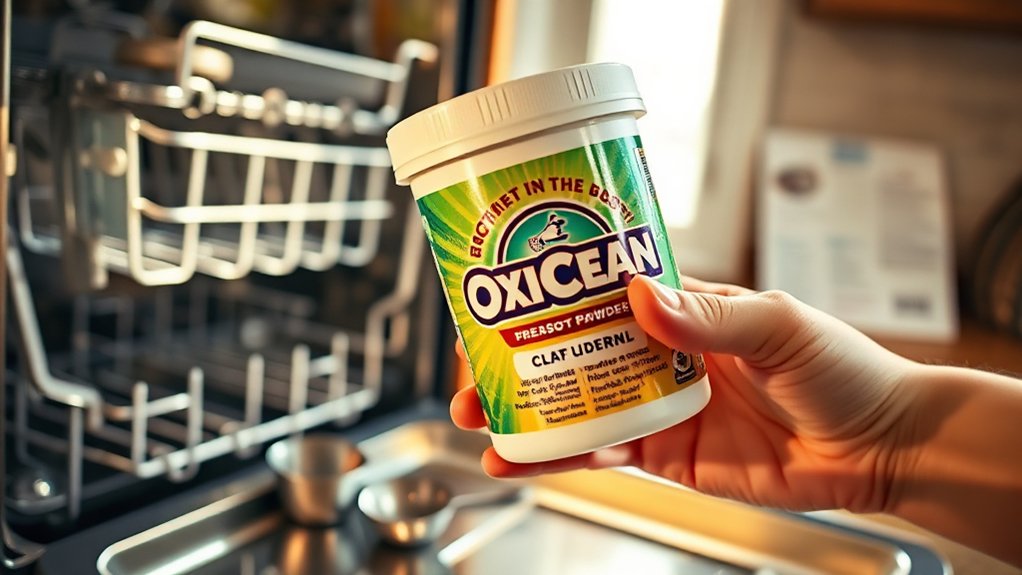
Before using OxiClean in your dishwasher, check the product label to confirm it’s safe for your intended use. OxiClean sells several formulas, and their directions can differ. Find the exact product name on your container, then read its uses, dilution instructions, and appliance guidance.
Don’t assume a powder or stain remover is suitable just because another OxiClean product is. Check whether the label mentions dishwashers, dishware, or machine cleaning. Follow the stated amount and preparation steps, and use only the method the manufacturer specifies.
If the label doesn’t clearly support your intended use, contact OxiClean’s customer service for clarification before proceeding. Keep the container nearby so you can refer to its directions, and make sure you’re reading the current label rather than relying on advice for a different formula.
Know the Risks of OxiClean in a Dishwasher
Even if your OxiClean label supports dishwasher use, the product can still pose risks if you use the wrong formula or amount. Too much cleaner can create excess suds, overflow, or leave residue on dishes and inside the appliance.
A formula with fragrances, dyes, or other additives may also leave unwanted traces or affect delicate items.
Never mix OxiClean with chlorine bleach, ammonia, or other cleaning products. Combining chemicals can release harmful fumes or cause dangerous reactions.
Follow the package directions and use only the stated quantity. Keep the product away from children and pets, and avoid breathing its powder or getting it in your eyes.
If you notice unusual foam, odors, or irritation, stop the cycle, ventilate the area, and follow the label’s safety guidance.
Remove Debris and Check the Filter
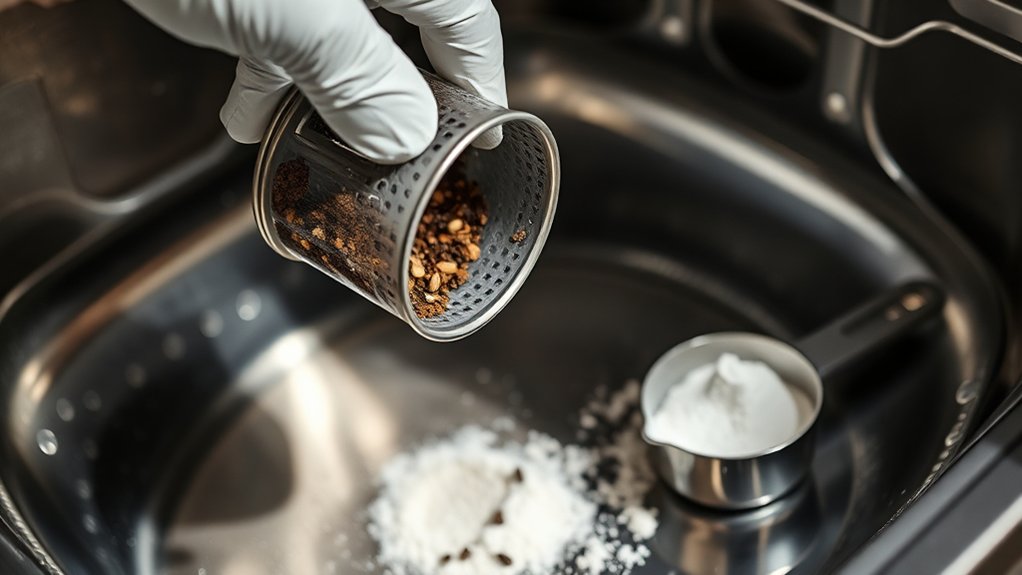
Before using OxiClean, make sure to clear away any visible food debris from your dishwasher.
Next, take out the filter following your appliance’s instructions.
Give it a good rinse and check for any trapped debris or damage.
Clear Visible Food Debris
Scrape away visible food scraps from the dishes and dishwasher floor, then remove and rinse the filter to clear trapped debris.
Check the filter’s mesh and surrounding area for bits of food, labels, or other residue.
Rinse away loose particles under running water, and use a soft brush if debris clings to the mesh.
Don’t force anything through the openings or use sharp tools, which could damage the filter.
Wipe the filter’s seating area with a damp cloth to pick up remaining scraps.
Before you add detergent or OxiClean, make sure the drain area looks clear and no food pieces remain where water needs to flow.
This quick cleanup helps prevent odors and lets the dishwasher circulate water effectively.
Follow your appliance manual for guidance on cleaning and handling its filter.
Remove the Dishwasher Filter
With loose food debris cleared, remove the dishwasher filter according to your appliance manual. You’ll usually find it at the bottom of the tub, beneath the lower spray arm.
Check your manual for the correct release method; filters may twist, lift, or disengage differently. Don’t force a stuck part, since that could damage its housing.
- Pull out the lower rack to give yourself room to work.
- Locate the filter assembly and note how its parts fit together.
- Turn or release the filter as directed, then lift it out carefully.
- Keep small components together and check the filter and opening for trapped debris.
Handle the filter gently, and avoid using tools unless your manual recommends them. Set it aside in a safe spot for the next step.
Rinse and Inspect the Filter
Rinse the filter under warm running water, gently brushing away food particles with a soft toothbrush if needed.
Don’t use a wire brush or abrasive pad, which can damage the mesh. Check the filter’s seams, screen, and plastic frame for trapped grease, mineral buildup, cracks, or warping.
Clear stubborn residue with a little dish soap and a soft brush, then rinse thoroughly so no suds remain.
Hold the clean filter up to the light. If you can see through the mesh and it has no tears or loose parts, it’s ready to reinstall.
Replace a damaged filter rather than relying on it to catch debris.
Before putting it back, inspect the dishwasher’s filter well and wipe away any loose food or grit with a damp cloth.
Don’t pour OxiClean into the filter or its housing.
Measure OxiClean According to the Label
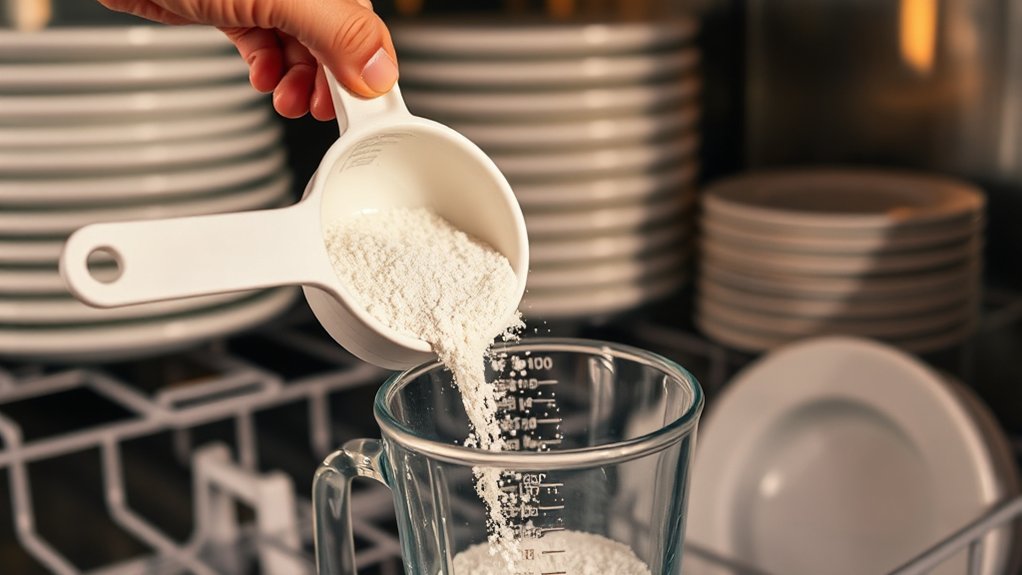
Before adding OxiClean to your dishwasher, check the product label to confirm it’s suitable for your intended use and follow its directions for the exact amount. Products and formulas can differ, so don’t assume a scoop or dose from another OxiClean package applies.
Use these steps to measure carefully:
- Find the dishwasher-related directions and identify the stated quantity.
- Check whether the label specifies powder, liquid, or a particular product version.
- Use the supplied scoop only if the label directs you to; level it as instructed.
- Measure the amount precisely, and don’t add extra for a tougher mess.
If the label doesn’t mention dishwasher use, don’t improvise a dose. Choose a product labeled for that purpose and follow its instructions.
Keep the container’s measuring guidance handy.
Run an Empty Dishwasher Cycle
Once you’ve measured the product according to its label, run an empty dishwasher cycle only if the label approves this use.
Remove any dishes, utensils, and items from the racks so the appliance runs without a load.
Add OxiClean only where the product directions specify; don’t put it in the detergent dispenser unless the label says to.
Choose the cycle and water temperature recommended on the package.
If the label doesn’t give cycle details, use a standard cycle and avoid adding other cleaners, which could cause unwanted reactions or excess suds.
Stay nearby during the wash, and stop the dishwasher if you notice leaking, unusual foaming, or an error.
When the cycle ends, let the interior cool before you inspect it.
Follow the product label for any additional cleanup or safety steps.
Rinse Before Loading Dishes
After the empty cycle, check the dishwasher interior and follow the product label for any needed cleanup.
Before loading dishes, rinse away loose OxiClean residue and food debris so they don’t transfer to your items or interfere with washing. You don’t need to scrub dishes spotless; modern dishwashers work best when some food soil remains.
Focus on visible powder, clumps, or debris, and check the filter area if residue has collected there.
- Remove dishes from the sink and scrape off large food scraps.
- Rinse any visible powder from plates, cups, and utensils.
- Check cookware and dish surfaces for residue, especially creases and rims.
- Load items securely, keeping spray arms clear.
Use clean running water, and avoid adding extra cleaning products during this step.
Once your dishes look free of loose residue, start a normal cycle.
Use a Dishwasher Cleaner Instead
It’s best to go with a dishwasher-safe cleaner instead of OxiClean to keep your appliance in good shape.
Just make sure to follow the instructions on the product for the correct amount and where to put it.
Then, run an empty cycle to clean your dishwasher—this way, your dishes won’t come into contact with the cleaner.
Choose Dishwasher-Safe Cleaner
If you want to clean your dishwasher, use a cleaner made for dishwashers rather than OxiClean. A dishwasher-safe product targets grease, mineral deposits, and odors without leaving unsuitable residue on dishes or interior parts.
Choose one that fits your machine and cleaning needs.
- Check the package for an explicit dishwasher-cleaner label.
- Pick a formula suited to your concern, such as hard-water buildup or lingering smells.
- Look for compatibility with your dishwasher type, including stainless-steel interiors if applicable.
- Choose a format you find convenient, such as a tablet, powder, or liquid.
Avoid laundry boosters and general-purpose cleaners, which may foam excessively or damage components. A purpose-made cleaner gives you a safer option for routine maintenance and helps keep your dishwasher fresh.
You’ll also avoid guessing whether a household product belongs in the appliance.
Follow Product Instructions
Once you’ve selected a dishwasher cleaner, follow its label for the correct amount, placement, and cycle. Products vary, so don’t assume that a familiar format or brand works like another.
Check whether you should put the cleaner in the detergent dispenser, place it elsewhere in the tub, or use a specific compartment. Measure carefully if the label gives an amount; adding extra won’t necessarily improve cleaning and may leave residue.
Confirm that the product suits your dishwasher type and any relevant manufacturer guidance. Read warnings and handling directions, too, especially if you have sensitive skin or children nearby.
Don’t combine the cleaner with detergent, bleach, or other chemicals unless the label explicitly permits it. If directions are unclear, consult the manufacturer before using the product.
Follow the listed cycle settings exactly.
Run an Empty Cycle
With the cleaner’s directions in mind, run an empty cycle so it can work throughout the dishwasher without dishes blocking its reach. Use a dishwasher cleaner made for your machine, not OxiClean, unless the appliance manufacturer specifically approves it. Before starting, remove food scraps and check that the spray arms can turn freely.
- Place the cleaner where its label recommends, such as the detergent dispenser or bottom rack.
- Choose the cycle and temperature specified on the package; don’t add detergent or dishes.
- Start the dishwasher and let the full cycle finish without interruption.
- When it’s done, open the door carefully and let the interior air out.
If residue or odors remain, follow the cleaner’s label before repeating. Don’t combine cleaners, and stop if you notice leaks, unusual noises, or other problems.
Check your manual for any additional guidance.
Frequently Asked Questions
Can Oxiclean Remove Tea and Coffee Stains From Dishes?
Yes, OxiClean can help remove tea and coffee stains from dishes. Check the product label first, since formulas and directions vary.
For a soak, dissolve the recommended amount in warm water, then submerge the stained dish for the specified time. Rinse it thoroughly before using it.
Don’t mix OxiClean with other cleaners, and avoid using it on materials the label excludes. For stubborn stains, repeat the treatment rather than increasing the concentration.
Is Oxiclean Safe for Septic Systems?
Yes, OxiClean is generally considered safe for septic systems when you use it as directed.
Think of your septic tank as a tiny garden: moderation helps its helpful bacteria thrive.
Avoid dumping large amounts of cleaner or concentrated solution down the drain, and don’t combine products.
Check the specific OxiClean label, since formulas vary, and follow its dosing instructions.
If your system has special requirements, ask a septic professional before use.
Can Oxiclean Damage Stainless Steel Dishwasher Interiors?
Yes, OxiClean can damage stainless steel dishwasher interiors, especially if you use too much, leave it sitting, or apply a concentrated solution.
Its ingredients may cause discoloration or dulling. Some products aren’t labeled for dishwasher use.
Check the product label and your dishwasher manual before using it.
If you’ve already spilled some inside, rinse the area thoroughly with clean water and dry it promptly to reduce the risk of staining or residue buildup.
How Should Oxiclean Be Stored Around Children and Pets?
Keep OxiClean locked away because curious hands and paws can turn a household product into a hazard.
Store it in its original, tightly closed container in a cool, dry place well above children’s reach and behind a child-resistant latch.
Don’t transfer it into food or drink containers, and keep it away from pet food and water.
Follow the label’s storage directions, and contact Poison Control or your veterinarian promptly if anyone swallows it.
What Should I Do if Oxiclean Gets in My Eyes?
If OxiClean gets in your eyes, rinse them immediately with clean, lukewarm water for at least 15 to 20 minutes.
Hold your eyelids open and remove contact lenses if they come out easily.
Don’t rub your eyes or use drops unless a medical professional tells you to.
Call Poison Control or your local poison center for guidance.
Seek urgent medical care if irritation, pain, redness, or blurred vision persists.
Take the product label with you.
Conclusion
Before using OxiClean in your dishwasher, check the product label and consider the risks. Remove debris, inspect the filter, and measure only as directed. Then run an empty cycle and rinse the machine before loading dishes.
Remember, even a small residue can affect what touches your family’s plates. If the label doesn’t approve dishwasher use, choose a cleaner made for dishwashers instead. You’ll protect your appliance and feel more confident about every load you wash.