How To Remove Oxiclean Residue From Hands – Quick Guide
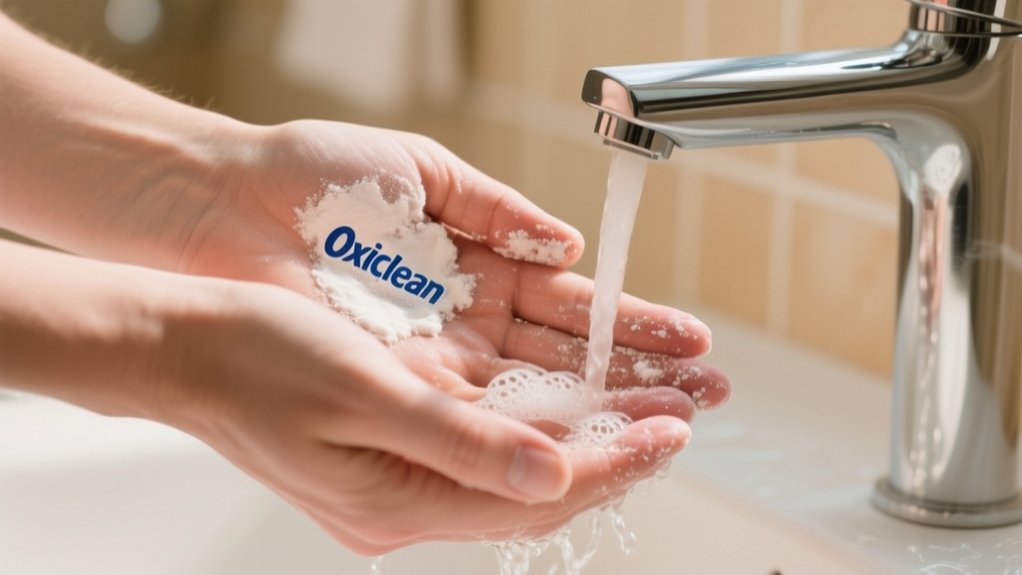
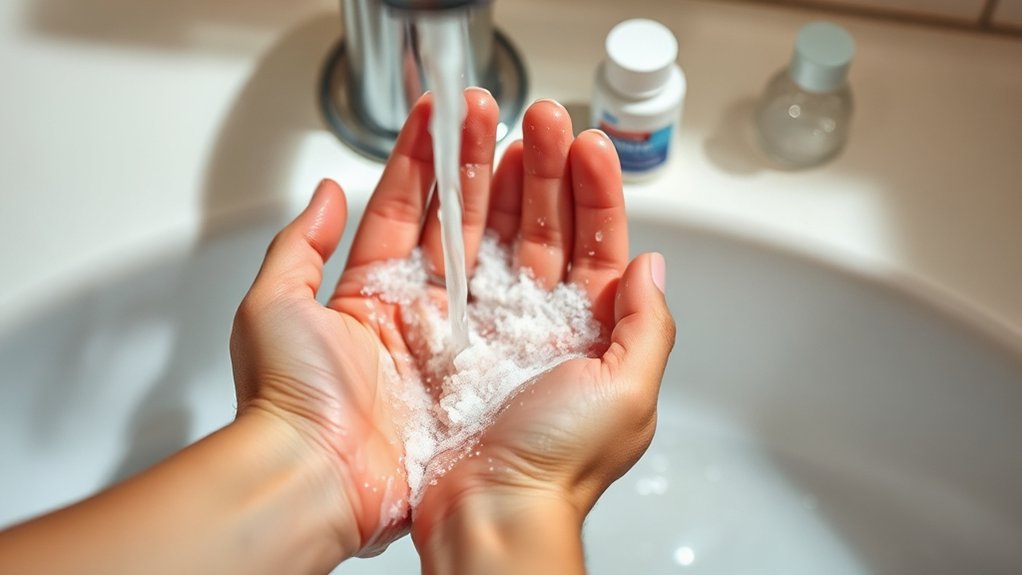
Rinse your hands under cool or lukewarm running water for several minutes, turning them to flush your palms, fingertips, and the spaces between your fingers. Remove rings or watches so water reaches the skin beneath them.
Wash gently with a small amount of mild, fragrance-free soap, then rinse and pat dry. Don’t scrub or use vinegar, bleach, or other cleaners.
Apply plain moisturizer if your skin feels tight. Keep going for steps to soothe irritation and prevent future residue.
Rinse OxiClean Residue Off Your Hands
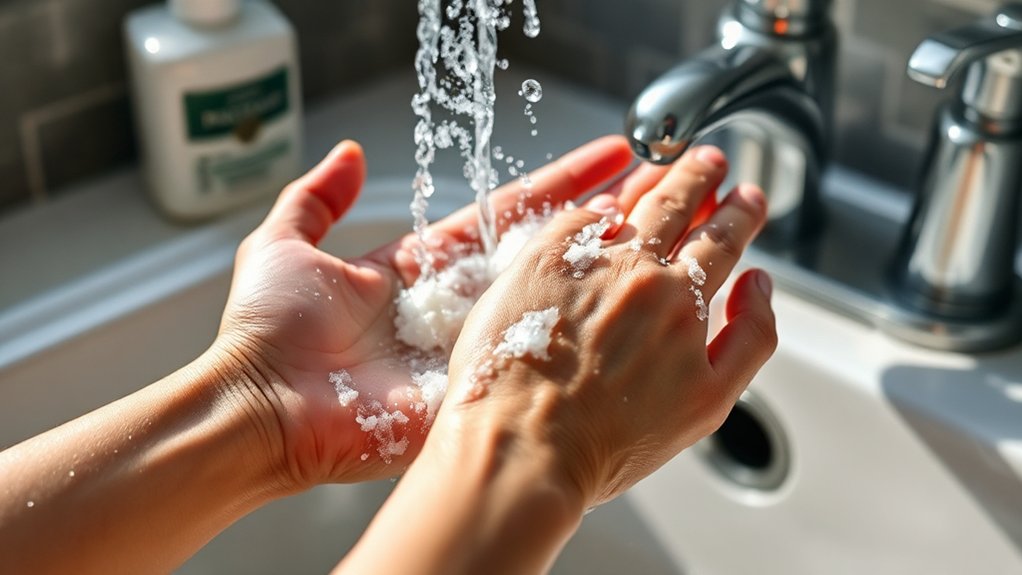
Rinse your hands under cool, running water for several minutes to wash away OxiClean residue.
Hold your hands beneath the stream and turn them so water reaches your palms, backs, fingertips, and the spaces between your fingers. Gently separate your fingers to flush away any powder or solution caught in skin creases.
Turn your hands under cool running water, gently separating your fingers to rinse away any cleaner trapped in skin creases.
Keep rinsing rather than wiping your hands, since rubbing can spread residue across your skin. If you’re wearing rings or a watch, remove them carefully and rinse the skin underneath, too.
Don’t use hot water, which may irritate skin already exposed to the cleaner. Continue until you can’t see or feel any remaining product.
If your skin still feels irritated after rinsing, stop handling the cleaner and seek medical guidance.
Dry your hands gently with a clean towel.
Wash Away Chalky Film With Mild Soap
Once you’ve rinsed your hands thoroughly, wash away any chalky film with a small amount of mild soap. Choose a gentle, fragrance-free cleanser if your skin feels sensitive. Use lukewarm water, since hot water can dry your hands, and avoid scrubbing hard.
- Wet your hands again and add a pea-sized amount of soap.
- Rub your palms together, then clean between your fingers and around your nails.
- Keep washing gently for about 20 seconds, paying attention to any visible powder.
- Rinse until the water runs clear, then pat your hands dry with a clean towel.
Check your skin afterward. If it feels tight, apply a plain moisturizer to help restore comfort.
Don’t use abrasive cleaners or rough tools. Gentle washing is usually enough to remove a light film.
Remove Stubborn OxiClean Film Safely
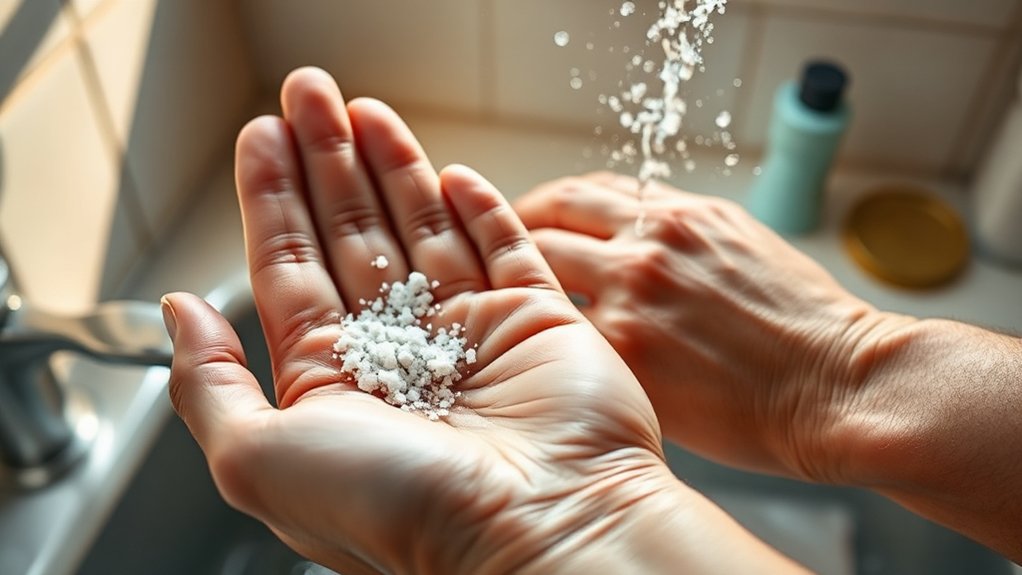
If you still notice a stubborn OxiClean film on your hands, try rinsing them with cool water first.
Then, wash gently using some mild soap—just be careful not to scrub too hard.
After that, pat your hands dry and finish up by applying a moisturizer to keep your skin feeling soft and soothed.
Rinse With Cool Water
Hold your hands under cool running water to wash away any remaining OxiClean film. Let the water flow over your palms, backs of your hands, and between your fingers.
Keep your hands beneath the stream for several minutes, moving them gently so water reaches every area. Don’t scrub hard; friction can irritate skin that’s already sensitive.
- Turn your hands palm-up and rinse each palm thoroughly.
- Turn them palm-down so water reaches the backs and knuckles.
- Spread your fingers and rinse carefully between them and around your nails.
- Check for slippery or gritty patches, then rinse those spots again.
If residue remains, continue rinsing with cool water rather than using hot water, which may worsen irritation.
Stop when your skin feels clean and no film remains. Pat your hands dry with a clean towel.
Use Mild Soap And Moisturizer
After rinsing, wash away any stubborn film with a small amount of mild, fragrance-free soap and cool water.
Rub your palms, fingertips, and the spaces between your fingers gently for about 20 seconds, then rinse thoroughly. Don’t scrub with a brush or use hot water; friction and heat can worsen irritation.
Pat your hands dry with a clean towel instead of rubbing.
Apply a fragrance-free moisturizer while your skin is still slightly damp. Choose a simple cream or ointment to help restore your skin’s protective barrier. If your hands feel tight or dry, reapply as needed.
Don’t use vinegar, bleach, or other cleaners to remove residue. If burning, redness, swelling, or pain continues after washing, stop using the product and contact a healthcare professional or poison control for guidance.
Soothe Dry or Irritated Skin
Once you’ve rinsed off the OxiClean, soothe dry or irritated skin with a fragrance-free moisturizer. Apply it while your hands are slightly damp to help lock in moisture. Choose a simple cream or ointment without added fragrance, which can further irritate sensitive skin.
- Use a gentle barrier: Smooth on petroleum jelly or a thick, fragrance-free cream to protect dry areas.
- Reapply as needed: Moisturize after washing your hands and whenever your skin feels tight.
- Avoid extra irritants: Skip scented lotions, harsh cleaners, and very hot water while your skin recovers.
- Protect your hands: Wear gloves for household chores, but take them off if sweat makes your skin uncomfortable.
Pat your hands dry instead of rubbing them. Keep your routine simple and give your skin time to regain comfort.
Know When to Seek Medical Advice
Most mild irritation improves after you rinse the product off.
But seek medical advice if burning, redness, swelling, or pain is severe, worsens, or doesn’t improve.
Contact a healthcare professional if you develop blisters, a rash, numbness, or signs of an allergic reaction like hives or facial swelling.
If you have trouble breathing or swelling in your mouth or throat, call emergency services immediately.
Tell the clinician which OxiClean product touched your skin and when the exposure happened.
Keep the package or take a photo of its label so they can check the ingredients and safety guidance.
Don’t apply other cleaning products or home remedies to the affected area while you wait for advice.
If symptoms persist despite basic care, arrange an evaluation rather than assuming they’ll resolve on their own.
A medical professional can recommend appropriate treatment and assess whether the skin needs further attention.
Prevent OxiClean Residue Next Time
You can prevent OxiClean residue by simply wearing protective gloves while you work.
Just make sure to measure the product carefully to avoid spills and excess powder.
And don’t forget to rinse your tools promptly so the residue doesn’t have a chance to dry on them.
Wear Protective Gloves
To prevent OxiClean residue from sticking to your hands next time, wear chemical-resistant gloves while mixing or handling it. Choose gloves that fit snugly and cover your wrists so powder or solution can’t slip inside. Check the product label for any specific protective equipment advice and follow it.
- Pick suitable gloves: Use sturdy, waterproof household or chemical-resistant gloves. Don’t rely on thin disposable gloves unless the label says they’re appropriate.
- Inspect before use: Look for holes, tears, or worn spots. Replace damaged gloves before you handle the product.
- Put them on carefully: Keep your hands dry and avoid touching your face or other surfaces with contaminated gloves.
- Remove and clean: Peel gloves off without touching their outer surfaces. Then rinse or discard them as directed. Wash your hands afterward.
Measure Carefully
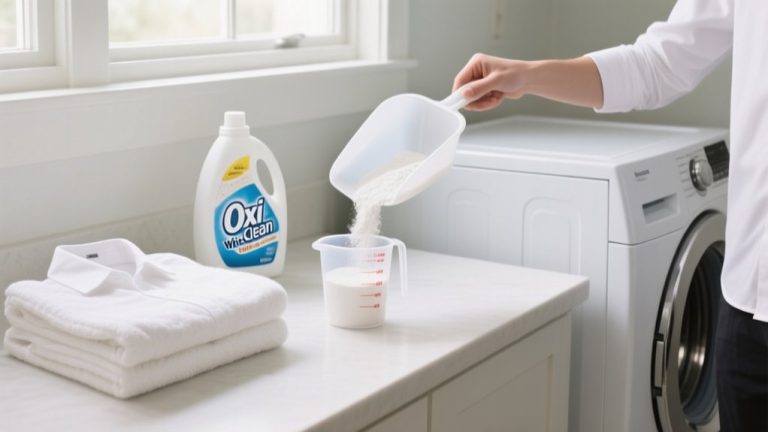
Along with wearing gloves, measuring OxiClean carefully helps prevent spills and residue on your hands.
Check the package directions before you begin, since the recommended amount can vary by product and cleaning task. Don’t estimate by eye or add extra powder or solution; too much won’t necessarily clean better and can make handling messier.
Use the scoop or measuring tool specified on the label, and keep it steady over the container or a clean, dry surface. Pour slowly to avoid dust and splashes, and keep the product away from your skin.
If you’re mixing a solution, measure the water and OxiClean separately, then combine them according to the instructions.
Work in a well-lit area so you can see the amount clearly. Close the container securely when you’re finished.
Rinse Tools Promptly
After measuring or mixing OxiClean, rinse the scoop, measuring cup, and other tools promptly under running water. Quick rinsing keeps powder and solution from drying into a stubborn film that could transfer to your hands during later use.
- Rinse every surface: Turn each tool under the tap, including handles, rims, and crevices where residue can collect.
- Use cool or lukewarm water: Flush away remaining cleaner without splashing it onto your skin or clothing.
- Wash reusable tools: If residue remains, clean them with dish soap and water, then rinse thoroughly.
- Dry and store safely: Let tools dry completely before putting them away, and keep them separate from food utensils.
Wear gloves when handling concentrated cleaner and avoid touching your face.
If residue gets on your hands, rinse your skin promptly with plenty of water.
Frequently Asked Questions
What Ingredients in Oxiclean Can Leave Residue on Skin?
OxiClean’s sodium carbonate (washing soda) and sodium percarbonate can leave a powdery or slippery film on your skin.
Percarbonate releases hydrogen peroxide when wet.
Some formulas also contain sodium silicate, surfactants, or other cleaning agents that may leave residue, depending on the product.
You might notice dryness or irritation rather than a visible coating.
Rinse your hands thoroughly with cool water, and check your package’s ingredient list because formulas vary.
Can Oxiclean Residue Transfer From Hands to Food or Surfaces?
Yes, residue on your hands can transfer to food, utensils, counters, or other surfaces you touch.
Don’t handle food until you’ve washed your hands thoroughly with soap and plenty of water.
If you’ve already touched food, discard it rather than risk ingesting cleaner.
Wipe affected surfaces with clean water, following the product label’s directions.
If irritation develops or you think you’ve swallowed residue, contact a medical professional or poison control promptly.
Does Oxiclean Residue Stain Jewelry or Damage Nail Polish?
A faint white veil can signal trouble: OxiClean residue may discolor or dull some jewelry, especially silver, plated pieces, or items with delicate finishes.
Its oxygen-based cleaner can also dry or irritate your skin, but brief contact is unlikely to damage cured nail polish.
Rinse your hands thoroughly with cool water, remove jewelry before handling the product, and check the label.
If jewelry looks altered, stop cleaning it and ask a jeweler.
Is Residue More Likely After Handling Powder or Diluted Solution?
You’re more likely to get residue from handling the powder, since dry particles can cling to damp skin and settle around your nails.
A diluted solution can leave a film too, especially if it’s concentrated, dries on your hands, or isn’t rinsed off thoroughly.
Wear gloves when handling either form, and rinse your hands well with cool water afterward.
If you notice irritation, stop using the product and follow its label directions.
How Can I Check Whether the Chalky Film Is Oxiclean Residue?
If the shoe fits, you can check the chalky film by rinsing your hands thoroughly with cool water and seeing whether it dissolves.
OxiClean residue often feels powdery or slippery and may leave a pale film, especially after handling undissolved powder or a concentrated solution.
Don’t taste or deliberately smell it. If irritation develops, rinse longer. If it persists, contact a medical professional.
A film alone can’t confirm its identity.
Conclusion
Treat OxiClean residue like a stubborn dusting, not a disaster. Rinse your hands under cool, running water, then wash with mild soap. Gently repeat if a chalky film remains.
Pat dry and apply moisturizer to comfort your skin. If burning, redness, or swelling persists, or symptoms worsen, contact a medical professional or poison control.
Next time, wear gloves and follow the label. With a little care, you can leave the residue behind and let your hands return to feeling like themselves.