How To Clean Vintage Linens With Oxiclean – Easy Method
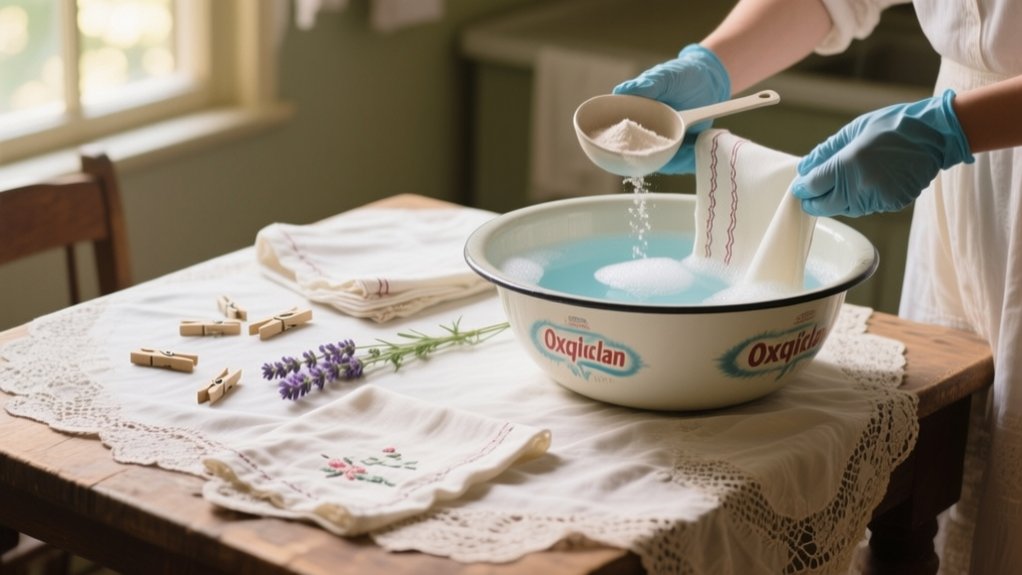
To clean vintage linens with OxiClean, inspect the fabric for fraying and test colored details in a hidden spot first. Wearing gloves, dissolve the label-recommended amount in hot water, then soak sturdy linens. Be sure to check the care label and product directions for suitable timing.
Rinse thoroughly with cool water until it runs clear, paying attention to seams and folds. Air-dry flat in the shade, then check for lingering stains. A few careful steps can help protect your linens.
Gather Supplies for Cleaning Vintage Linens

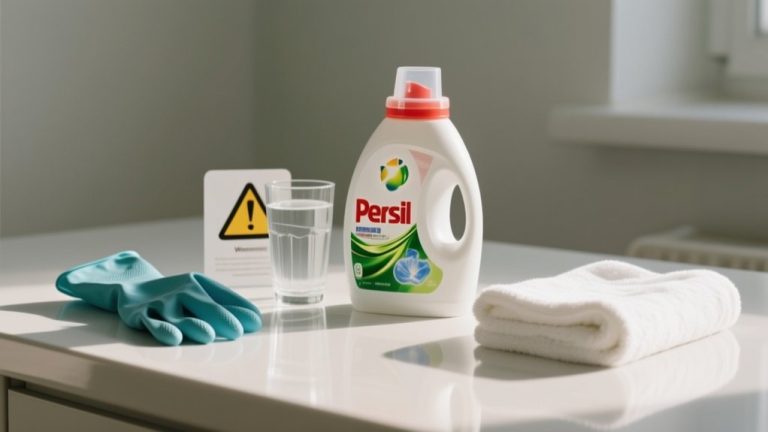
Before you begin, gather OxiClean, a measuring spoon, a clear plastic bowl or tub, hot water, rubber gloves, and wooden chopsticks for stirring. Having everything ready makes the best way to clean vintage linens easier and helps you prepare the solution without interruptions.
Put on your rubber gloves before handling the cleaner. Measure one tablespoon of OxiClean and add it to one cup of hot water in your clear container. The transparent bowl or tub lets you see the mixture and monitor the soaking process.
Use wooden chopsticks to stir until the powder dissolves; they’re convenient for mixing without using your hands. Choose a container large enough to hold the solution and later fully submerge the linen.
Keep your supplies together so you can work carefully and follow the next preparation steps without searching for tools.
Check Linen Condition and Test Colored Details
With your supplies ready, inspect the linen for discoloration, stains, fraying, or other damage that could affect cleaning.
Check seams and hems closely; fragile fibers may need extra care.
Before treating the whole piece, test any colored embroidery, edging, or trim on a hidden spot. This helps you see whether its dye will bleed when exposed to OxiClean.
Test colored embroidery or trim in a hidden spot first to check for dye bleeding before treating the whole linen piece.
- Choose an inconspicuous area, such as an inside hem.
- Apply a small amount of diluted OxiClean solution.
- Watch for color transfer, fading, or changes to the fibers.
- If the detail stays stable, consider a brief soak to assess cleaning results.
Use limited exposure to reduce risk to delicate fabric.
After any test or treatment, rinse thoroughly so residue won’t weaken the linen over time.
Mix OxiClean According to the Label
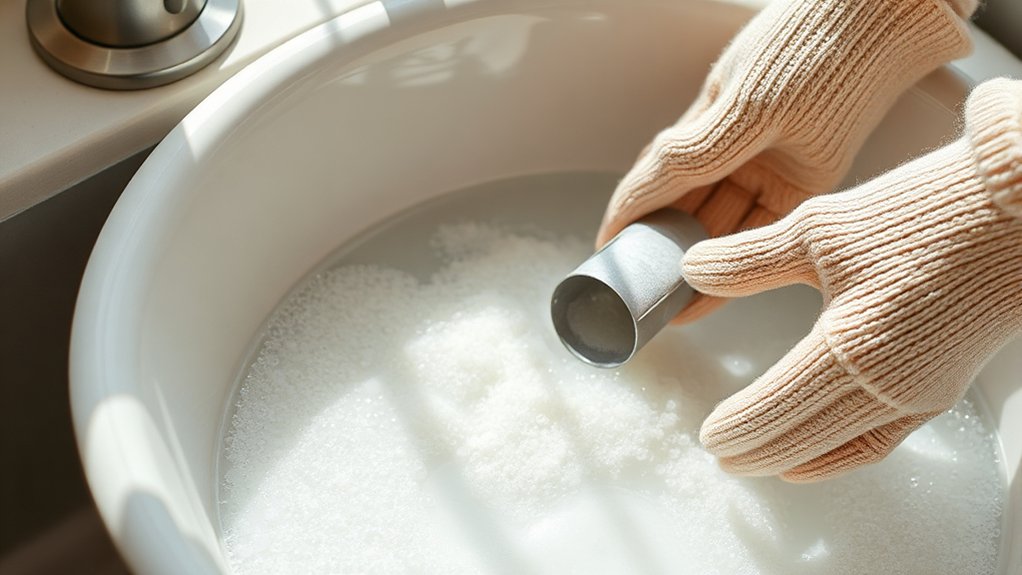
Mix OxiClean according to its label, typically using one scoop per gallon of hot water. Check the package directions first, since product versions and instructions can vary.
Use hot water to help activate the cleaner and boost its stain-fighting action.
Measure carefully rather than adding extra powder; a stronger mixture isn’t necessarily safer for delicate vintage fabric.
Pour the water into a clean container, then add the measured OxiClean. Stir the solution thoroughly until every granule dissolves. This step helps prevent undissolved powder from leaving residue on your linens.
Make sure the container is large enough to hold the amount of solution you need, and keep the mixture consistent with the label’s guidance.
Once the powder has dissolved, you’ll have a prepared cleaning solution for the next step.
Soak Vintage Linens and Rinse Thoroughly
First, make sure the colors won’t bleed by doing a quick test.
Once you’re confident, go ahead and soak your linens in the prepared solution for about 24 hours.
After that, rinse them really well with clean water to wash away the solution and any stains that have loosened up.
Soak for 24 Hours
Before soaking, apply a spray-and-wash treatment to set-in stains, then test OxiClean on a hidden spot to check for color bleeding. Once the fabric passes this test, prepare a hot-water solution and begin the 24-hour soak.
Keep these steps in mind:
- Choose a clean basin large enough to hold your vintage linens without crowding.
- Mix OxiClean into hot water according to the product directions, dissolving it fully.
- Lower each piece into the solution, pressing gently until every section is submerged.
- Stir the linens carefully now and then, helping the solution reach stained and discolored areas.
Let the fabric soak for the full 24 hours so OxiClean has time to lift discoloration. Check occasionally that the linens remain covered and add solution if needed.
Handle delicate fibers gently throughout.
After soaking, move on to a thorough rinse with clean water.
Rinse Linens Thoroughly
Once the 24-hour soak is complete, gently agitate the linens in the solution to loosen remaining dirt, then rinse them under cool running water until it runs clear and no cleaner remains.
Work carefully, lifting and turning each piece so water reaches every area without pulling or twisting the fabric.
Continue rinsing until you can’t see suds or feel any slippery residue. If the water still looks cloudy or tinted, refresh it and rinse again; leftover Oxyclean and loosened soil shouldn’t remain in the fibers.
Check seams, folds, and any embroidered sections, where solution can linger.
When the rinse water runs clear, gently press out excess water without wringing the linens.
Lay them flat or hang them to air dry in a shaded, well-ventilated spot. Keep them out of direct sunlight to help prevent further discoloration.
Air-Dry Linens and Recheck Stains
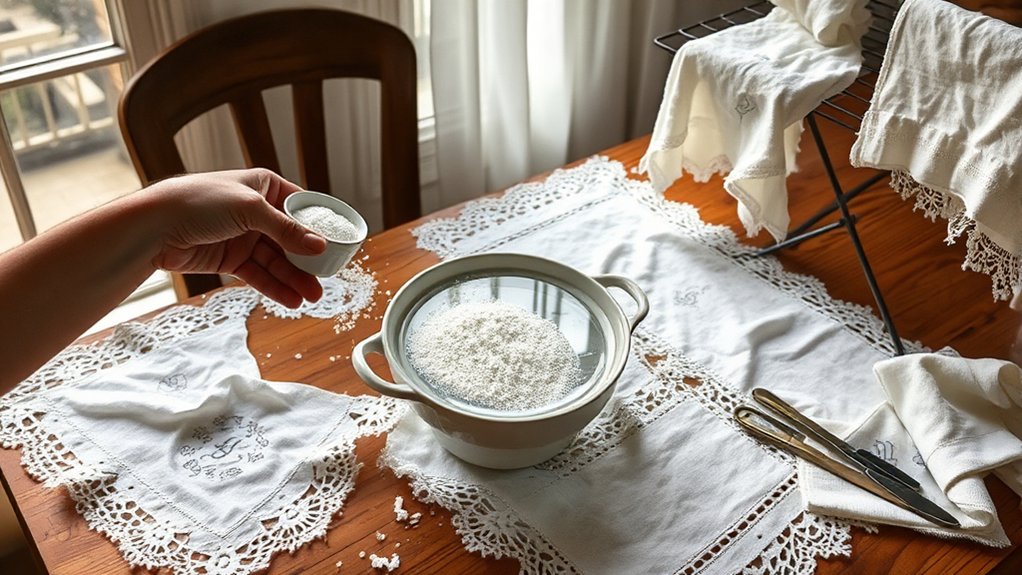
Air-dry your linens completely to keep their fibers safe from the heat of the dryer.
Plus, this helps you see if any stains are still hanging around.
Once they’re dry, take a good look to spot any areas the cleaning might’ve missed.
If you find any stubborn stains, just apply some stain remover again and run the linens through another wash.
Gently Air-Dry Linens
Lay your washed vintage linens flat in a shaded area to dry gently, protecting their color and delicate embroidery. Keep them away from direct sunlight, which can fade old fabric and weaken its fibers.
Spread each piece fully so air can circulate and the cloth dries evenly without sharp folds. Use these simple steps to support a careful drying process:
- Choose a clean, shaded surface or drying rack.
- Smooth the linen gently, aligning its edges.
- Arrange embroidered sections flat, without pulling their threads.
- Leave space around each piece for airflow.
Don’t hang heavy, damp linens, since their weight may stretch the fabric. Let them dry naturally and avoid heat that could stress delicate fibers.
Once dry, handle each piece gently as you prepare it for its next use.
Check for Remaining Stains
After washing vintage linens with Oxyclean, let them air-dry completely before checking for lingering stains. Don’t judge damp fabric; drying helps reveal marks that water can hide.
Once the linens are dry, inspect them in bright, even light. Gently rub any questionable areas with your fingers to feel whether residue or discoloration remains. Use this quick guide:
| Check | What to do | What to notice |
|---|---|---|
| Dryness | Air-dry completely | Damp patches |
| Lighting | Inspect in bright light | Hidden marks |
| Surface | Rub gently with fingers | Remaining residue |
Check the whole piece, including hems and folds, rather than focusing only on obvious spots. Regular inspections after cleaning help you protect the beauty and longevity of vintage fabric.
If you find a mark, note its location and condition before deciding what to do next.
Repeat Treatment if Needed
Once the linens are completely dry, check them again to see whether the stains have faded or remain. Drying reveals marks that may have been difficult to see while the fabric was damp. If you still spot discoloration, repeat the Oxyclean treatment carefully, keeping the vintage fabric’s condition in mind.
- Lay each linen flat in bright, indirect light.
- Look closely at seams, folds, and stained areas.
- If a mark remains, soak the linen again; stubborn stains may need a longer soak or a stronger Oxyclean solution, following product directions.
- Rinse thoroughly, then use a gentle wash cycle to protect the fibers.
Air-dry the linen completely once more before checking it again. Don’t use heat to speed drying since you need a clear view of the final stain removal results.
Protect Delicate Linen After Cleaning
To protect delicate linen after cleaning, air-dry it away from direct sunlight to prevent fading and discoloration. Once it’s completely dry, store it in a cool, dry place. Wrap it in acid-free tissue paper to help preserve its shape and reduce creases. Avoid damp storage areas, where mildew can damage the fabric.
| Care step | What you should do | Why it matters |
|---|---|---|
| Drying | Air-dry in shade | Helps prevent fading |
| Storage | Use acid-free tissue | Reduces creasing |
| Inspection | Check regularly | Catches damage early |
If you’d like to refresh the finish, apply a gentle fabric spray or starch sparingly, testing a hidden spot first. Inspect stored linens regularly for wear or damage, and address problems promptly. These simple habits help you maintain the texture and extend the life of your vintage pieces.
Frequently Asked Questions
Can Oxiclean Remove Yellowing From Vintage Linens?
Yes, OxiClean can remove yellowing from vintage linens. Dissolve it in hot water, following the product label, and soak the fabric for at least 24 hours.
Check it periodically and rinse thoroughly afterward.
If you’re treating a stain, apply a spray-and-wash pre-treatment first.
Test a hidden area before soaking, especially if your linen has red or colored details since dyes may bleed.
Use OxiClean sparingly to help protect delicate fibers from weakening over time.
Is Oxiclean Safe for Antique Lace?
OxiClean isn’t automatically safe for antique lace; you’ll need to test it carefully. A 30-minute soak is the maximum recommended here since longer exposure may weaken delicate fibers.
First, mix the product with water according to its package directions, typically one scoop per gallon.
Then test a hidden spot for color changes or damage. If the lace reacts, stop and rinse it gently.
Never apply OxiClean directly, especially to colored or fragile lace.
Can I Use Oxiclean on Embroidered Linens?
Yes, you can use OxiClean on embroidered linens, but take care to protect the threads. First, test a diluted solution on a hidden spot and check for color changes or damage.
If the test looks safe, soak the linen briefly to lift stains; don’t exceed 24 hours.
Avoid OxiClean on delicate or heavily colored embroidery.
Afterward, wash gently with mild detergent, then rinse thoroughly and air-dry to help preserve the fabric and stitching.
How Often Can Vintage Linens Be Treated With Oxiclean?
Treat your vintage linens with OxiClean no more than once every few months. Frequent use can weaken delicate fibers over time, so save it for deep cleaning or stubborn stains.
Before treating the whole piece, test a small, hidden area to check for color changes.
For routine washing, use a gentle detergent instead.
If a linen needs frequent attention, choose gentler cleaning methods to help preserve its fabric and embroidery.
What Alternatives Work for Linens That Cannot Tolerate Oxiclean?
Yes, your vintage linens can still get gentler stain care without OxiClean. Try Retro Clean Solution, made for delicate fabrics and sold at quilt shops and online.
For colored linens, automatic dishwasher powder may lift stains without bleeding, but test it first.
After initial stain treatment, use regular laundry detergent for routine washing; it’s milder but less effective on stubborn marks.
Skip Biz cleaner, which hasn’t worked well.
Always test any cleaner on a hidden spot first.
Conclusion
With a little patience, you can brighten vintage linens without rushing their delicate fibers. Gather your supplies, test colored details, follow the OxiClean label, and rinse thoroughly.
Air-dry each piece, then check for lingering stains before storing it clean and protected. Imagine this: linen fibers can be finer than a human hair, so gentle care matters.
Handle your heirloom thoughtfully, and you’ll help preserve its beauty for many more years.