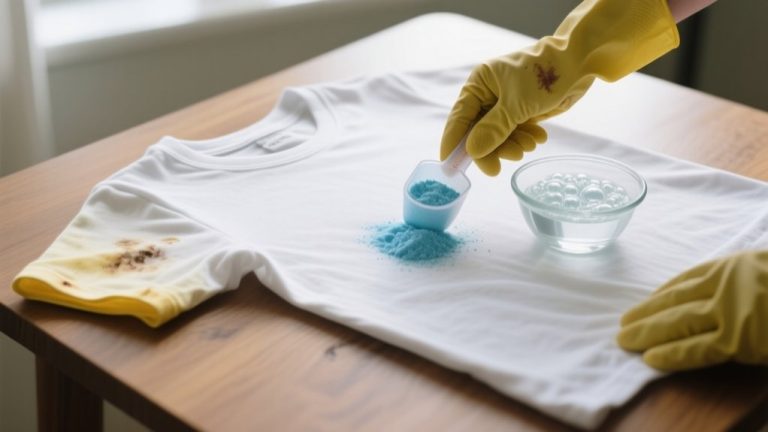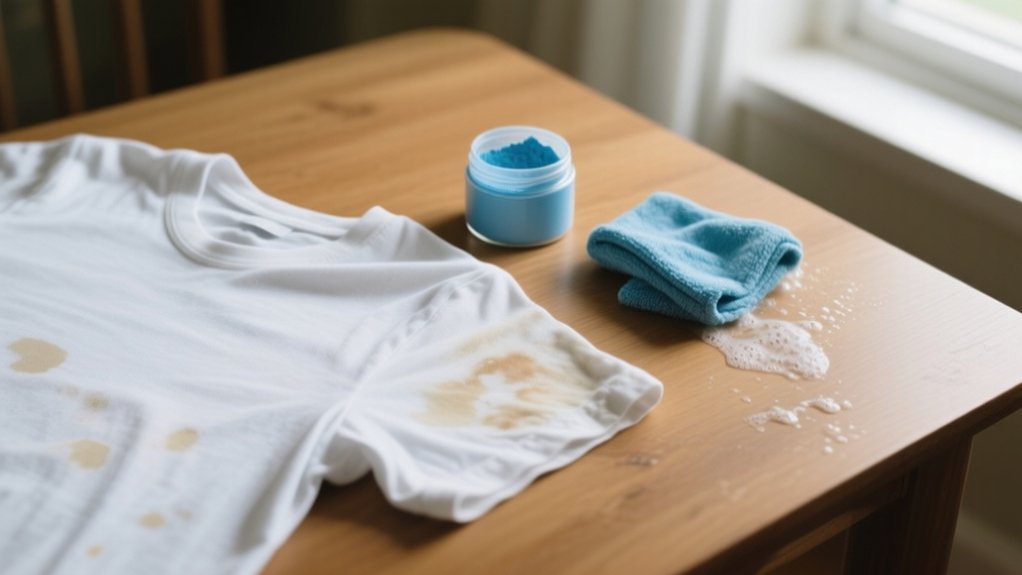
Can Oxiclean Remove Bleach Stains – What to Know
You can’t use OxiClean to remove bleach stains, since it breaks down organic stains but doesn’t restore color or repair fabric damage caused by bleach. Bleach stains are permanent because they chemically strip dye from fibers, and OxiClean won’t reverse this loss.
While it helps clean surrounding spots, it won’t fix the bleach area itself. If you want to explore effective ways to handle bleach stains and protect your clothes, there are important alternatives and tips you should know.
What Are Bleach Stains and Why Are They Permanent?
Bleach stains happen when chlorine bleach reacts with colored fabrics, stripping away the dye and leaving a lightened or white spot. This occurs because the bleach composition contains strong oxidizing agents that break down the molecular structure of fabric dyes.
You should know that fabric sensitivity plays a major role; natural fibers like cotton are particularly vulnerable, while synthetic fibers may resist bleach damage better.
The stain becomes permanent because bleach doesn’t just remove color. It damages the fabric’s fibers, preventing the restoration of the original shade.
The severity depends on how concentrated the bleach is and how long it contacts the fabric.
Because this chemical reaction irreversibly alters both dye and fabric, no cleaning product, including OxiClean, can reverse the stain’s effects.
How Does OxiClean Work on Typical vs. Bleach Stains?
Although OxiClean effectively tackles many common stains by releasing oxygen to break down organic matter, it doesn’t work the same way on bleach stains.
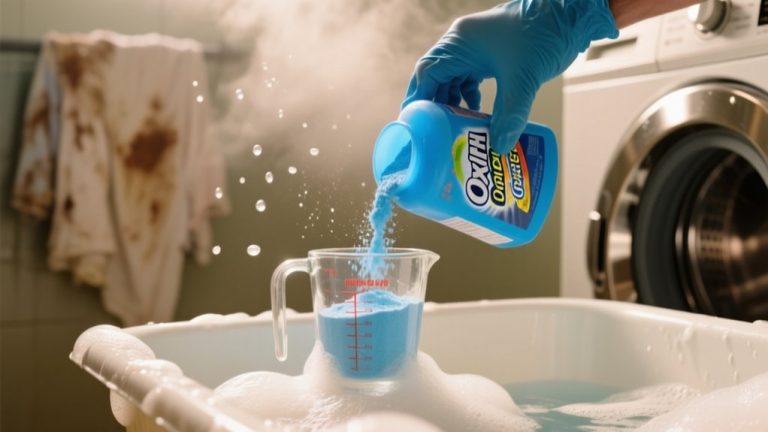
OxiClean’s effectiveness lies in sodium percarbonate, which activates in water to break down organic stains like food, dirt, and grease without harming fabrics.
OxiClean uses sodium percarbonate to safely break down organic stains like food, dirt, and grease.
However, bleach stains cause color loss and structural changes in the fabric, which OxiClean can’t reverse.
Unlike typical stains that leave residue, bleach stains remove pigment, making restoration impossible with OxiClean.
For typical stains, letting OxiClean sit for several hours maximizes stain removal.
You should view OxiClean more as a tool for stain prevention and removal of everyday messes rather than a fix for bleach damage, which requires different approaches beyond OxiClean’s capabilities.
Can OxiClean Fix Bleach Damage on Fabrics?
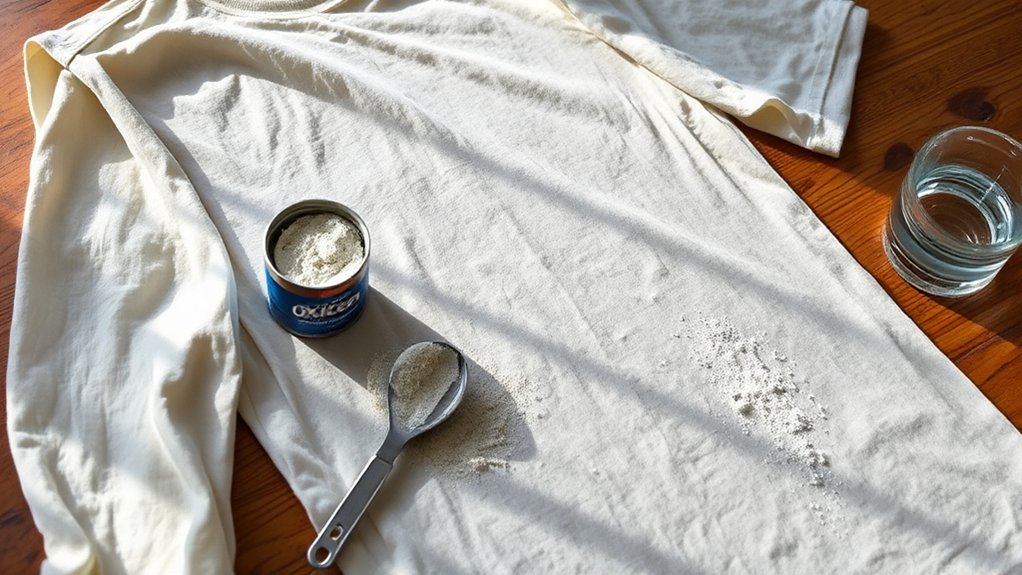
You can’t use OxiClean to fix bleach damage because bleach permanently removes the color from fabric.
OxiClean is great at getting rid of stains, but it won’t bring back the original colors that bleach has stripped away.
If you want to improve the look of the damaged areas, a better option is to cover them up with fabric dye or paint.
That way, you can restore some color and make the fabric look fresh again.
Understanding Bleach Damage
Since bleach permanently alters fabric color and structure, OxiClean can’t reverse bleach damage. The bleach chemistry breaks down dye molecules, causing irreversible discoloration and weakening fabric fibers.
While OxiClean excels at removing typical stains like dirt and food, it can’t restore color lost to bleach. Understanding this is essential for fabric restoration efforts.
When bleach stains appear, your best options are to accept the discoloration or consider dyeing the fabric to mask the damage. OxiClean may help clean surrounding areas and reduce contrast, but it won’t repair the actual bleach stain.
Knowing the limits of bleach chemistry and OxiClean’s capabilities guarantees you manage expectations and take appropriate steps to maintain your fabrics effectively.
OxiClean’s Limitations Explained
While OxiClean effectively tackles many common stains, it can’t undo the chemical damage bleach causes to fabrics. Bleach stains result in discoloration or lightening that no stain removal product, including OxiClean, can reverse.
You might use OxiClean to eliminate other stains around a bleach spot, but it won’t restore the bleached area’s original color or texture. Understanding OxiClean’s limitations is essential for proper fabric care. You shouldn’t expect it to fix bleach damage.
Instead, prevention by careful bleach handling remains the best strategy. When bleach stains occur, consider alternatives like re-dyeing or repurposing the fabric, as cleaning alone won’t repair the damage.
This knowledge helps you manage fabric care effectively and sets realistic expectations for stain removal.
Alternative Fabric Repair Methods
Although OxiClean can’t reverse bleach damage, you have several effective options to repair or conceal affected fabric areas. Fabric patching allows you to cover damaged spots with matching material, while creative embroidery lets you transform stains into unique designs.
Using fabric dyes or markers that match the original color also helps restore the fabric’s appearance. Remember to test any method on a hidden area first to avoid further damage.
| Method | Description |
|---|---|
| Fabric Patching | Covers bleach spots with matching fabric pieces |
| Creative Embroidery | Uses stitching to conceal and decorate damaged areas |
| Fabric Dye/Markers | Restores color by matching original fabric shade |
These alternatives offer practical solutions when OxiClean falls short.
How Long Should OxiClean Sit on Tough Stains?
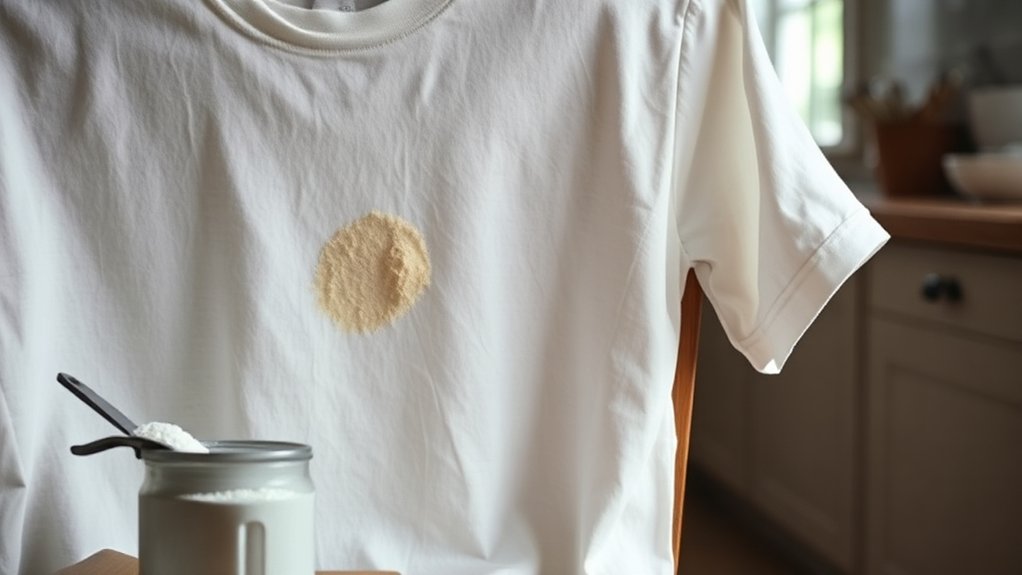
You should let OxiClean sit on tough stains for at least 5 to 10 minutes to achieve the best results. For more stubborn stains, extending the stain duration up to 30 minutes can greatly improve effectiveness.
One key application tip is allowing OxiClean to dry on the stain, which often enhances its ability to break down deeply embedded marks. However, always test a small, inconspicuous area first to confirm fabric compatibility.
Let OxiClean dry on stains to boost effectiveness, but always test fabric compatibility on a hidden spot first.
Plan your cleaning session when you can monitor the stain’s progress, such as over a weekend.
After treatment, thoroughly rinse the fabric to remove any residue, preventing dirt attraction or discoloration.
Following these application tips guarantees you maximize OxiClean’s stain-removing power while protecting your fabrics.
How to Use OxiClean Safely on Fabrics
Before you use OxiClean, it’s a good idea to check if your fabric can handle it. This helps you avoid any damage or discoloration.
When you’re ready, mix the solution the right way and try it out on a small, hidden spot first. That way, you can be sure it won’t harm your fabric.
Fabric Compatibility Guide
When using OxiClean on fabrics, it’s essential to test a small, hidden area first to confirm the product won’t cause damage or discoloration.
Start by identifying the fabric type. OxiClean is generally safe on cotton, polyester, and blends but avoid “dry clean only” materials or those with special finishes.
Use proper testing methods by applying a diluted OxiClean solution to an inconspicuous spot. Wait the recommended time, then rinse and inspect for any adverse effects.
Always check fabric care labels for specific instructions or warnings.
For colored fabrics, be extra cautious, as prolonged exposure may cause fading.
Safe Application Techniques
Having identified which fabrics are safe for OxiClean, the next step involves applying the product correctly to protect your garments. Start by performing a patch test on a hidden area to verify fabric safety and prevent adverse reactions.
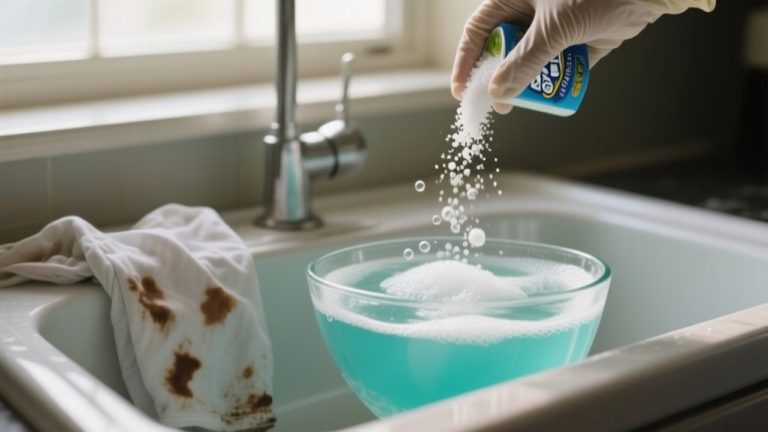
Mix OxiClean with water as per the package instructions, usually one scoop per gallon, for best effectiveness. Use application tips like gently applying the solution with a soft cloth or sponge. Avoid scrubbing vigorously to protect delicate fibers.
After treatment, rinse the fabric thoroughly with cold water to remove any residue, preserving the fabric’s color and integrity.
Following these safe application techniques ensures you treat bleach stains effectively while minimizing damage, enhancing the chances of restoring your garments without compromising fabric safety.
Why You Need a Different Approach for Bleach Stains
Although OxiClean works wonders on many types of stains, it won’t restore bleach stains since they actually remove color from the fabric rather than deposit unwanted substances.
Because bleach stains aren’t traditional stains, you need a different approach.
Using OxiClean or similar products won’t bring back the lost color and may worsen the discoloration. Instead, you should look into bleach alternatives that focus on color restoration, such as fabric dyes or specialized restoration products designed for bleached areas.
Acting quickly is essential to prevent further fabric damage. Always perform a patch test before applying any color restoration product to guarantee it won’t harm your garment.
Understanding this distinction helps you choose the right method to effectively address bleach stains without causing additional damage.
What Are the Alternatives to OxiClean for Bleach Stains?
How do you effectively treat bleach stains when OxiClean falls short? You can turn to several alternatives for stain removal.
Natural remedies like white vinegar help neutralize bleach chemicals, though they won’t restore fabric color.
Baking soda paste, made by mixing baking soda with water, lifts stains gently when applied and scrubbed.
For more stubborn bleach marks, commercial stain removers designed specifically for bleach stains offer targeted solutions.
Moreover, color remover products can restore original fabric color by removing unwanted bleach spots.
While dyeing kits aren’t a direct stain removal method, they provide a way to cover extensive damage by revitalizing the garment’s look.
These options give you effective tools beyond OxiClean to manage bleach stains confidently.
How to Use Fabric Dye to Cover Bleach Stains
When you want to conceal bleach stains effectively, fabric dye offers a reliable solution by restoring color to the affected areas.
Start by choosing a dye compatible with your fabric type, whether cotton or polyester, to guarantee the best results.
Clean and dry the garment thoroughly before dye application to promote even color absorption.
Follow the manufacturer’s dye application tips closely, paying attention to recommended soaking times and temperatures. These color restoration techniques maximize dye penetration and durability.
After dyeing, rinse the fabric thoroughly to remove excess dye, then air dry to set the color and prevent fading.
When Should You Call a Professional for Bleach Stain Repair?
Why should you consider calling a professional for bleach stain repair? When bleach stains cover a large area or are extensive, a professional assessment guarantees the right repair techniques are applied.
Professionals evaluate your fabric type and color, choosing methods that avoid further damage.
Professionals assess fabric type and color to select safe, effective repair methods without causing additional harm.
If your DIY attempts result in uneven coloring or fail altogether, experts can restore your item more effectively. For valuable or sentimental pieces, entrusting repair to a professional provides peace of mind and preserves the fabric’s integrity.
Moreover, professionals have access to specialized products and tools unavailable to most consumers, which can make a significant difference in treatment success.
Calling a professional assures precise, reliable results when dealing with challenging bleach stains.
How Can You Prevent Bleach Stains During Cleaning?
Because bleach is a powerful chemical, you need to handle it carefully to prevent unwanted stains during cleaning. For effective stain prevention, always wear gloves and protective clothing to avoid accidental spills on your skin or clothes.
Dilute bleach properly according to the manufacturer’s instructions to reduce the risk of concentrated spots that cause stains. When working with colored fabrics, opt for color-safe bleach alternatives to avoid discoloration.
An essential cleaning tip is to test bleach solutions on a small, hidden area before applying them widely.
Finally, avoid using bleach on surfaces prone to staining, like wood or porous materials. Following these cleaning tips guarantees you minimize bleach stains and maintain your items’ integrity during cleaning.
Frequently Asked Questions
Can Oxiclean Be Used on Colored Fabrics Without Fading?
You can use OxiClean on colored fabrics without fading if you treat it like a careful artist protecting a masterpiece.
Always perform a colorfast test by applying a small amount on an inconspicuous spot to check fabric compatibility.
OxiClean’s formula lifts stains without harsh bleaching, but following instructions is key.
Avoid mixing it with bleach products to keep your colors vibrant and safe, ensuring your clothes stay as lively as you want them.
Is Oxiclean Safe for Use on Delicate Fabrics Like Silk or Wool?
Oxiclean isn’t safe for delicate fabrics like silk or wool due to its harsh active ingredients.
When considering Oxiclean applications, you must prioritize fabric compatibility because delicate fibers can get damaged or discolored.
If you must use it, always dilute heavily and test on a hidden spot first.
However, it’s best to choose specialized cleaners designed for silk or wool to preserve texture and color.
Follow the care label’s instructions carefully.
How Should Oxiclean Be Stored to Maintain Its Effectiveness?
To maintain OxiClean’s effectiveness and longevity, follow key storage tips: keep it in a cool, dry place away from direct sunlight and moisture.
Always store it in its original, tightly sealed container to prevent clumping and contamination.
Avoid placing it near strong odors or chemicals, which can degrade its formula.
Check expiration dates regularly, and use a clean, dry scoop when handling.
These steps guarantee OxiClean stays potent for your cleaning needs.
Can Oxiclean Remove Mildew or Mold Stains From Clothing?
Yes, OxiClean can remove mildew and mold stains from clothing effectively. By soaking your fabric in an OxiClean solution for several hours, you’ll boost mildew removal techniques.
For best results, use hot water and always follow mold prevention tips like thorough rinsing to avoid residue.
Checking fabric care labels guarantees safety, especially for delicate materials.
This method offers a reliable way to restore your clothes without harsh chemicals.
Does Oxiclean Have Any Environmental or Allergy Concerns?
You should know OxiClean has a lower environmental impact than traditional bleach because it’s biodegradable and breaks down into less harmful substances.
However, it still poses allergy risks for sensitive individuals due to its active ingredients, like sodium percarbonate.
To minimize any issues, always test it on a small area first and follow the manufacturer’s instructions closely.
This approach helps you use OxiClean safely while protecting both your health and the environment.
Conclusion
Bleach stains may feel like permanent marks of frustration, but understanding their nature empowers you to act wisely. While OxiClean can tackle many stains, it can’t truly reverse bleach damage. It’s like trying to erase a highlighter’s glow.
Instead, focus on prevention, gentle care, or creative fixes like fabric dye. Remember, sometimes professional help is the beacon you need. Don’t let bleach stains steal your fabric’s story. Take control and protect your clothes with confidence.