How To Clean Lace With Oxiclean – Pro Tips
You can clean some lace with OxiClean, but check the care label first and don’t use it on dry-clean-only items. Identify the fiber since silk and wool may be damaged, and test a hidden spot before treating the whole piece.
Mix OxiClean as directed with cool water, then gently blot stains and soak the lace while watching for changes. Rinse carefully, press out water with a towel, and air-dry flat in the shade.
A few more precautions can help you protect delicate lace.
Check If Your Lace Can Handle OxiClean
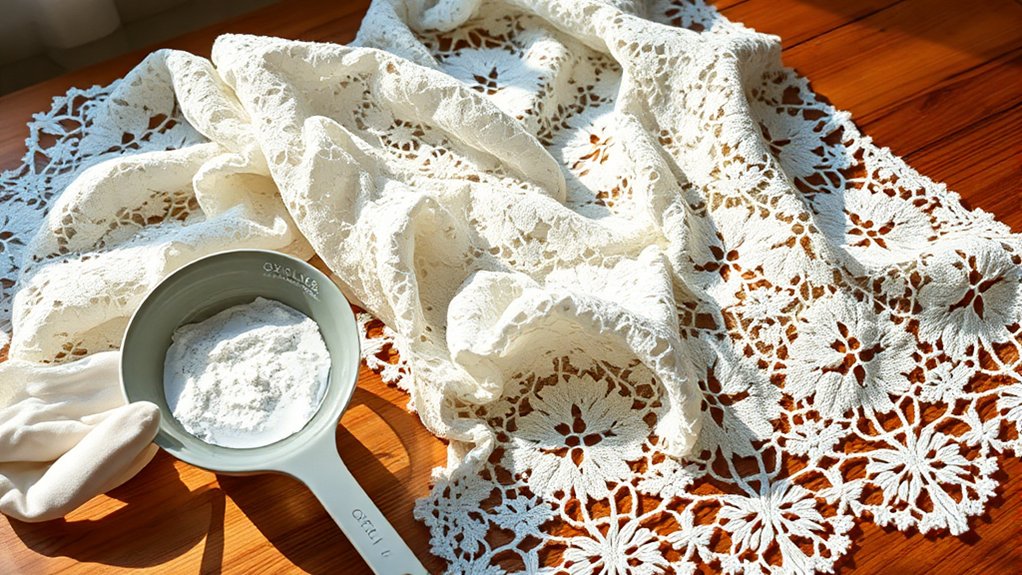
Before cleaning lace with OxiClean, check the care label to make sure the fabric can handle oxygen bleach. Look for warnings against bleaching, soaking, or washing, and follow any instructions for delicate fabrics.
Check the care label for bleach, soaking, or washing restrictions before using OxiClean on lace.
If the label says dry-clean only, don’t use a home soak; take the item to a professional cleaner instead.
Identify the lace fiber, too. Cotton and many synthetic laces may tolerate oxygen bleach, but silk, wool, and antique lace can be fragile or react unpredictably.
When the fiber or label is unclear, don’t assume OxiClean is safe.
Test a hidden area first: apply a small amount of diluted product, wait briefly, then rinse and blot.
Check for fading, discoloration, weakened threads, or texture changes once dry. If you notice any damage, stop and choose a gentler cleaning method.
Don’t proceed if the lace shows damage.
Gather Supplies and Mix a Gentle Soak
If the lace passed the label check and spot test, gather a clean basin, cool water, and OxiClean. Then measure the product according to its package directions. Use a basin large enough to let the lace lie freely; don’t crowd or fold it tightly.
Follow the label’s water ratio, and stir until the powder dissolves completely. Keep the solution cool, since heat can stress delicate fibers. Set out a soft towel nearby for later handling, and use clean hands or gloves when mixing.
| Supply | Purpose | Check |
|---|---|---|
| Clean basin | Holds the soak | No residue |
| Cool water | Dilutes cleaner | Not warm |
| OxiClean | Cleans lace | Measure per label |
Make only enough solution to cover the lace, and prepare it just before use.
Spot-Treat Lace Stains Before Soaking
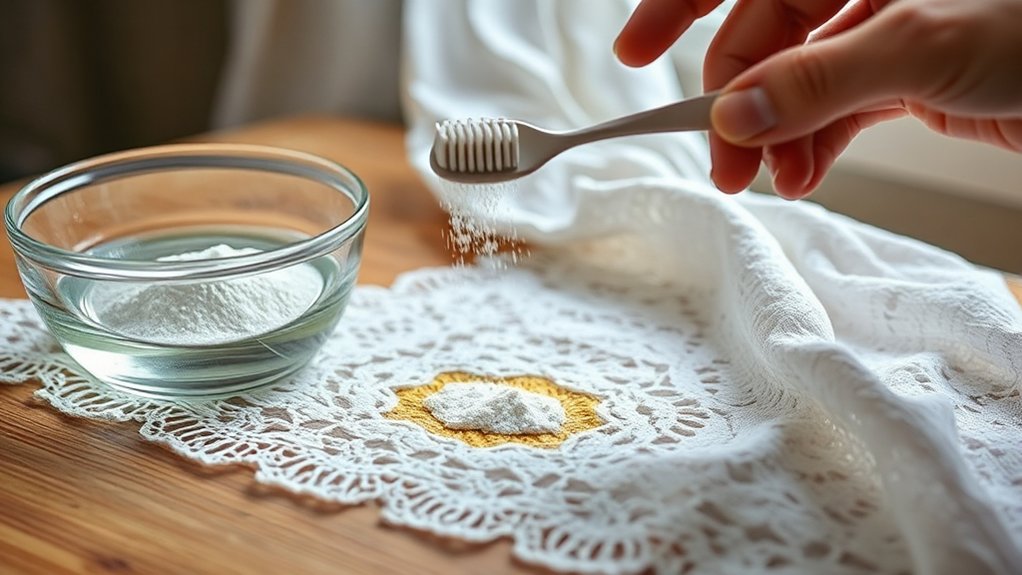
Treat visible stains individually before lowering the lace into the soak. Lay the piece on a clean, white towel, then check both sides for marks. Test your chosen cleaner on a hidden area first; lace fibers and dyes can react unpredictably.
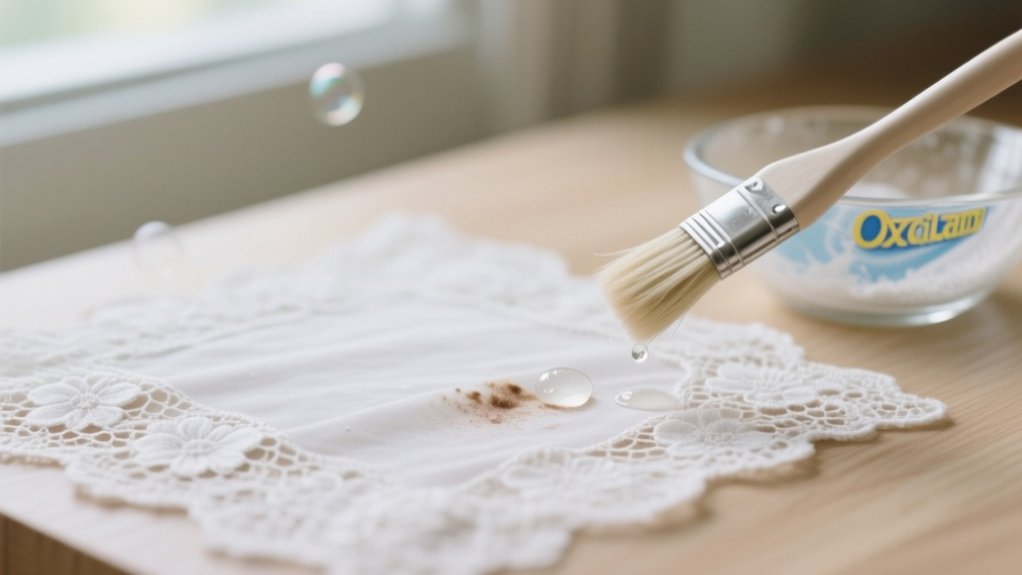
For a small stain, dampen a cotton swab or soft white cloth with the prepared OxiClean solution. Blot gently from the stain’s edge toward its center, using only enough liquid to moisten the spot.
Don’t rub, scrub, twist, or pull the threads, since delicate lace can snag or stretch. Lift loosened residue with a clean, damp cloth, and repeat carefully if needed.
For oily marks, remove excess with a spoon’s edge before blotting. Keep colors separate, and stop if dye transfers or fibers weaken. Let treated spots rest briefly.
Soak Lace With OxiClean Carefully
Once the spot-treated areas have rested briefly, prepare a fresh OxiClean bath according to the package directions, using cool water for delicate lace.
Measure the powder carefully; too much cleaner can leave residue or weaken fragile fibers. Stir until it dissolves fully, then test the solution on a hidden section if you’re unsure how the lace will react.
Submerge the lace gently, keeping it spread out rather than bunched or twisted. Make sure every stained area sits beneath the solution, but don’t scrub or rub the fabric.
Let it soak only for the time recommended on the package, checking the lace periodically for changes in color or texture.
If the piece is antique, unusually delicate, or embellished with beads, avoid prolonged soaking and follow its care label.
Don’t leave lace unattended in the bath.
Rinse and Dry Lace Without Damage
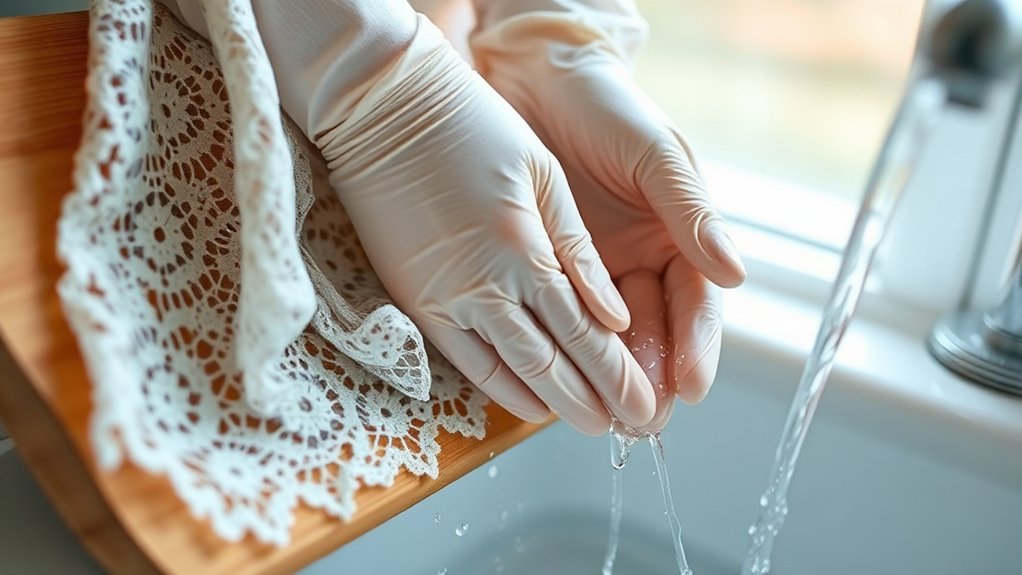
Rinse the lace with cool water until all the cleaning solution is gone.
Then, gently press out the excess water—just be careful not to wring or twist the fabric.
After that, lay it flat to air-dry, which will help it keep its shape.
Rinse With Cool Water
After cleaning the lace, hold it under a gentle stream of cool water to wash away soap and loosened dirt. Keep the fabric supported in your hands, and let water flow through its openings without pulling or twisting.
Rinse both sides so no detergent remains trapped in the threads. Use cool, not warm or hot, water; heat can weaken delicate fibers or affect dyes.
Turn the lace gently to expose folds and seams to the rinse. Guide water across the fabric rather than directing a forceful spray at it.
Continue until the water runs clear and the lace no longer feels slippery. Check carefully for suds in dense embroidery, where residue can stiffen fibers.
Once rinsing is complete, move on to removing excess water gently before drying the lace.
Remove Excess Water Gently
Press the lace gently between clean, absorbent towels to lift out excess water.
Lay the piece on a fresh towel, then place another towel over it. Use your palms to press lightly and evenly; don’t twist, wring, or scrub the fabric.
These motions can stretch delicate threads, distort the pattern, or loosen embellishments. If the towels become soaked, replace them with dry ones and repeat the gentle pressing.
Handle the lace by supporting its full weight, rather than pulling at an edge or a fragile detail. For small pieces, you can roll the lace inside a towel and press along the roll, then unroll it carefully.
Stop when the fabric feels damp instead of dripping. Removing water this way helps protect the lace’s shape and fibers before you move on to drying.
Air-Dry Lace Flat
Lay the damp lace flat on a clean, dry towel, gently arranging it into its original shape. Smooth the edges with your fingertips, but don’t pull or stretch delicate threads.
Choose a shaded, well-ventilated spot and let the lace dry naturally. Direct sunlight and heat can weaken fibers or fade color.
Keep the lace supported on the towel so its weight won’t distort the pattern. Replace the towel if it becomes damp, helping moisture escape evenly.
Turn the lace carefully once the top feels nearly dry. Keep it away from radiators, hair dryers, and other heat sources. Wait until it’s completely dry before storing or sewing it.
If the lace has a shaped edge, check its alignment as it dries and gently restore the outline while it’s still slightly damp.
Don’t hang it, since gravity can stretch the openwork.
Avoid Common OxiClean Mistakes on Lace
OxiClean can damage delicate lace if you use it too often, mix it with other cleaners, or leave it soaking too long.
Follow the product label, and don’t assume a stronger solution will clean better. Too much powder can weaken fibers or leave residue behind.
Never combine OxiClean with bleach, ammonia, vinegar, or another cleaner. Mixing products can create harmful fumes or reactions.
Use OxiClean by itself, and rinse the lace thoroughly with cool water after treatment.
Don’t soak lace indefinitely. Check it often, and remove it as soon as the stain lifts or the label’s time limit arrives.
If the fabric’s color changes, fibers loosen, or trim begins to fray, stop immediately and rinse.
Test a hidden area first, and skip OxiClean on fragile, antique, or unlabeled lace unless a textile-care professional approves it.
Frequently Asked Questions
Can Oxiclean Remove Yellowing From Vintage Lace?
Yes, OxiClean may reduce yellowing on vintage lace, but results depend on the fibers, age, and cause of discoloration.
Test a hidden spot first, since oxygen bleach can weaken fragile threads or alter dyes.
Dissolve the product fully in cool water, then soak briefly and gently, following its label.
Rinse thoroughly and air-dry flat.
If the lace is valuable or extremely delicate, consult a textile conservator before treating it.
Is Oxiclean Safe for Lace Wedding Dresses?
OxiClean may be safe for some lace wedding dresses, but you shouldn’t use it without checking the care label and testing a hidden spot.
Delicate fibers, dyes, trims, and older fabrics can weaken or discolor.
If the dress is silk, vintage, heavily embellished, or labeled dry-clean-only, don’t soak it. Instead, consult a wedding-gown cleaner.
For washable lace, use a diluted solution, keep soaking brief, rinse thoroughly, and never scrub or wring it.
Can Oxiclean Damage Lace Dye or Embellishments?
Yes, OxiClean can damage lace dye or embellishments, especially if the lace is delicate, colored, vintage, or decorated with beads, sequins, metallic thread, or glued details.
Before treating the garment, check its care label and test a hidden spot for color loss or damage.
Don’t soak embellished lace or use hot water.
If you’re unsure, skip OxiClean and ask a professional cleaner experienced with wedding dresses.
How Often Can Lace Be Cleaned With Oxiclean?
As a rule of thumb, clean lace with OxiClean only when it’s visibly soiled or has an odor, not on a fixed schedule.
Frequent soaking can weaken delicate fibers and fade dyes or damage embellishments.
Check the care label, test a hidden spot, and follow the product directions.
For routine upkeep, gently shake out dust or spot-clean instead.
If you’re unsure about the lace’s age or construction, choose a gentler method or consult a textile specialist.
What Alternatives Work for Lace That Cannot Tolerate Oxiclean?
For lace that can’t tolerate OxiClean, use a mild, pH-neutral detergent or a gentle soap designed for delicate fabrics.
Test a tiny hidden area first, then hand-wash in cool water without rubbing, twisting, or soaking for long.
For silk or antique lace, choose a specialist cleaner instead.
Rinse gently, press water out with a clean towel, and air-dry flat, away from direct heat or sunlight to help prevent damage.
Conclusion
With the right care, you can clean lace with OxiClean without compromising its delicate fibers. Check the care label, use a gentle solution, and test an inconspicuous spot before treating the whole piece.
Keep soaking brief, rinse thoroughly, and let the lace air-dry flat. Skip hot water, harsh scrubbing, and chlorine bleach, which can cause damage or discoloration. Take your time, and you’ll keep your lace looking fresh without throwing caution to the wind.