Does Oxiclean Bathroom Cleaner Have Bleach – What to Know
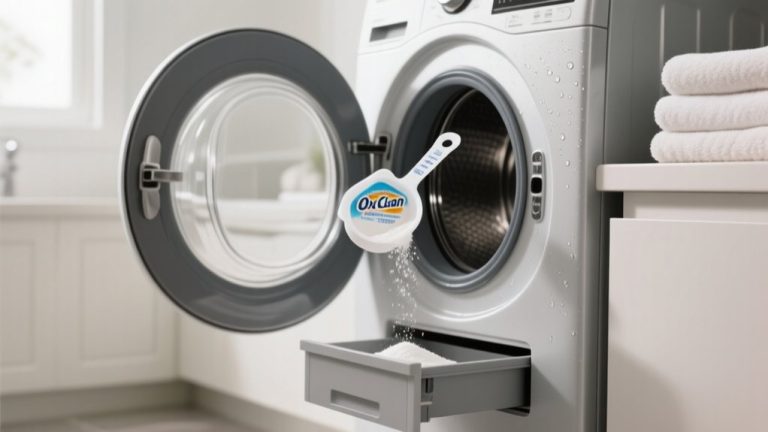
OxiClean Bathroom Cleaner generally doesn’t contain chlorine bleach; it uses oxygen-based cleaning ingredients to lift grime and brighten surfaces. However, formulas can vary, so check your specific product’s label before use.
Look for sodium hypochlorite to identify chlorine bleach, and follow all stated precautions. Oxygen-based bleach isn’t the same as chlorine bleach, but you still shouldn’t mix cleaners.
Use the product as directed, and check the guidance below to learn how to verify ingredients and stay safe.
Does OxiClean Bathroom Cleaner Have Bleach?
No, OxiClean Bathroom Cleaner doesn’t contain chlorine bleach; it uses oxygen-based cleaning ingredients instead. That distinction matters when you’re choosing a cleaner for bathroom stains and buildup.
The product’s oxygen-based formula helps lift grime and brighten surfaces without relying on chlorine bleach’s whitening action.
You may still see the word “bleach” used broadly to describe products that whiten or remove stains. Here, though, OxiClean Bathroom Cleaner isn’t a chlorine bleach cleaner.
Check the label on your bottle to confirm its ingredients and intended uses, and follow the directions for the surfaces you’re cleaning.
Don’t assume that a product is suitable for every material just because it lacks chlorine bleach.
If you’re sensitive to cleaning products, ventilate the room and avoid contact with your skin and eyes while you use it.
Why Can the Formula Vary by Product?
OxiClean formulas can vary because the brand makes different products for specific cleaning tasks. You’ll find cleaners designed for bathrooms, laundry, carpets, and other surfaces. Each job calls for different ingredients, strengths, and delivery methods, so one product’s formula won’t necessarily match another’s.
Even products within the same category may target different soils or surfaces.
| Product type | Main cleaning focus |
|---|---|
| Bathroom cleaner | Soap scum and bathroom grime |
| Laundry booster | Stains and odors in fabrics |
| Carpet cleaner | Soil and spots in carpet |
| Multipurpose cleaner | Everyday messes on suitable surfaces |
These differences can affect whether a formula contains bleach, another stain-fighting ingredient, or neither. A product may also use ingredients suited to its intended surface, helping you avoid damage when you use it as directed.
How Do You Check the Product Label?
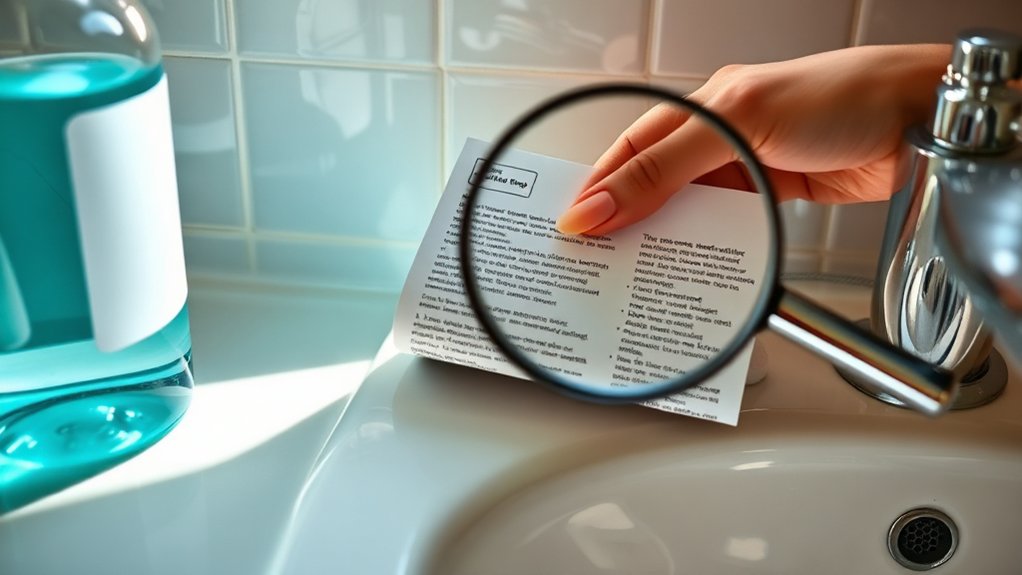
When you check the product label, start by looking at the active ingredients. This will tell you if the formula contains bleach or any other cleaning agents.
It’s also important to read the warning statements carefully so you know about any safety precautions and risks involved with mixing chemicals.
And don’t just assume that products with similar names have the same ingredients or warnings—they often don’t.
Check Active Ingredients
To find out whether an OxiClean bathroom cleaner contains bleach, read the active-ingredients section on the product label.
Look for the specific chemical names listed there rather than relying on the product’s color, scent, or cleaning claims. The formula can vary by product, so check the exact bottle you plan to use.
- Find the ingredient panel. Turn the bottle around and locate the ingredients or active-ingredients section.
- Check for bleach terms. Look for sodium hypochlorite, the common name for chlorine bleach, or other ingredients explicitly identified as bleach.
- Read the full product name. OxiClean sells different bathroom cleaners, and their formulas may differ. Match the label to the product you have, and check the manufacturer’s current ingredient information if the panel doesn’t provide enough detail.
This helps you identify what’s in your cleaner before use.
Read Warning Statements
Warning statements can offer clues about a cleaner’s ingredients and safe use. Check the bottle’s front and back, including fine print, for bleach references and chemical warnings. Don’t rely on the brand name or a claim like “oxygen power”; read the exact product label, since formulas can differ.
| Label wording | What it may indicate | What you should do |
|---|---|---|
| “Contains bleach” | Bleach is present | Follow label directions |
| “Do not mix with ammonia” | Mixing may create hazardous fumes | Keep products separate |
| “Use in a well-ventilated area” | Fumes may irritate you | Open windows or run a fan |
If the warning doesn’t clearly identify the ingredients, check the manufacturer’s product page or safety data sheet. You can also contact the company. Follow every precaution, and never mix cleaners.
Is Oxygen-Based Bleach the Same as Chlorine Bleach?
No, oxygen-based bleach and chlorine bleach are different products, even though both can help remove stains.
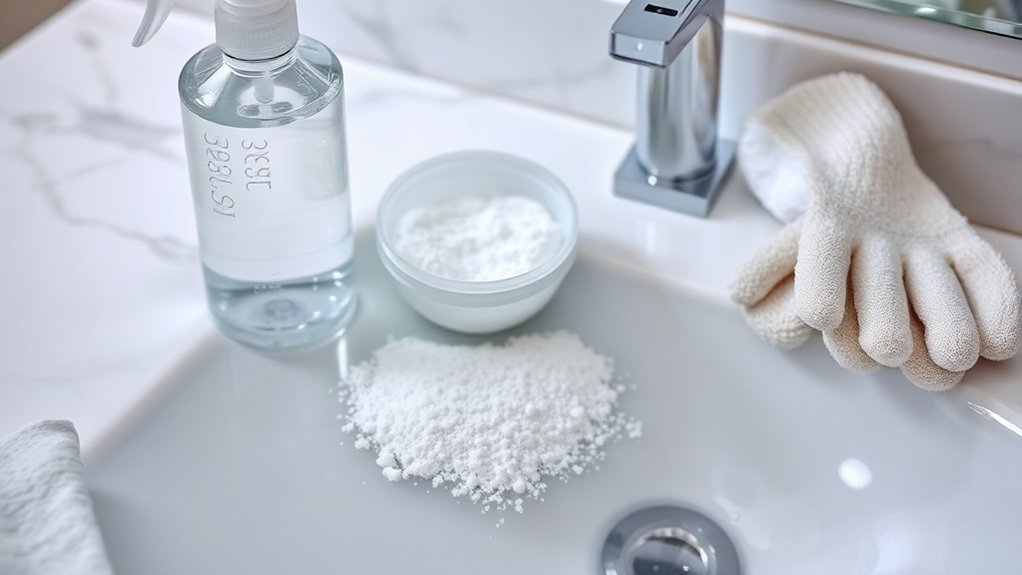
Oxygen-based formulas often use hydrogen peroxide or sodium percarbonate, which releases oxygen to lift stains. Chlorine bleach typically contains sodium hypochlorite, a stronger disinfectant and whitening agent. You shouldn’t assume one product contains the other.
Oxygen bleach and chlorine bleach use different ingredients, so don’t assume one contains the other.
- Ingredients: Check the cleaner’s label to identify its active ingredients. Just seeing “bleach” doesn’t tell you which type it uses.
- Stain action: Oxygen-based bleach can help break down organic stains and is generally gentler on colors and some surfaces. Chlorine bleach can whiten and disinfect but may discolor materials.
- Product claims: OxiClean-branded bathroom cleaners may use different formulas.
How Should You Use the Cleaner Safely?
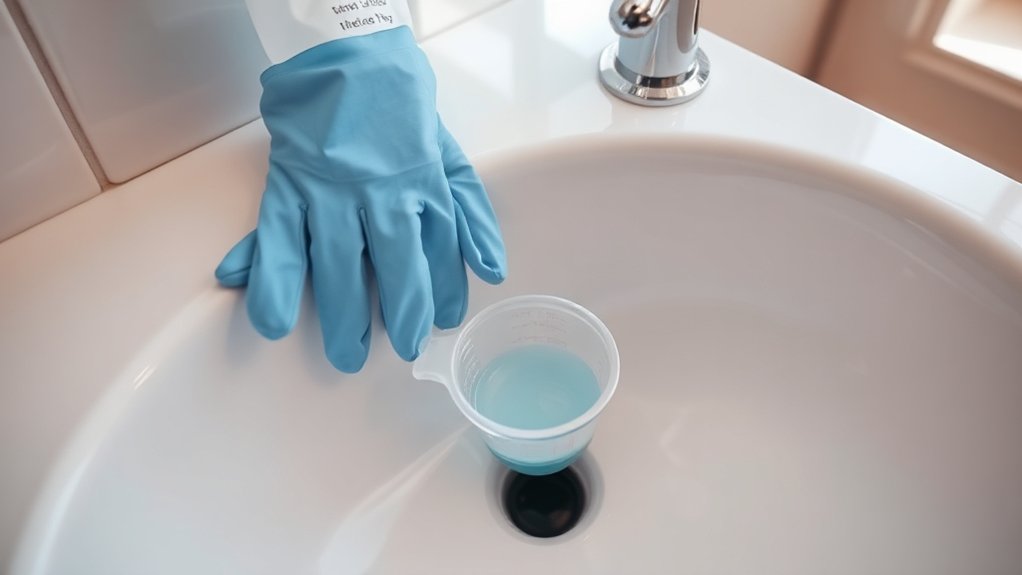
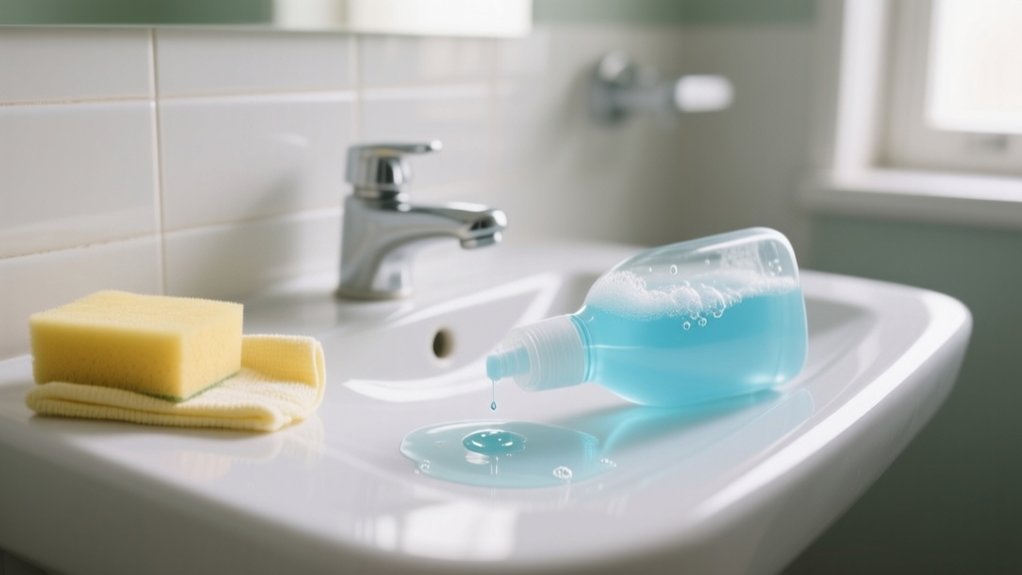
Before using an OxiClean bathroom cleaner, read its label and follow the directions for the specific formula. Wear gloves if the label recommends them, and protect your eyes and skin from splashes. Open a window or turn on an exhaust fan to keep the room ventilated.
Test the product on a small, hidden area first, especially on colored, delicate, or unfamiliar surfaces. Apply only as directed, and don’t leave the cleaner on longer than the label specifies. Use a clean cloth or sponge, then rinse the surface if instructed.
Keep the product away from children and pets, and store it in its original container with the label intact.
If you get cleaner on your skin or in your eyes, follow the label’s first-aid guidance and seek help if irritation persists.
What Should You Never Mix It With?
Never mix OxiClean bathroom cleaner with bleach, ammonia, or other cleaning products. Even when a product seems mild, combining cleaners can create irritating or dangerous fumes, cause splashing, or make ingredients react unpredictably. Use this rule for the bottle’s formula and any surface where you’ve applied it.
- Bleach: Don’t combine it with chlorine bleach or products containing bleach. Mixing cleaners can release harmful gases.
- Ammonia: Keep it away from ammonia-based glass cleaners and other ammonia products; the combination can produce hazardous fumes.
- Other cleaners: Don’t add vinegar, toilet-bowl cleaner, drain cleaner, or another bathroom spray. Different formulas may react, and you can’t reliably predict the result.
Read the label before use, and use only the cleaner as directed. Don’t mix products in a bucket, spray bottle, or on a surface.
What Should You Do After Accidental Mixing?
If you’ve accidentally mixed OxiClean bathroom cleaner and bleach, the first thing you should do is leave the area right away and get some fresh air.
Don’t try to clean up the mixture yourself or breathe in the fumes—it can be really dangerous.
Once you’re safe, contact Poison Control for guidance on what to do next.
Leave the Area
After accidentally mixing OxiClean bathroom cleaner with bleach, leave the area immediately and get everyone else out, too.
Don’t stay to wipe up the spill or inspect the mixture. Fumes can irritate your eyes and lungs, and you may not notice their effects right away.
Move outdoors or to another place with fresh air. Keep children, pets, and other people away from the affected room.
Don’t touch the liquid, breathe near it, or carry contaminated items through your home. Avoid using fans or other equipment that could spread fumes.
If you can do so without re-entering the area, close the door behind you.
Don’t return until the space has been safely ventilated and you’ve received appropriate guidance.
If anyone has trouble breathing, seek emergency help immediately.
Contact Poison Control
Once you’re in fresh air, contact Poison Control for advice, even if no one has symptoms. In the U.S., call 1-800-222-1222 or use webPOISONCONTROL.org. If you’re elsewhere, call your local poison center.
Tell the specialist the product names, ingredients if available, amounts, and when and how the cleaners mixed. Keep the containers or labels nearby but don’t re-enter a contaminated area to retrieve them. Follow the specialist’s instructions. Don’t induce vomiting or try home remedies unless advised.
Call emergency services immediately if anyone has trouble breathing, chest pain, severe coughing, confusion, fainting, or worsening symptoms. Don’t wait for Poison Control if a person is seriously ill.
If cleaner got in someone’s eyes or on their skin, rinse with clean, lukewarm water while you seek guidance. Stay in fresh air and keep others away.
Frequently Asked Questions
Is Oxiclean Bathroom Cleaner Safe for Septic Systems?
Yes, OxiClean Bathroom Cleaner is generally considered safe for septic systems when you use it as directed and in normal household amounts.
You should avoid pouring large quantities directly into a drain, since excessive cleaners can disrupt the bacteria your septic system needs.
Check the product label for current septic guidance, and follow its directions.
If you have a sensitive or poorly functioning system, ask your septic service professional before using it.
Can It Damage Colored Grout or Natural Stone?
Yes, OxiClean Bathroom Cleaner can damage colored grout or natural stone, depending on its ingredients and your surface’s finish.
You should check the product label first; don’t assume it’s safe for every tile.
Test it on a small, hidden spot, follow the label’s directions, and rinse thoroughly.
Avoid using it on marble, limestone, or other acid-sensitive stone unless the manufacturer specifically approves it.
For delicate surfaces, choose a stone-safe cleaner instead.
Is the Cleaner Safe to Use Around Pets?
You can use OxiClean Bathroom Cleaner around pets if you keep them away during application and follow the label directions.
Don’t let your pet touch or lick wet surfaces, and ventilate the room while you clean.
Store the bottle securely out of reach.
Once the treated surfaces are fully dry and you’ve rinsed them if the label requires it, pets can return.
If your pet ingests the cleaner or shows symptoms, contact a veterinarian or poison-control service.
Does Oxiclean Bathroom Cleaner Expire?
Yes, OxiClean Bathroom Cleaner can lose effectiveness over time, though the product may not show a clear expiration date.
Check the bottle for a date, lot code, or manufacturer guidance, and contact OxiClean if you can’t find one.
Store it tightly closed in a cool, dry place, away from sunlight and heat.
If the cleaner’s color, smell, or consistency has changed, or it no longer works well, replace it.
Don’t mix it with other cleaners.
Can It Remove Hard-Water Stains and Soap Scum?
Yes, you can use OxiClean Bathroom Cleaner on hard-water stains and soap scum, though “clean” doesn’t always mean “gone.”
Spray the product onto the affected surface, let it sit for the time listed on the label, then wipe or rinse thoroughly.
Stubborn mineral deposits may need repeat applications or a cleaner specifically formulated for limescale.
Test it on an inconspicuous spot first, and don’t mix it with other cleaning products.
Conclusion
Don’t assume every OxiClean bathroom cleaner is bleach-free or that “oxygen bleach” behaves like chlorine bleach. Before you spray, check the exact product label and follow its directions; formulas can differ.
Never mix cleaners, especially with ammonia, acids, or other products. If you’ve already mixed them and notice fumes, irritation, or trouble breathing, leave the area and seek help.
That label may seem like a small detail, but it could be the warning that keeps your next cleaning session safe.