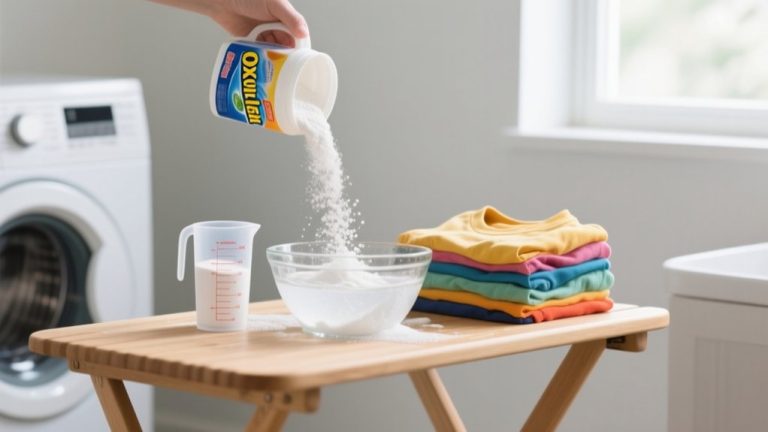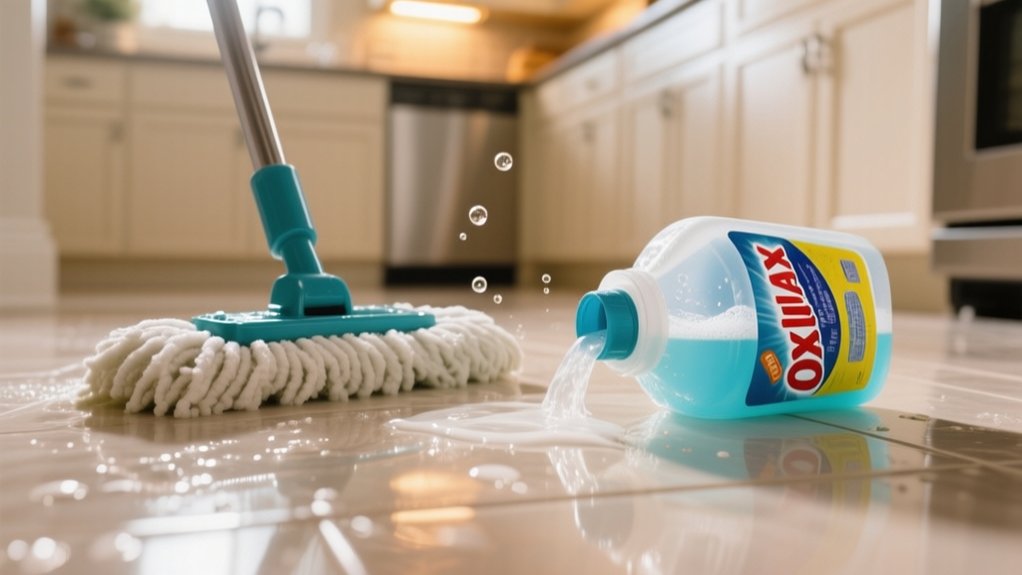
Can You Mop With Oxiclean – Find Out
You can mop some floors with OxiClean, but check the product label and your flooring manufacturer’s care instructions first. Use only a product approved for the surface, and follow its exact dilution directions. A stronger mix won’t clean better and may leave residue.
Dissolve the powder completely, test the solution in a hidden spot, and mop with a well-wrung mop. Never mix OxiClean with bleach, ammonia, or other cleaners. Keep going to find out which floors and cleaning methods are safest.
Can You Mop With OxiClean?
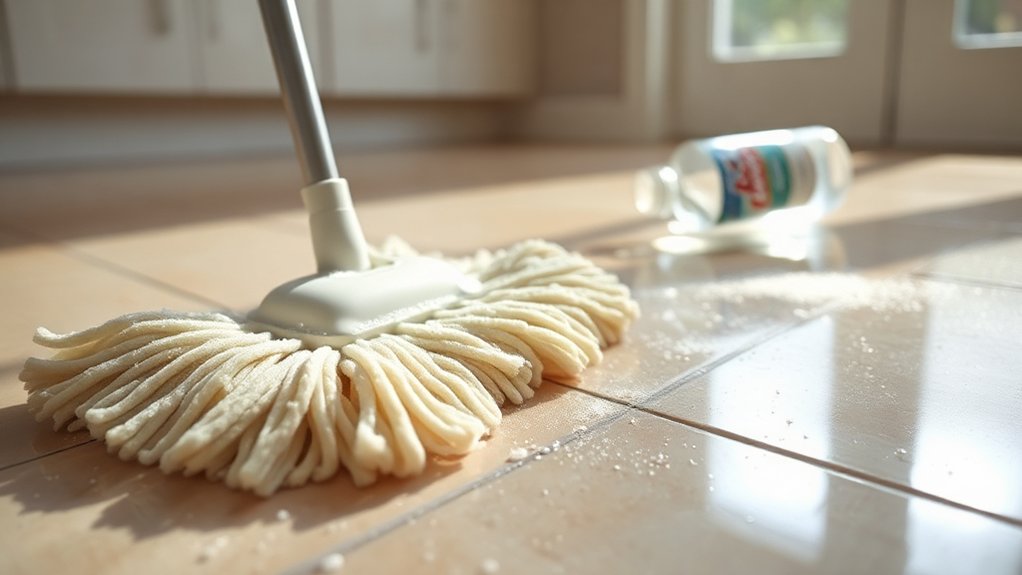
Can you mop with OxiClean? Yes, you can use an OxiClean solution to mop some floors, provided you follow the product label and check that your flooring can tolerate it.
OxiClean contains oxygen-based cleaning agents that can help lift dirt and stains, but it isn’t a universal floor cleaner. A mixture that’s too strong, or one left sitting too long, may leave residue or affect a surface’s finish.
Before mopping, test the diluted solution in a hidden spot and let it dry. If you notice discoloration, dullness, or damage, don’t use it on that floor.
Work in small sections, avoid soaking the surface, and rinse with clean water if the label directs you to do so. Keep the area ventilated, and don’t mix OxiClean with other cleaners.
Which OxiClean Products Are Suitable for Floors?
OxiClean Versatile Stain Remover can handle some floor stains, but you shouldn’t just assume it’s safe for every type of surface.
It’s a good idea to check the product label and your flooring manufacturer’s care instructions before you use it.
If you’re doing routine mopping, it’s better to go with a cleaner that’s specifically made to be safe for floors.
Versatile Stain Remover
For occasional floor stains, some OxiClean products may help, but they aren’t all meant for hard surfaces. Check the label before using any formula on your floor, and test it in a hidden spot first.
OxiClean Versatile Stain Remover comes as a powder, while some versions are sold as sprays. Their intended uses and directions differ, so don’t assume every product suits every surface.
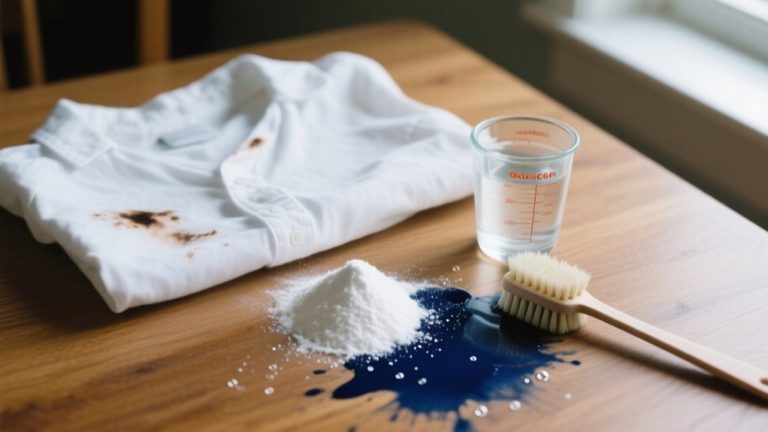
- Versatile Stain Remover powder: Dissolve it as directed, then apply only if the label permits your floor type.
- Versatile Stain Remover spray: Use for targeted spots only when its instructions allow hard-surface use.
- MaxForce spray: Check its label carefully; it’s designed primarily for laundry stains.
- Laundry detergent or booster formulas: Don’t use them as floor cleaners unless the product directions specifically approve it.
Never leave residue behind.
Floor-Safe Alternatives
If you want a floor-safe option, choose a product whose label explicitly lists your floor type and gives directions for hard-surface use. OxiClean products aren’t interchangeable: many target laundry or carpet, not mopping. Check the package before applying any cleaner, and test an inconspicuous spot first.
| Product type | Floor guidance |
|---|---|
| OxiClean laundry powder | Don’t assume it’s floor-safe |
| OxiClean carpet cleaner | Use only on labeled carpets |
| OxiClean stain remover spray | Check label; don’t mop with it |
| Hard-surface cleaner | Use only if your floor is listed |
For tile or sealed vinyl, choose a cleaner labeled for that material. Avoid using oxygen bleach on unsealed wood, natural stone, or damaged finishes unless the manufacturer approves it. Follow dilution and rinsing directions, ventilate the room, and keep children and pets away until the floor’s dry.
Which Floors Can You Clean With OxiClean?
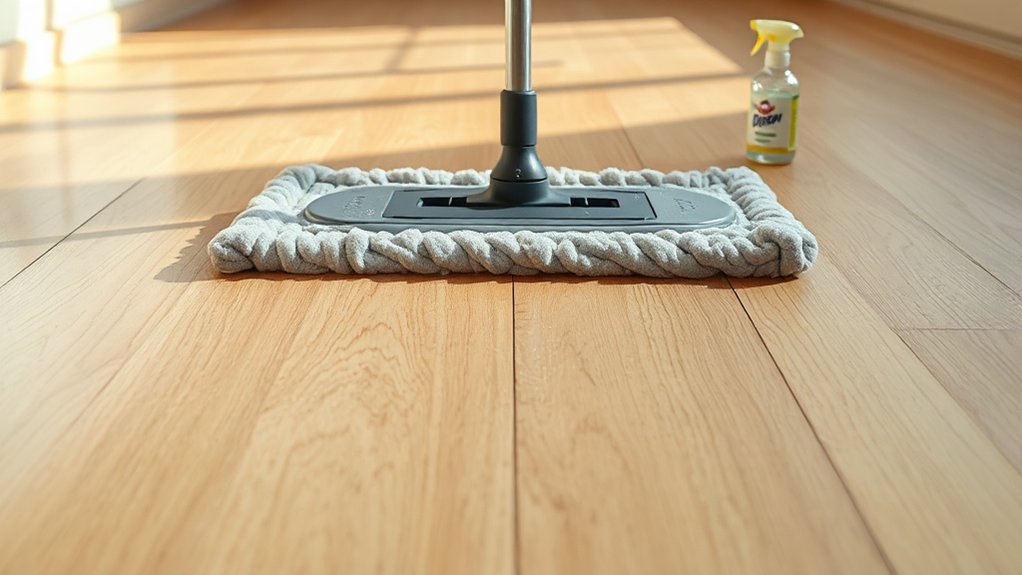
You can use OxiClean on some hard floors, but the right approach depends on the flooring material and its manufacturer’s care instructions.
OxiClean is suitable for some hard floors, but always check your flooring manufacturer’s care instructions first.
Check your flooring warranty and test any approved cleaner in an inconspicuous spot first. Avoid assuming that a surface’s water resistance makes it safe for oxygen-based products.
- Ceramic and porcelain tile: You can generally clean these durable, sealed surfaces, but protect grout and follow its care guidance.
- Sealed concrete: You may use OxiClean if the sealer’s manufacturer approves it; test first to prevent dulling or discoloration.
- Vinyl: Check the flooring maker’s instructions, since some finishes may react poorly to cleaners not specifically approved.
- Laminate, hardwood, and unsealed stone: Don’t use OxiClean unless the manufacturer explicitly permits it. Moisture or chemical exposure can damage wood, seams, finishes, or porous stone.
When in doubt, choose a floor-approved cleaner instead.
How Do You Mix OxiClean for Mopping?
First, check the product label for specific mopping directions and the recommended dilution.
Make sure to measure OxiClean carefully so you don’t end up using too much.
Then, mix it with warm water just as the instructions say before you start mopping.
Check the Product Label
Before mixing OxiClean for mopping, read the label on your specific product, since formulas and directions vary. Don’t assume that instructions for one OxiClean cleaner apply to another. Check the package for whether the product suits your floor type and intended use.
Look for these details before preparing a solution:
- Approved surfaces: Confirm that the label permits use on your flooring. Some materials may need special care.
- Mixing directions: Follow the product-specific instructions for making a cleaning solution, rather than relying on an online recipe.
- Safety precautions: Note any guidance about ventilation, protective gear, or keeping the cleaner away from children and pets.
- Rinsing and drying: Check whether the label calls for rinsing the floor or taking other steps after mopping.
If the directions don’t clearly allow floor use, contact the manufacturer or choose a cleaner labeled for your surface.
Measure OxiClean Carefully
Once the label confirms OxiClean is suitable for your floor, measure the product and water exactly as directed. Use the dosage listed for mopping, not the amount you’d use for laundry or stain removal.
Different OxiClean products may have different concentrations, so don’t assume one scoop or capful works for every formula. Check whether the label specifies a scoop, line, or volume, and use that measure rather than estimating.
For accuracy, place your bucket on a level surface and measure the water with a marked container. Add only the amount the directions call for; a stronger solution won’t necessarily clean better and could leave residue or affect the finish.
If the label doesn’t give floor-cleaning directions, contact the manufacturer instead of guessing.
Keep the product away from children and pets.
Mix With Warm Water
After measuring the label-approved amount, mix OxiClean with warm water at the temperature the directions specify. Use a clean bucket, and check the product label for the correct water volume and mixing instructions.
Don’t guess the concentration: too much cleaner can leave residue or harm some surfaces, while too little may not clean effectively.
- Pour the specified amount of warm water into your bucket.
- Add the measured OxiClean gradually, rather than dumping it in all at once.
- Stir until the powder dissolves; undissolved granules can scratch floors or leave marks.
- Confirm the solution looks evenly mixed, then prepare to mop promptly.
Keep the mixture away from children and pets, and don’t combine it with other cleaners.
Make only what you need, since storage directions may vary by product.
How Do You Mop Safely With OxiClean?
To mop safely with OxiClean, first check the product label and your floor manufacturer’s care instructions, since some surfaces can be damaged by oxygen bleach.
Check the product label and your floor’s care instructions before mopping, as oxygen bleach may damage some surfaces.
Test your diluted solution in a hidden spot and let it dry to check for discoloration or damage. Wear gloves if the label recommends them, and keep the powder and solution away from children and pets.
Use only the amount specified on the package; a stronger mix won’t clean better and may leave residue or harm your floor.
Dissolve the powder completely before you begin, and don’t mix OxiClean with bleach, ammonia, or other cleaners.
Apply the solution with a well-wrung mop rather than flooding the surface, especially around seams and edges.
Work in small sections, and stop if you notice fading, tackiness, or surface changes.
When Should You Rinse Floors After Mopping?
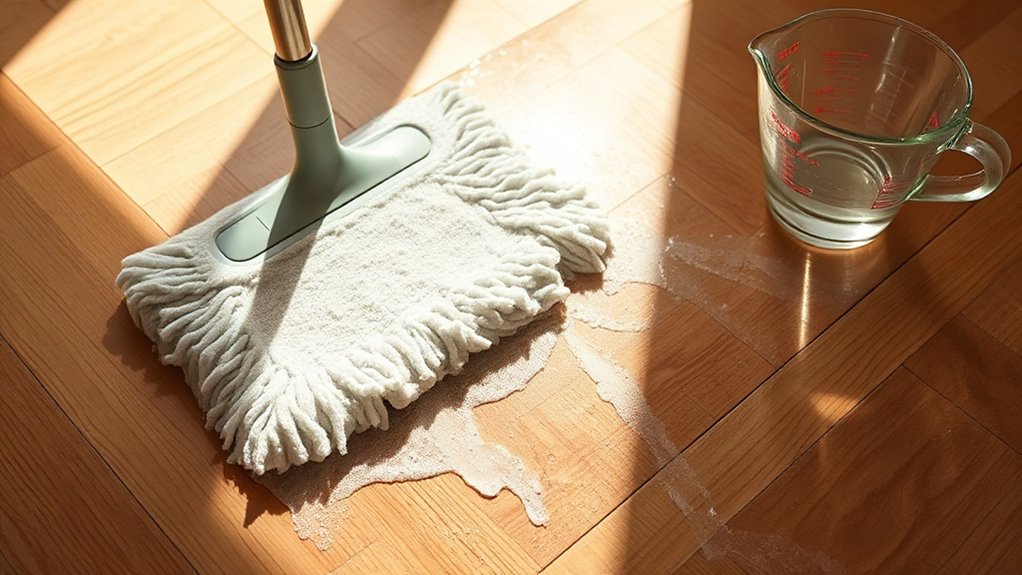
Rinse the floor after mopping if the product label calls for it, or if the surface feels sticky or looks streaky once it dries. Check the label before you begin, since directions can vary by product and floor type.
If rinsing is needed, use clean water and a well-wrung mop to remove residue without soaking the surface.
Rinse promptly in these situations:
- The label directs you to rinse after cleaning.
- You notice a tacky film or visible streaks after the floor dries.
- You’ve used more solution than directed and suspect leftover cleaner.
- You’re cleaning a surface that its care instructions say needs a water rinse.
After rinsing, dry the floor with a clean towel or allow it to air-dry. Follow the flooring manufacturer’s care guidance, and don’t leave standing water behind.
What Not to Mix or Use With OxiClean?
Once the floor is clean, avoid mixing OxiClean with other cleaners, especially chlorine bleach, ammonia, or acidic products such as vinegar.
Combining products can trigger dangerous reactions, release harmful fumes, or reduce cleaning effectiveness. Use OxiClean only as directed on its label, and don’t add it to a bucket containing leftover cleaner.
Keep the powder and solution away from children and pets, and don’t ingest them. Avoid getting the product in your eyes or leaving it on your skin; wear gloves if you have sensitive skin, and rinse splashes promptly.
Don’t use OxiClean on wool, silk, leather, or other materials the label excludes.
Test a small, hidden area first, since some finishes or colors may fade. If you’re unsure whether your floor can tolerate it, check its care instructions before applying OxiClean.
Which Floor Cleaners Work Better Than OxiClean?
For routine floor cleaning, a pH-neutral cleaner made for your flooring is usually a better choice than OxiClean. It removes everyday soil without leaving harsh residues or risking damage from an unsuitable formula. Choose a product that matches your floor’s finish and follow its label directions.
- Tile and vinyl: Use a floor cleaner labeled for your surface; rinse if the instructions require it.
- Hardwood: Pick a wood-floor cleaner, apply it sparingly, and avoid soaking boards.
- Laminate: Use a laminate-safe spray or diluted cleaner, then dry the floor promptly.
- Stone: Choose a stone-specific, nonacidic cleaner to protect sensitive surfaces.
For light messes, warm water and a microfiber mop may be enough. Test any new product in an inconspicuous spot first, and don’t mix cleaners.
OxiClean may suit some jobs, but it isn’t a universal floor cleaner.
Frequently Asked Questions
Can Oxiclean Damage Grout Over Time?
Yes, OxiClean can damage grout over time, especially if you use it too often, mix it too strongly, or leave it sitting on the surface.
Its oxygen-based cleaner may weaken or discolor some grout, particularly older, unsealed, or colored grout.
Test a diluted solution in a hidden spot first, follow the label, and rinse thoroughly.
For routine cleaning, choose a grout-safe product and avoid harsh scrubbing that can wear grout away.
Is Oxiclean Safe to Use Around Pets?
By Jove, OxiClean can be used around pets, but you should keep your animals away while you mix or apply it.
The product’s ingredients may irritate their skin, eyes, or stomach if they touch or ingest the solution.
Follow the label, ventilate the area, and store the container securely.
Let cleaned surfaces dry completely before letting your pets return, and contact a veterinarian if exposure causes symptoms.
Can Oxiclean Remove Old Stains From Carpets?
Yes, OxiClean can remove some old carpet stains, but results depend on the stain, carpet fibers, and how long the mark has set.
You’ll get the best chance by choosing a product labeled for carpets and following its directions.
Test it on a hidden spot first to check for color changes.
Blot the stain gently; don’t scrub, since you could damage fibers or spread the mark.
Repeat only as directed.
How Should Leftover Oxiclean Solution Be Stored?
Like a fading spark, leftover OxiClean solution loses strength over time, so you shouldn’t store it for later.
Mix only what you need, and discard any remainder after cleaning.
Don’t pour it into a sealed container, since oxygen-releasing ingredients can build pressure.
Follow the product label for disposal, and keep the solution away from children and pets until you’ve discarded it.
Rinse your bucket or spray bottle thoroughly before using it again.
Does Oxiclean Have a Strong Odor?
OxiClean usually doesn’t have a strong odor, though you may notice a mild, clean scent or a slight chemical smell when you mix it. Your perception can vary by product, concentration, and sensitivity to fragrances.
Use it in a well-ventilated area, and avoid breathing in dust while measuring the powder.
If the smell bothers you, stop using it, ventilate the room, and follow the label’s safety directions.
Conclusion
OxiClean can help clean compatible, sealed floors, but you’ll need the right product, a correctly diluted solution, and a spot test first. Follow the label, avoid mixing it with other cleaners, and rinse if the directions call for it.
For delicate or unsealed flooring, choose a cleaner made for that surface instead. Why risk damage when a floor-specific product can offer a safer clean? When in doubt, check your flooring manufacturer’s care instructions before you mop.