How To Clean Washing Machine Drain Filter – Guide
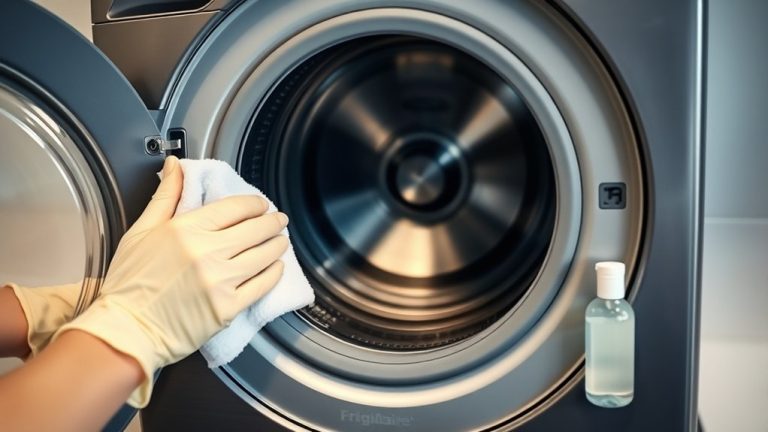
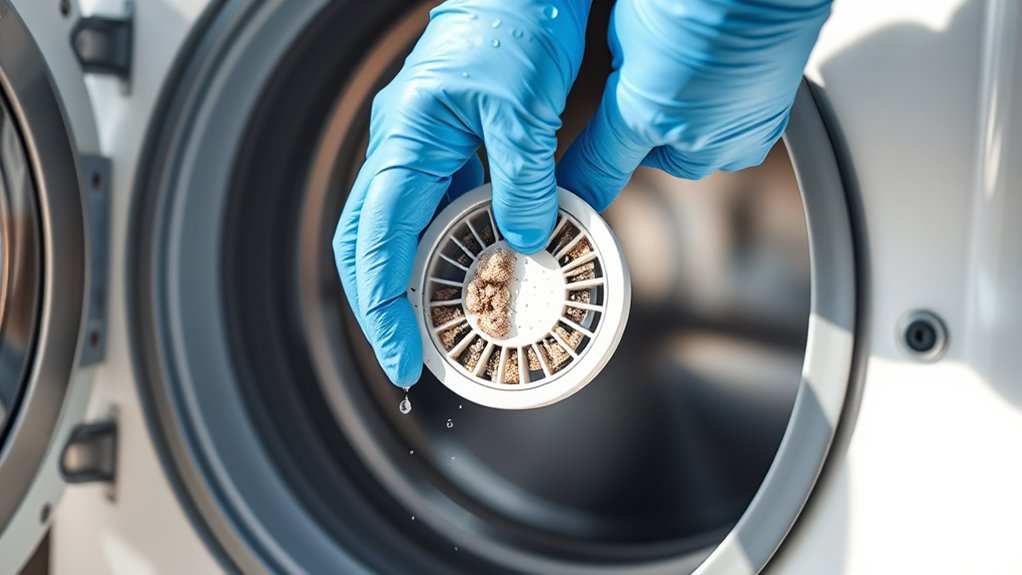
To clean your washing machine drain filter, first unplug the machine and locate the filter behind the bottom front panel. Open the hatch carefully to drain residual water into a container. Unscrew and remove the filter, then clear away lint and debris under warm water using a soft brush.
Next, check the cavity for blockages and inspect the drain hose for kinks. Make sure everything is clear to help your machine drain properly.
Finally, reinstall the filter securely, ensuring the seal is tight to prevent leaks. Keep reading for a detailed step-by-step process and some handy maintenance tips.
Where to Locate the Washing Machine Drain Filter
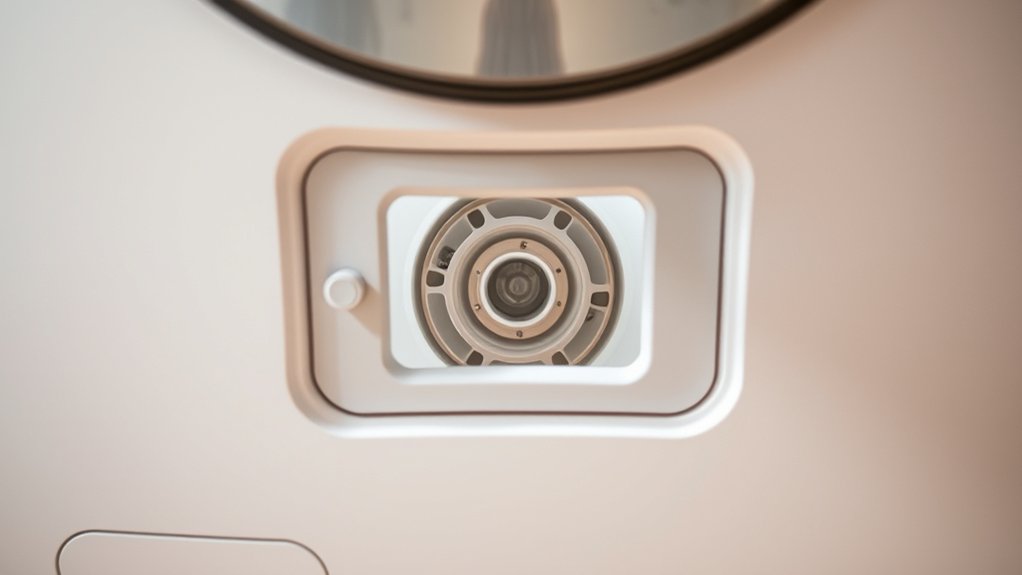
Although the exact location varies by brand and model, you’ll typically find the washing machine drain filter behind a small rectangular hatch at the bottom front of the machine.
To locate the drain filter on front-load washers, check the lower corners of the front panel, most commonly at the bottom right. Brands like Samsung, Bosch, and Whirlpool position the filter behind an access panel there for straightforward maintenance.
For front-load washers, the drain filter is usually behind a bottom-right access panel for easy maintenance.
You’ll need to open this hatch carefully to reach the filter.
For top-load models, the drain filter might be inside the central agitator or accessible from underneath the machine.
Since locations vary, always consult your user manual to accurately locate the drain filter and guarantee proper handling during cleaning or inspection.
Why You Should Clean Your Washing Machine’s Drain Filter
Since your washing machine’s drain filter traps lint, hair, and debris during each cycle, you need to clean it regularly to prevent blockages that impair drainage. A clogged filter disrupts proper water drainage, causing longer wash times and wet clothes.
Regular machine maintenance by cleaning the drain filter avoids lint buildup, foul odors, and potential damage to the drain pump. Neglecting this essential step can lead to costly repairs or premature machine failure.
Key reasons to clean your washing machine’s drain filter include:
- Preventing lint buildup that blocks water drainage
- Reducing the risk of foul odors from stagnant water
- Protecting the drain pump from damage by trapped objects
- Ensuring efficient wash cycles and proper drainage
- Extending your machine’s lifespan through routine maintenance
Tools You Need to Clean the Drain Filter
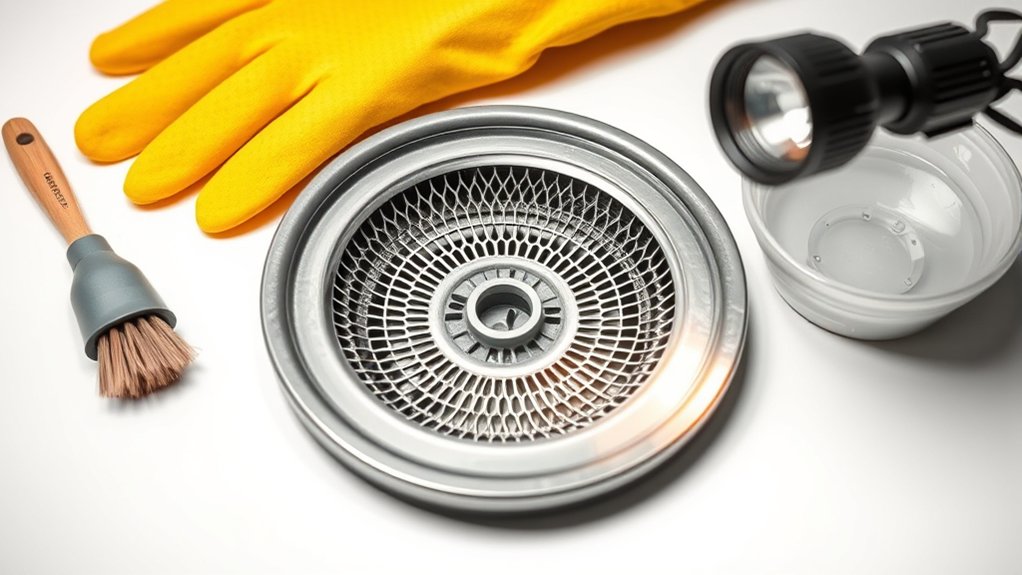
To clean your washing machine’s drain filter effectively, you’ll want to have a few specific tools ready. Grab a soft cloth, a small brush, and a shallow container to catch any water that might spill out.
It’s also a good idea to prepare some safety items like gloves. If the filter is tight, having pliers or a filter removal tool can make the job much easier.
And don’t forget, keeping some white vinegar and warm water nearby will really help dissolve any grime or limescale buildup.
Essential Cleaning Tools
Before you start cleaning the washing machine drain filter, gather a few essential tools to guarantee the process goes smoothly and safely. Having the right cleaning tools ensures you can access, remove, and clean the filter without damage or mess.
Prepare a shallow container to catch any water that spills when you open the access panel or remove the filter. Use a soft brush to clean the filter mesh thoroughly without causing harm.
You might also need a screwdriver or a coin to open the access panel or unscrew the filter housing.
Mild cleaning solutions like white vinegar help dissolve limescale buildup effectively. These tools really make the job easier and help you avoid any unwanted mess or damage.
Essential cleaning tools include:
- Rubber gloves
- Shallow container
- Soft brush or sponge
- Screwdriver or coin
- Mild cleaning solution (e.g., white vinegar)
Safety Preparation Items
Gathering the right cleaning tools sets the stage, but preparing for safety guarantees the process goes smoothly without accidents. First, wear gloves to protect your hands from dirt, lint, and residual water or cleaning agents.
Place a shallow pan beneath the drain filter to catch water to drain, preventing spills onto the floor.
Before accessing the filter, use a screwdriver or coin to carefully remove the access panel or hatch. Keep a rag nearby to promptly wipe up any water spills, maintaining a dry and safe workspace.
This setup minimizes mess and risk, ensuring you can clean the filter efficiently without injury or damage.
Following these safety preparation steps is essential for a controlled, safe cleaning process. It might seem like extra work, but it really makes everything easier and safer in the long run. Trust me, taking these small precautions pays off!
How to Clean Your Washing Machine Drain Filter (Step-by-Step)
Although it might seem straightforward, cleaning your washing machine drain filter requires careful attention to safety and detail. First, turn off and unplug your machine. Locate the drain filter hatch at the bottom front, then open it.
Use the built-in drain hose or a shallow pan to remove any leftover water carefully. Next, unscrew the filter by turning it counter-clockwise and remove lint and debris.
Clean the filter surfaces thoroughly under warm running water using a soft brush or sponge.
Finally, reinstall the filter securely and close the hatch. Run a short cycle to make sure everything drains properly and check for leaks.
Key steps to clean your drain filter:
- Turn off and unplug the machine
- Open filter hatch carefully
- Drain residual water with drain hose or pan
- Remove lint and clean filter under warm water
- Reinstall filter securely and test for leaks
How Often to Clean Your Drain Filter
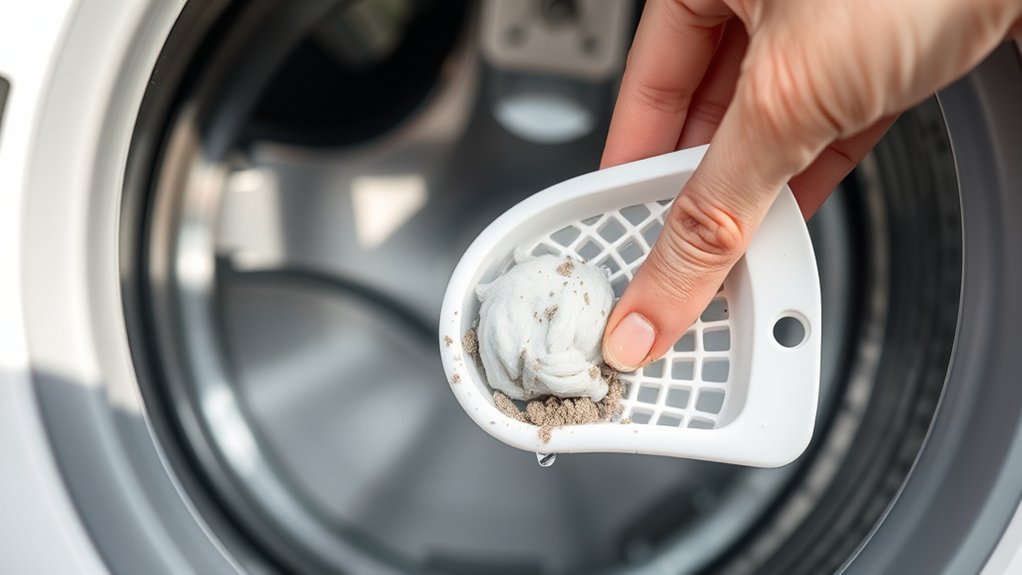
Once you’ve cleaned your washing machine drain filter properly, keeping up with a regular cleaning schedule is key to making sure your machine runs smoothly.
Regularly cleaning your washing machine drain filter is essential for smooth and efficient operation.
For most people, cleaning the drain filter every three months is just right to keep things working well and stop lint and debris from building up.
If you have pets, kids, or often wash clothes that shed a lot, you might want to clean the filter more often — say, every two months.
And if your machine gets a lot of use, monthly cleanings are best to avoid clogs and bad smells.
Doing this regular upkeep not only helps stop drainage problems caused by gunk but also helps your washing machine last longer and saves you from expensive repairs.
Stick to this routine, and your drain filter will stay clear, keeping water flowing smoothly and your washing cycles running without a hitch.
Signs Your Drain Filter Needs Cleaning Now
You’ll probably notice slow drainage or longer wash cycles when the filter gets clogged with debris.
And if your machine starts giving off musty or sewage odors, that’s a good sign stagnant water is stuck in the filter.
Plus, sometimes your machine might show error codes like E21, F21, 5E, or F05 to let you know there’s a drainage problem caused by a blocked drain filter.
Slow Drainage Symptoms
When your washing machine slows down during wash cycles or takes longer than usual to complete, it’s often a sign that the drain filter is clogged with debris. Slow drainage directly impacts water flow, causing extended cycle times and inefficient spinning.
You might also notice error codes such as E21, F21, or 5E, which indicate drainage issues linked to a clogged drain filter.
If clothes remain wet after the spin cycle, the filter is likely obstructing proper water removal. Keep an eye out for these key slow drainage symptoms to figure out if your drain filter needs immediate cleaning:
- Prolonged wash or spin cycles
- Excessively wet laundry after spinning
- Visible water pooling inside the drum
- Repeated error codes related to drainage
- Audible gurgling or unusual draining sounds
Unpleasant Odor Signs
If your washing machine emits a persistent musty or sewage-like odor, it signals a clogged or dirty drain filter that needs immediate attention. Foul smells come from stagnant water and organic buildup trapped in the drain filter. This promotes mildew and bacteria growth.
The odor often gets worse after washing or sticks around even after cleaning. When that happens, it means the filter needs urgent maintenance. Catching these signs early helps keep your machine clean and running efficiently.
| Odor Sign | Meaning |
|---|---|
| Musty smell | Mildew accumulation in filter |
| Sewage-like odor | Severe clogging with organic waste |
| Persistent odor | Filter needs immediate cleaning |
| Sour smell on clothes | Bacteria growth in drain filter |
| Odor after cleaning | Incomplete drain filter cleaning |
Regular cleaning gets rid of foul smells and stops mildew from building up. It’s a simple way to keep your washing machine fresh and working well.
Error Code Alerts
Unpleasant odors often serve as early warnings of a clogged washing machine drain filter, but error codes provide more direct alerts that demand your attention. When your machine displays error codes like F21, 5E, or E21, it means the drain filter is clogged and needs immediate cleaning. Ignoring these warnings can make drainage problems worse and even damage your appliance.
Watch for these signs that your drain filter needs cleaning:
- Persistent slow drainage during wash cycles
- Error codes indicating drainage failure
- Excessively wet laundry after spinning
- Longer-than-normal wash cycles
- Foul odors from trapped debris in the drain filter
Make sure to address these error codes quickly by cleaning the clogged drain filter. This will help restore proper drainage and keep your washing machine running smoothly.
Common Mistakes to Avoid When Cleaning Your Drain Filter
Although cleaning your washing machine’s drain filter is straightforward, certain mistakes can cause damage or leaks. Common mistakes include opening the filter during a wash cycle, which risks flooding from residual hot water.
Avoid forcing a stuck filter with metal tools, as this can crack the plastic housing. Always protect your floor with towels or a shallow container to catch water when removing the filter.
When cleaning drain filter components, inspect the impeller and cavity thoroughly to remove debris.
Finally, proper reassembly is essential: check the rubber seal and re-tighten the filter securely to prevent leaks.
Tips to Prevent Drain Filter Clogs
To keep your washing machine’s drain filter working well, you should take some simple steps to prevent clogs before they happen. Catching clogs early means less maintenance and helps your machine last longer. It’s all about stopping debris, lint buildup, and detergent residue from causing trouble.
Here are some tips you can try:
- Always empty your pockets and use mesh laundry bags to stop small items from getting into the filter.
- Pre-treat fabrics that shed a lot and pet hair to keep lint from piling up.
- Don’t overload your machine; it can lead to more debris getting stuck.
- Use the right amount of detergent to avoid extra residue buildup.
- Clean your filter regularly, about every three months, to get rid of trapped debris and residue.
Following these easy steps keeps your drain filter clear, which means your washing works better and you avoid costly repairs down the line.
How to Inspect and Clear the Filter Cavity and Drain Hose
When you remove the filter, inspect the cavity closely using a flashlight to spot any debris, lint, or objects stuck in the impeller blades. Use fine-nosed pliers to carefully clear trapped debris, making sure the impeller spins freely. Wipe the filter cavity walls with a damp cloth or soft brush to remove any residue.
Next, take a look at the drain hose. Check for kinks or blockages that might restrict water flow. If you find any, straighten or clear them to keep the drainage working properly.
Finally, put the filter back in securely. Make sure the rubber seal is seated correctly to prevent leaks. This way, everything should run smoothly again.
| Task | Action |
|---|---|
| Inspect filter cavity | Use flashlight & pliers |
| Clear debris | Remove objects & wipe cavity |
| Check drain hose | Straighten & clear blockages |
Frequently Asked Questions
Can I Use Bleach to Clean the Drain Filter?
You shouldn’t use bleach to clean the washing machine drain filter because it can corrode plastic parts and damage rubber seals.
Instead, use hot water with a soft brush or a vinegar solution to remove debris safely.
If you do use bleach, make sure to dilute it heavily—one part bleach to ten parts water—and rinse thoroughly to avoid residue buildup.
But honestly, regular non-chemical cleaning is more effective and less risky for your machine.
It’s just better to keep things simple and safe!
Will Cleaning the Drain Filter Improve Washing Machine Odor?
Yes, cleaning the drain filter will improve your washing machine’s odor. When you clear out trapped lint, debris, and stagnant water, you remove the breeding ground for mold and bacteria causing foul smells.
Make sure you clean it thoroughly and regularly. Ideally, try to do this once a month to keep unpleasant odors at bay.
This simple maintenance step helps your machine stay fresh and function efficiently.
Plus, it prevents musty or sewage-like scents from developing.
How Do I Know if My Washing Machine Drain Filter Is Removable?
You’ll know if your washing machine drain filter is removable by locating the small access hatch, usually on the bottom front panel. Open it without tools and look for a mesh or screen component.
If you see a filter with a knob or cap, it’s removable.
Check your user manual for specifics. Some models have built-in emergency drain hoses attached to the filter.
Unscrew or unclip them to access the filter for removal.
Can a Clogged Drain Filter Cause My Washing Machine to Stop?
Yes, a clogged drain filter can definitely cause your washing machine to stop. You might think it’s just a minor issue, but blockages prevent proper water drainage.
This can cause the machine to halt mid-cycle or display error codes. To avoid pump damage and interruptions, clean the filter regularly.
Locate it, remove debris, rinse, and reinstall carefully. Doing this helps your washer run smoothly without unexpected stoppages or costly repairs.
Is It Safe to Clean the Drain Filter Without Gloves?
Yes, you can clean the drain filter without gloves if you handle it carefully and wash your hands thoroughly afterward. However, gloves are recommended to protect your skin from mold, bacteria, residual detergent, or sharp debris that might cause irritation or infection.
If you have cuts, sensitive skin, or allergies, always wear gloves. It’s better to be safe than sorry.
Regardless, always sanitize your hands after cleaning to get rid of any contaminants that might be left on your skin.
Conclusion
Think of your washing machine’s drain filter like a car’s oil filter. Neglect it, and performance drops. Just as a clogged oil filter can stall your engine, a dirty drain filter can cause leaks or drainage issues.
By cleaning it regularly using the steps outlined, you guarantee smooth operation and extend your machine’s lifespan. Stay proactive; a few minutes of maintenance now saves costly repairs later.
Keep your washer running efficiently. Clean that filter!