How To Clean Washing Machine Without Vinegar – Guide
You should avoid vinegar when cleaning your washing machine because its acidity damages rubber seals, hoses, and metal parts. This can shorten your machine’s lifespan.
Instead, try safer natural alternatives like baking soda to deodorize and scrub, citric acid to dissolve mineral buildup, and hydrogen peroxide to disinfect mold and bacteria. Run hot water cycles with these agents to get the best results.
Clean dispensers with lemon juice and wipe seals regularly. Following these steps guarantees thorough, vinegar-free care.
If you want, you can explore more detailed cleaning and maintenance tips here.
Why You Shouldn’t Use Vinegar in Your Washing Machine
Why should you avoid using vinegar to clean your washing machine? Vinegar’s acidity can degrade rubber seals, hoses, and other internal components over time, causing costly repairs. When used directly in the washing cycle, especially in front load washers, vinegar weakens these essential parts.
Prolonged or frequent use speeds up damage to internal gaskets and rubber components, which shortens the machine’s lifespan. Plus, vinegar can corrode metal parts and promote mineral deposits that mess with how your washer performs.
Manufacturers often advise against using vinegar and suggest alternative cleaning methods to keep your appliance safe. Following their advice helps you maintain your washing machine’s integrity without risking corrosion or component failure.
Natural Alternatives to Vinegar for Cleaning Your Washing Machine
Although vinegar is commonly used for cleaning, several natural alternatives provide safer, effective solutions for maintaining your washing machine. Baking soda, citric acid, and hydrogen peroxide serve as eco-friendly agents that target odors, limescale, and mold and mildew without harming machine components.
Baking soda deodorizes and gently scrubs. Citric acid dissolves mineral buildup. And hydrogen peroxide acts as a powerful disinfectant.
These natural cleaning methods reduce reliance on harsh chemicals and are safe for septic systems.
| Alternative | Primary Function |
|---|---|
| Baking Soda | Deodorizes, gentle scrubbing |
| Citric Acid | Dissolves limescale, mineral buildup |
| Hydrogen Peroxide | Disinfectant, kills mold and bacteria |
| Eco-Friendly | Safe for environment and septic |
| Natural Cleaning | Effective, chemical-free maintenance |
Deep Clean Your Washing Machine Naturally: Step-by-Step
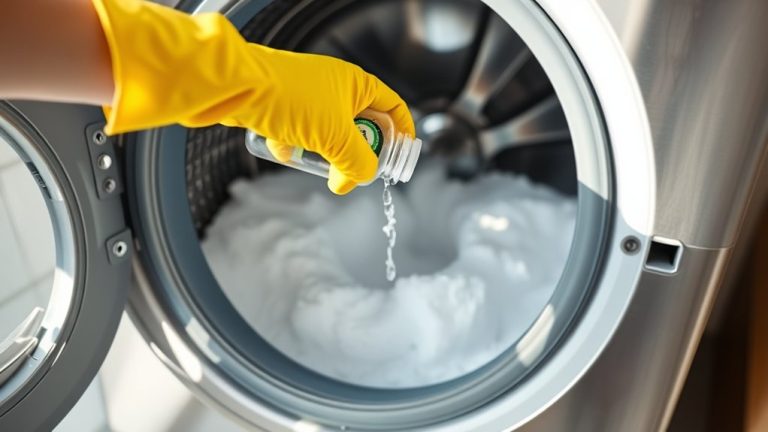
When you want to thoroughly clean your washing machine without using vinegar, start by running a hot water cycle with 2 to 4 cups of a natural cleaning agent such as baking soda or citric acid.
Pause the cleaning cycle midway and let the solution sit for 30 minutes to loosen grime and limescale inside the drum.
Pause the cycle and let the natural solution sit for 30 minutes to break down grime and limescale.
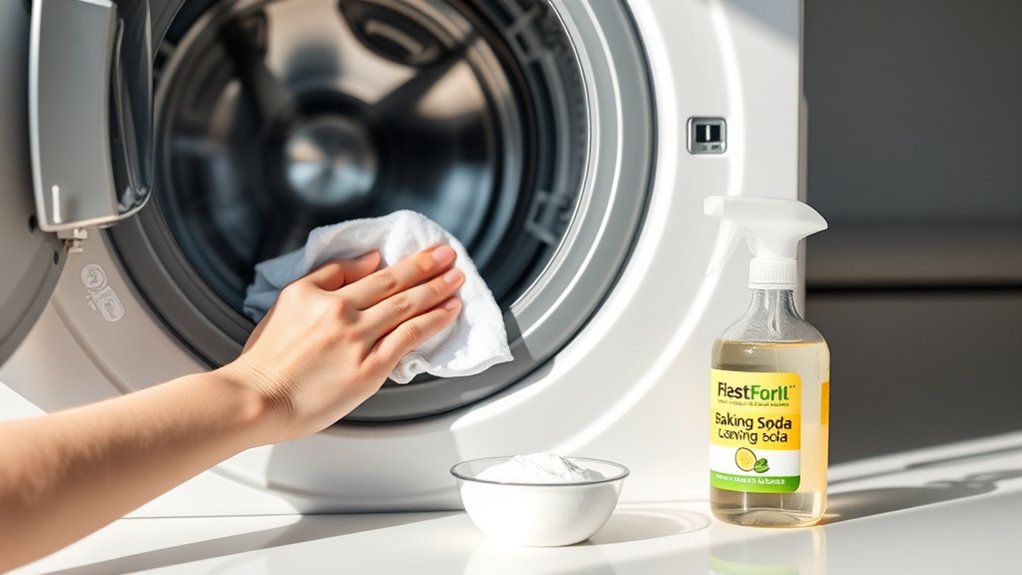
After that, use a soft cloth dampened with baking soda paste or hydrogen peroxide to disinfect and wipe the rubber door seal and external surfaces carefully.
Then, resume the cleaning cycle to rinse away all residues thoroughly.
Finally, leave the door open to promote drying and prevent mold buildup.
This step-by-step process guarantees a deep clean using only natural cleaning agents. It helps keep your machine’s efficiency and hygiene without harsh chemicals.
How to Clean Washing Machine Dispensers and Door Seals Safely
Start by taking out the detergent and fabric softener dispensers. Then, soak them in warm water mixed with lemon juice—this helps break down any stubborn residue.
Next, grab a soft brush and dip it into a mild cleaning solution. Use it to scrub the door seal carefully, paying special attention to the folds and crevices where dirt and mold like to hide.
Once you’ve scrubbed everything, wipe the seal thoroughly. It’s a good idea to leave the door open afterward, so everything can dry completely and stop mold from growing.
Dispenser Cleaning Tips
Because detergent and softener dispensers often accumulate residue and mold, cleaning them thoroughly is essential for maintaining washing machine hygiene. Start dispenser cleaning by removing the dispensers and soaking them in warm water mixed with hydrogen peroxide to loosen buildup.
Use an old toothbrush dipped in hydrogen peroxide or a mild cleaning solution to scrub mold and grime from all compartments.
Wipe the edges carefully with a damp cloth soaked in hydrogen peroxide, making sure you reach all the hidden areas. After scrubbing, rinse the dispensers thoroughly and dry them completely to prevent moisture buildup.
Consistent thorough cleaning of dispensers not only removes residue but also inhibits mold growth. This helps keep your washing machine efficient and extends its lifespan.
Plus, you can do all this without relying on vinegar, which some people prefer to avoid. It’s a simple routine that really makes a difference!
Door Seal Care
Although the door seal often goes unnoticed, it can harbor mold, detergent residue, and dirt that impair your washing machine’s performance. To clean it effectively, gently pull back the rubber gasket and inspect for mold, mildew, or buildup.
Use a damp cloth soaked in a natural disinfectant solution, such as hydrogen peroxide or lemon juice, to wipe the door seal thoroughly.
For stubborn debris trapped in crevices, scrub carefully with an old toothbrush.
After cleaning, leave the door open to allow the rubber gasket to dry completely, preventing mold growth.
Regularly inspect and clean the door seal to avoid soap scum, mildew, and odors, especially in humid environments.
Proper door seal care maintains washing efficiency and prolongs your machine’s lifespan. So, making it a part of your routine will really pay off in the long run.
How Often to Clean Your Washing Machine Without Vinegar
When you want to keep your washing machine functioning at its best without using vinegar, cleaning it every 30 cycles is essential to prevent mold, mildew, and odors from developing. Adjust your cleaning frequency based on water hardness and household usage to maintain peak performance.
Try to do a deep clean with natural methods like baking soda about once a month to tackle buildup effectively. For regular maintenance, wipe down external surfaces and door seals weekly to reduce washing machine odor and prevent mold growth.
Avoid excessive cleaning cycles since overdoing it can wear down internal components over time. By balancing routine maintenance with targeted deep cleaning, you’ll extend your machine’s lifespan and keep it fresh using safe, vinegar-free alternatives.
Prevent Odors and Mold Without Using Vinegar
You can keep odors and mold at bay in your washing machine by using natural alternatives like baking soda and hydrogen peroxide when you run cleaning cycles. It’s a simple swap that works really well.
Make sure you’re also cleaning the door seals, dispensers, and filters regularly. This helps get rid of any hidden grime and keeps moisture from building up, which is what usually leads to mold.
Another trick is to run hot water cycles with citric acid or baking soda. These not only help neutralize any smells but also break down residue without needing to use vinegar at all.
It’s an easy way to keep your machine fresh and clean!
Natural Odor Prevention
How can you effectively prevent odors and mold in your washing machine without relying on vinegar? Focus on natural cleaning methods that target odor-causing bacteria and inhibit mold and mildew growth. Prioritize thorough drying and disinfecting to maintain freshness.
Leave the washing machine door open after cycles to enhance airflow and reduce mold and mildew buildup. Wiping the rubber door seal and detergent dispensers with a baking soda and water solution helps remove moisture and odors.
You can also use natural disinfectants like hydrogen peroxide or lemon juice periodically to neutralize mold spores.
Run monthly hot water cycles with baking soda or citric acid to eliminate odor-causing bacteria and prevent limescale.
Don’t forget to clean the washer’s filter and drainage system regularly to remove debris that fosters odors and mold.
These simple steps keep your machine fresh and smelling great naturally!
Mold Control Techniques
Maintaining a mold-free washing machine requires targeted techniques beyond just preventing odors. To keep mold at bay, regularly run cleaning cycles using hydrogen peroxide or baking soda. These natural disinfectants work well to inhibit mold spores without needing vinegar.
Make sure to thoroughly clean rubber seals and door gaskets with hydrogen peroxide or a diluted bleach solution. This helps remove trapped mold spores and stops odors from forming.
After every wash, leave the door open to let moisture evaporate—that’s a crucial step to prevent mold.
Once a month, run hot water cycles with baking soda or citric acid to reduce residue that can encourage mold growth.
Also, keep the detergent dispenser and filter clean and dry since these spots are prime places for mold to develop.
Vinegar-Free Cleaning Alternatives
Although vinegar is a common choice for cleaning washing machines, several effective alternatives can prevent odors and mold without its use. You can rely on natural cleaning agents like baking soda and hydrogen peroxide for mold prevention and grime removal.
Running hot water cycles with baking soda or citric acid ensures thorough descaling.
Pay special attention to cleaning the detergent dispenser and rubber seals regularly with hydrogen peroxide to inhibit mold buildup.
Moreover, enzymatic cleaners offer a powerful, eco-friendly solution to maintain machine hygiene.
- Use baking soda and hydrogen peroxide for odor control
- Run hot water cycles with baking soda or citric acid for descaling
- Clean detergent dispensers and rubber seals routinely
- Apply enzymatic cleaners as safe vinegar substitutes
- Leave the door open to reduce moisture and mold growth
How to Pick Safe Cleaners for Your Washing Machine
When selecting a cleaner for your washing machine, you’ll want to prioritize products that comply with your appliance’s material and manufacturer guidelines. Start by reviewing appliance labels and cleaning instructions to identify safe cleaners specifically formulated for your machine’s components.
Avoid harsh chemicals like chlorine bleach or ammonia unless explicitly recommended, as they may compromise rubber seals and plastic parts.
Instead, opt for natural cleaning products such as hydrogen peroxide, baking soda, or citric acid. These offer effective, eco-friendly alternatives with proven chemical compatibility.
Always verify product labels for compatibility with your machine’s materials to prevent degradation.
Make sure to follow dosage instructions carefully to avoid overuse, which can lead to residue buildup or damage.
Maintaining Your Washing Machine With Vinegar-Free Solutions
Since vinegar can sometimes damage rubber seals and leave lingering odors, you should focus on vinegar-free methods to keep your washing machine clean and efficient. Effective maintenance enhances performance and prevents mold and mildew buildup.
For vinegar-free cleaning and upkeep, try these steps:
- Wipe the washing machine’s exterior, detergent dispensers, and rubber seals with a damp cloth and baking soda or hydrogen peroxide.
- Run hot water cycles with baking soda or citric acid to dissolve soap scum and deposits.
- Clean filters and hoses periodically to maintain water flow and prevent blockages.
Also, leave the washer door open after cycles to promote drying and inhibit mold and mildew growth.
Using specialized machine cleaners like affresh® tablets monthly helps with thorough internal cleaning without vinegar.
These techniques guarantee your washing machine stays hygienic and functions at its best. Give them a try and see the difference!
Frequently Asked Questions
Can I Use Baking Soda and Lemon Juice Together to Clean My Washer?
Yes, you can use baking soda and lemon juice together to clean your washer. Add baking soda during the wash cycle to neutralize odors and gently scrub residues.
Then, introduce lemon juice in the rinse cycle to break down mineral deposits and soap scum. The resulting carbon dioxide helps lift grime.
Just be careful not to overuse this method. Too much can damage rubber seals or internal parts. So, use it sparingly for safe, effective cleaning.
Does Using Vinegar Void My Washing Machine’s Warranty?
Using vinegar typically doesn’t void your washing machine’s warranty unless the manufacturer explicitly warns against it.
Many brands caution that internal vinegar use may degrade rubber seals or components, which could lead to denied warranty claims if damage happens.
To avoid any risks, it’s a good idea to check your machine’s user manual or contact the manufacturer directly to see what they say about vinegar.
Using vinegar for external cleaning usually doesn’t cause any warranty issues, so that’s generally safe to do.
How Do Hard Water Deposits Affect Washing Machine Cleaning?
Hard water deposits can be a nightmare, clogging your washing machine like a traffic jam during rush hour. They reduce efficiency by coating pipes, valves, and heating elements with limescale. This leads to longer wash cycles and higher energy use.
These deposits also cause sensor errors and wear out mechanical parts faster. Plus, soap scum buildup leaves your laundry dingy and stiff.
On top of that, corrosion risks damaging seals and metal components inside your machine.
Are Commercial Washing Machine Cleaners Safe Without Vinegar?
Yes, commercial washing machine cleaners are generally safe without vinegar when you follow the manufacturer’s instructions. These products use enzymes, surfactants, and descaling agents designed to remove buildup effectively without harming seals or hoses.
However, you should check compatibility with your washer type and avoid overuse to prevent potential damage.
For regular maintenance, consider gentler options like baking soda or citric acid if you want to minimize chemical exposure.
Can Cleaning My Washer Without Vinegar Improve Laundry Scent?
Long before the age of smartphones, people knew that keeping things clean improved their environment. Yes, cleaning your washer without vinegar can improve laundry scent.
Using baking soda or hydrogen peroxide neutralizes odors effectively while preventing mold and mildew buildup.
Regularly wiping seals and dispensers and leaving the door open boosts airflow, which helps reduce musty smells.
Consistent maintenance with non-vinegar agents guarantees your laundry smells fresher over time. It’s a simple way to keep things smelling great without vinegar.
Conclusion
Cleaning your washing machine without vinegar isn’t just possible. It’s actually essential for preserving its delicate components. By using safe, natural alternatives and following precise cleaning steps, you’ll keep your machine running like new.
This way, you avoid the damage vinegar can cause. Regular maintenance also prevents odors and mold buildup, which helps your machine perform at its best.
Remember, your washing machine isn’t just an appliance. It’s the unsung hero of your home and deserves meticulous care without harsh chemicals. Taking care of it properly makes all the difference.