How To Clean Washing Machine Drum Top Loading – Guide
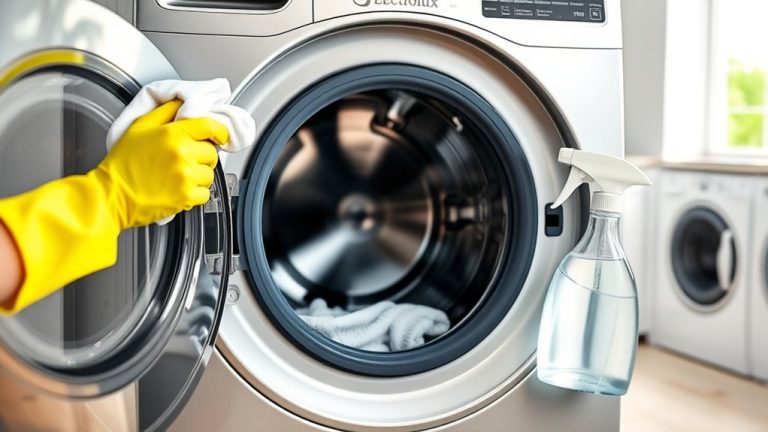
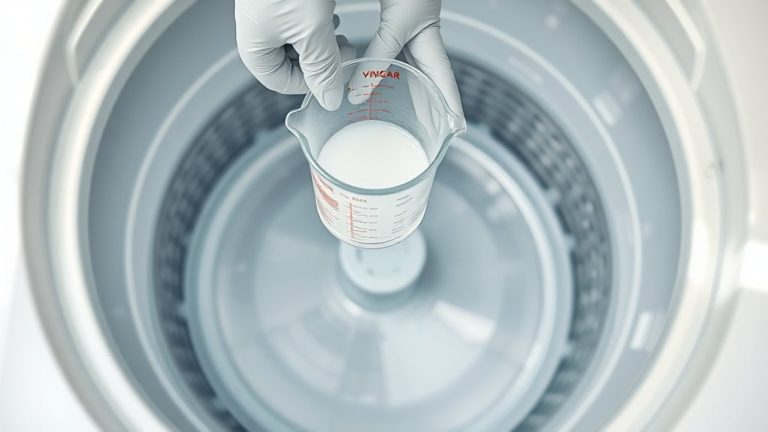
To clean your top-loading washing machine drum, run a hot water cycle with two cups of white vinegar or a specialized cleaner. Pause midway to scrub the drum and lid with a microfiber cloth. This helps get rid of any buildup and keeps things fresh.
Next, remove and soak the dispenser drawer. Don’t forget to rinse and dry the lint filter too. Give the exterior a good wipe down to finish up.
Leave the lid open afterward to let it ventilate and prevent mold from forming. Doing this regularly, about once a month, keeps your washer fresh, odor-free, and working efficiently. Want to keep your machine in top shape? Try out these simple steps and maintenance tips to guarantee peak performance.
Why You Should Clean Your Top Load Washer Drum Regularly
Although you mightn’t see it, your top load washer drum accumulates detergent residue, mold, and mildew over time. This buildup can compromise hygiene and cause unpleasant odors. Regularly cleaning the drum helps prevent this, keeping your washing environment sanitary.
Your top load washer drum hides residue and mold that can cause odors—regular cleaning keeps it fresh and sanitary.
By removing trapped moisture and residues, you get rid of the sources of musty smells. Plus, consistent cleaning helps avoid mineral deposits and limescale, which can harm the drum’s surface and affect how your washer works.
This kind of maintenance reduces the risk of corrosion and mechanical problems, helping your machine last longer. Keeping the drum clean also means your laundry won’t pick up dirt or leftover detergent, so your clothes come out fresher and cleaner every time.
Staying proactive with drum care is a simple way to keep both hygiene and your washer’s performance in top shape. Just as in espresso preparation, where water quality plays a crucial role in extraction and flavor, maintaining clean water flow and mineral balance in your washer helps preserve its optimal function and longevity.
What Tools and Supplies You Need to Clean Your Washer Drum
To clean your top-loading washer drum effectively, you’ll want a few handy tools like microfiber cloths and a soft-bristled brush. These help you get into those tight spots without scratching anything.
As for supplies, white vinegar and baking soda are your go-to natural cleaners. You can also grab some specialized cleaning tablets made to break down all that stubborn residue.
Having these items ready means you’re all set to tackle buildup inside the drum and in the dispensers with ease and precision. Regular maintenance and systematic adjustments help ensure your washer stays in optimal condition.
Essential Cleaning Supplies
Before you start cleaning your top-loading washing machine drum, gather the right tools and supplies to guarantee an efficient and thorough job. You’ll need microfiber cloths to wipe down the drum and exterior surfaces without leaving lint or scratches.
A soft-bristled brush is essential for loosening stubborn grime in hard-to-reach spots inside the drum.
For removable dispensers, prepare to soak them in hot water and scrub gently with a brush or cloth to remove buildup. Non-removable dispensers require pouring cleaning solutions directly into them, then scrubbing with a soft brush or cloth.
Don’t forget gloves to protect your hands and measuring cups to apply cleaning agents like vinegar, baking soda, or bleach accurately and safely.
These supplies assure effective cleaning while preserving your washer’s components. It’s all about having what you need on hand so the job goes smoothly and your machine stays in great shape.
Additionally, just as consistent particle size is crucial for espresso extraction, maintaining consistent cleaning routines helps ensure your washing machine operates efficiently over time.
Recommended Cleaning Tools
Which tools will give you the best results when cleaning your top-loading washer drum? Start with microfiber cloths; they’re gentle yet effective for wiping down the drum, dispensers, and exterior surfaces without causing damage.
Use a soft-bristled brush or an old toothbrush to scrub away residue and mold in tight spots like seals and crevices inside the drum.
For removable dispensers, soak them in hot water mixed with vinegar or mild detergent to dissolve buildup thoroughly.
If dispensers aren’t removable, pour your cleaning solution directly into the compartments and scrub carefully with your brush.
Equip yourself with spray bottles for precise application of cleaning agents and sponges for rinsing the drum.
These easy-to-handle tools ensure a thorough, efficient cleaning process every time. It really makes the chore a lot simpler!
Using a digital scale to measure and control liquid quantities during cleaning solutions preparation can enhance consistency and effectiveness.
How to Clean the Drum: Step-by-Step Guide for Top Load Washers
First, double-check that your washer drum is completely empty. Then, go ahead and select the hottest, longest cycle you can find—this really helps get the drum as clean as possible.
Next, pour in two cups of white vinegar or a specialized cleaner right into the drum. This will work to break down any mineral buildup and tackle those stubborn odors.
Now, here’s a little trick: when the cycle is about halfway done, pause the machine. Take a microfiber cloth and give the inside of the drum and the lid a good scrub.
Once you’re done, just resume the cycle so everything gets rinsed thoroughly. Easy, right?
Maintaining temperature stability during cleaning cycles can help prevent mineral buildup and improve the longevity of your washer.
Preparing The Drum
Although it might seem simple, preparing the drum properly is essential for an effective cleaning process in top load washers. First, remove all laundry or items from the drum to guarantee you can access every surface thoroughly.
Next, use warm water to loosen dirt, detergent residue, and mineral deposits inside the drum.
For stubborn buildup, manually soak the drum with a mixture of vinegar and baking soda, which helps dissolve grime effectively. After soaking, take a soft cloth or sponge to carefully wipe down the interior surfaces, removing any loosened debris.
Finally, rinse the drum thoroughly with clean water to eliminate any residual cleaning solution or particles.
Proper preparation sets the stage for a deep, efficient cleaning cycle. It really makes a difference when you start with a clean slate! Maintaining proper dosing ensures consistent results, which is just as important in cleaning as it is in other precise processes.
Cleaning Cycle Steps
Once you’ve prepped the drum, run your top-loading washer on the hottest and longest cycle using a suitable cleaning agent like vinegar, bleach, or a commercial product such as Affresh.
Midway through the cycle, pause the machine and scrub the drum interior, lid, and accessible crevices with a microfiber cloth or soft brush to dislodge residue.
Then, resume and complete the cycle.
After that, immediately run an additional rinse cycle with hot water to flush out any remaining cleaning agents and loosened grime.
Once that’s done, remove lint and debris from the filter.
Wipe down the exterior surfaces and control panel for thorough cleanliness.
Finally, leave the washer lid open to allow the drum to air dry thoroughly.
This helps prevent mold and mildew buildup and keeps your machine fresh and hygienic.
Regular maintenance and recalibration, similar to the precision required in equipment calibration, ensure optimal washer performance and longevity.
Removing Odors and Mold From Your Top Load Washer Drum
How can you effectively remove odors and mold from your top load washer drum? Start by running a hot water cycle with either white vinegar or a specialized washing machine cleaner. This helps break down mold and mildew buildup.
For stubborn spores, scrub the drum interior with a soft cloth soaked in a vinegar or baking soda solution. Then, to thoroughly disinfect, run another hot water cycle using bleach. This kills mold, bacteria, and spores trapped inside.
Always leave the washer lid open after use to promote complete drying and prevent moisture retention.
Make sure there’s proper ventilation during cleaning and avoid overloading the washer. Both steps help reduce excess moisture that fosters mold growth.
Following these precise steps will keep your drum fresh and hygienic. Plus, it helps prolong your washer’s efficiency.
How to Clean the Dispenser, Lint Filter & Exterior
Because residue buildup can hinder your washer’s performance, you should regularly clean the dispenser drawer, lint filter, and exterior surfaces.
Start by removing the dispenser drawer and soaking it in warm water. Use a soft brush to scrub away detergent residue, rinse thoroughly, and dry completely before reinstalling.
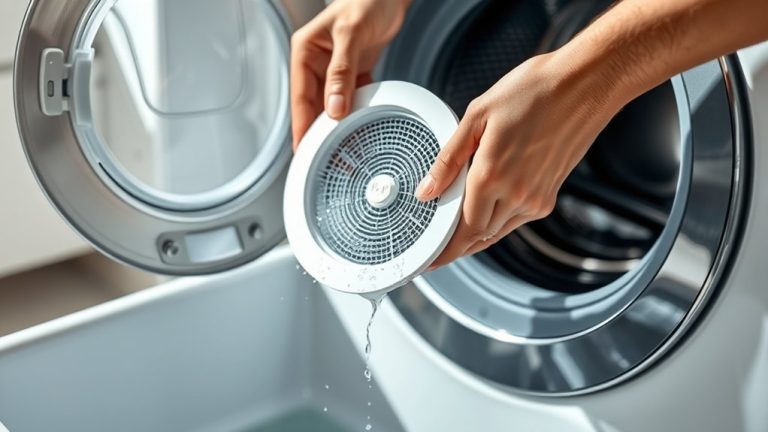
Next, take out the lint filter, rinse it under running water, and gently scrub with a soft brush to remove lint and debris. Make sure to dry it thoroughly to prevent mold from forming.
For the exterior, wipe down the control panel, sides, and around the lid seal with a damp microfiber cloth. You can apply a mild cleaner or vinegar solution to help stop mold growth and keep things hygienic.
Just be sure everything is dry before putting parts back in to avoid mildew and keep your washer running smoothly.
How Often Should You Clean Your Top Load Washer Drum?
You should clean your top load washer drum at least once a month to prevent mold, mildew, and detergent buildup from compromising its performance.
Clean your top load washer drum monthly to prevent mold, mildew, and detergent buildup.
For households with hard water, mineral deposits can accumulate faster, so cleaning every 2 to 3 weeks is advisable.
Ideally, perform cleaning after every 30 wash cycles to maintain hygiene and avoid residue that causes musty odors or stains on clothes.
If you detect any unpleasant smells or visible film, increase cleaning frequency accordingly.
Always consult your washer’s manufacturer guidelines to select suitable cleaning agents and determine the most effective schedule.
Consistent maintenance ensures the drum operates efficiently, prolongs appliance lifespan, and keeps your laundry fresh without risking damage from improper or infrequent cleaning.
Easy Tips to Keep Your Washer Drum Fresh and Efficient
Although washing machines are designed to handle heavy loads, maintaining your washer drum’s freshness requires consistent care and specific habits. You need to prevent residue buildup, odors, and microbial growth to keep your washer efficient.
Here are some practical tips to help you out:
Run a hot water cycle with vinegar and baking soda regularly to dissolve detergent residue and neutralize odors. Wipe the drum interior and lid with a microfiber cloth after each use to stop mold and mildew from forming.
Also, use a dedicated washer cleaner or cleaning tablet like Affresh once a month to remove deep-seated grime.
After your wash cycle, leave the washer lid open to promote air circulation and thorough drying. This helps prevent moisture from sticking around.
Try not to overload your washer since too many clothes can trap moisture and encourage bacteria growth.
Following these simple steps will keep your drum fresh and your machine running longer.
Frequently Asked Questions
Can I Use Bleach Instead of Vinegar to Clean the Drum?
You can use bleach to disinfect your washing machine drum, but it won’t remove mineral deposits or odors like vinegar does.
Just make sure you don’t mix bleach and vinegar. That combo can create harmful fumes.
Also, always follow the manufacturer’s guidelines. This helps prevent damaging rubber seals or causing discoloration.
Is It Safe to Clean the Drum With a Pressure Washer?
You shouldn’t use a pressure washer to clean your washing machine drum. The high pressure can damage seals, force water into electrical components, and void your warranty.
Instead, opt for gentle cleaning methods with mild solutions and a microfiber cloth. These are much safer and will help keep your machine in good shape without any risk. Just take your time and be gentle!
Will Cleaning the Drum Remove All Stains From Clothes?
Oh, sure, cleaning the drum will magically erase every stubborn stain. But in reality, it mainly prevents new ones by removing residue and bacteria.
Stubborn stains need targeted treatments beyond just drum cleaning to truly vanish.
Can I Clean a Top Load Washer Drum With Baking Soda?
Yes, you can clean your top load washer drum with baking soda. Just add 1/2 to 1 cup directly into the drum.
Then, run a hot water cycle. This helps break down residue, deodorize, and keep your machine clean. It’s an easy and effective way to maintain your washer.
How Long Does a Typical Washing Machine Drum Cleaning Take?
A typical washing machine drum cleaning takes 60 to 90 minutes using a specialized cleaning cycle. Manual cleaning usually adds another 15 to 30 minutes. So, all in all, expect to spend about 1 to 2 hours on the whole process.
It really depends on your washer model and the specific cleaning steps you follow. Some machines might be quicker, while others take a bit longer. But don’t worry—it’s not a huge time commitment and definitely worth keeping your washer fresh!
Conclusion
Regularly cleaning your top load washer drum isn’t just about hygiene. It also helps maintain performance and prevents costly repairs.
A lot of people think detergent alone keeps it clean, but that’s not the case. Over time, residue and mold build up, which can affect how well your washer works.
By following a simple step-by-step process and using the right tools, you can get rid of odors and buildup for good. Doing this regularly means your washer runs smoothly, saves energy, and lasts longer.
In the end, it makes your laundry routine way easier and more efficient.