What To Put In Washing Machine To Clean It – Best Options Guide
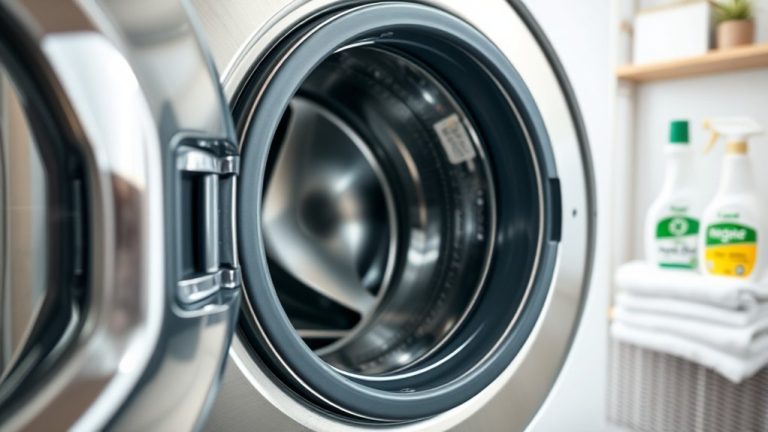
To clean your washing machine effectively, use distilled white vinegar and baking soda on a hot cycle for natural, thorough cleaning. You can also choose EPA-approved commercial cleaners like Affresh or OxiClean for convenience and strong odor-fighting power.
Be sure to clean detergent dispensers and rubber seals regularly to prevent buildup and mold. Avoid mixing harsh chemicals like bleach and vinegar to stay safe.
Keep your washer fresh and efficient. Discover expert tips to maintain it longer and prevent odors.
Why You Need to Clean Your Washing Machine Regularly
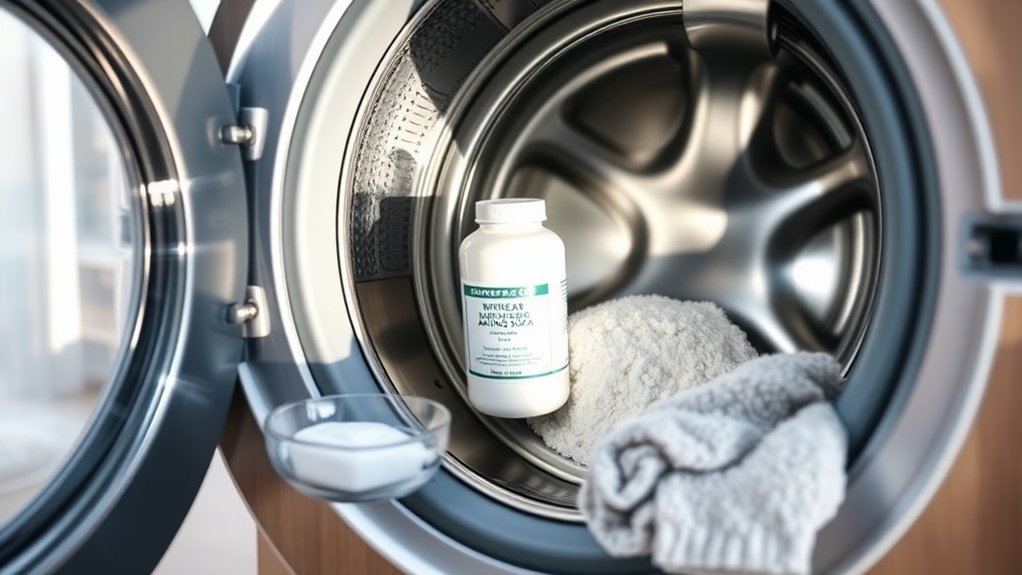
Although you mightn’t see it, your washing machine harbors mold, mildew, and detergent buildup that can cause unpleasant odors and reduce laundry freshness. Regular cleaning with a quality washing machine cleaner prevents these issues, ensuring your clothes come out smelling clean and fresh every time.
Monthly cleaning is essential to maintain peak performance, as buildup clogs dispensers and seals, disrupting drainage and causing persistent odors. By committing to this routine, you not only enhance efficiency but also extend your machine’s lifespan, reducing costly repairs.
After heavy color bleeding, cleaning becomes even more vital to avoid cross-contamination and protect your garments.
How Often to Clean Your Washing Machine for Best Results
You should clean your washing machine at least once a month or after every 30 cycles to keep it running smoothly and smelling fresh.
If you notice severe color bleeding, it’s a good idea to clean the washer right away to prevent stains and odors.
Also, keep an eye out for any unpleasant smells or residue buildup—these are clear signs that your machine needs a thorough cleaning.
Monthly Cleaning Frequency
To maintain your washing machine’s efficiency and keep your laundry fresh, clean it at least once a month or after every 30 wash cycles. This monthly cleaning frequency prevents mold, mildew, and detergent buildup that can cause odors and reduce performance.
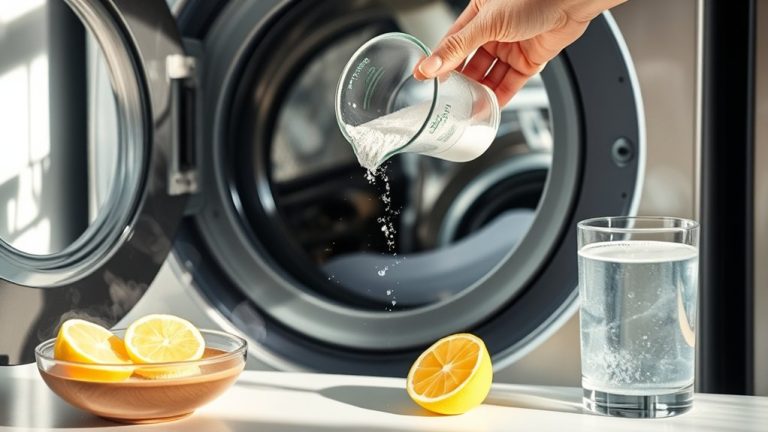
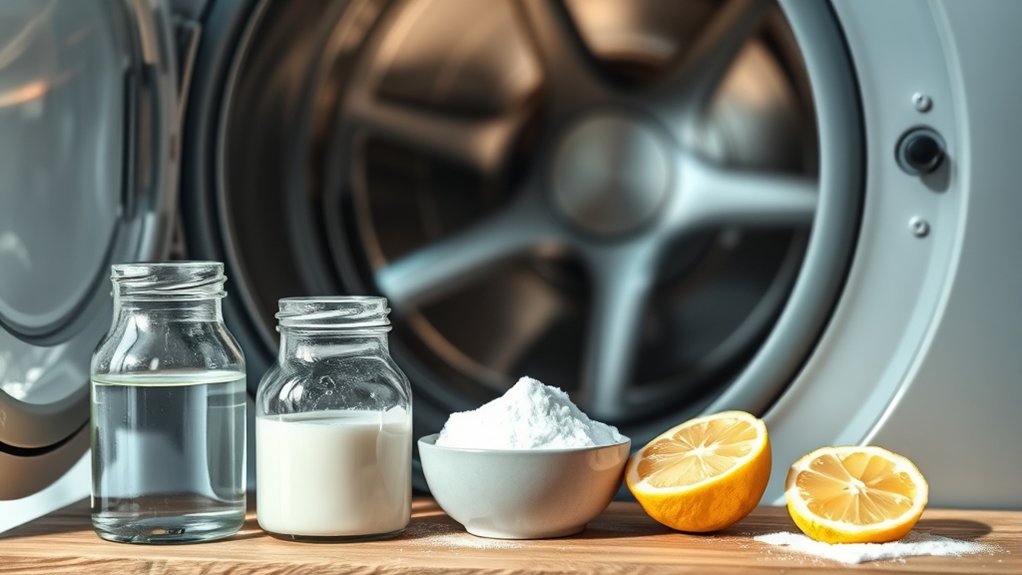
You can clean your washing machine effectively using baking soda to clean and distilled white vinegar. For top-loaders, add half a cup of baking soda and two cups of vinegar to an empty tub, then run a hot cycle.
Front-load machines often need more frequent attention due to trapped moisture. Regularly monitoring for odors or residue helps you know when to clean.
Sticking to this routine not only keeps your laundry smelling fresh but also extends your washer’s lifespan by preventing clogs and malfunctions. It’s an easy habit that pays off in the long run!
Cleaning After Color Bleeds
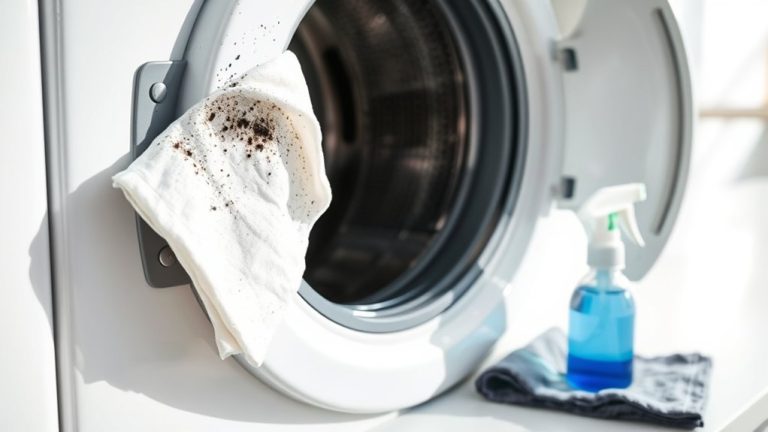
When severe color bleeding occurs, cleaning your washing machine immediately prevents stains from setting and protects future loads from discoloration.
Prompt action is key to maintaining a fresh, efficient machine.
For effective cleaning after color bleeds, follow these steps:
- Use a specialized cleaner like the Affresh brand to remove dye residues and buildup.
- Run a hot water cycle to fully rinse away cleaning agents and any lingering odors.
- Perform regular cleaning at least once a month or every 30 cycles to prevent stains and odors.
- Check and clean dispensers and seals to avoid trapped dye causing future color issues.
Signs Washer Needs Cleaning
Although washing machines are built to handle regular use, they still need routine maintenance to perform at their best. You should clean your washer at least once a month or every 30 cycles to prevent odors, mold, and residue buildup.
If your laundry starts smelling musty instead of fresh, that’s a clear sign your machine needs cleaning. After severe color bleeding incidents, clean the washer immediately to avoid contaminating future loads.
Between thorough cleanings, run a hot water cycle occasionally to maintain freshness and break down detergent residue. Keep an eye out for any unusual odors or visible residue inside the drum—this will help you know when it’s time for a cleaning session.
Regular maintenance not only keeps your laundry smelling great but also extends your machine’s lifespan.
Top Commercial Washing Machine Cleaners: Reviews and Recommendations
You’ll find that cleaner tablets like Affresh and Molly’s Suds offer powerful and convenient options for removing grime and residue from your machine. They make the whole cleaning process pretty easy.
If powders are more your style, OxiClean has got you covered. It comes in pre-measured pouches that really tackle odors and buildup effectively.
At the end of the day, choosing the right product depends on what you need and prefer.
But these top commercial options work well for a wide range of washer types and concerns.
Leading Cleaner Tablets
Since regular maintenance guarantees peak washing machine performance, choosing the right cleaner tablets is essential. Cleaner tablets simplify the process to clean a washing machine effectively, preventing buildup and odors.
Here are leading options to evaluate:
- Affresh Washing Machine Cleaner tablets: EPA Safer Choice certified, they clean all machine parts in one cycle, perfect for monthly use.
- OxiClean Washing Machine Cleaner: Comes in pre-measured pouches, targets residue and odors, and is septic-safe for convenience.
- Molly’s Suds Washing Machine Cleaner Tablets: Use gentle ingredients and citrus essential oils, offering a natural scent while removing grime.
- Aunt Fannies All Purpose Cleaning Vinegar: A cleaning alternative with higher acidity, especially effective combined with baking soda.
These cleaner tablets combine practicality with eco-friendly benefits, helping maintain your washer’s efficiency and freshness.
It’s a simple step that really makes a difference in keeping your machine running smoothly.
Effective Powder Options
When you want a thorough clean that tackles stubborn residue and buildup, powder-based washing machine cleaners offer powerful solutions. Effective powder options like OxiClean Washing Machine Cleaner deliver strong cleaning power, breaking down grime and odors while remaining safe for septic systems.
For an eco-friendly choice, consider Aunt Fannie’s All Purpose 6% Distilled White Cleaning Vinegar, which boosts cleaning power when combined with baking soda. It does carry a strong vinegar scent, though, so keep that in mind.
These powders work well for deep cleaning, especially when used monthly to maintain peak washing machine performance. Glisten Washer Magic is another top contender, effectively reaching hidden buildup to preserve your machine’s efficiency.
Natural Washing Machine Cleaning: Vinegar, Baking Soda, and Essential Oils
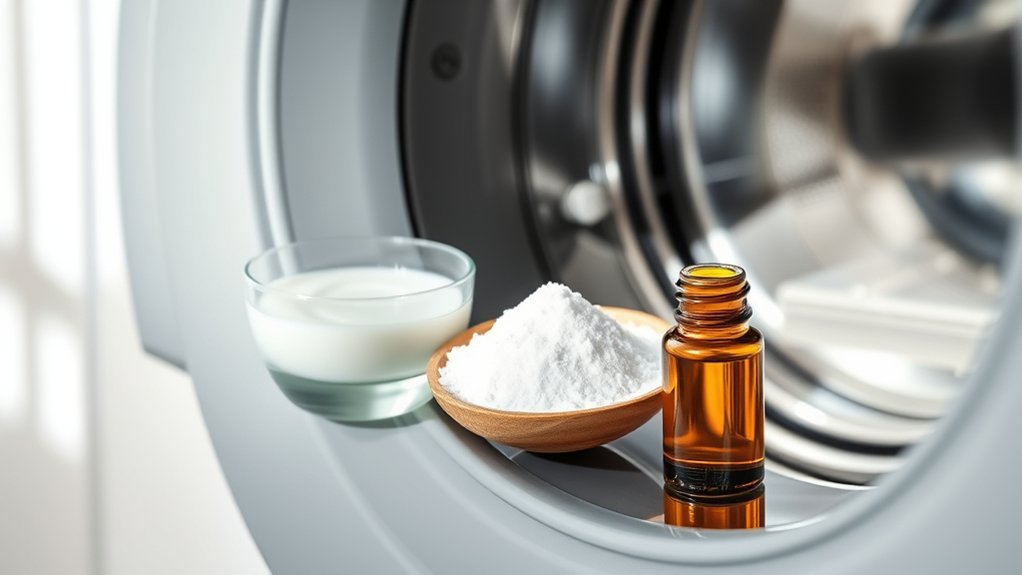
A natural cleaning routine using distilled white vinegar, baking soda, and essential oils offers an effective way to keep your washing machine fresh and odor-free.
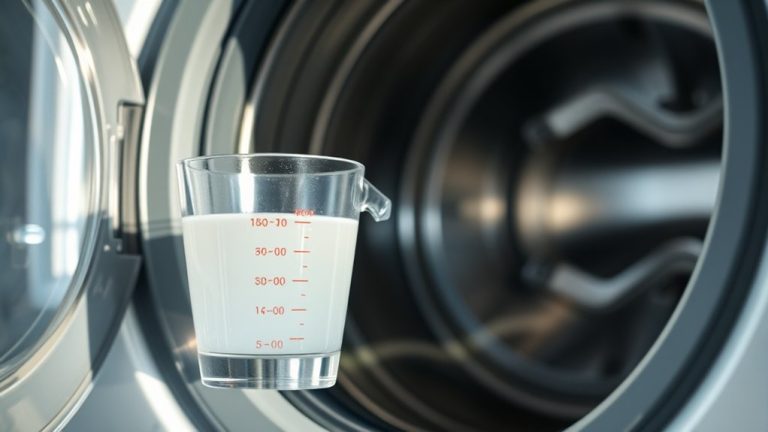
Start by pouring 2 cups of vinegar into the drum, then run the hottest, longest cycle to eliminate buildup and odors.
Next, sprinkle ½ cup of baking soda inside for enhanced deodorizing and residue removal.
Add a few drops of essential oils during cleaning for a pleasant scent, but be careful not to let them come into direct contact with machine parts to avoid damage.
Using these natural cleaners provides an eco-friendly, biodegradable alternative that reduces chemical risks.
It’s a simple way to keep things clean without harsh chemicals.
Key benefits include:
- Effective odor and buildup removal with vinegar
- Enhanced cleaning and deodorizing from baking soda
- Pleasant fragrance with essential oils
- Regular use prevents mold and mildew buildup
Using Bleach and Baking Soda Safely in Washing Machine Cleaning
Though bleach and baking soda both provide powerful cleaning benefits, you must use them carefully to protect your washing machine and your health. For safe bleach usage, always check your machine’s compatibility and follow manufacturer instructions.
Add one cup of bleach directly into the drum and run a hot water cycle with the washer empty. Make sure there’s proper ventilation to avoid inhaling fumes.
Baking soda benefits include deodorizing and neutralizing odors without harsh chemicals. Just sprinkle half a cup into the drum after the bleach cycle for added freshness.
Never mix bleach and baking soda at the same time, as this can produce harmful chlorine gas.
By following these safety precautions and application methods, you’ll maintain an effective, safe cleaning routine that keeps your machine fresh and functioning well.
It’s really about taking a few simple steps to protect both your appliance and your health.
How to Clean Dispensers, Rubber Seals, and Washer Parts Effectively
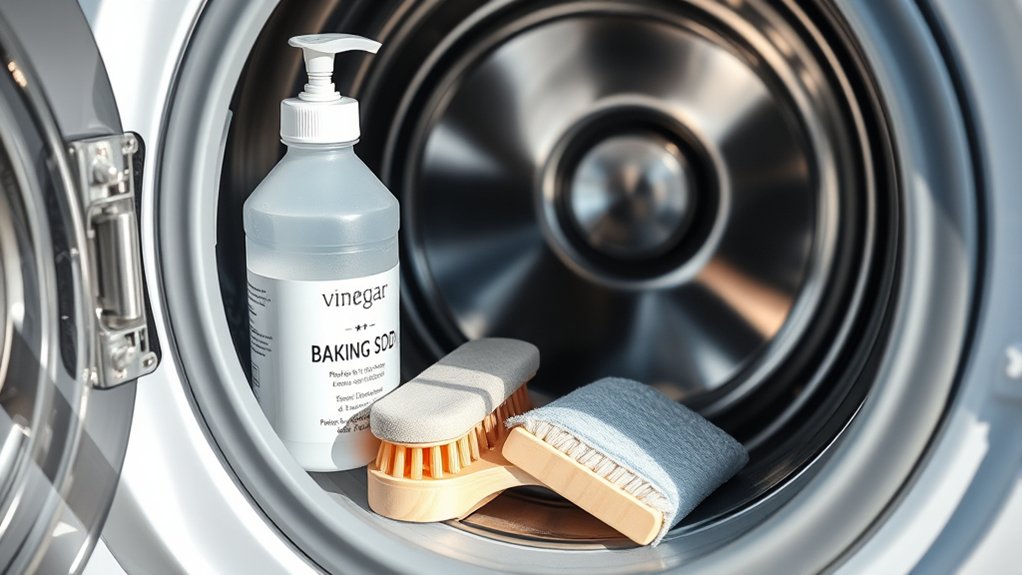
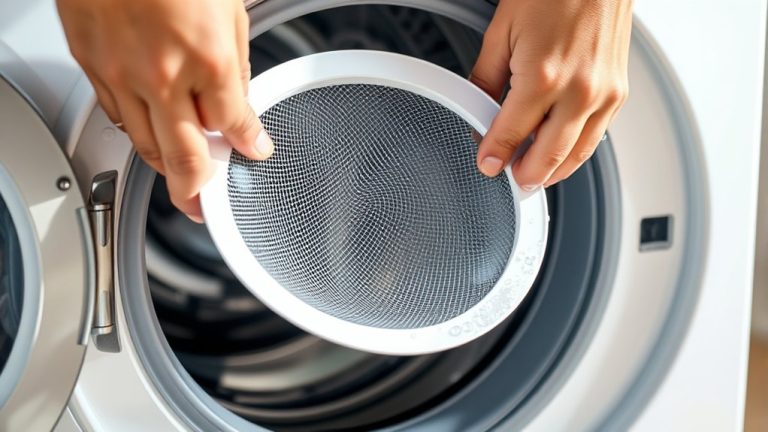
To keep your washing machine running smoothly, start by removing the dispensers and soaking them in hot, soapy water. This helps break down any detergent buildup that might be stuck on.
Next, don’t forget about the rubber seals. Give them a good wipe with a damp cloth or some cleaning wipes. It’s important to clean these areas well because mold can hide in those little crevices.
By taking the time to regularly maintain these parts, you’re not just stopping odors—you’re also helping your washer last longer.
It’s a simple routine that really pays off!
Dispenser Cleaning Tips
When you want to keep your washing machine running smoothly and free from odors, regularly cleaning the dispenser drawer and rubber seals is essential. These areas often trap detergent residue and moisture, which can lead to mildew buildup and unpleasant smells.
Here are some effective dispenser cleaning tips: Remove the dispenser drawer and soak it in warm water with mild detergent to dissolve residue.
Use cleaning wipes or a damp cloth to thoroughly wipe the rubber seals around the door, focusing on crevices where mildew can form.
You can also apply a vinegar and baking soda mixture to tackle stubborn stains and eliminate odors without damaging parts.
For top-load washers, detach and clean removable agitator parts to maintain overall machine hygiene.
Following these steps helps you prevent buildup, maintain efficiency, and extend your washer’s lifespan.
It’s a simple routine that really pays off in the long run.
Rubber Seal Maintenance
Keeping the dispenser clean is just one part of maintaining your washing machine’s hygiene. The rubber seal deserves equal attention to prevent mold and odors. Regularly wipe the rubber seal with cleaning wipes or a damp cloth to remove moisture and prevent mold growth.
After cleaning, dry the seal thoroughly with a microfiber cloth to avoid mildew buildup. Make sure to inspect the rubber seal for tears or wear, as damage can cause leaks and unpleasant smells. Proper maintenance guarantees your washer stays fresh and functions effectively.
| Task | Method | Result |
|---|---|---|
| Wipe seal | Cleaning wipes or cloth | Removes moisture, grime |
| Dry seal | Microfiber cloth | Prevents mold growth |
| Inspect seal | Visual check | Detects tears, leaks |
| Clean dispensers | Soak in hot water | Clears residue, clogs |
| Maintain parts | Follow manual | Guarantees efficient wash |
How to Run the Best Washer Cleaning Cycle Every Time
Start your washer cleaning cycle by selecting a high-quality cleaner like Affresh or OxiClean. Be sure to follow the manufacturer’s instructions for the best results.
To guarantee a thorough cleaning and keep your machine smelling fresh, follow these expert steps:
Always run the cleaning cycle with an empty washer to maximize effectiveness.
For front-loaders, pour 2 cups of distilled white vinegar into the drum and select the hottest, longest wash cycle.
Top-load machines benefit from a Basket Clean cycle, adding one cup of bleach or a recommended cleaner.
After the cycle finishes, wipe down the drum and door with a microfiber cloth to remove residue and enhance freshness.
Incorporating these steps guarantees your washer’s cleaning and rinse cycle work together for peak maintenance every time.
Preventing Odors: Laundry Mistakes to Avoid in Your Washing Machine
Although your washing machine works hard to keep your clothes clean, certain laundry mistakes can cause persistent odors that compromise its performance. To prevent odors, you need to regularly clean key parts like the detergent dispenser and rubber seal. These areas often collect residue buildup that invites musty smells.
Always leave the washing machine door open between uses to promote airflow and stop mold growth. Avoid overloading your washer because that leads to poor rinsing and detergent residue, which only makes odors worse.
Make sure the drain hose is positioned correctly to prevent siphoning back water, a common cause of musty odors.
Try adding washing machine cleaning to your routine by using natural solutions like vinegar and baking soda once a month. These simple steps will help keep your machine fresh and working efficiently.
What to Avoid Putting in Your Washing Machine to Keep It Fresh
When you want to maintain a fresh washing machine, you should avoid putting certain substances into the drum. Some common mistakes can cause damage, odors, or residue buildup. To keep your machine in top shape, steer clear of these.
Avoid using dish soap. It creates excessive suds that harm your washer and leave residue.
Also, don’t mix vinegar and bleach because it produces toxic chlorine gas, which is dangerous.
Steer clear of fabric softener during cleaning cycles. It causes a waxy buildup that traps odors.
And try not to use baking soda and vinegar together in the same cycle since they neutralize each other and reduce cleaning power.
Also, avoid using cleaners not designed for washing machines. Harsh chemicals in those can damage your machine.
Following these tips will keep your machine fresh and functioning well.
Tips for Maintaining Your Washing Machine Between Cleanings
To keep your washing machine running smoothly between deep cleanings, you should leave the washer door open after each use. This helps promote airflow and prevents mold growth. It’s a simple step that makes a big difference.
Make it a habit to clean detergent dispensers regularly. Residue buildup can cause unpleasant odors and affect how well your machine washes. So, keeping those dispensers clean really helps.
Try running a hot water cycle occasionally without any laundry inside. This flushes out lingering dirt and bacteria, keeping things fresh.
If you notice any unusual smells, don’t wait—address them right away. Using natural cleaning products like distilled white vinegar or baking soda works great to maintain freshness without harsh chemicals.
By following these simple steps, along with monthly deep cleanings, you’ll keep your machine efficient and odor-free.
This not only extends its lifespan but also keeps your laundry fresh and clean.
Frequently Asked Questions
Can I Use Dishwasher Detergent to Clean My Washing Machine?
You shouldn’t use dishwasher detergent to clean your washing machine because it’s not very effective for washing machine maintenance.
Plus, it can cause excessive suds or leave behind residue buildup.
Instead, go for alternative cleaning solutions like washing machine cleaners or natural options such as vinegar and baking soda.
These work better and are safer for your machine.
To keep your washer in top shape, make sure to clean it properly every one to three months.
Just follow your machine’s manual for the best frequency and product recommendations.
Does Cleaning the Washing Machine Improve Laundry Scent?
Yes, cleaning your washing machine greatly improves laundry freshness by eliminating odor-causing detergent buildup and mold.
By maintaining a regular cleaning frequency, ideally monthly, you control odors that transfer to your clothes.
Focusing on the drum and seals prevents musty smells, ensuring your laundry smells clean and fresh every time.
Consistent cleaning not only boosts odor control but also helps your machine perform at its best for better wash results.
Can Washing Machine Cleaners Damage My Clothes?
You won’t burn your bridges with clothes if you use the right cleaning agents in your washing machine. Proper washing machine maintenance, using recommended cleaners, keeps your machine efficient without harming fabrics.
Always follow instructions to avoid chemical residues that could damage clothes. Natural options like vinegar and baking soda offer gentle fabric protection.
Is It Safe to Clean Washing Machines With Hard Water?
Yes, it’s safe to clean washing machines with hard water, but you need to be mindful of hard water effects like mineral buildup and detergent buildup.
These can reduce machine longevity if not addressed.
You should increase cleaning frequency, ideally monthly or after 30 cycles, using descaling agents or vinegar to remove deposits.
This practical routine helps maintain efficiency and extends your machine’s life despite hard water challenges.
Can I Clean My Washing Machine During a Laundry Load?
You might think cleaning your washing machine during a laundry load saves time, but it’s best to avoid it. For effective cleaning frequency, wait until the drum’s empty. Natural cleaners like vinegar work wonders this way.
If you have a front loader, try running a hot cycle by itself. Top loaders often do well with bleach or specialized cleaners.
Combining cleaning with laundry risks residue buildup and reduces cleaning efficiency.
Conclusion
Think of your washing machine as a garden. You wouldn’t let weeds take over, right? Regular cleaning is the sunlight and water that keeps it thriving.
By using the right cleaners and running proper cycles, you nurture its performance and prevent foul odors. Avoid harmful habits, and treat your machine with care between washes.
This way, your laundry stays fresh, and your machine runs efficiently for years to come. Keep it clean, keep it strong.