Does Regular Oxiclean Disinfect – Quick Answer
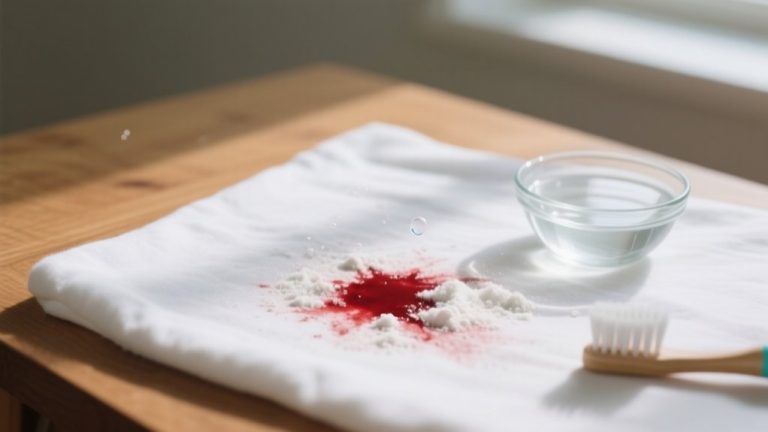
No, regular OxiClean doesn’t disinfect laundry or surfaces. It’s an oxygen-based stain remover: sodium percarbonate releases hydrogen peroxide in water to help lift stains, brighten fabrics, and reduce odors.
Even if your clothes look clean, stain removal doesn’t prove that germs have been killed. For disinfection, choose a product labeled for the specific laundry or surface. Then, follow its directions and required contact time.
Keep reading to learn how OxiClean differs from products designed to kill germs.
Does Regular OxiClean Disinfect?
Does regular OxiClean disinfect? No. Standard OxiClean isn’t a registered disinfectant, so you shouldn’t rely on it to kill bacteria, viruses, or other germs.
It may help with laundry stains and odors, but cleaning or freshening fabric doesn’t mean you’ve disinfected it.
If you need to disinfect clothing or household surfaces, choose a product whose label specifically says it disinfects and lists the germs it kills.
Follow the label’s directions, including the required contact time, dilution, and any fabric or surface restrictions.
Don’t assume that adding more OxiClean or using hotter water will make it a disinfectant. Neither changes its labeled purpose.
Check the package carefully since OxiClean offers different products.
A product labeled as a sanitizer or disinfectant may have specific claims, but regular OxiClean doesn’t.
What Does Regular OxiClean Actually Do?
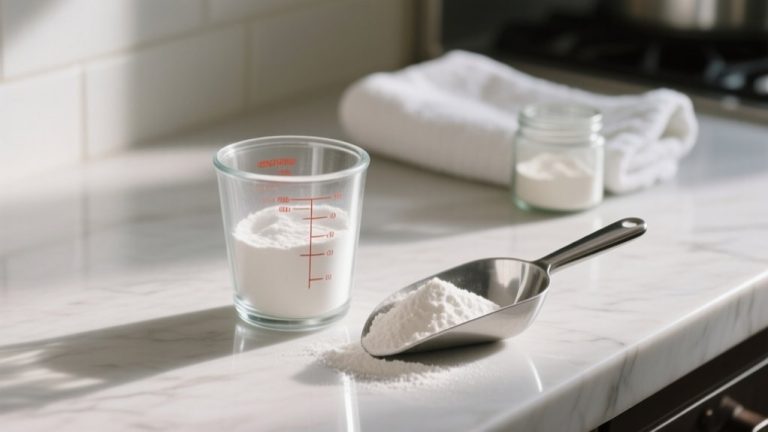
Regular OxiClean is an oxygen-based stain remover that helps lift stains and brighten laundry. Its active ingredient, sodium percarbonate, releases hydrogen peroxide when mixed with water. That oxygen-based action helps loosen many everyday marks from washable fabrics, while the product’s other ingredients support cleaning and freshness.
Regular OxiClean releases hydrogen peroxide in water to help lift everyday stains and brighten washable fabrics.
You can use it as a laundry booster, a presoak, or a targeted treatment, following the label directions for the specific product and fabric.
- For laundry: Add it to a wash to help tackle stains and revive dull-looking colors.
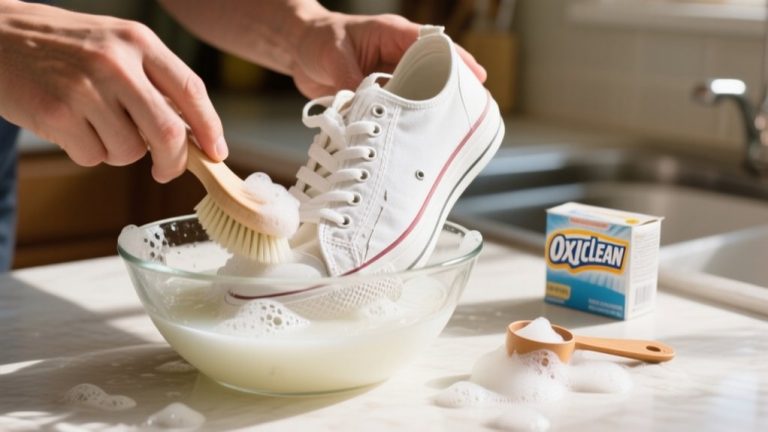
- For soaking: Dissolve it in water, then soak suitable items before washing.
- For surfaces: Some formulas are intended for hard surfaces; check the label before use.
Always test an inconspicuous area, use the recommended amount, and avoid applying it to materials the label excludes.
Why Doesn’t Stain Removal Kill Germs?
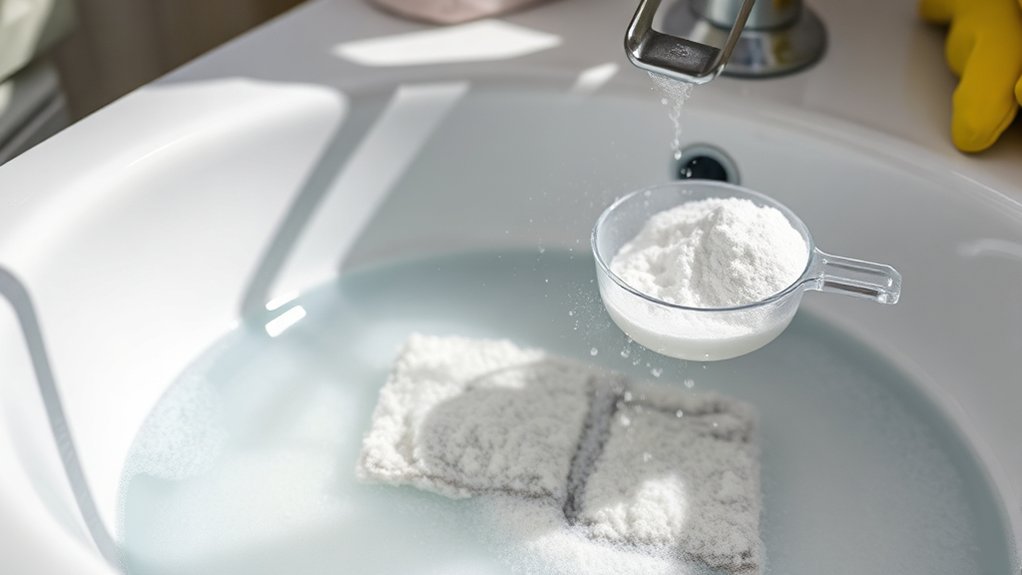
Why doesn’t lifting a stain necessarily kill germs? Because removing visible soil and disinfecting are different jobs. When you wash a stained item, detergent and agitation can loosen and carry away residue, but that doesn’t prove every microorganism has been inactivated. A fabric can look clean while still harboring germs you can’t see.
Disinfection depends on whether a product is designed and tested to kill specific microbes under stated conditions. The result can vary with the germ, the surface, the product’s concentration, and how long it stays in contact.
Stains also vary: some are mostly pigment, while others contain organic material that can shield microbes or interfere with treatment. So, a brighter appearance tells you that the stain has faded or lifted, not that the item is germ-free. Don’t use appearance alone as proof of disinfection.
What Should You Use to Disinfect Laundry or Surfaces?
Choose a disinfectant labeled for the laundry or surface you’re treating. Check its directions before use, since products work only on approved materials and under specified conditions.
For laundry, follow the garment’s care label and the product’s instructions for dosage, water temperature, and cycle.
For hard surfaces, clean visible dirt first, then apply the disinfectant as directed. Keep the surface wet for the full contact time because wiping it dry too soon may reduce effectiveness.
Laundry: Use a product specifically labeled for disinfecting fabrics, and don’t exceed the recommended amount.
Hard surfaces: Confirm the label lists the surface, such as a countertop or bathroom fixture.
Safety: Ventilate the area, wear any recommended protection, and never mix cleaning products.
When no disinfectant is suitable, laundering or cleaning may still remove soil but won’t necessarily disinfect.
Are Any OxiClean Products Disinfectants?
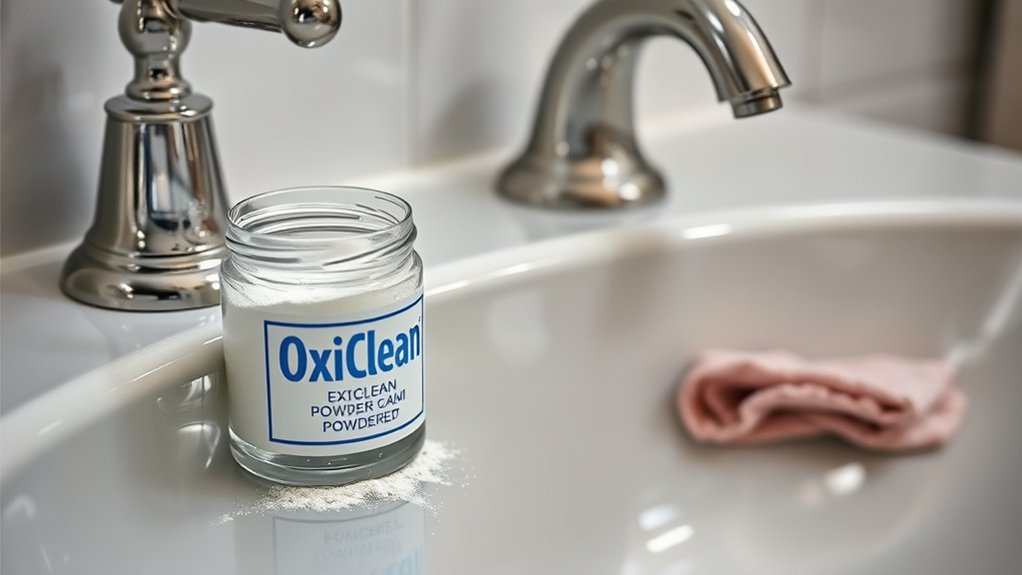
OxiClean products aren’t all disinfectants; a product disinfects only if its label specifically says so and provides directions for disinfecting. Check the package before you rely on it to kill germs. A stain remover or laundry booster may clean without disinfecting.
| Product label | What it may do | What you should check |
|---|---|---|
| Stain remover | Lift stains | Disinfection claim |
| Laundry booster | Boost cleaning | Approved use directions |
| Sanitizer | Reduce certain germs | Labeled organisms |
| Disinfectant | Kill specified germs | Contact time and surfaces |
Don’t assume that oxygen-based ingredients make a product a disinfectant. If the label doesn’t give disinfecting directions, use a registered disinfectant for the intended laundry or surface, following its instructions.
Keep products away from children, and never mix cleaners. When you’re unsure, contact the manufacturer or check the product label online.
Frequently Asked Questions
Can Oxiclean Damage Colored Fabrics?
Yes, OxiClean can damage or fade some colored fabrics, especially if you use too much, soak them too long, or apply the product directly.
Check the garment’s care label and test a hidden area first.
Follow the package directions, use the recommended amount, and avoid soaking delicate materials like wool, silk, or leather.
If the color transfers during your test, don’t use OxiClean on that item. Choose a gentler cleaner instead.
Is Oxiclean Safe to Use Around Pets?
OxiClean can be safe around pets when you use it as directed, but keep your animals away from the powder, solution, and treated surfaces.
Don’t let pets lick wet laundry or drink cleaning water.
Rinse surfaces thoroughly, ventilate the area, and wait until everything is completely dry before allowing your pet back.
Store the product securely, and contact your veterinarian or a poison-control service if your pet swallows any.
How Should Oxiclean Powder Be Stored?
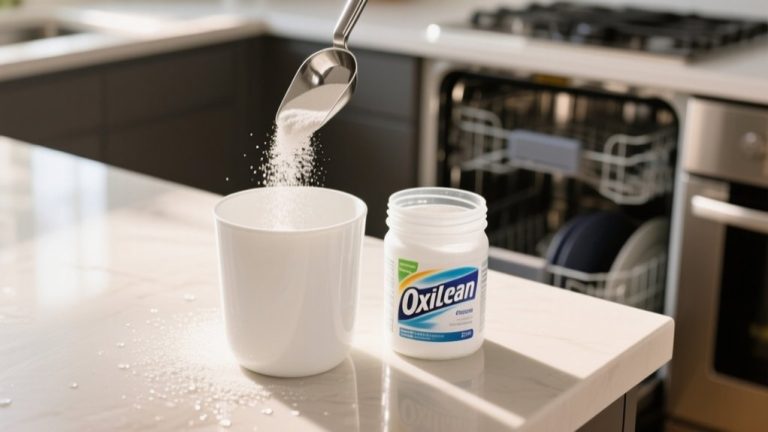
Store OxiClean powder in its original, tightly sealed container in a cool, dry place.
Keep it away from moisture, heat, and direct sunlight. Dampness can cause clumping and reduce effectiveness.
You should place it on a high shelf or in a locked cabinet, out of children’s and pets’ reach.
Don’t transfer it to an unmarked container, and keep the label available so you can follow safety and use directions.
Can Oxiclean Be Used in Cold Water?
Yes, you can use OxiClean in cold water, but it may dissolve and work more slowly than in warm water.
For best results, dissolve the powder completely in warm or hot water first, then add the solution to your cold-water wash if the product label allows.
You can also use a cold-water formula, such as OxiClean Versatile Stain Remover Free, following its directions.
Always check garment care labels and product instructions before use.
Does Oxiclean Expire?
Yes, OxiClean can lose effectiveness over time, though it doesn’t suddenly become unsafe like milk left on the counter.
Think of it as a fading flashlight: its cleaning power dims gradually, especially if moisture gets into the package.
For best results, use powdered OxiClean within a few years and store it tightly sealed in a cool, dry place.
If it’s clumpy or performs poorly, replace it.
Liquid formulas may have shorter shelf lives; check the label.
Conclusion
Regular OxiClean can lift stains and brighten laundry, but it doesn’t disinfect or reliably kill germs. A clean-looking shirt isn’t necessarily a germ-free shirt. Stain removal and disinfection are different jobs.
If you need to sanitize laundry or surfaces, choose a product labeled for that purpose and follow its directions. Some OxiClean products may have specific disinfecting claims, so check the label rather than assuming.
When germs matter, let the label, not the bubbles, guide you.