What Is A Dry Clean – Simple Explanation Guide
Dry cleaning lets you clean delicate clothes using special chemical solvents instead of water. This protects fabrics like silk, wool, or embellished items from shrinking, fading, or damage.
This method gently removes dirt and stains while preserving your garment’s color, shape, and texture better than regular washing. Professionals use machines and pretreatment techniques to get tough stains out safely.
Keep going, and you’ll discover how this process works and why it’s often better than home cleaning methods.
Understanding Dry Cleaning Vs. Regular Washing
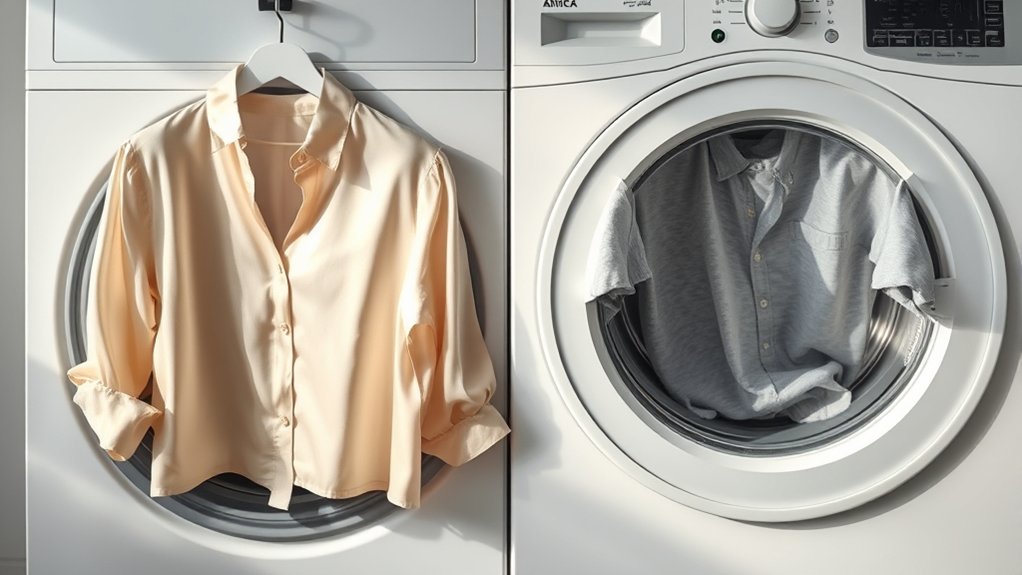
Although regular washing uses water and detergent to clean your clothes, dry cleaning relies on specialized chemical solvents that protect delicate fabrics from damage.
Regular washing uses water and detergent, while dry cleaning employs specialized solvents to safeguard delicate fabrics.
When you use laundry detergents and fabric softeners in a traditional wash, water agitates the fibers, which can cause shrinkage, fading, or distortion, especially in delicate materials.
Dry cleaning avoids these risks by using gentle agitation and precise temperature control, preserving your garment’s shape and texture.
This method is ideal for fabrics like silk, wool, and embellished pieces that water and detergents can harm.
Instead of soaking the fabric, dry cleaning solvents remove dirt effectively without breaking down fibers.
Why Some Clothes Are Labeled Dry Clean Only
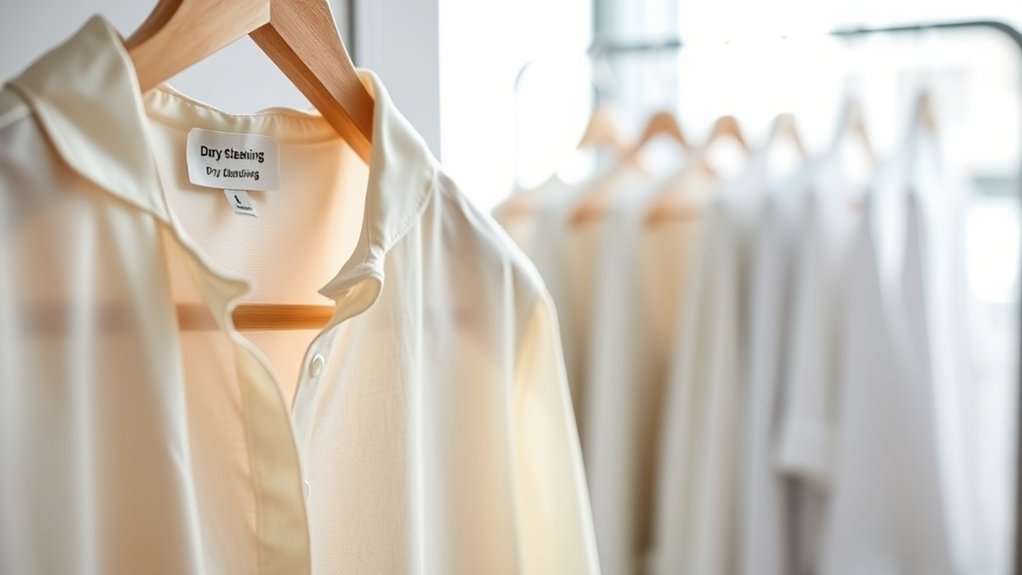
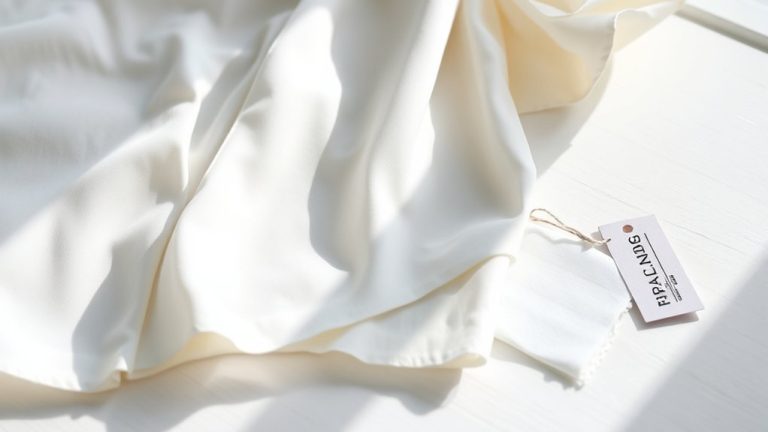
You might’ve seen some clothes with a “Dry Clean Only” label and wondered why. Well, it’s usually because the fabrics don’t get along well with water.
If you wash these items at home, they can lose their shape, fade in color, or even change texture.
That’s where professional dry cleaning comes in. It helps keep the garment’s structure intact by skipping water and harsh scrubbing, so your clothes stay looking their best.
Fabric Sensitivity To Water
Why do some clothes come with a “Dry Clean Only” label? It mainly comes down to fabric sensitivity to water. Fabrics like silk, wool, and cashmere undergo special fabric treatment to maintain their integrity.
These natural fibers can shrink, warp, or lose shape when exposed to water and agitation. Water can also cause dye bleeding or fading, especially in dark or delicate fabrics, leading to color transfer or dullness.
Since water-based cleaning can set stains or damage these textiles irreversibly, dry cleaning uses special solvents that don’t harm the fabric. This method preserves the garment’s appearance and prevents damage caused by water sensitivity.
It helps your clothes last longer and keeps them looking like new. So, next time you see that label, you’ll know it’s all about protecting your favorite pieces!
Preserving Garment Structure
When you handle garments labeled “dry clean only,” you need to take into account their delicate structure, which water and heat can easily damage. These clothes often feature garment layering, including interfacing, padding, and intricate tailoring, all of which rely on precise construction to maintain shape.
Water washing can weaken or distort these layers, causing shrinking, stretching, or loss of stiffness.
Dry cleaning uses eco-friendly solvents that gently clean without compromising the garment’s form. These solvents preserve the crispness and structure that water and agitation might ruin.
By choosing dry cleaning, you protect the original appearance and longevity of your delicate pieces.
This way, you ensure they keep their intended fit and style without damage from traditional washing methods. It’s a smart choice if you want your clothes to last and look just right every time you wear them.
How Dry Cleaning Machines Use Solvents To Clean Clothes
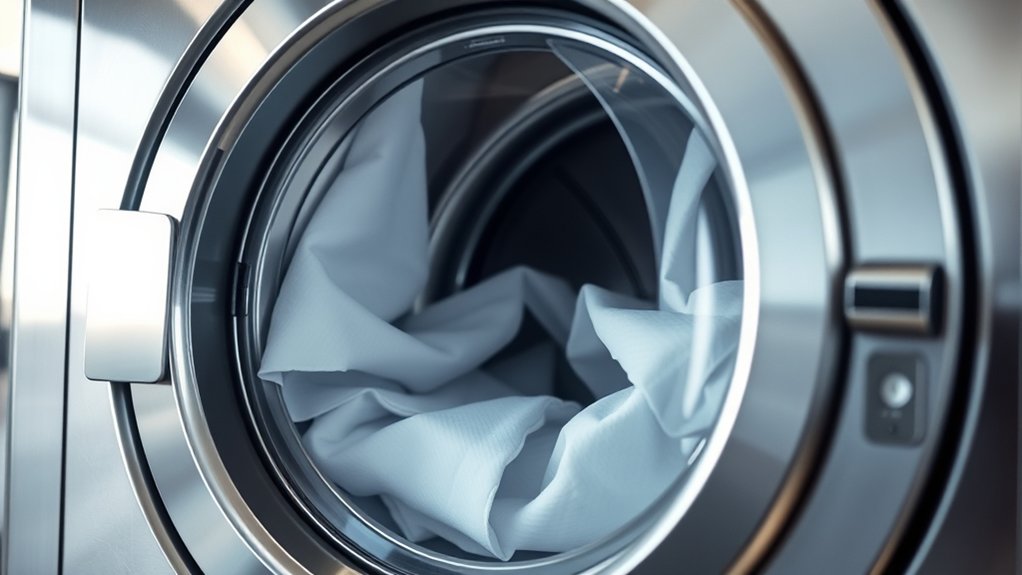
You’ll notice that dry cleaning machines use special solvents to break down oils and dirt without using water. This helps keep your clothes safe from damage.
Inside the rotating drum, the solvent moves through the fabric, making sure everything gets cleaned evenly and effectively.
At the same time, the system is continuously filtering the solvent to remove impurities. This way, the solvent stays fresh and can be reused throughout the entire process.
Solvent-Based Cleaning Process
A dry cleaning machine uses a perforated drum to tumble your clothes in a specialized solvent instead of water. These chemical solvents dissolve oils, dirt, and stains from fabrics without causing water-related damage or shrinking.
The solvent’s ability to target grease and grime enhances cleaning efficiency, making it ideal for delicate materials.
During the cycle, the solvent is heated to about 30°C to boost its cleaning power, then cooled to safely evaporate any residual moisture. This controlled process guarantees your clothes come out fresh and undamaged.
By relying on these chemical solvents rather than water, dry cleaning machines maintain fabric integrity while effectively removing tough stains.
So, it’s a superior alternative to traditional laundry methods that rely on water. You get your clothes thoroughly cleaned without worrying about shrinking or damage.
It’s pretty great for those delicate fabrics you want to keep looking their best.
Solvent Filtration System
Because solvent cleanliness directly affects how well your clothes get cleaned, dry cleaning machines rely on advanced filtration systems to keep solvents pure. The solvent passes through multiple filters, including lint filters, spin disc filters, and activated charcoal cartridges. These filters work to remove dirt, oils, and dyes.
You’ll notice filter cake builds up on lint filters, so regular filter maintenance is essential. Keeping these filters clean helps solvent circulation stay efficient and cleaning results remain effective.
After the initial filtration, final polishing filters eliminate any remaining soils. This step allows the solvent to be recycled without contamination.
This filtration system not only protects your clothes but also reduces solvent emissions and environmental impact. It does this by capturing impurities before solvent recycling.
Pretreatment And Stain Removal In Dry Cleaning
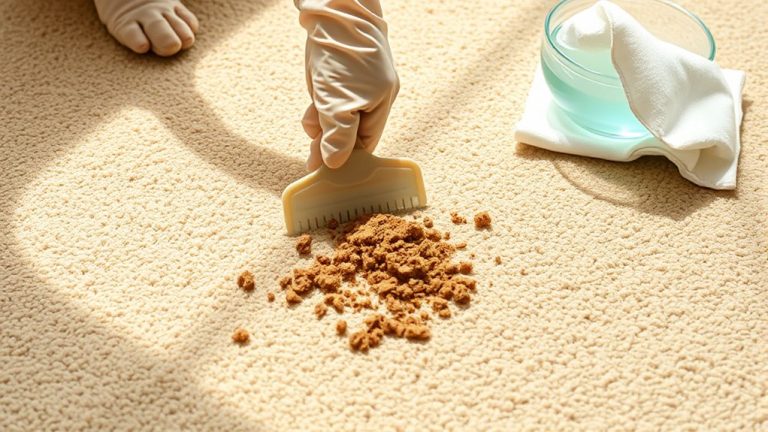
When dealing with stains in dry cleaning, pretreatment plays a crucial role in boosting removal success. The first step is stain identification, which helps you select the right pretreatment techniques. Applying specialized solutions before the main cleaning process improves stain removal and prevents stains from setting.
Here’s what you should know about pretreatment and stain removal:
Oil-based stains respond well to solvent-based pretreatments. Old or deeply set stains need extra care and sometimes multiple treatments. Fabric sensitivity affects which pretreatment method you can safely use.
Proper pretreatment guarantees a cleaner final garment by stopping stains from embedding during cleaning. It’s all about giving your clothes the best chance to come out looking great.
How Dry Cleaning Protects Fabric Shape, Color, And Texture
Although many cleaning methods can damage fabric, dry cleaning safeguards your clothes’ shape, color, and texture by using gentle solvents instead of water. This avoids shrinking and stretching, which helps maintain fabric flexibility.
Garments are carefully shaped on padded forms and pressed, preserving their original texture and structure. Controlled drying removes solvents gently, preventing distortion.
The finishing touches, like steaming and reshaping, ensure your clothes look and feel as fresh as when you bought them. This process supports excellent color preservation, keeping fabrics vibrant longer than home washing.
| Protection Area | Dry Cleaning Benefit |
|---|---|
| Fabric Shape | Prevents shrinking/stretching |
| Color Preservation | Maintains vibrant colors |
| Texture & Flexibility | Retains softness and original feel |
Why Professional Dry Cleaning Works Better Than At-Home Kits
Maintaining your clothes’ shape, color, and texture is easier with professional dry cleaning. It offers advantages that at-home kits just can’t match. Professionals use specialized solvents and machines that deeply clean without harming fabrics, unlike at-home kits. They also target tough stains with pretreatments you can’t replicate yourself.
Professional dry cleaning preserves your clothes better than at-home kits with expert stain treatment and fabric-safe solvents.
Plus, professionals sort garments to apply the best cleaning method for each item. This ensures quality and longevity.
Advanced solvent recovery reduces environmental impact. There’s precise control of temperature and agitation for safer cleaning. Effective stain removal happens through expert pretreatment.
And when you compare costs, professional cleaning often comes out ahead over repeated at-home kit use.
Choosing professional dry cleaning means better results, a lower environmental footprint, and often more cost-effective care for your delicate garments. It’s a smart choice that pays off in the long run.
Preparing Clothes For Dry Cleaning
How should you get your clothes ready before taking them to the dry cleaner? First, always check the care labels for “Dry Clean Only” instructions and fabric composition. This helps guarantee proper fabric care.
Next, remove all accessories like belts, pins, and detachable hoods. You don’t want anything to get damaged during cleaning.
Make sure to empty every pocket, including inside compartments. You wouldn’t want to leave behind objects that could cause stains or damage.
If you notice any stains, be sure to point them out and specify their cause. Also, mention any previous stain treatment you’ve applied.
Finally, separate delicate or high-value items from regular laundry. This way, they get the attention they need.
Following these steps ensures your clothes get the best possible dry cleaning results.
What To Expect From A Professional Dry Cleaning Service
Once you’ve prepared your clothes properly, the dry cleaner takes over with a thorough inspection to identify stains, damage, and any special care instructions. Your garments are tagged, sorted by fabric type and color, and pretreated to tackle stains effectively.
After you prepare your clothes, the dry cleaner inspects, tags, sorts, and pretreats them for stains.
The cleaning process uses gentle, eco-friendly solvents that remove dirt and oils without water. This helps maintain your garment’s longevity.
Afterward, your clothes are pressed, steamed, and reshaped to restore their original look.
Before you pick them up, each item undergoes a final quality check to make sure it’s spotless and intact.
Here’s what you can expect:
- Detailed inspection and tagging of garments
- Sorting and pretreatment for stains
- Use of eco-friendly solvents for cleaning
- Finishing touches like pressing and steaming
Frequently Asked Questions
Are Dry Cleaning Solvents Safe for the Environment?
Dry cleaning solvents can impact the environment, but you can minimize harm by choosing services with safer chemical safety practices. Advances in technology reduce emissions, helping you support better environmental impact through responsible solvent use and disposal.
It’s all about making smarter choices. When dry cleaners adopt greener methods, it makes a big difference. So, next time you need dry cleaning, look for places that prioritize eco-friendly practices.
How Long Does a Typical Dry Cleaning Process Take?
A typical dry cleaning process takes 1 to 3 hours, balancing dry cleaning costs with clothing preservation.
You’ll get thorough cleaning, pretreatment, and finishing that keep your garments looking their best without rushing quality.
Can Dry Cleaning Remove All Types of Stains?
You won’t always win every battle against stains. Dry cleaning excels at stain removal on many fabrics, but cleaning effectiveness varies.
Some stubborn marks need special care or extra treatment beyond dry cleaning’s usual reach. So, sometimes, you might need a little something extra to get the job done right.
Is Dry Cleaning Safe for All Fabric Types?
Dry cleaning isn’t safe for all fabric types; you need to evaluate fabric compatibility and chemical safety. Some materials like leather or synthetics may be damaged, so always check care labels and consult professionals before cleaning.
It’s always better to be cautious. When in doubt, ask an expert or look up specific instructions for your fabric. That way, you can keep your clothes looking great without any surprises.
How Often Should I Dry Clean My Clothes?
You should dry clean your clothes based on their maintenance needs. For example, suits usually need dry cleaning every 3-5 wears. Outerwear can be cleaned seasonally, while delicate items might require more frequent care.
Always follow laundry tips and manufacturer guidelines. This helps you avoid over-cleaning and damaging the fabric. Taking these steps keeps your clothes looking great longer.
Conclusion
Now that you know dry cleaning uses solvents instead of water, you might wonder if it’s just a fancy myth that it’s gentler on clothes. The truth is, dry cleaning really does protect delicate fabrics from shrinking, fading, and losing shape. Regular washing can’t always promise that.
So, when you see that “dry clean only” tag, it’s best to trust the process. It keeps your clothes looking fresh and lasting longer.