Can You Dry Clean A Wedding Dress – Cleaning Guide
You should have your wedding dress professionally dry cleaned within two weeks after your ceremony to prevent stains from setting and avoid fabric damage. Expert cleaners handle delicate fabrics like silk and lace with gentle methods, protecting embellishments and preventing brittleness or shrinkage.
Avoid last-minute or DIY cleaning, which risks irreversible harm to beading and embroidery. Early, precise care maintains your gown’s texture, color, and heirloom value. Understanding these details guarantees your dress stays flawless for years to come.
When to Dry Clean Your Wedding Dress?

Although you might be tempted to wait, you should dry clean your wedding dress within one to two weeks after the ceremony. Acting promptly prevents stains like sweat or champagne from setting, which can cause irreversible fabric discoloration.
Immediate cleaning also protects delicate materials such as silk and lace from damage that prolonged exposure might cause.
Delaying dry cleaning increases the risk of color fading and yellowing, especially if the dress is stored improperly. Scheduling your professional cleaning within this timeframe ensures stains are effectively removed and preserves the fabric’s original vibrancy.
By addressing your dress quickly, you avoid permanent marks and maintain its pristine condition. This helps safeguard against subtle but damaging effects of color fading and fabric discoloration before long-term storage.
Why Last-Minute Dry Cleaning Risks Your Dress
Why risk your wedding dress by leaving dry cleaning until the last minute? When you delay, you increase the chance of handling mistakes caused by rushed or inexperienced staff. These errors can lead to permanent fabric deterioration, including accidental rips, burns, or discoloration from harsh chemicals used in haste.
Last-minute cleaning often means insufficient time for a thorough inspection, allowing stains or fabric issues to go unnoticed. And quick turnarounds leave no buffer for necessary repairs or re-cleaning, which can really jeopardize your gown’s flawless appearance.
To protect your dress’s integrity, schedule dry cleaning well in advance. This way, you ensure careful handling, appropriate treatments, and enough time to address any problems. That’s how you keep your wedding dress looking pristine for your big day.
Dry Cleaning Delicate Fabrics: Silk & Lace
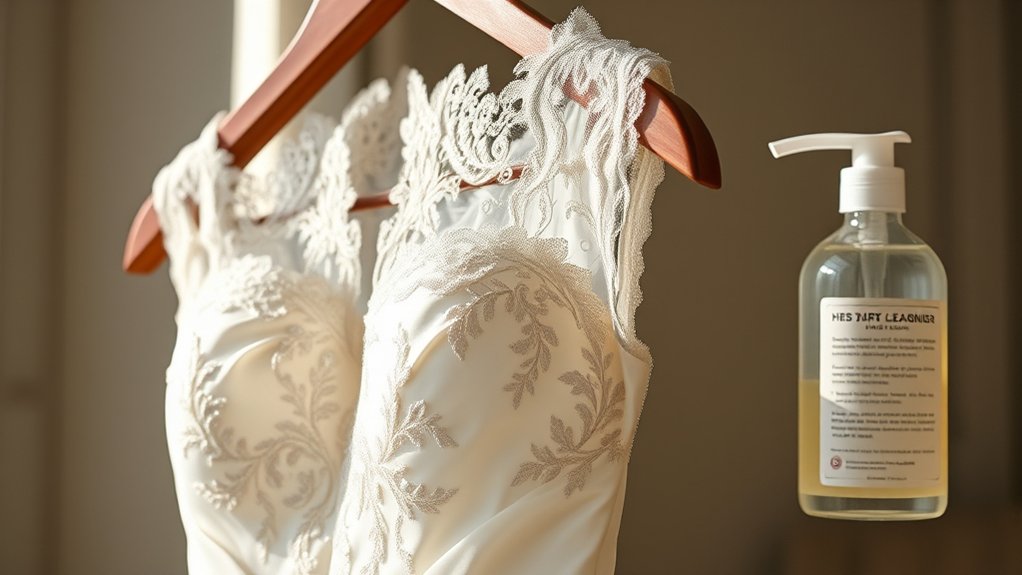
When you choose to dry clean silk and lace wedding dresses, you need to trust specialists who really understand their unique sensitivities. These fabrics require careful attention to keep their texture intact and to effectively remove stains without causing damage.
If handled incorrectly, silk can stiffen or get water spots, and lace might tear or become brittle. So, it’s super important to be cautious with these materials.
Here are some key things to keep in mind:
First, make sure the dry cleaner has experience with delicate fabrics like silk and lace. Then, use gentle cold spot cleaning for lace to protect the fibers.
Also, avoid harsh chemicals and high heat since they can distort the fabric. When drying lace, lay it flat to keep its delicate weave and texture safe.
Risks of DIY and Hotel Wedding Dress Cleaning
If you decide to clean your wedding dress yourself or rely on hotel services, you risk damaging delicate fabrics and intricate details. DIY mishaps often happen because of using improper techniques or harsh products. This can lead to shrinking, staining, or fabric distortion.
Without specialized knowledge, you might accidentally make the condition of silk or lace worse. Hotel mishandling can be just as problematic since many hotels don’t have the specialized equipment or trained staff needed for high-end gowns. Rushed or last-minute treatments often result in inadequate cleaning, which increases the chance of irreversible damage to beading or embroidery.
Outsourced services might also mishandle or even lose your dress because of inexperience with fine materials. To avoid costly errors, it’s really important to choose expert cleaners who know how to preserve wedding dresses properly.
How Pros Protect Beading and Lace on Wedding Dresses
Although delicate beading and lace require extra care, professional cleaners use specialized techniques to preserve these intricate details effectively. When you entrust your wedding dress to experts, they focus on beading preservation and lace reinforcement to maintain its original beauty without causing damage.
Professional cleaners expertly preserve delicate beading and lace to maintain your wedding dress’s original beauty.
Here’s how pros protect your dress’s embellishments:
- Use gentle hand cleaning with low-alkaline solvents to avoid loosening beads or damaging lace fibers.
- Reinforce lace and beading by securing them with mesh or backing fabrics during cleaning.
- Avoid harsh agitation and high heat that could cause beads to detach or lace to tear.
- Support fabric and embellishments carefully to prevent snagging or pulling during handling.
Wedding Dress Pressing and Wrinkle Removal Explained
Since wedding dresses often feature delicate fabrics and intricate embellishments, pressing and wrinkle removal require specialized care to prevent damage. To maintain fabric stability, use a steam iron on a low heat setting with a pressing cloth. Avoid direct contact that can scorch or distort details like beading and lace.
For minor wrinkles, lightly mist the dress and use a hairdryer at the lowest heat setting. This guarantees gentle wrinkle treatment without stressing the fabric. Rushing or improper handling risks permanent damage.
For gowns made of silk, crepe, or heavily embellished materials, professional pressing with specialized equipment and trained staff is essential. This helps preserve the dress’s integrity and appearance.
Taking this expert approach ensures your wedding dress remains flawless and ready for your big day.
Storing and Protecting Your Wedding Dress
How do you guarantee your wedding dress remains pristine long after the ceremony? Proper storage and protection are essential to preserve delicate vintage embellishments and prevent fabric discoloration.
Proper storage and protection are key to preserving your wedding dress’s delicate details and preventing discoloration.
Avoid plastic bags that trap moisture, fostering yellowing and mold. Instead, choose breathable, acid-free storage solutions designed for archival preservation.
Store your gown in an acid-free, breathable bag or box to prevent fabric yellowing. Keep the dress away from direct sunlight, high humidity, and damp areas to avoid discoloration and damage.
Use padded hangers or internal loops to support the dress’s shape, preventing stretching or sagging.
Inspect your dress every six months for mold, mildew, or environmental damage, and address any issues promptly.
Taking these steps guarantees your wedding dress maintains its beauty for years to come. It’s all about giving your dress the care it deserves!
Benefits of Early Wedding Dress Cleaning
You’ll want to schedule your wedding dress cleaning early to avoid any last-minute emergencies that could damage the fabric.
If you act quickly, professionals can tackle stains and any damage before they set in for good.
Plus, getting it cleaned early leaves plenty of time for any repairs that might be needed, so your dress stays beautiful for years to come.
Prevent Last-Minute Emergencies
Although the wedding day may feel far off, cleaning your dress at least a week in advance gives you essential time to inspect it thoroughly. You can address any necessary repairs and request re-cleaning if needed.
Sticking to a well-planned cleaning schedule minimizes the risk of emergency repairs caused by stubborn stains or fabric damage.
Early cleaning ensures that any issues are caught and resolved calmly, rather than hurriedly on the eve of your wedding. Rushing this process can lead to mishandling or incomplete cleaning, which puts your gown’s pristine condition at risk.
Key benefits of early cleaning include:
- Detecting and fixing damage before it worsens
- Avoiding stress from last-minute cleaning emergencies
- Allowing for expert re-cleaning if stains persist
- Ensuring professional care maintains intricate beading and fabric integrity
Preserve Fabric Integrity
Because early cleaning tackles stains before they set, you can preserve your wedding dress’s delicate fabrics more effectively. Acting promptly prevents irreversible stains from embedding, guaranteeing stain prevention is maximized.
By removing sweat, oils, and environmental residues quickly, you maintain fabric durability and reduce oxidation risks that cause yellowing and deterioration over time.
Early intervention also minimizes the need for harsh chemicals or aggressive treatments that could weaken fragile textiles. This careful, timely approach keeps your gown’s original texture, color, and intricate details intact, safeguarding its integrity.
Ultimately, cleaning your dress soon after the event ensures that its fabric durability endures.
That way, your cherished heirloom remains pristine and beautiful for years to come.
Allow Time For Repairs
Promptly cleaning your wedding dress not only preserves its fabric but also gives you plenty of time to handle any needed repairs. Early cleaning helps professionals spot and fix issues like loose beads, small tears, and fabric wear before they get worse.
This way, you can avoid rushed hemming adjustments or last-minute color restoration that might compromise your gown’s integrity. Scheduling cleaning well ahead keeps stress levels down and ensures your dress looks flawless on your big day.
You’ll catch minor damages early, which prevents them from getting worse. Plus, it makes sure hemming adjustments are precise, keeping your dress’s silhouette just right.
It also gives time for a thorough color restoration to keep your gown looking vibrant. And it allows for delicate care of the fabric and any embellishments.
Frequently Asked Questions
Can Dry Cleaning Remove All Types of Stains From a Wedding Dress?
You can’t expect dry cleaning to guarantee complete stain removal from all fabrics. Stain removal really depends on the fabric compatibility and the type of stain you’re dealing with.
Delicate materials and set-in stains might need specialized or repeated treatment to get the best results. So, sometimes one round of dry cleaning just isn’t enough. It’s all about what works best for your specific dress and stain.
How Long Does the Dry Cleaning Process Typically Take?
You’ll typically wait one to three weeks for fabric preservation, as the cleaning timeline involves careful stain removal and pressing.
Scheduling ahead safeguards your gown’s grace, guaranteeing pristine perfection without rushing risks or overlooked details.
Taking your time with the process really pays off in the end. It ensures every step is done right, so your garment looks flawless.
Are There Any Fabrics That Should Never Be Dry Cleaned?
You shouldn’t dry clean untreated silk, crepe, or glued embellishments. Fabric safety really matters.
Don’t fall for dry cleaning myths. Delicate, hand-woven, or antique fabrics often need gentler care to avoid damage or texture changes.
What Should I Do if My Dress Has Sentimental Value or Antique Fabric?
If your dress holds more memories than a lifetime, trust expert preservation techniques and antique fabric care. Always consult specialized cleaners, inspect delicate areas first, and use gentle, pH-neutral solvents to protect those priceless details expertly.
It’s really important to handle these fabrics with extra care. Don’t rush the process—taking your time means preserving the dress’s beauty and history for years to come. When in doubt, ask a professional who knows exactly how to treat vintage or sentimental garments.
Can Alterations Be Done Before or After Dry Cleaning?
You should do major alterations before dry cleaning to guarantee fabric preservation and avoid damage. Minor adjustments can follow cleaning, but consider cost considerations and consult professionals to maintain your dress’s integrity and appearance.
It’s usually best to get the big changes out of the way first. That way, the fabric stays protected throughout the process.
If you only need small tweaks, doing them after dry cleaning can work too. Just keep in mind the cost and always ask a pro for advice to keep your dress looking great.
Conclusion
Just like Cinderella’s delicate glass slipper needed expert care, your wedding dress deserves the same attention. Don’t risk last-minute dry cleaning or DIY attempts that could damage silk, lace, or intricate beading. Trust professionals who know how to protect every detail and press your gown flawlessly.
Start early, clean wisely, and store your dress properly. This way, it stays as timeless and radiant as the day you said “I do.”