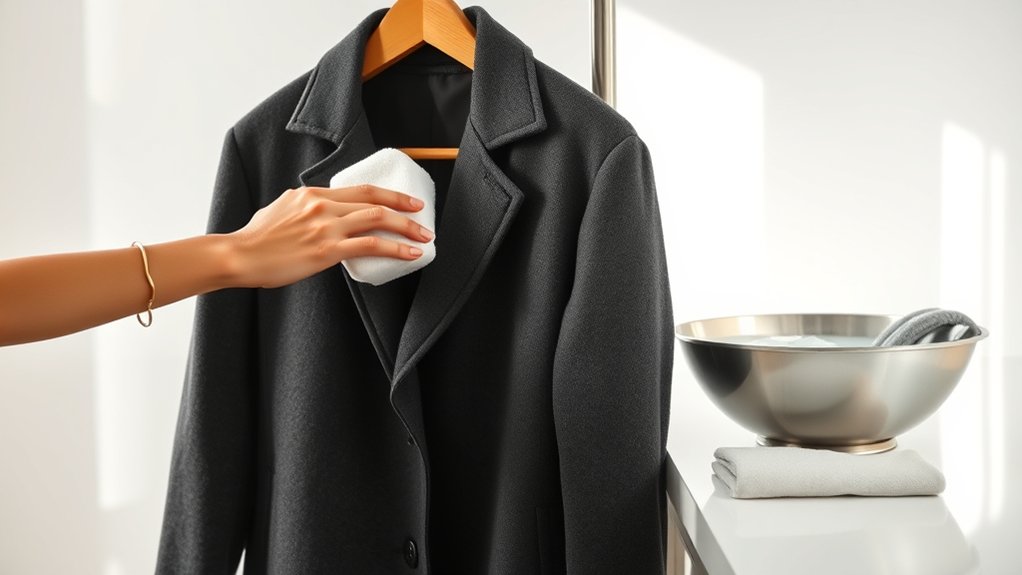
How To Dry Clean A Coat – Step By Step Guide
To dry clean your coat, start by checking its care label for fabric and cleaning instructions. Inspect and gently pre-treat any stains using mild agents, testing first on hidden areas.
Choose a dry cleaner experienced with your coat’s fabric, making sure they use appropriate solvents and handle delicate items carefully. After dry cleaning, properly dry and reshape the coat.
Then store it on padded hangers in breathable bags. Follow these steps to keep your coat looking its best. There’s more to mastering maintenance ahead.
Check Your Coat’s Care Label for Dry Cleaning Instructions
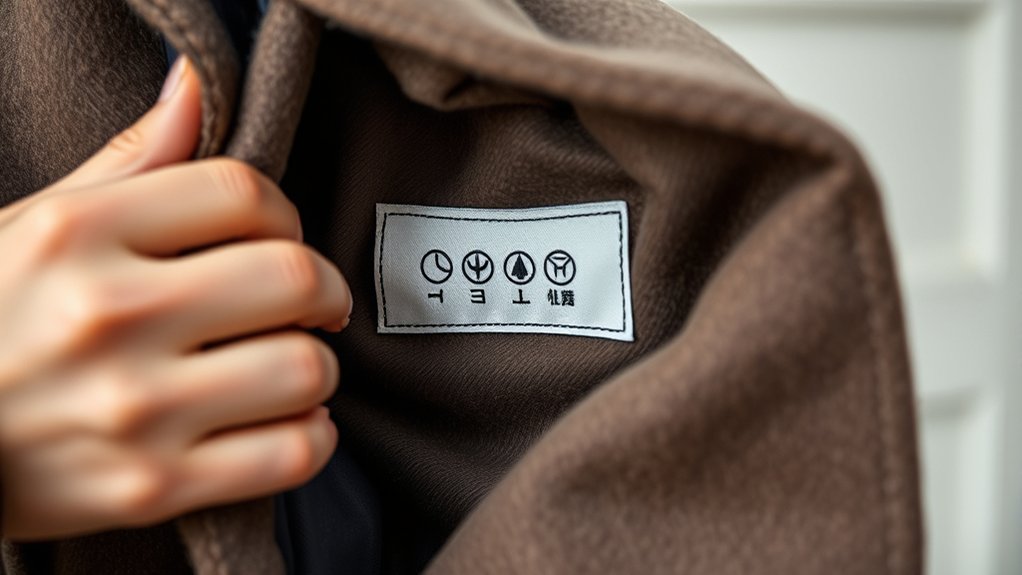
Before you start cleaning your coat, you should locate and carefully examine its care label. This step guarantees fabric compatibility and guides your cleaning approach.
Focus on label interpretation: identify symbols like an open circle, which signals dry clean only, or letters such as A, P, or F that indicate appropriate solvents.
Look for symbols like an open circle or letters A, P, and F to guide safe dry cleaning solvents.
Read any additional notes on temperature limits or special restrictions to avoid damaging delicate fibers.
Confirm whether hand-washing or machine-washing is allowed, as ignoring these instructions risks shrinking or warping the fabric.
Also, check that the label is intact and legible; a worn label may lead to incorrect cleaning methods.
Accurately interpreting your coat’s care label is essential for preserving its quality and extending its lifespan. So, take your time with this step—it really makes a difference!
Inspect and Treat Stains Before Dry Cleaning
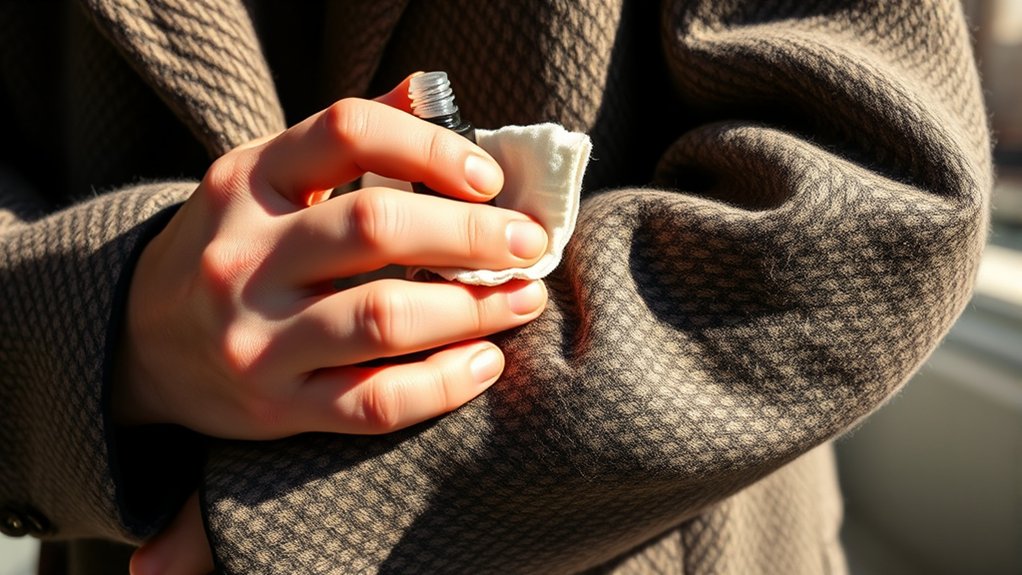
First, take a close look at each stain on your coat. Try to figure out what kind of stain it’s and how old it might be. This will help you pick the best way to treat it.
Next, pre-treat the stains with gentle cleaning agents, like a mix of vinegar and water. Just be sure to steer clear of harsh chemicals that could harm the fabric.
Before you go ahead and treat the whole stain, test your cleaning method on a small, hidden spot first. This way, you can make sure it won’t damage your coat.
Identify Stain Types
When you carefully examine your coat for stains like grease, ink, or food, you can figure out the best way to treat them. Start by identifying the stain type with a clean, white cloth. Gently blot the stain to see what it’s without spreading it.
Also, pay attention to how long the stain has been there and if you’ve tried removing it before. Older stains usually need more specialized care. Knowing exactly what kind of stain you’re dealing with helps you choose the right pre-treatment or tell your dry cleaner what to do.
Always test any treatments on a hidden area first to avoid damaging your coat.
When you’re identifying stains, think about how frustrating it’s to see your favorite coat marked up. But also remember the satisfaction that comes with removing the stain effectively.
Plus, you’ll feel confident knowing you’re protecting your coat’s fabric and color.
Pre-Treat Specific Stains
Although dry cleaning professionals handle most stains, you should inspect and pre-treat specific marks yourself to improve removal results. Start by carefully identifying the stain’s type, age, and severity.
Fresh stains respond best to prompt stain removal, so apply a small amount of stain remover or a water and mild detergent mixture directly to the mark.
For greasy or oily stains, use a bit of dish soap or a specialized solvent. Always dab gently without rubbing to avoid fabric damage.
Before applying any product, perform fabric testing on a hidden area of the coat to make sure it won’t discolor or harm the material.
This methodical approach enhances stain removal efficiency and protects your coat during dry cleaning. Taking these steps really helps get your coat looking its best!
Use Gentle Cleaning Agents
Since dry cleaning alone may not fully remove all stains, you should inspect your coat carefully and pre-treat any marks with gentle, fabric-safe cleaning agents. Choose mild products like diluted vinegar solutions or specialized stain removers that guarantee fabric safety.
Always test the agent on a hidden area first to prevent fading or damage.
When applying, blot stains gently instead of rubbing to avoid fiber deterioration or spreading. Fully treat and let stains dry before the dry cleaning process to improve removal success.
Protect your coat’s texture and color with gentle cleaning. Prevent permanent stains by acting promptly and carefully. Feel confident knowing you’re preserving your coat’s integrity.
Using gentle cleaning agents is essential to maintain fabric safety and achieve the best dry cleaning results.
Choose the Right Dry Cleaner for Your Coat’s Fabric

Because different coat fabrics demand specialized care, you need to choose a dry cleaner experienced with materials like silk, wool, or leather. Start by verifying their expertise with your coat’s specific fabric to guarantee proper fabric care.
Check online reviews and certifications to confirm they uphold high standards for delicate garments.
Ask about the cleaning solvents they use. These must be compatible with your coat’s material to avoid damage or discoloration.
Also, inquire if they offer specialized services such as stain removal, odor elimination, or eco-friendly options tailored to your fabric type.
Finally, make sure they provide clear handling instructions and guarantees, especially for sensitive materials like fur or suede. This helps maintain your coat’s integrity throughout the cleaning process.
What Happens When Your Coat Gets Dry Cleaned?
When you drop off your coat, the first thing that happens is a careful inspection. They sort it based on the fabric and what kind of care it needs.
After that, they use special solvents to clean your coat without any water. These solvents get rid of stains and oils but keep the material in great shape.
Finally, your coat gets some finishing touches and a thorough check to make sure it looks perfect and keeps its shape.
Garment Intake And Sorting
How exactly does your coat begin its journey through dry cleaning? First, during garment intake, your coat is carefully tagged with your details, fabric type, stain identification, and any special instructions. This step guarantees accurate tracking and customized care focused on fabric preservation.
Next, the coats are meticulously sorted by fabric weight, texture, and color. This sorting prevents damage and avoids color transfer, maintaining the coat’s original quality.
Before cleaning, targeted pretreatment is applied to stains based on their type, fabric sensitivity, and age, preparing the garment for ideal results.
You can trust that each coat receives personalized care tailored to fabric and stains. It also gets protection against damage and discoloration. Plus, there’s thorough preparation to ensure effective cleaning.
Solvent-Based Cleaning Process
Your coat undergoes a carefully controlled solvent-based cleaning process designed to remove oils, dirt, and grease without water. During this process, your coat is immersed in a specialized solvent, typically perchloroethylene or hydrocarbon. These solvents effectively dissolve contaminants while preserving fabric integrity.
Gentle agitation lifts dirt from the fibers without altering the coat’s shape or texture. The entire cycle happens within a closed system, which keeps the solvent safe by preventing emissions. This protects both the environment and the workers.
After cleaning, the solvent is extracted through spinning or vacuuming, leaving your coat free of residues. This method focuses on cleaning efficiency, targeting stubborn stains while maintaining delicate fabrics.
Post-Cleaning Finishing Inspection
Once the solvent-based cleaning process removes oils and dirt, the coat moves on to a thorough post-cleaning finishing inspection. This critical step guarantees every stain removal is complete and the fabric texture remains flawless. Skilled inspectors examine the garment meticulously, checking for any lingering marks or damage.
The coat then undergoes pressing, steaming, and shaping to restore its original structure. Quality control verifies buttons, seams, and embellishments are intact and perfectly aligned.
You can expect your coat to emerge smooth, wrinkle-free, and ready to wear. The fabric texture will be restored to its natural feel and completely free of any residual stains or imperfections.
This methodical inspection guarantees that only coats meeting strict standards reach you, ensuring a polished, impeccable finish. So, you can trust your coat will look its absolute best.
Why Dry Cleaning Is Gentle on Your Coat’s Fabrics
Although water is commonly used in cleaning, dry cleaning avoids it entirely, making the process much gentler on your coat’s fabrics. By using specialized solvents instead of water, dry cleaning prevents fabric shrinkage, stretching, and fading. This helps preserve both fabric softness and color vibrancy.
Dry cleaning uses gentle solvents, avoiding water to protect fabric softness, color, and prevent shrinkage or stretching.
The process minimizes agitation, protecting delicate fibers like wool and silk from wear and tear. These gentle solvents effectively dissolve oils, grease, and stubborn stains without disrupting the fabric’s structure.
Furthermore, avoiding water eliminates risks like water spots, fabric distortion, and dye bleeding. Professional dry cleaning’s controlled environment ensures your coat retains its original texture, shape, and finish far longer than traditional washing methods.
This careful approach safeguards your coat’s integrity, extending its lifespan while maintaining its pristine appearance. So, if you want your coat to look great for years, dry cleaning is definitely the way to go.
Drying and Fluffing Your Coat After Cleaning
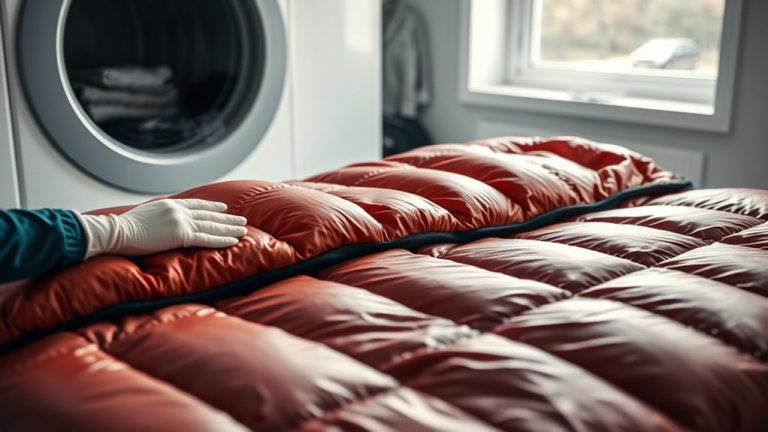
Dry cleaning preserves the coat’s fabric integrity, but proper drying and fluffing afterward guarantee it maintains shape and loft. Use a low heat setting on your dryer with clean tennis or dryer balls to evenly fluff the filling. Gently reshape the coat while it’s still damp to prevent wrinkles and preserve its form.
Avoid hanging heavy coats; instead, lay them flat on a clean surface to dry fully in a well-ventilated area. Incorporate folding techniques carefully once dry to maintain softness and shape. Fabric softening at this stage helps restore the coat’s plush feel without damaging fibers.
Feel the renewed loft and softness with every touch. See your coat regain its original structure and elegance. Enjoy the confidence of a perfectly maintained garment.
How to Store Your Coat to Maintain Shape and Longevity
Where should you store your coat to keep it looking sharp and lasting longer? Choose a cool, dry, and well-ventilated space, away from direct sunlight to prevent the coat fabric from fading. Use sturdy, padded hangers to maintain the coat’s shape and avoid shoulder sagging.
For long-term storage, opt for breathable garment bags to shield your coat from dust and moths. Avoid overcrowding your closet to prevent creases and fabric crushing. Periodically reshape and lightly brush your coat to preserve its appearance.
| Storage Tip | Benefit |
|---|---|
| Padded hanger types | Maintains coat shape |
| Cool, dry space | Prevents fabric deterioration |
| Breathable garment bags | Protects against dust and moths |
| Avoid overcrowding | Prevents creases and crushing |
| Regular brushing | Removes dust, keeps fabric fresh |
Tips to Extend Your Coat’s Life Between Dry Cleanings
Proper storage sets a strong foundation for preserving your coat, but maintaining its condition between cleanings requires consistent care. To extend your coat’s life, focus on fabric conditioning and stain prevention daily.
Consistent care and daily fabric conditioning are key to extending your coat’s life between cleanings.
Regularly brush your coat with a soft garment brush to remove dust and dirt, which reduces fabric wear.
Address stains immediately using mild soap or a damp cloth to prevent permanent damage. Use fabric fresheners or steam your coat to keep it smelling fresh and looking crisp without frequent dry cleaning.
Protect your coat from harsh weather and sunlight to preserve color and fabric integrity.
Store it on a sturdy hanger inside a breathable garment bag to avoid dust buildup. Treat spots promptly to maintain a flawless appearance and extend cleaning intervals.
Frequently Asked Questions
Can I Dry Clean My Coat at Home Without Professional Help?
You can try home cleaning for light freshening using DIY methods, but they won’t remove deep stains or protect delicate fabrics.
For best results, always follow care labels and consider professional dry cleaning instead. It’s usually safer and more effective.
If you’re unsure, it’s better to leave it to the pros to avoid damaging your coat.
How Often Should I Dry Clean My Coat Each Season?
Think of your coat like a car that needs regular tune-ups. Stick to a seasonal schedule and dry clean natural fibers like wool every 4 to 6 weeks.
You’ll want to adjust this based on the coat’s material and how often you wear it. Doing this helps preserve its quality and keeps it looking sharp.
Are There Fabrics That Should Never Be Dry Cleaned?
You shouldn’t dry clean fabrics with low durability, like untreated leather or suede, as solvents harm them. Also, delicate textiles lacking stain resistance, such as silk or embellished garments, can be damaged by dry cleaning chemicals.
It’s best to handle these materials with extra care. Sometimes, spot cleaning or gentle hand washing works better. When in doubt, check the care label or consult a professional.
What Are the Environmental Impacts of Dry Cleaning Chemicals?
You should know dry cleaning chemicals cause chemical pollution and solvent toxicity, contaminating air, water, and soil. This harms ecosystems and human health. So, you must choose eco-friendly methods to minimize these environmental impacts effectively.
It’s really important to think about the chemicals used and how they affect our planet. By opting for greener alternatives, we can help protect the environment and stay healthier in the long run.
Can Dry Cleaning Remove Odors From My Coat?
Yes, dry cleaning uses specialized fabric treatment techniques to achieve effective odor removal. It penetrates fibers, neutralizing odors from smoke or sweat. Often, deodorizing agents are added for persistent smells.
This ensures your coat smells fresh and clean.
Conclusion
Now you know that dry cleaning can remove up to 90% of stains without harsh water or scrubbing, keeping your coat’s fabric intact. By following these steps and choosing the right cleaner, you’ll prolong your coat’s life and maintain its shape.
Remember, proper care between cleanings is just as important. Treat your coat well, and it’ll stay fresh and durable season after season. It’ll be ready for whatever weather comes your way.