Can You Dry Clean A Rug – Cleaning Tips Explained
Yes, you can dry clean a rug, especially if it’s made from natural fibers like jute, wool, or delicate materials that are prone to water damage. Dry cleaning helps preserve the fiber shape, prevents shrinking, and avoids mold growth by limiting moisture exposure.
You can use absorbent powders like baking soda or talcum for odors and spot stains. Just sprinkle it on, let it sit, and then vacuum thoroughly.
For heavily soiled or valuable rugs, professional care is usually the best way to go. Keep exploring to uncover expert techniques and maintenance tips.
When Should You Choose Dry Cleaning for Your Rug?
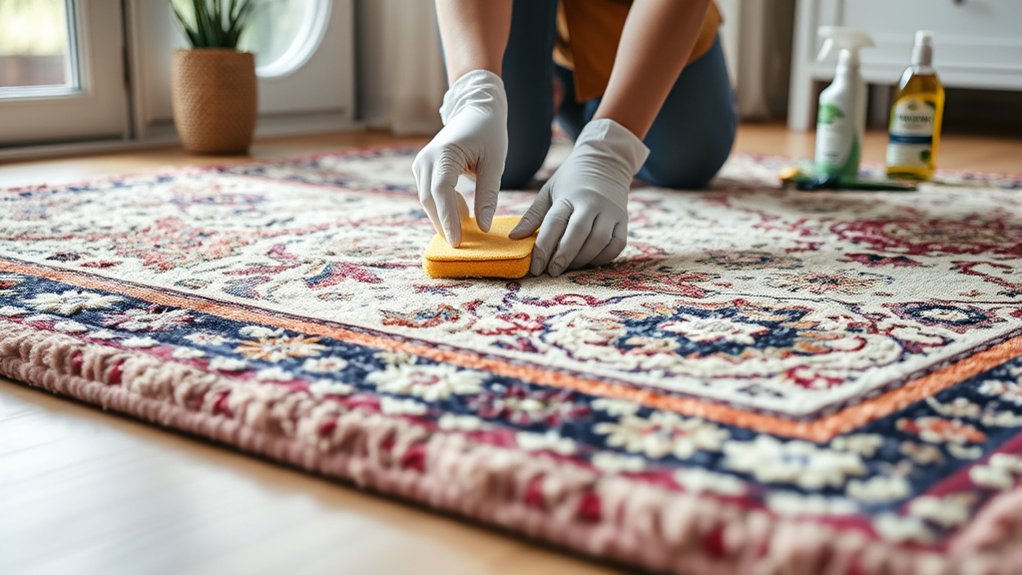
When you own rugs made from natural fibers like jute, sisal, or cotton, you should choose dry cleaning to prevent fiber deformation caused by excess moisture. Water exposure can lead to fraying edges and accelerate color fading, which compromises the rug’s integrity.
Dry cleaning protects natural fiber rugs like jute and sisal from moisture damage and color fading.
Also, if your rug rests on wooden or parquet floors, dry cleaning avoids moisture seepage that might damage these surfaces.
For delicate or handcrafted rugs, dry cleaning preserves intricate craftsmanship without risking warping.
Opt for dry cleaning when you need quick maintenance, as it eliminates lengthy drying times associated with wet methods.
Periodic deep cleaning via dry methods effectively removes ingrained dirt and neutralizes odors while safeguarding fibers.
Benefits of Dry Cleaning Rugs Vs. Wet Cleaning
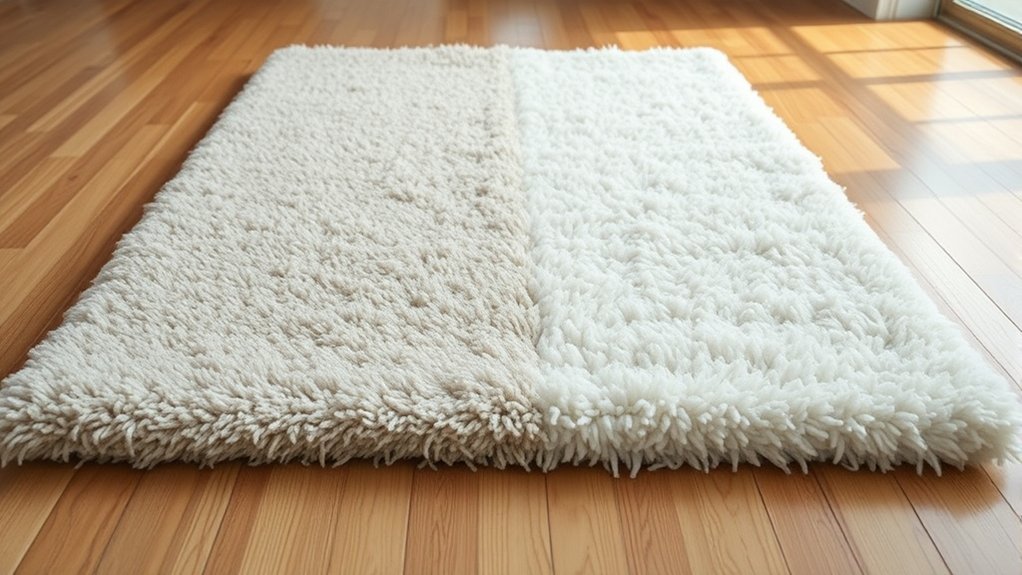
When you go with dry cleaning for your rug, you’re cutting down on moisture exposure, which helps avoid damage and stops mold from growing. This is especially great if your rug is made from delicate materials like wool because it keeps the fibers in their original shape.
On top of that, dry cleaning works fast to get rid of odors without needing long drying times. So, your rug stays fresh and is ready to use again in no time.
Moisture Damage Prevention
Although wet cleaning has been a traditional method for rug maintenance, dry cleaning offers significant advantages in preventing moisture damage. By minimizing moisture exposure, dry cleaning reduces mold and mildew risks and protects your floors from water seepage, especially wooden surfaces.
It also preserves the rug’s natural fibers, avoiding deformation, shrinking, and color fading caused by prolonged dampness. Compared to wet cleaning, dry cleaning’s quick process limits humidity exposure, decreasing friction damage and fiber deterioration.
| Cleaning Method | Moisture Exposure | Risk of Damage |
|---|---|---|
| Wet Cleaning | High | Mold, fiber shrink |
| Dry Cleaning | Low | Minimal moisture harm |
| Outcome | Damp fibers | Preserved fibers |
Choose dry cleaning to extend your rug’s lifespan and maintain its integrity.
Fiber Shape Preservation
Because dry cleaning limits water exposure, it effectively preserves the fiber shape of your rug by preventing swelling, warping, and deformation that often result from wet cleaning. This fiber maintenance is vital, especially for natural fibers like wool, jute, and sisal, which can shrink or lose tension when saturated.
By minimizing moisture, dry cleaning reduces risks of fiber matting or felting, common issues with wet methods. This helps ensure your rug retains its original texture and structure.
Texture preservation through dry cleaning means your rug maintains its intended aesthetic and durability over time.
Ultimately, opting for dry cleaning safeguards the rug’s fiber integrity, extending its lifespan by avoiding water-related structural damage and distortion. This approach guarantees precise fiber shape preservation, which is essential for long-term rug care.
Quick Odor Neutralization
How quickly can you restore freshness to your rug without lingering dampness? Dry cleaning offers rapid odor neutralization by absorbing odor molecules without adding moisture. This prevents mold and mildew growth.
Unlike wet cleaning, dry methods eliminate odors within hours, making your rug immediately fresh. The absorbent powders or foams used trap odors deep in the fibers, ensuring long-lasting control without risking color fading.
Dry cleaning also makes pet hair removal easier by loosening trapped hair without leaving any wet residue. Plus, it avoids the dampness that wet cleaning can cause, which often encourages microbial buildup and unpleasant smells.
Dry Cleaning Tips for Wool, Jute, and Synthetic Rugs
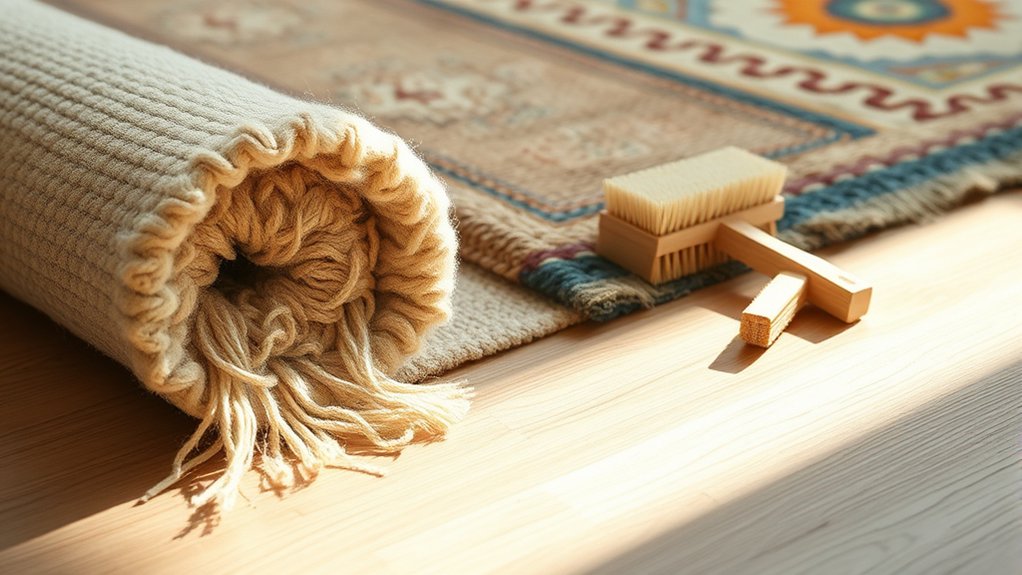
When you need to freshen up wool, jute, or synthetic rugs without using water, dry cleaning offers an effective solution that minimizes the risk of damage.
Before applying any dry cleaning solvents, perform colorfastness testing on a small, inconspicuous area to confirm the rug’s dyes won’t bleed or fade.
Test a hidden spot first to ensure colors stay vibrant and don’t bleed during dry cleaning.
For wool rugs, use professional foam or absorbent powders designed for delicate fibers.
Jute rugs require dry shampoos or absorbent powders since moisture can cause warping.
Synthetic rugs tolerate powder or foam treatments well due to their water-resistant nature.
Always adhere to manufacturer instructions and avoid excessive moisture.
It’s a simple way to keep your rugs looking fresh without risking damage.
Test colorfastness before treatment
Use foam or powder solvents appropriate for each fiber
Avoid moisture to prevent structural damage
Step-by-Step Dry Cleaning With Household Items
Start by sprinkling baking soda evenly across your rug. Focus on the areas that tend to hold odors or look dirty. Then, let it sit for up to three hours so it can absorb all the impurities.
After that, go ahead and apply some salt to any stubborn spots. This helps lift those tougher stains.
Once you’ve done that, make sure to vacuum thoroughly to get rid of all the baking soda and salt residues.
These simple steps use everyday household items to freshen up your rug without needing any moisture or harsh chemicals. It’s an easy and effective way to keep your rug looking clean and smelling fresh!
Baking Soda Application
Although many cleaning methods require water and specialized products, using baking soda offers a simple, effective dry cleaning alternative for your rug. This technique minimizes the risk of color fading and supports pattern preservation. It’s perfect for delicate or vintage rugs.
To apply baking soda correctly, evenly sprinkle it over the rug, focusing on odor-prone or visibly soiled areas. Let it sit for 1 to 3 hours, or overnight if the odors are stronger.
Then, vacuum thoroughly to remove all residue without disturbing the rug’s fibers. For added freshness, you can mix a few drops of essential oil with the baking soda before applying.
Using this method regularly helps maintain cleanliness, absorb odors, and loosen dirt. Plus, it protects your rug’s vibrant colors and intricate patterns without needing any water.
Salt and Vacuuming
Building on the effectiveness of baking soda, salt offers another dry cleaning option that draws out moisture and grime from your rug. Begin with a fine salt application, sprinkling evenly over the rug’s surface.
Then, roll the rug tightly and let it sit for 4-6 hours. This gives the salt time to absorb embedded dirt and odors.
Afterward, unroll and prepare for vacuuming. Use a slow, deliberate vacuum technique to make sure you remove all salt residue along with loosened particles.
This careful vacuuming prevents salt from getting stuck in the fibers, which could cause stiffness.
Combining salt application with a thorough vacuum technique is a straightforward and effective way to keep your rug clean and fresh without using water or harsh chemicals.
It’s an easy method anyone can try at home.
How to Spot Clean Rug Stains Without Wetting
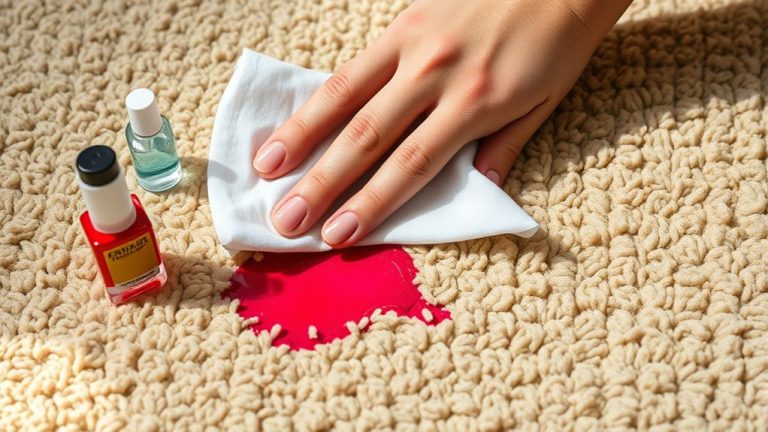
When you need to treat a rug stain without adding moisture, gently blot the area with a clean, white cloth or paper towel to lift the stain without spreading it. This approach minimizes color fading and helps keep the texture intact. Just be sure to avoid rubbing, since that can damage the fibers and push the stain deeper.
To effectively spot clean without wetting, try sprinkling talcum or cornstarch on greasy stains. Let it absorb the oils for a while, then vacuum it up thoroughly.
You can also use a soft brush to gently lift any residue without soaking the rug.
And don’t forget to always test any cleaning method on a hidden area first to make sure it won’t cause discoloration. These techniques make it easy to target stains while keeping your rug’s vibrancy and structure looking great.
Dry Cleaning Machines and Powders Explained
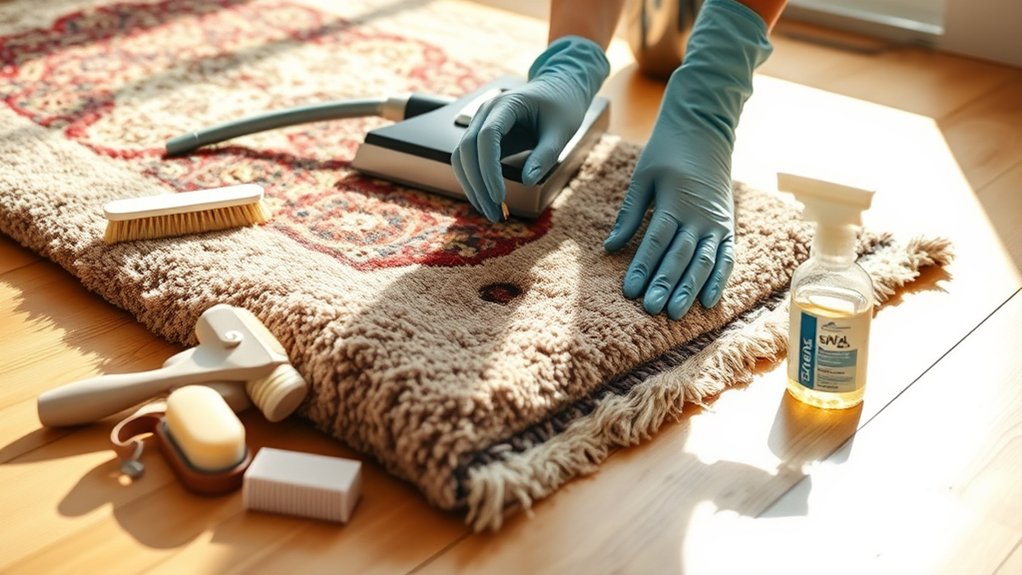
If you want to clean your rug deeply without soaking it, dry cleaning machines offer an efficient solution by using minimal water combined with specialized absorbent powders or foams. These machines employ rotating brushes that evenly distribute powders formulated to lift grease, dirt, and odors from delicate fibers.
After treatment, the powders are vacuumed away, removing embedded debris without residue. Proper machine maintenance guarantees consistent powder application and prolongs equipment life.
| Feature | Benefit | Maintenance Tip |
|---|---|---|
| Powder formulation | Eco-friendly, residue-free | Store in dry, cool place |
| Rotating brushes | Even powder distribution | Clean brushes regularly |
| Minimal water use | Safe for delicate fibers | Check seals to prevent leaks |
This approach keeps your rug clean while preserving its integrity. It’s a smart way to maintain your rugs without risking damage.
How to Keep Your Rugs Fresh and Odor-Free Without Water
Beyond dry cleaning machines and powders, you can keep your rugs fresh and odor-free without using any water. This approach prevents color fading and supports texture preservation, which is essential for maintaining your rug’s aesthetic and feel.
Start by sprinkling baking soda on the rug and leaving it overnight to absorb odors effectively.
You can make it even better by adding essential oils to the baking soda for a pleasant scent.
Afterward, vacuum thoroughly to remove residues and trapped dirt.
Also, try to ventilate your room regularly to help dissipate moisture and odors embedded in the fibers.
For localized odors, spot clean with vinegar or specialized sprays designed for odor neutralization.
- Apply baking soda with essential oils for deep freshness
- Vacuum well to maintain texture and avoid residue buildup
- Ventilate frequently to prevent musty smells and preserve color fidelity
When Should You Hire a Professional for Rug Dry Cleaning?
Although many rugs can be maintained with regular at-home care, you should hire a professional for dry cleaning when stains or soil exceed what DIY methods can handle.
Professionals expertly address heavy soiling, persistent odors like mold, and damage to the rug’s backing. They ensure thorough restoration without risking further harm.
If your rug is delicate, handcrafted, or high-value, professional care prevents color fading and improper cleaning that could degrade the fibers.
Large or immovable rugs also benefit from specialist treatment because they require equipment and techniques beyond home capabilities.
Additionally, fringe care often demands expert attention to avoid tangling or damage. Professional dry cleaners are trained to manage this.
Trusting a specialist safeguards both your rug’s appearance and structural integrity.
Frequently Asked Questions
Can Dry Cleaning Remove Pet Hair From Rugs Effectively?
Yes, dry cleaning effectively aids pet hair removal and pet allergen reduction on rugs. You should pre-vacuum thoroughly, then apply dry cleaning agents. This combined approach guarantees deeper fiber cleaning and sustained allergen control.
It’s a pretty simple process but makes a big difference. Think of it as giving your rug a fresh start by loosening and lifting pet hair that regular vacuuming might miss. Plus, it helps keep allergens at bay, which is great if you or your family are sensitive to pet dander.
Is Dry Cleaning Safe for Rugs With Fringe or Tassels?
Dry cleaning can risk fringe damage, so you should inform your cleaner to guarantee tassel preservation. They’ll apply protective measures or recommend manual cleaning to safeguard delicate fibers and prevent fraying or detachment during the process.
It’s always a good idea to chat with your cleaner about any special parts of your rug. That way, they can take extra care and make sure your tassels stay intact. Taking these steps helps keep your rug looking great without any unexpected damage.
How Often Should Rugs Be Dry Cleaned for Maintenance?
Like clockwork, you should adjust cleaning frequency based on rug thickness. Thin rugs need dry cleaning every 2 months, while thicker ones can last 3 months. This routine keeps your rug fresh and fibers intact.
It really depends on how much traffic your rug gets too. If it’s in a busy area, you might want to clean it a bit more often. But for low-traffic spots, sticking to this schedule works just fine.
Does Dry Cleaning Affect the Color Vibrancy of Rugs?
Dry cleaning generally supports color preservation, but you must consider dye sensitivity. Using professional, color-safe methods guarantees your rug’s vibrancy stays intact.
On the other hand, improper techniques risk fading or bleeding due to harsh chemicals or excessive moisture. So, it’s really important to choose the right cleaning approach for your rug.
Can Dry Cleaning Eliminate Allergens Trapped in Rugs?
Yes, dry cleaning effectively eliminates dust mites and mold spores trapped in your rug by minimizing moisture. This helps prevent microbial growth and neutralizes allergens.
To get the best results, combine dry cleaning with regular vacuuming. That way, you’re tackling allergens from multiple angles and keeping your rug fresh and clean.
Conclusion
You might worry that dry cleaning won’t remove deep dirt, but it actually refreshes and protects your rug’s fibers without causing water damage.
By choosing dry cleaning, you avoid shrinking, color fading, or mold growth, especially on delicate wool or jute rugs.
With the right powders and spot treatments, your rug stays vibrant and odor-free.
When in doubt, trust professionals to preserve your rug’s beauty and longevity with expert dry cleaning methods.