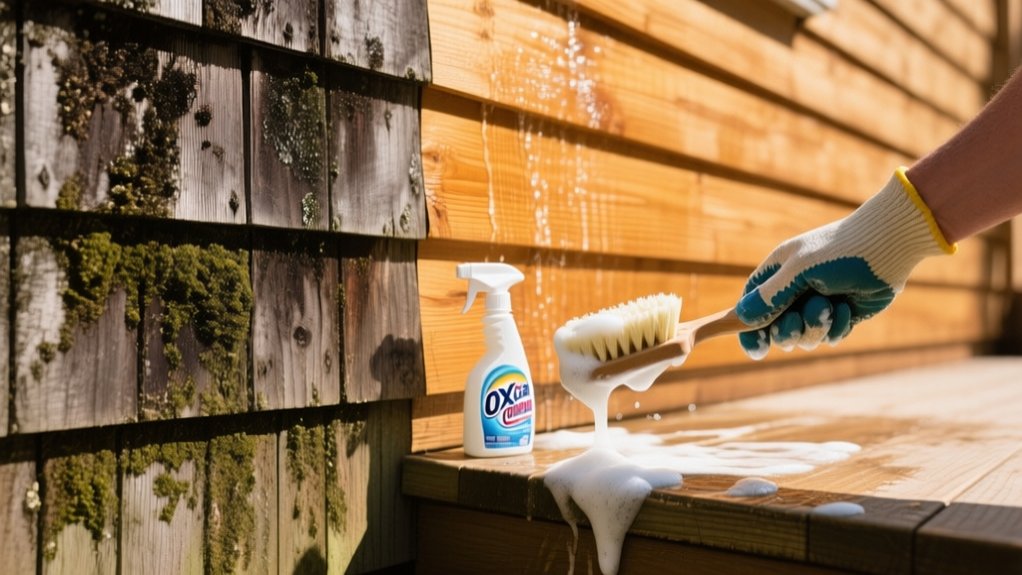
How To Clean Cedar Siding With Oxiclean – Easy Method
To clean cedar siding with OxiClean, inspect the boards for damage and move furniture away from the house. Cover nearby plants, then mix the cleaner with water according to the product label; never add bleach or other cleaners. Test a hidden spot first.
Apply the solution gently with a soft brush, sponge, or low-pressure sprayer, keeping the cedar damp, not soaked. Rinse each section from top to bottom before it dries, then let the siding air-dry completely. A few simple checks can help prevent streaks and mildew.
Prepare Cedar Siding and Protect Nearby Plants
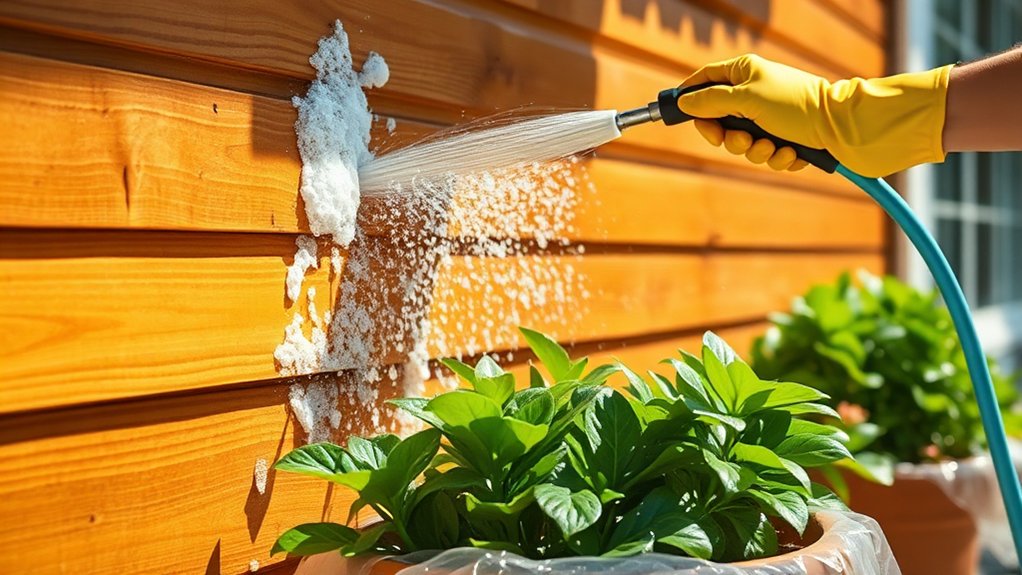
Before cleaning cedar siding, inspect it for loose boards, damaged caulk, and peeling finish, and fix any issues that could let water seep behind the wood.
Inspect cedar siding for loose boards, damaged caulk, or peeling finish, and repair anything that could let water seep behind the wood.
Check for cracked trim, exposed nail heads, and signs of rot, too. Don’t wash damaged areas until you’ve repaired them and the repairs have cured.
Move patio furniture, grills, and decorations away from the house so you can work safely and reach the siding.
Cover nearby plants with breathable fabric or plastic, but remove covers promptly to prevent overheating.
Wet leaves and soil around the work area with clean water to dilute accidental splashes.
Close windows and doors, and protect electrical outlets, light fixtures, and vents from moisture.
Put on gloves and eye protection, and choose a mild-weather day with little wind.
Keep pets and children clear of the work zone.
Mix OxiClean According to the Product Label
Mix OxiClean with water exactly as the product label directs, using the amount specified for the cleaning strength you need. Check the package for the correct product version and read its directions before measuring.
Formulas and recommended concentrations can differ, so don’t rely on a general recipe or assume more powder will work better.
Use a clean bucket and measure both the powder and water carefully. Add the product as directed, then stir until it dissolves.
Wear gloves and avoid breathing dust while handling the powder.
Don’t mix OxiClean with bleach, ammonia, or other cleaners because combining products can create hazardous reactions. Prepare only the amount you expect to need, and follow the label’s guidance for storage and disposal.
If the package doesn’t list cedar siding as a suitable surface, contact the manufacturer before use.
Apply the Cleaner Without Soaking Cedar
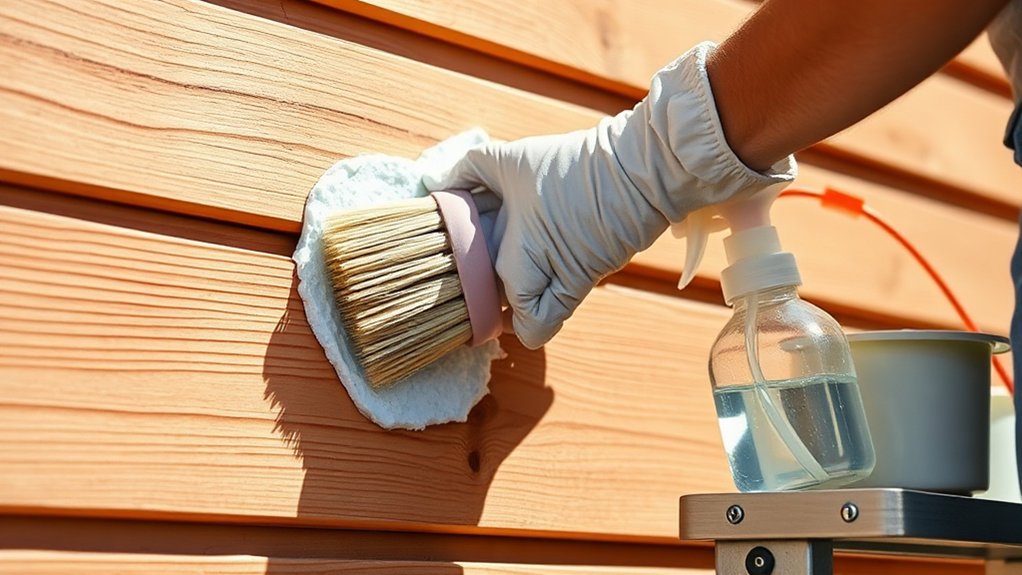
Once the cleaner is ready, test it on a small, inconspicuous area and let the spot dry to check for discoloration. If the cedar’s color stays consistent, work in manageable sections so you can control how much solution reaches the wood.
Apply the cleaner with a soft-bristled brush, sponge, or low-pressure sprayer, following the product label’s directions. Keep the surface lightly damp rather than saturated; cedar can absorb excess moisture, which may lead to swelling or damage.
Use gentle, even strokes, moving with the grain to avoid roughing up the fibers. Don’t scrub aggressively, and don’t let the solution pool in joints, gaps, or around trim.
If a section begins to look overly wet, pause and use less solution as you continue. Keep your application steady and controlled throughout.
Rinse Cedar Siding Thoroughly and Let It Dry
Rinse each section with clean water before the cleaner dries, using a garden hose or low-pressure spray. Work from the top down so dirty water runs over areas you haven’t rinsed yet.
Keep the nozzle moving and use a gentle, even flow. Strong pressure can damage cedar fibers or force water behind the boards.
Pay attention to seams, corners, and the undersides of siding, where cleaner can collect. Rinse until no suds or residue remain, then check the boards from different angles for missed spots.
If you find any, rinse them again rather than scrubbing the damp wood.
Let the siding air-dry completely. Choose a dry period with mild weather and allow plenty of time before painting, sealing, or moving furniture back against the wall.
Don’t trap moisture against the cedar.
Prevent Streaks and Protect Cedar From Mildew
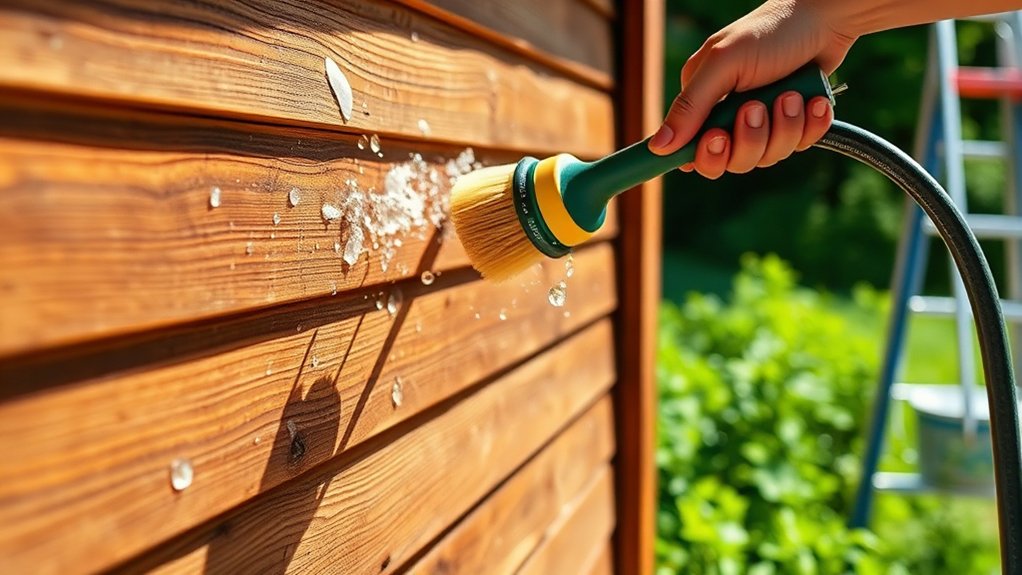
After the cedar dries, check for streaks and lingering damp spots, especially beneath eaves and near seams. If you spot cleaner residue, rinse that area with a gentle stream of water, working from top to bottom.
Don’t use a pressure washer; its force can damage cedar fibers and drive water behind boards. Let the siding dry completely before applying any finish.
To discourage mildew, keep gutters clear and trim plants away from the wall so air and sunlight can reach the wood. Fix leaks promptly and redirect sprinklers that wet the siding.
If mildew returns, use a cedar-safe cleaner according to its label rather than applying more oxygen bleach indiscriminately.
Inspect shaded areas regularly and address growth early. Avoid sealing damp wood since trapped moisture can encourage mildew and damage the siding.
Frequently Asked Questions
Is Oxiclean Safe for All Types of Cedar Siding?
No, OxiClean isn’t automatically safe for every type of cedar siding. You should check the product label and your siding manufacturer’s care instructions before applying it.
Cedar’s finish, age, and condition can affect how it reacts. The cleaner may discolor wood or damage a coating.
Test a diluted solution on a small, hidden spot first, rinse thoroughly, and avoid letting it dry.
If you’re unsure, use a cedar-approved cleaner instead.
Can Oxiclean Remove Paint or Stain From Cedar Siding?
You can’t count on OxiClean to remove paint or stain from cedar siding. It may lighten or unevenly affect some finishes, especially if you use a strong solution, scrub aggressively, or leave it on too long.
As the saying goes, “An ounce of prevention is worth a pound of cure.” Test a hidden spot first, follow the product label, and rinse thoroughly.
For deliberate stripping, choose a finish remover suited to cedar.
How Often Should Cedar Siding Be Cleaned?
Clean your cedar siding every one to two years, or sooner if you notice grime, mildew, pollen, or algae.
Your local climate matters. Damp, shaded, or heavily wooded areas may require annual cleaning, while dry, sunny locations often need less frequent attention.
Inspect the siding each spring and fall, and clean only as needed.
Use a gentle method and avoid high-pressure washing. High pressure can damage cedar fibers and force water behind the boards.
Can I Use Oxiclean on Cedar Shingles?
Yes, you can use OxiClean on cedar shingles, but test a small, hidden area first.
Mix the cleaner according to its label and avoid stronger concentrations that could discolor or damage the wood.
Wet the shingles, apply the solution gently, and scrub with a soft brush along the grain.
Rinse thoroughly with low-pressure water, protecting nearby plants.
Don’t use a pressure washer, and check your shingle manufacturer’s care instructions before cleaning.
What Alternatives Can I Use if Oxiclean Damages My Cedar?
If OxiClean damages your cedar, switch to a cedar-safe wood cleaner or mild soap and water.
Apply it gently with a soft-bristle brush, following the product label, then rinse thoroughly with a low-pressure hose.
Avoid bleach, harsh chemicals, abrasive tools, and pressure washers, as they can worsen discoloration or surface damage.
Always test any cleaner on a hidden spot first.
If the wood remains stained or rough, consult a siding professional before sanding, staining, or sealing it.
Conclusion
Clean cedar siding with OxiClean by preparing the area, following the product label, and applying the solution without soaking the wood. Rinse thoroughly, then let the siding dry completely to help prevent streaks and mildew.
A little care goes a long way: protect nearby plants, work gently, and check the cedar as you go. With these simple steps, you’ll refresh your siding while preserving its natural beauty, one careful rinse at a time.