How To Clean Ge Washing Machine Top Loader – Easy Guide
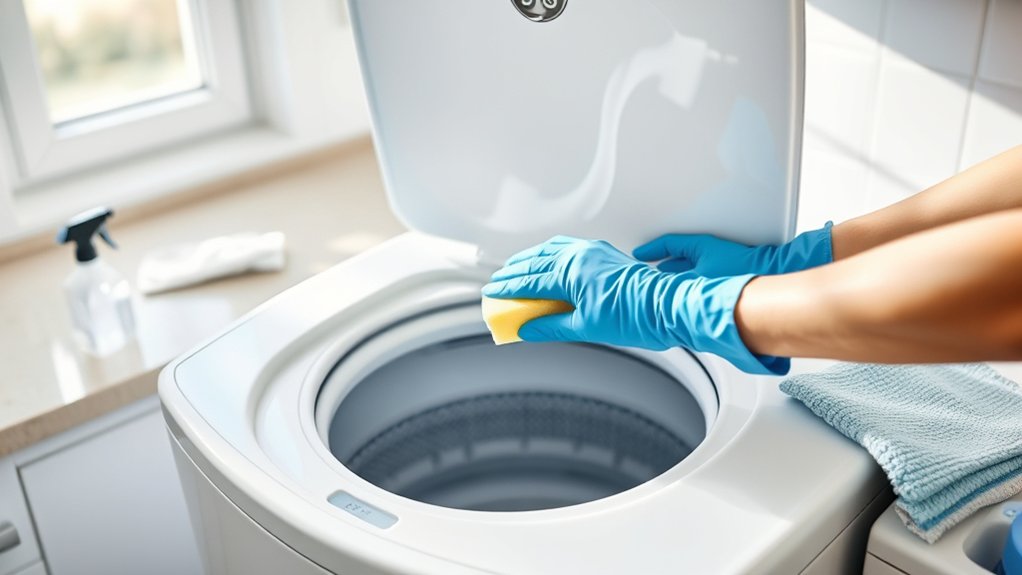
To clean your GE top-load washer, run the monthly Basket Clean cycle with 1 cup of bleach, vinegar, or washer cleaner to remove odors and buildup. Regularly wipe the lid, agitator, and seals with a damp cloth. Keep the lid open after use to promote air circulation.
Also, inspect and properly position the drain hose to prevent odors. If your model doesn’t have the Basket Clean cycle, you can use hot water with vinegar and baking soda for manual cleaning. These steps help keep your washer efficient and fresh.
There are more detailed tips that can help you optimize maintenance if you want to go further. Just a little care goes a long way with your washer!
Why Regular Cleaning Matters for GE Top-Load Washers
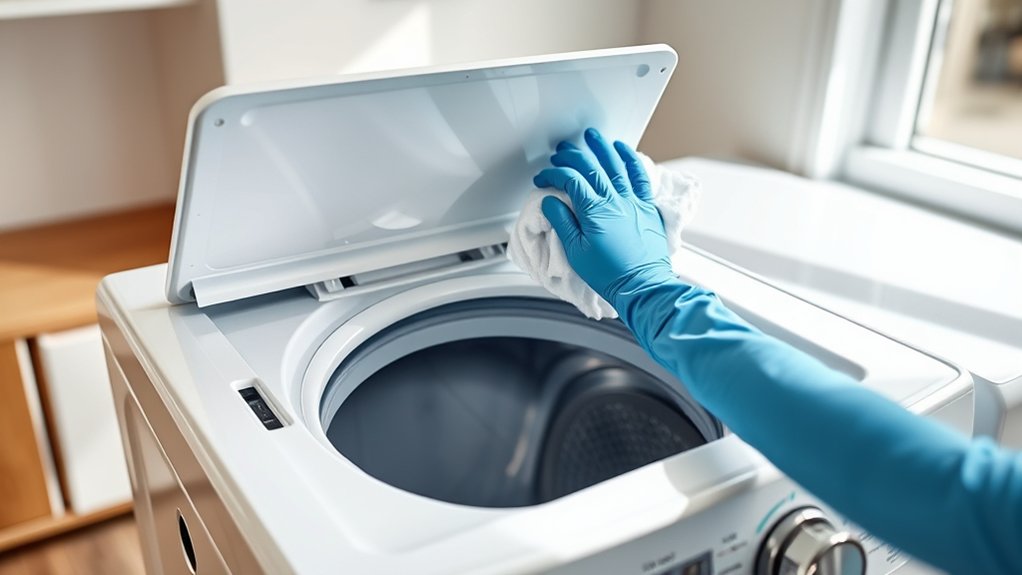
Although your GE top-load washer is designed for durability, regular cleaning is essential to prevent odor, soil, and detergent buildup in the wash basket.
You should perform regular cleaning to maintain ideal performance and avoid residue buildup that compromises wash quality.
Monthly use of the Basket Clean cycle, preferably with bleach, greatly aids in odor prevention by targeting mildew odors and accumulated grime.
Keeping the washer lid open after use promotes air circulation, reducing moisture and preventing musty smells.
Proper drain hose positioning is vital. It stops water from siphoning back into the washer, which can cause foul odors.
Utilizing recommended cleaning products like Affresh or natural solutions such as vinegar and baking soda enhances the removal of persistent residues and odors.
This ensures your GE top-load washer operates efficiently and stays fresh longer.
Step-by-Step Cleaning Guide for Your GE Washer
Anyone maintaining a GE washer should follow a systematic cleaning routine to guarantee peak performance and longevity.
Start by running the Basket Clean cycle monthly with bleach, vinegar, or a washer cleaner to prevent odors and detergent buildup. If your GE washing machine lacks this cycle, unplug it and run a hot water cycle using 2 cups of vinegar followed by ½ cup of baking soda.
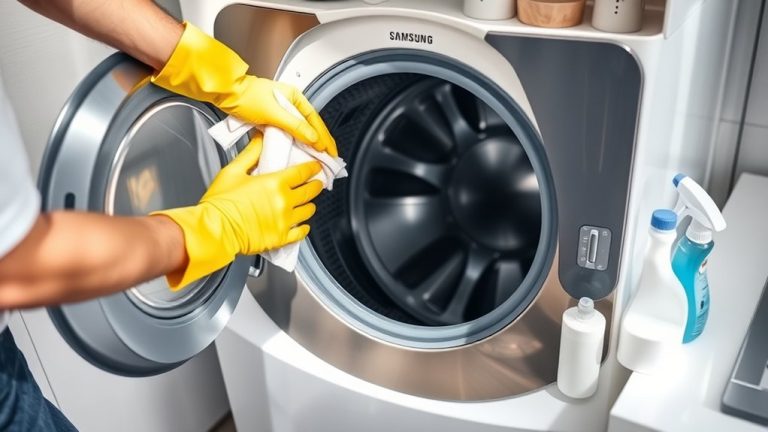
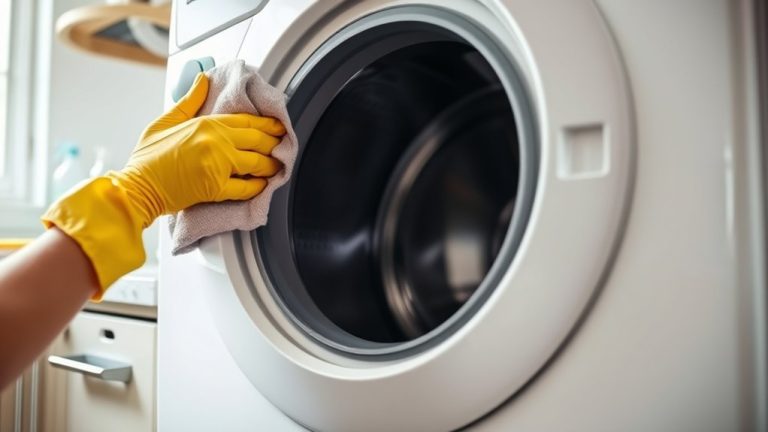
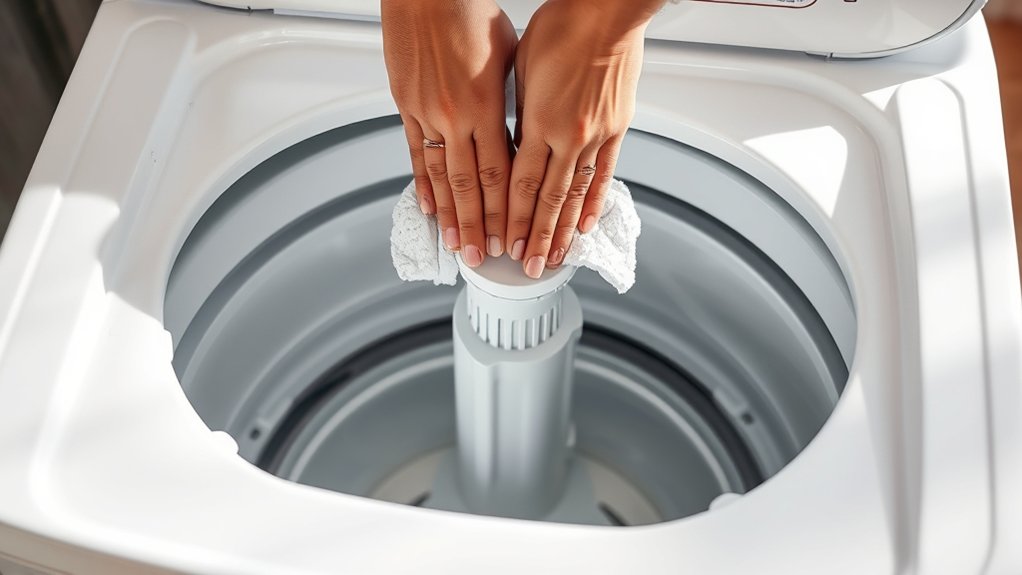
Regularly wipe the lid, agitator, and seals with a damp cloth to remove moisture and inhibit mildew growth. Always leave the lid open after use to enhance air circulation and reduce musty odors.
Finally, inspect the drain hose to confirm it’s correctly positioned. Misplacement can cause siphoning and odor issues.
Run the Basket Clean cycle or use vinegar and baking soda. Wipe down components with a damp cloth to prevent mildew. Check and adjust the drain hose to avoid odors.
Using the Basket Clean Cycle for Easy Cleaning
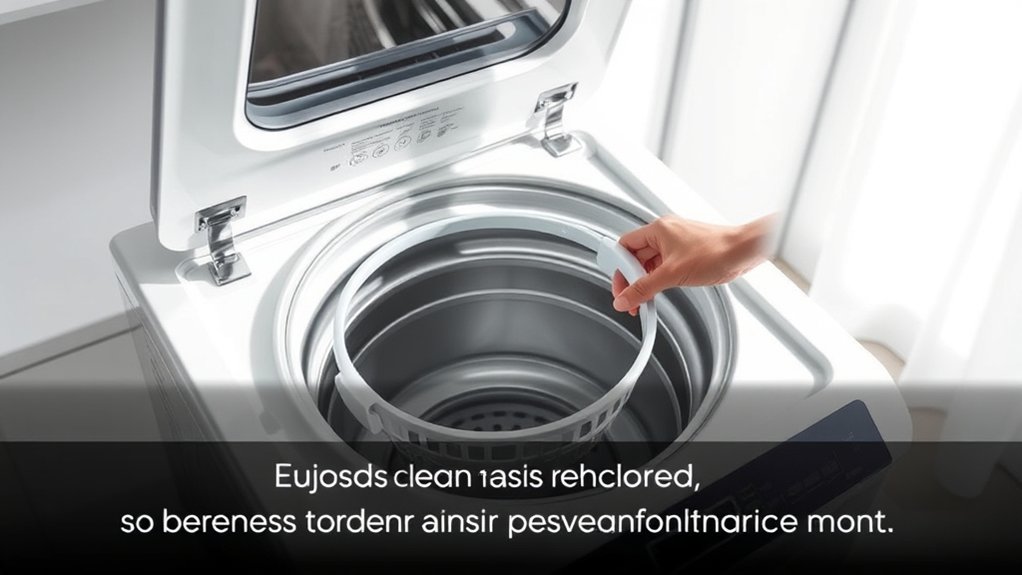
Maintaining your GE washer’s cleanliness becomes straightforward when you use the Basket Clean cycle regularly. On your GE top-load washer, just select the Basket Clean cycle and add 1 cup (250 ml) of bleach, white vinegar, or a specialized washer cleaner.
Run this cycle once a month to prevent odor, detergent build-up, and soil accumulation in the tub.
Try not to interrupt the cycle; if a power outage happens, it will automatically resume. After it finishes, you might notice a bleach smell—that’s actually a good sign. It means the cleaning was effective and your washer is well maintained.
While white vinegar and baking soda are good for cleaning, the Basket Clean cycle gives you a thorough, automated process. This helps optimize your washer’s longevity and reduces the need for manual cleaning.
Using this cycle consistently ensures your washer runs efficiently without unwanted residues.
Manual Cleaning Without Basket Clean Cycle
If your GE top-load washer lacks a Basket Clean cycle, you can still keep it clean by manually running a hot water cycle with 2 cups of white vinegar added directly into the drum. This method effectively removes buildup and odors.
After the vinegar cycle, add 1/2 cup of baking soda to the drum and run another hot water cycle to neutralize odors and enhance cleaning.
For ongoing maintenance, follow these tips:
Unplug the machine before manual cleaning to guarantee safety.
Wipe the lid, agitator, and seals regularly to prevent residue and mildew.
Also, leave the lid open after cycles to promote air circulation and inhibit mildew growth.
This practical approach helps maintain your GE Appliances top-loading washing machine without relying on a clean cycle. It’s a simple way to keep things fresh and running smoothly.
Cleaning Dispensers, Lid, and Surfaces on Your GE Washer
You should regularly remove and rinse the detergent dispensers under warm water to clear away any residue and prevent clogs.
It’s a simple step that goes a long way in keeping your washer running smoothly.
Next, wipe down the lid and the exterior surfaces with a damp cloth to get rid of dust and grime.
This helps your machine look clean and fresh.
And don’t forget the rubber seals around the lid!
Giving those a good clean will stop mildew odors from developing, keeping everything smelling nice.
Cleaning Detergent Dispensers
Regularly remove the detergent dispensers and soak them in warm, soapy water to dissolve residue buildup and maintain proper dispensing. This helps prevent clogging and ensures your washer cleans efficiently during each cycle.
After soaking, grab a soft brush to reach those tricky little crevices. This step not only helps get rid of stubborn grime but also keeps mold from building up.
Don’t forget to wipe down the exterior surfaces with a damp cloth to clean up any spills or sticky residue. Make sure every part is completely dry before putting everything back together to avoid moisture buildup and odors.
Try to include this in your monthly maintenance routine to keep your GE washer running smoothly.
- Soak detergent dispensers in warm soapy water to eliminate buildup
- Use a soft brush for crevice cleaning and mold prevention
- Wipe all exterior surfaces with a damp cloth and dry thoroughly
Wiping Lid And Surfaces
Maintain your GE washer’s efficiency by wiping down the lid, agitator, and exterior surfaces with a damp cloth to remove dust and detergent residue. Use a vinegar-water solution or mild detergent for effective cleaning, making sure all surfaces stay free of buildup.
Pay special attention to the seals and hinges around the lid, since these areas can trap moisture and dirt, which increases the risk of mildew. For stubborn spots, gently scrub with a soft sponge to avoid damaging the surfaces.
After cleaning, keep the lid open to promote air circulation. This helps prevent moisture buildup and supports mildew prevention.
Consistent wiping of the lid and surfaces will extend your washer’s lifespan and keep it running smoothly by ensuring everything stays clean and dry.
Preventing Mildew Odors
Keeping the lid and surfaces clean helps reduce moisture buildup, but tackling mildew odors means paying special attention to the detergent dispenser and seals. Regular cleaning of the detergent dispenser stops residue from building up, which can cause those unpleasant smells.
Try using a mixture of white vinegar and baking soda to clean the seals and crevices. This helps get rid of trapped moisture that mildew loves to hang onto.
Also, leaving the washer lid open after cycles lets air circulate, which keeps musty odors at bay.
To prevent mildew odors effectively:
- Wipe down the lid and surrounding surfaces with a damp cloth after each use
- Run a monthly hot water cycle with a washer cleaner for a deep clean
- Clean detergent dispensers and seals thoroughly using white vinegar and baking soda
Sticking to these simple steps keeps moisture under control, so your GE washer stays fresh and odor-free.
Removing Odors From Your GE Top-Load Washer
If you want to prevent unpleasant odors in your GE top-load washer, run a Basket Clean cycle monthly using 1 cup of bleach, vinegar, or a specialized washer cleaner.
If your machine doesn’t have this cycle, just fill it with hot water, add 2 cups vinegar or ¾ cup water softener, then run the longest wash cycle. Proper drain hose placement is super important too; clip it to the standpipe side to stop siphoning and musty smells.
Always leave the lid open after using your washer to boost air circulation and help keep mildew at bay. For stubborn odors, try products like Glisten Washer Magic, and be sure to follow the instructions closely.
| Task | Recommended Product | Key Benefit |
|---|---|---|
| Basket Clean cycle | Bleach, Vinegar, Washer cleaner | Removes odors effectively |
| Alternative cycle | Hot water + Vinegar or softener | Deep cleaning |
| Maintenance | Drain hose placement | Prevents stagnant water |
How to Ventilate Your Washer to Prevent Mildew
How can you prevent mildew from developing in your washer? Properly ventilate your washing machine to reduce moisture and improve air circulation. This helps prevent odors and mildew growth.
Always leave the lid open after use to allow airflow and moisture to dissipate. Regularly clean the rubber seals and lid edges because these areas trap moisture and encourage mildew.
To ventilate effectively, place your washing machine in a well-ventilated area. This enhances airflow and reduces humidity.
Make sure any vents on your washer are unobstructed and working correctly. If humidity stays high, use a dehumidifier in your laundry space. This will help prevent mildew buildup even more.
Following these steps minimizes moisture buildup, keeps your washing machine fresh, and stops mildew from taking hold.
Checking and Adjusting Your Washer’s Drain Hose to Stop Odors
Make sure your washer’s drain hose isn’t pushed too far into the stand pipe. If it is, water might siphon back and cause those unpleasant odors.
It’s a good idea to secure the hose to the side of the stand pipe and keep it elevated at the recommended height. This helps keep the drainage working properly.
Also, don’t forget to check the hose regularly for any kinks, blockages, or damage. These can slow down the flow and lead to bad smells.
Proper Hose Positioning
While maintaining your GE washing machine, proper positioning of the drain hose plays an essential role in preventing odors. Incorrect hose placement can cause siphoning and backflow, which leads to musty smells from trapped water.
Keep the drain hose clipped to the stand pipe, but avoid pushing it too far inside. Make sure the height of the stand pipe is at least 30 inches from the floor. This helps promote effective water flow and prevents backflow.
Regularly inspect and clean the drain hose to remove buildup that could cause odors. Check for kinks or blockages in the drain hose that might restrict water flow. Maintain proper hose positioning to avoid siphoning and backflow.
Clean the drain hose periodically to eliminate buildup and prevent musty smells. It’s a simple step that can make a big difference in keeping your washer smelling fresh!
Preventing Siphoning Odors
One essential step to prevent siphoning odors is verifying your washer’s drain hose is correctly positioned and maintained. Avoid pushing the drain hose too far into the drain standpipe, as this causes siphoning, leading to unpleasant odors and musty smells.
Secure the hose by clipping it to the side of the standpipe to maintain proper positioning. Regularly inspect the drain hose for kinks or blockages that can impede drainage and contribute to odor buildup.
Keep the hose elevated and verify it doesn’t rest in stagnant water, which fosters bacterial growth and foul smells.
Finally, check all hose connections for leaks or wear to prevent odors from escaping into your washing machine area. Proper maintenance of the drain hose is vital to stopping siphoning and eliminating odors effectively.
It’s a simple step that makes a big difference in keeping your laundry area fresh.
Scheduling Routine Maintenance for Best Performance
Routine maintenance is essential to keep your GE washing machine running efficiently and odor-free. Scheduling regular cleanings guarantees the finest performance and prevents issues like mildew growth and unpleasant odors.
Clean the washer tub monthly to prevent detergent build-up and odor. If your model has a Basket Clean cycle, use it with bleach, vinegar, or a washer cleaner for maximum freshness. After each use, leave the lid open to promote air circulation.
Here are some key routine maintenance tips for you:
Schedule monthly clean washer tub cycles using the Basket Clean cycle or bleach/vinegar.
Leave the lid open post-wash to reduce mildew growth through proper air circulation.
Regularly inspect and clean the drain hose to prevent siphoning odors.
Also, perform additional cleaning when needed.
Best Cleaning Products for GE Top-Load Washers
Maintaining your GE top-load washer’s cleanliness depends heavily on the right cleaning products. Use Affresh tablets by placing one directly in the tub, then run a hot water cycle for thorough cleaning.
If you prefer a natural approach, pour 2 cups of white vinegar into the drum and start a hot water cycle to eliminate odors. After that, follow with ½ cup of baking soda to neutralize any lingering smells.
Regularly apply Glisten Washer Magic or Tide Washing Machine Cleaner as per the manufacturer’s instructions. This helps prevent build-up and keeps your washer running at its best.
Always check your GE top-load washer’s manual before using any cleaning product to make sure it’s safe for your machine.
Using these cleaning products properly during a hot water cycle will keep your washer efficient and odor-free.
Frequently Asked Questions
Can I Use Bleach Instead of Vinegar to Clean My GE Washer?
Yes, you can use bleach instead of vinegar as a bleach alternative for odor removal and mold prevention in your GE washer.
Use 1 cup of bleach during the Basket Clean cycle for effective detergent buildup removal.
Make sure to clean your washer every 1-3 months, depending on how often you use it, to keep it in good shape.
Always follow safety precautions when handling bleach, and never mix bleach with vinegar.
Using the right cleaning tools helps ensure a thorough washing machine care routine and can prolong your washer’s lifespan.
Taking these steps will keep your GE washer running smoothly and smelling fresh!
How Often Should I Replace the Washing Machine Hoses?
You should follow a hose replacement frequency of every 5 to 7 years to maximize your washing machine lifespan.
Use hose maintenance tips like DIY hose inspection to spot signs of wear such as bulges, cracks, or leaks.
Preventing leaks starts with choosing quality hoses, like stainless steel braided ones, and following installation best practices.
Consult a hose compatibility guide to avoid common hose issues and guarantee proper fit for safe, durable connections.
Is It Safe to Clean the Washing Machine Filter Myself?
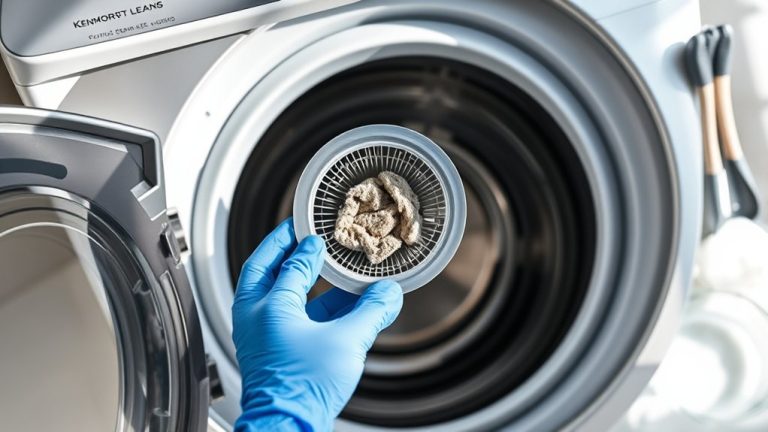
Think of your washing machine filter as a castle gatekeeper, keeping debris out to protect the kingdom. Yes, it’s safe to clean the filter yourself using proper filter maintenance tips and safe cleaning methods.
You’ll need simple cleaning tools, check for common filter issues, and follow DIY filter cleaning steps regularly.
Make sure to watch for filter replacement signs and maintain a consistent filter cleaning frequency. Doing this boosts performance, prevents leaks, and extends your machine’s life.
It’s easier than you might think, and your washing machine will thank you for the care!
What Should I Do if My GE Washer Won’T Drain Properly?
If your GE washer won’t drain properly, start by checking for common causes like filter clogs, pump problems, or a kinked drain hose.
Take a look at the water level and watch for any error codes that might point to drainage issues.
Next, follow some simple troubleshooting steps.
Clean the filter and make sure the drain hose is positioned correctly. Running a cleaning cycle can also help keep things in good shape.
If the problem keeps happening, it’s a good idea to get professional help.
That way, you can avoid causing any damage to your machine.
Can I Use Homemade Cleaning Solutions for My GE Washer?
Absolutely, you can supercharge your GE washer’s cleanliness with homemade cleaner recipes!
Vinegar helps break down detergent residues, and baking soda is great for neutralizing odors. You can even add essential oils for a fresh scent.
Plus, citric acid or hydrogen peroxide work wonders on tough stains.
Make sure to clean your machine monthly to prevent buildup. These simple washing tips boost odor removal and keep your washer running smoothly and smelling fresh.
Conclusion
By keeping your GE top-load washer clean, you’ll extend its life and keep your clothes fresh. No steam-powered contraptions needed. Just regular maintenance will do the trick.
Make sure to use the basket clean cycle and tackle some manual cleaning too. This helps prevent odors and mildew from building up inside your machine.
Don’t forget to check the drain hose and ventilate properly. With the right products and routine care, your washer will perform efficiently. This saves you time and hassle in the long run.
Stay proactive and wash smart!