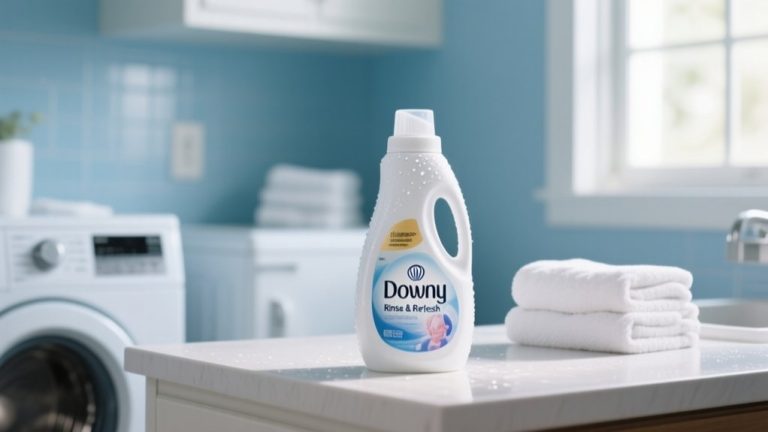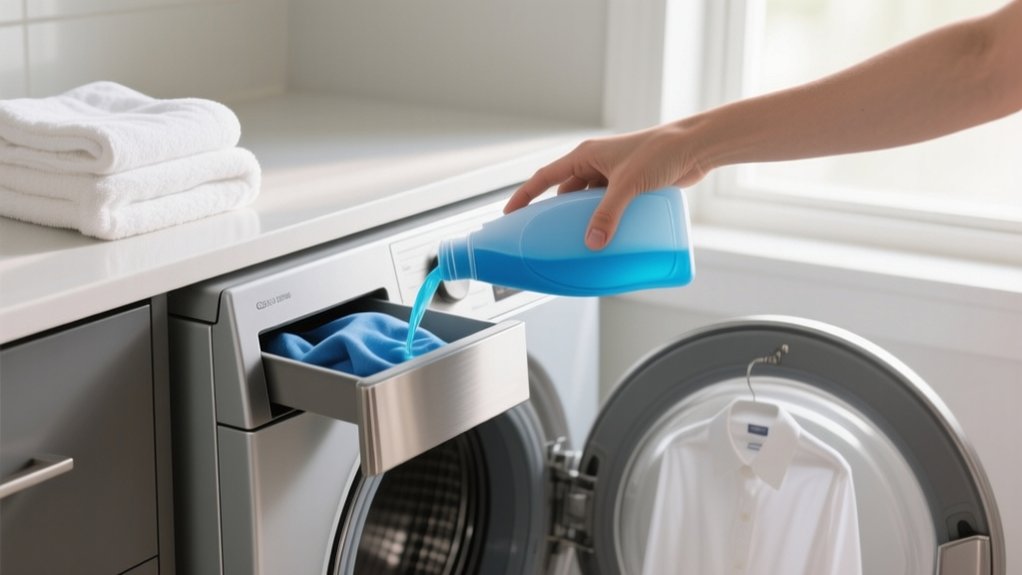
How To Use Downy Fabric Conditioner – Quick Guide
Many people struggle to keep laundry soft, fresh, and easy to manage, especially when they’re not sure how to use fabric conditioner the right way. If you’ve ever wondered whether you’re adding too much, too little, or putting it in the wrong spot, you’re not alone.
To use Downy fabric conditioner, pour 1/4 to 1/2 cup (or one capful) into your washer’s fabric softener drawer to guarantee it dispenses during the rinse cycle. Adjust the amount based on load size, less for small loads, more for larger ones.
Avoid mixing it with detergent and check your washer manual for the softener compartment. Downy softens fabrics, fights odors, and keeps clothes fresh. Keep going to discover tips on fabric types and troubleshooting common issues.
How To Use Downy Fabric Conditioner In Your Washer
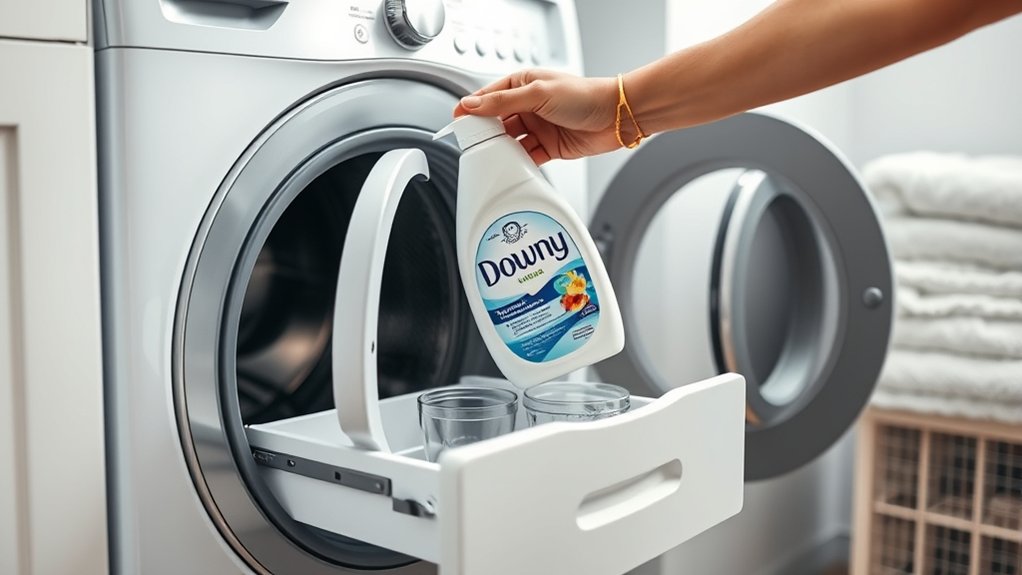
To use Downy fabric conditioner in your washer, start by pouring the recommended 1/4 to 1/2 cup into the fabric softener drawer before you begin your wash cycle.
Make certain you use the designated compartment for fabric softener, especially with front-loading washers, to avoid clogging or residue buildup.
Don’t mix Downy with your detergent; it works best when added separately in the softener drawer.
Adjust the amount based on your load size, but usually, 1/4 to 1/2 cup is enough for a regular load.
Following these steps guarantees that Downy is properly dispensed during the rinse cycle, allowing it to soften fabrics and add fragrance effectively.
Always refer to your washer’s manual to locate the correct compartment for fabric conditioner.
When And Why To Use Downy During The Rinse Cycle
During the rinse cycle, the fabric softener distributes after detergent has finished cleaning.
Timing For Optimal Release
Although it might seem simple, adding Downy Fabric Conditioner at just the right time makes a big difference in your laundry’s softness and freshness.
To get the best results, add Downy to the fabric softener drawer of your washing machine so it releases during the rinse cycle.
This timing lets Downy penetrate fabrics effectively and rinse away detergent residue.
Here’s why timing matters:
- The rinse cycle allows Downy’s low pH formula to soften fabrics gently without damage.
- Proper release enhances freshness and softness, improving your clothes’ feel.
- Following dosage and timing instructions guarantees peak performance and fabric care.
Odor Removal Benefits
A key advantage of adding Downy during the rinse cycle is its powerful odor removal ability. Downy Rinse & Refresh targets stubborn odors trapped in fabrics, boosting your laundry’s freshness.
When you pour it into the fabric softener drawer, it releases exactly during the rinse cycle, where it works best to eliminate smells.
Unlike vinegar, which loses effectiveness quickly in water, Downy keeps its concentrated low pH, guaranteeing thorough odor removal without harming your clothes. It works well on various fabric types, making it a reliable choice no matter what you’re washing.
Using Downy this way guarantees smelly residues rinse away completely, leaving your garments cleaner and fresher. This method is ideal whenever you want to tackle persistent odors effectively during laundry.
Fabric Softening Effects
Beyond odor removal, adding Downy during the rinse cycle considerably improves fabric softness. You should pour Downy into your washing machine’s fabric softener drawer to guarantee it releases at the right time. This step makes your clothes feel more comfortable and gentle against your skin.
Here’s why you want to use Downy during the rinse cycle:
- It enhances softness, giving your fabrics a smooth, cozy feel.
- It reduces static cling, making garments easier to handle and preventing annoying shocks.
- It leaves a long-lasting fresh scent, keeping your laundry smelling clean for days.
Downy works well on various fabric types, so you can safely soften everything from everyday wear to delicate materials.
How Much Downy Fabric Conditioner To Use Per Load
One capful of Downy Fabric Conditioner delivers the ideal balance of softness and scent for a standard load. For smaller loads, use half a capful to keep the scent subtle while still softening your clothes.
If you’re washing larger or heavily soiled loads, increase the amount to 1.5 capfuls for better performance without risking fabric damage.
Always pour Downy into your machine’s fabric softener drawer to guarantee it dispenses evenly during the rinse cycle.
You can adjust the amount based on your fabric type and scent preference, but keep it within these recommended limits for the best results.
This way, you’ll enjoy soft, fresh-smelling clothes every time without overusing the product.
How Downy Removes Odors And Softens Clothes
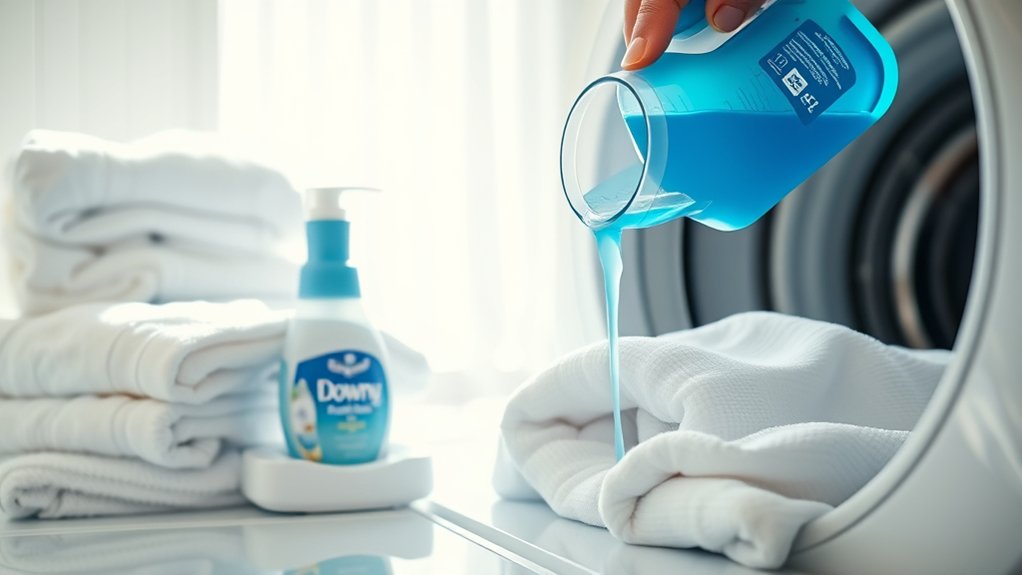
That’s why the next section explains how to use it in your laundry routine.
Odor Removal Mechanism
A key factor in how Downy removes odors and softens clothes lies in its specially formulated rinse cycle action. When you add Downy to the fabric softener drawer, it releases its odor-fighting agents at the perfect time, guaranteeing trapped residues are effectively lifted from your fabrics.
Its concentrated low pH formula cleans gently without harming various fabric types, maintaining freshness throughout the rinse cycle.
Here’s how Downy works to remove odors:
- Targets and breaks down odor-causing residues during rinse.
- Maintains cleaning power longer than alternatives like vinegar.
- Conditions fabrics simultaneously for a pleasant feel post-wash.
This precise action guarantees your laundry smells fresh and stays soft without compromising fabric integrity.
Fabric Softening Benefits
Fabric softening goes beyond just making clothes feel pleasant—it plays an essential role in maintaining freshness and comfort. When you use Downy, it effectively removes persistent odors trapped in fabrics, revitalizing your laundry with lasting freshness.
Its concentrated low pH formula cleans gently without damaging different fabric types, ensuring your clothes stay in great condition.
Downy not only softens fibers but also enhances their scent, leaving your laundry smelling clean after every wash. Unlike vinegar, which loses its odor-neutralizing power quickly, Downy provides long-lasting odor control while keeping fabrics soft and comfortable to wear.
This dual action helps you enjoy fresher, softer clothes that feel great against your skin every day.
Application During Rinse
Add Downy Rinse & Refresh to your washing machine’s fabric softener drawer to target odors and soften clothes during the rinse cycle. This guarantees the product releases at the perfect time for maximum effect.
Here’s how it works:
- Downy’s concentrated low pH formula penetrates fabrics without damage, removing trapped odors effectively.
- Unlike vinegar, Downy maintains its cleaning power through the rinse cycle, tackling stubborn smells that linger.
- Regular use leaves your laundry smelling fresh and feeling soft, improving overall fabric care.
Choosing The Right Downy Fabric Conditioner For Your Laundry
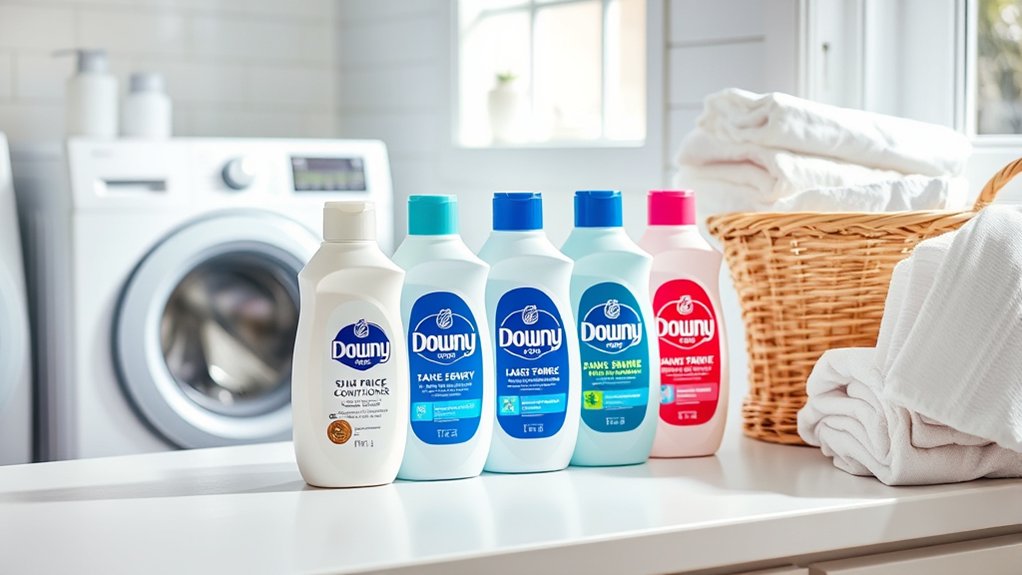
When you want your laundry to feel soft and smell fresh, choosing the right Downy fabric conditioner is key. Downy offers liquids, sheets, and beads, so you can pick what fits your laundry routine.
Consider your fabric type; some Downy conditioners are tailored for specific materials, ensuring excellent care.
If odors are a concern, try Downy Rinse & Refresh to neutralize smells. For classic softness and a lasting scent, Downy Ultra is a great choice.
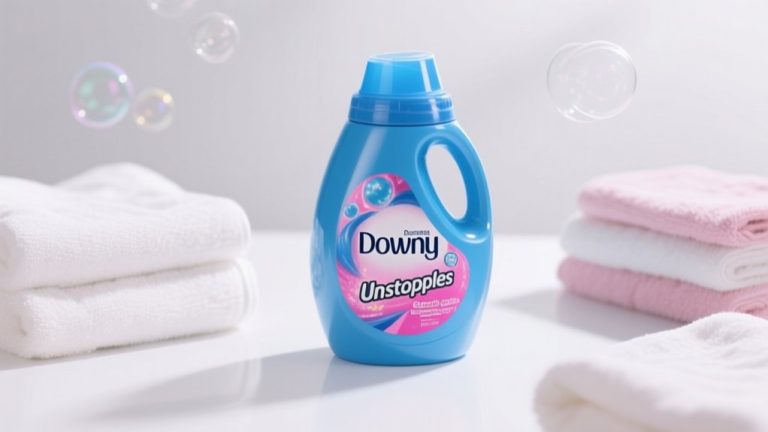
If you want extra freshness without extra steps, Downy Unstopables scent boosters add a powerful scent in-wash.
Using Downy Fabric Conditioner On Different Fabrics
You can confidently use Downy Fabric Conditioner on a wide range of fabrics like cotton, polyester, and their blends to boost softness without risking damage.
For delicate materials such as silk and wool, use less Downy to prevent changes in texture or weight.
Avoid using it on water-repellent or moisture-wicking fabrics, as it can reduce their effectiveness.
Here’s how to use Downy on different fabrics:
- Delicates (silk, wool): Use a smaller amount for gentle care.
- Towels and linens: Helps maintain absorbency while adding softness and a fresh scent.
- Everyday fabrics (cotton, polyester): Add Downy to the softener drawer for best results during the rinse cycle.
Follow these tips to keep your laundry soft and fresh across all fabric types.
Troubleshooting Common Issues With Downy Fabric Conditioner
Although Downy Fabric Conditioner generally works smoothly, you might occasionally encounter issues like residue buildup, lingering odors, or a greasy feel.
If you spot residue on your clothes, make sure you add Downy to the fabric softener drawer, so it releases properly during the rinse cycle.
Avoid using too much product. Stick to the recommended amount on the label based on your load size to prevent greasiness.
For stubborn odors, pre-treat heavily soiled items or try Downy Rinse & Refresh to remove trapped smells.
Check fabric care labels before use. Some fabrics aren’t compatible with fabric softeners and may be damaged.
Also, don’t mix Downy with other laundry additives, as this can reduce its effectiveness and impact your laundry results.
Frequently Asked Questions
Can Downy Fabric Conditioner Be Used for Hand Washing Clothes?
Yes, you can use Downy fabric conditioner for hand washing. Dilute a capful in water after washing, soak your clothes briefly, then rinse thoroughly so they come out soft and fresh-smelling.
Is Downy Safe for Baby Clothes and Sensitive Skin?
Yes. Downy is dermatologically tested, free from harsh dyes, and offers hypoallergenic options, which can make it a good choice for baby clothes and sensitive skin. It’s still best to check the specific product label, since options may vary by formula.
How Should Downy Be Stored to Maintain Its Effectiveness?
Store Downy in a cool, dry place away from sunlight and humidity, and keep the cap sealed tight. Avoid extreme heat, and check the expiration date so it stays effective.
Can Downy Help Reduce Wrinkles in Clothes?
Yes, Downy can help reduce wrinkles by coating fibers, which makes them more flexible and lowers friction during drying. With regular use in your rinse cycle, your clothes may come out smoother and hold their shape better.
Does Downy Fabric Conditioner Affect the Absorbency of Towels?
Yes, if you use Downy sparingly and as directed, it should not noticeably reduce towel absorbency. Overusing fabric conditioner can lead to buildup over time, which may dull their drying power.
Conclusion
Using Downy fabric conditioner delivers delightful softness and dazzling freshness to your daily laundry. By adding it during the rinse cycle, you’ll effortlessly eliminate odors and enhance every fabric’s feel. Just measure the right amount for remarkable results, whether washing wools, cottons, or synthetics.
With Downy, your clothes will come out cuddly, clean, and enchantingly cozy. Making every wear wonderfully welcoming and your washing routine wonderfully worry-free.