Where Is Persil Laundry Detergent Made – Origin Story
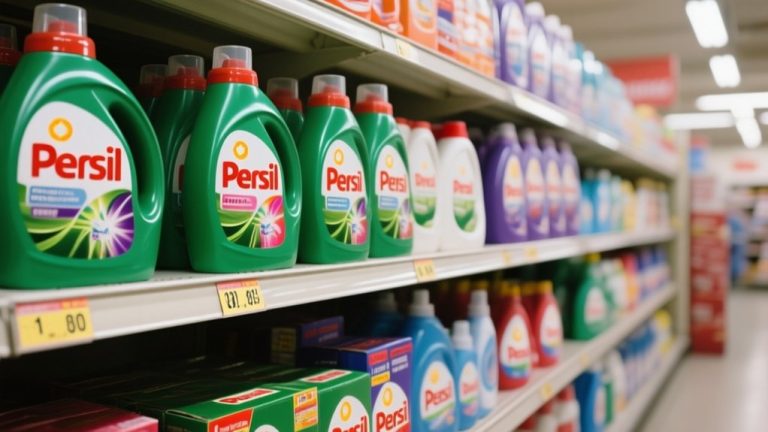
If you’ve ever stood in the detergent aisle wondering which laundry brand is really worth trusting, you’re not alone. Many people want a detergent that actually works, has a reliable history, and fits their cleaning needs without the guesswork. Persil is one of those names that keeps coming up, and its story helps explain why.
You’ll find Persil laundry detergent’s origins in Germany, where Henkel launched it in 1907 with a groundbreaking formula combining cleaning power and bleaching agents. Produced mainly in Henkel’s Düsseldorf facilities, Persil has evolved through innovations like enzymes and cold-water capsules.
While Henkel handles most European production, Unilever makes Persil in the UK under license, resulting in regional formula differences. Keep exploring to uncover how these developments shape Persil’s global presence and future sustainability.
Persil Laundry Detergent’s Place of Origin
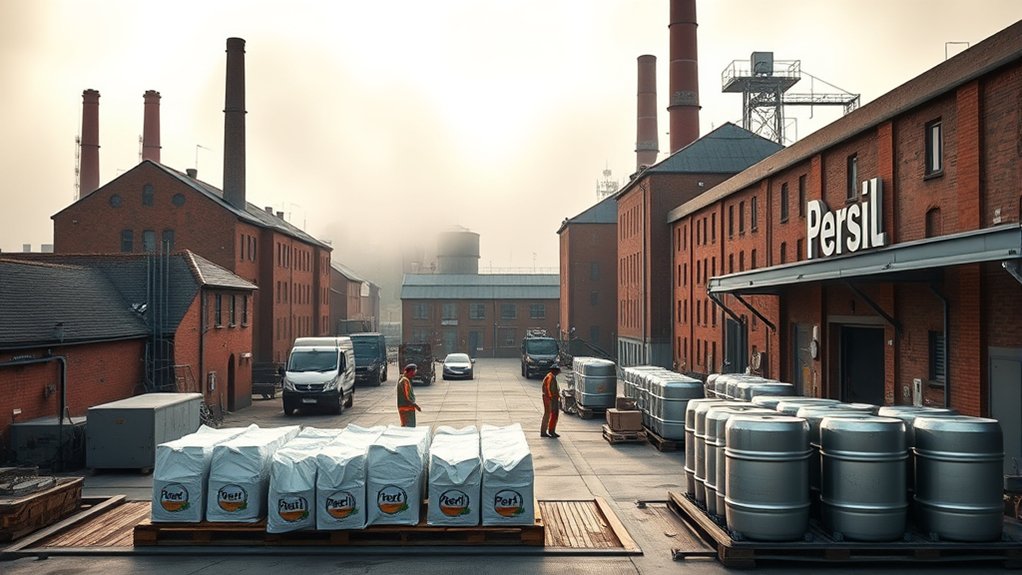
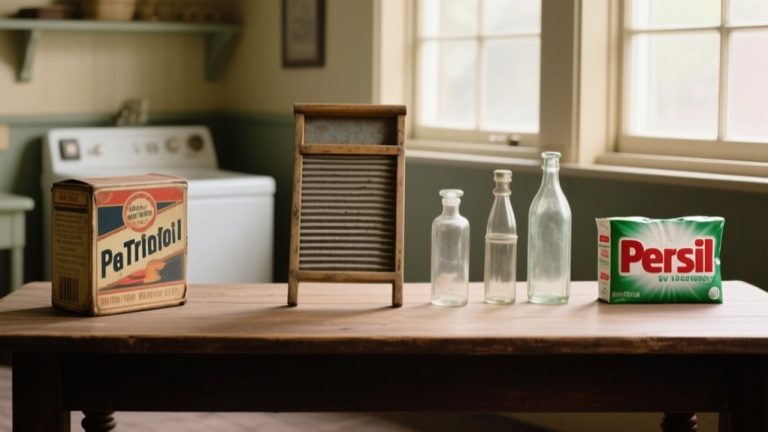
Where did Persil laundry detergent originate? You’ll find its roots in Germany, where Henkel first launched it in 1907. As one of the earliest laundry detergents, Persil stood out thanks to its active ingredients, sodium perborate and silicate, which revolutionized stain removal.
If you’re in the UK or Ireland, you’ll recognize Persil as a Unilever product, since they hold the brand rights in these regions. However, Henkel still produces Persil in many other global markets.
You might notice that the formula changes depending on where you live, as it’s tailored to meet local preferences.
Over time, Persil’s reach has grown internationally, and you may know it by different names like Omo or Skip in various countries.
How Henkel Developed the Original Persil Formula
The next section explains how Henkel scaled production and expanded its market reach.
Early Formula Innovation
Although laundry detergents existed before, Henkel revolutionized the market in 1907 by developing the original Persil formula, the first to combine cleaning power with a bleaching agent. This innovation introduced active oxygen as the key cleaning element, greatly improving stain removal while being gentler on fabrics than traditional soaps.
When Persil launched commercially in 1909, it was marketed as the “Amazing Oxygen Washer,” changing how people approached laundry by eliminating the need for soap. Henkel also innovated with a powder format, making the detergent easier to store and use compared to liquid soaps.
Over time, the formula has evolved, incorporating enzymes to target specific stains, ensuring Persil remains a leading detergent brand grounded in its early formula innovation.
Catalyst Technology Development
Building on its early formula innovation, Henkel continued to explore ways to enhance Persil’s cleaning power. In 1994, they introduced Persil Power, incorporating a manganese(IV)-based catalyst to boost bleach decomposition. This advancement allowed for effective stain removal at lower temperatures, addressing energy efficiency concerns.
However, you should know that despite promising results, the catalyst caused issues like color loss and fabric damage, leading to a product recall.
Henkel then abandoned the catalyst formula but used the experience to refine the main Persil detergent. They improved performance without relying on catalysts, maintaining the brand’s reputation for reliable cleaning.
This development reflects Henkel’s commitment to balancing innovation with fabric care and consumer safety.
Germany’s Key Role in Persil Manufacturing and Innovation
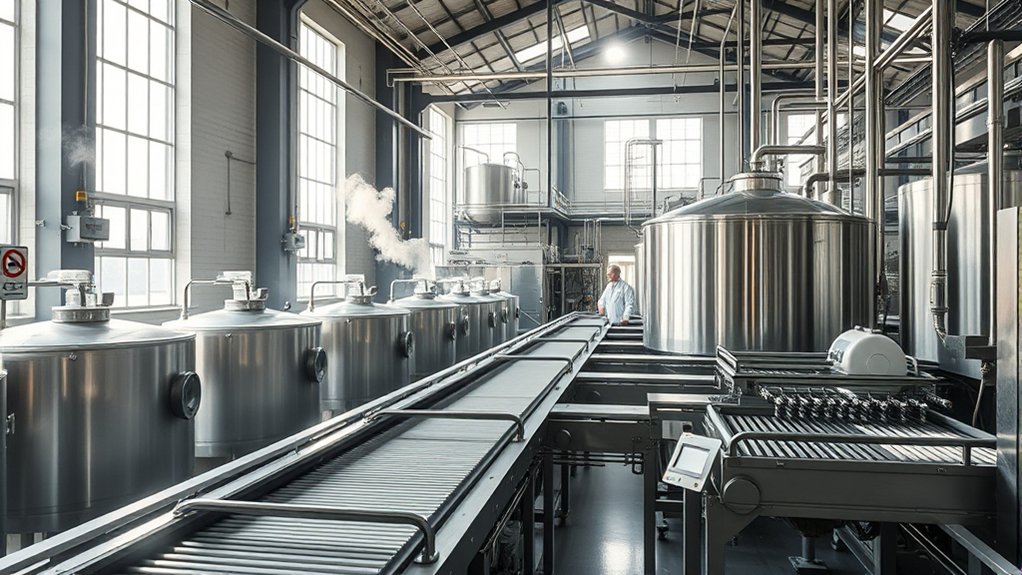
Since its launch in 1907, Persil has been deeply rooted in Germany, where Henkel AG continues to lead its manufacturing and innovation efforts. The brand originated here as the world’s first commercially available laundry detergent, named after its key ingredients, sodium perborate and silicate.
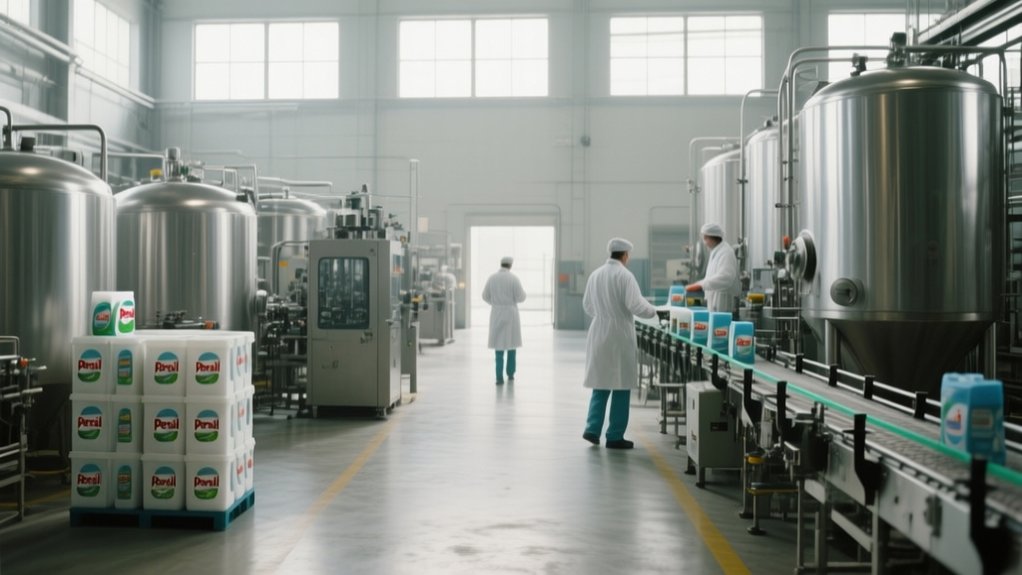
Germany remains a crucial production hub, with Henkel’s Düsseldorf headquarters driving advances in detergent technology.
In the early 1990s, Henkel introduced the Persil Micro System, reflecting Germany’s ongoing commitment to innovation despite market challenges.
Today, German manufacturing focuses on advanced technologies and sustainability, strengthening Persil’s position as a leader in the laundry detergent industry.
You can see how Germany’s expertise and dedication have shaped Persil into a brand known for quality and cutting-edge solutions.
Licensing and Its Impact on Persil Production Worldwide
When you buy Persil in different parts of the world, you might notice variations because the brand is produced under a licensing agreement. Unilever manufactures Persil in the UK and markets it alongside brands like Omo and Via in Europe, while Henkel produces it in other regions.
This licensing setup leads to differences in formulations, such as Henkel’s use of specific enzymes not found in Unilever’s version.
Pricing strategies also vary, with Henkel’s Persil generally offered at a lower cost. Despite these differences, both versions maintain a strong reputation for effective stain removal and receive high customer satisfaction globally.
This licensing arrangement allows Persil to adapt to regional markets while preserving its core brand identity worldwide.
Henkel vs. Unilever: Persil Production Differences
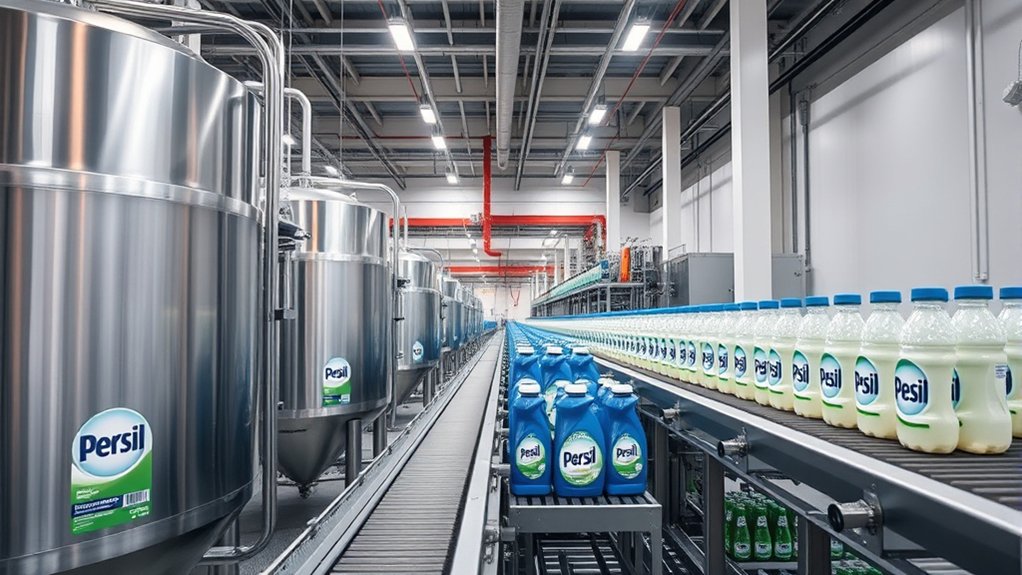
The licensing agreement between Unilever and Henkel creates notable differences in how Persil is produced and marketed across regions.
You’ll find that Henkel manufactures Persil in countries like Germany using a unique formula with specific enzymes, while Unilever produces its version primarily in the UK with different formulations. These differences affect performance and consumer preference.
Here are three key distinctions:
- Henkel’s Persil includes enzymes absent in Unilever’s version, impacting cleaning power.
- Unilever’s Persil is preferred for front-loading machines due to its cleaner rinse.
- Henkel’s product is generally more affordable, with stronger brand presence in continental Europe, whereas Unilever dominates the UK market.
Understanding these differences helps you appreciate how Persil adapts to regional needs through production and marketing strategies.
How Regional Markets Shape Persil Manufacturing
Although Persil carries a single brand name globally, its manufacturing adapts closely to regional markets to meet local consumer preferences and laundry habits.
You’ll notice that Unilever produces Persil in the UK, while Henkel handles most of Europe, each tailoring formulations and marketing to local needs.
This regional focus allows quick responses to market demands, like sustainable capsules tailored for cold washes.
| Region | Manufacturer | Key Adaptation |
|---|---|---|
| UK | Unilever | Formulations for typical UK stains |
| Europe | Henkel | Enzyme-rich formulas |
| Global | Both | Shared brand, separate processes |
| Innovation | Both | Sustainable, eco-friendly products |
| Marketing | Both | Culturally tailored campaigns |
You benefit from products designed specifically for your region’s laundry habits and preferences.
Advances That Have Shaped Persil’s Production Over Time
These production changes also affected cost, supply chains, and everyday product availability.
Catalyst Innovations Impact
When Unilever introduced a manganese(IV)-based catalyst in the 1990s, it greatly boosted Persil’s stain removal capabilities while allowing effective cleaning at lower temperatures.
This catalyst improved bleach decomposition, enabling more compact and efficient detergent formulas. However, the 1994 launch of Persil Power, which relied heavily on this catalyst, led to garment damage issues and a product recall.
These challenges underscored the need to balance innovation with product safety and integrity. As a result, Unilever refined Persil’s main formula to maintain high performance without catalysts.
Key impacts of these catalyst innovations include:
- Enhanced stain removal and cleaning efficiency
- Development of more compact detergent formulas
- Reinforced focus on consumer safety and product reliability
Cold Wash Technology
Since the early 1990s, Persil has advanced cold wash technology to clean effectively at lower temperatures, cutting energy use and supporting sustainability.
They introduced catalysts like manganese(IV) to boost stain removal during cold washes, so you don’t need hot water for great results.
Persil’s 2022 launch of a sustainable capsule designed for low-energy cold washes shows their ongoing commitment to innovation and eco-friendly solutions.
Their cleaning agents target invisible dirt, ensuring high performance even in shorter cycles.
If you’re pressed for time, the latest “Wonder Wash” formula delivers powerful cleaning in as little as 15 minutes using cold water.
Thanks to these advances, Persil keeps your laundry fresh while reducing environmental impact.
Sustainable Packaging Advances
Building on Persil’s advances in cold wash technology, the brand has also made significant strides in sustainable packaging to further reduce environmental impact.
You’ll find these key innovations shaping Persil’s eco-friendly approach:
- Introduction of capsules optimized for low-energy cold washes, minimizing environmental footprint.
- Launch of laundry sheets in 2023, cutting plastic waste while enhancing user convenience.
- Continuous packaging advancements aligned with Unilever’s broader sustainability goals, reducing carbon emissions.
These efforts showcase Persil’s commitment to balancing effective cleaning performance with eco-conscious packaging.
The Future of Persil Laundry Detergent Production
Although Persil has long been recognized for its effective cleaning power, the brand is now prioritizing sustainability and innovation to shape the future of its laundry detergent production. You’ll see this in products like sustainable capsules for cold washes and eco-friendly laundry sheets that reduce waste. Persil also explores AI and smart tech partnerships to enhance convenience and efficiency.
Their innovations, such as the “Wonder Wash,” cater to fast-paced lifestyles with short, cold cycles. Adapting formulations and marketing strategies guarantees the brand stays relevant amid changing cultural and urban trends.
| Focus Area | Key Developments |
|---|---|
| Sustainability | Cold wash capsules, laundry sheets |
| Technology | AI integration, smart laundry tech |
| Innovation & Adaptation | “Wonder Wash,” cultural insights |
Frequently Asked Questions
What Ingredients Are Used in Persil Detergent Today?
Persil detergent today typically uses surfactants, enzymes like proteases and amylases, builders, sodium percarbonate bleach, and fragrance. These ingredients work together to break down stains, brighten fabrics, and leave a fresh scent, which can vary by region.
Is Persil Safe for Sensitive Skin?
Yes. It’s dermatologically tested and free from harsh dyes or fragrances, which may make it a better option for sensitive skin. It still cleans effectively, but if your skin reacts easily, you may want to watch for any signs of irritation when trying it.
Can Persil Be Used in Both Standard and High-Efficiency Washers?
Yes, you can use Persil in both standard and high-efficiency washers. It is specially formulated to work effectively in low-water HE machines while still providing strong cleaning power in traditional washers.
How Environmentally Friendly Is Persil Packaging?
Yes, Persil’s packaging is generally eco-friendly because it uses recyclable materials, concentrated formulas, and laundry sheets. The brand says it aims for 100% recyclability by 2025 and is working to reduce plastic waste and support global recycling efforts.
Does Persil Offer Fragrance-Free or Hypoallergenic Options?
Yes. Persil offers fragrance-free, hypoallergenic options for sensitive skin, and they come in liquids and capsules. These formulas are designed to clean gently while still providing powerful stain removal, so you can choose the format that fits your routine.
Conclusion
As you reach for your next load of laundry, imagine the journey Persil has taken from Henkel’s innovative labs in Germany to your local store shelves. This detergent’s origin story blends tradition with cutting-edge science, shaped by regional needs and global collaboration.
Understanding where Persil is made gives you a glimpse into a legacy of quality and progress. It helps explain why your clothes come out fresh and clean every time.