Can You Use Oxiclean In Dishwasher – Find Out
Many people wonder if they can use a laundry cleaner like OxiClean in the dishwasher to get dishes sparkling clean. If you’ve ever dealt with cloudy glasses, stuck-on food, or residue after a wash, you’re not alone. It’s a common frustration, and finding the right solution can feel confusing.
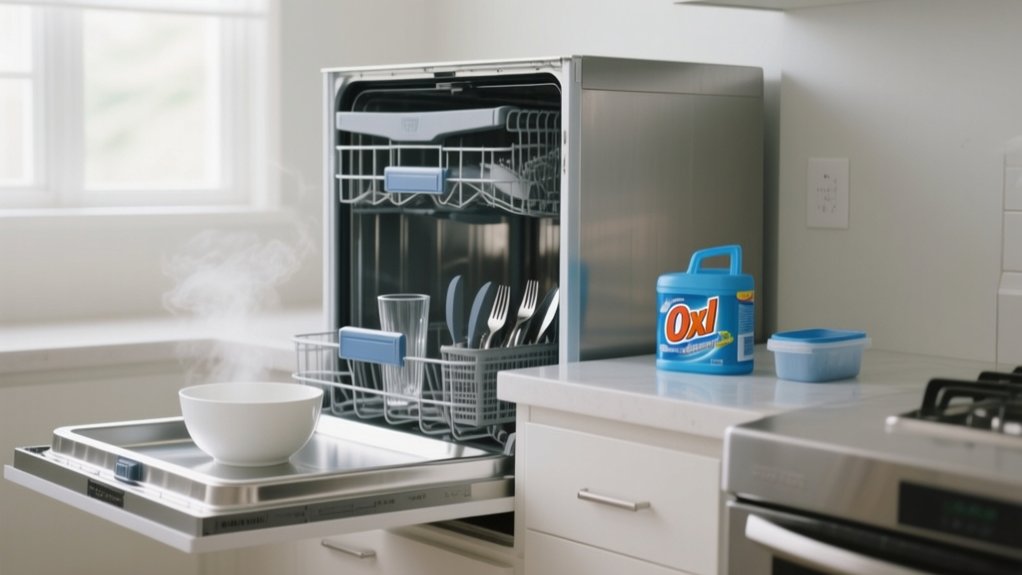
You shouldn’t use OxiClean in your dishwasher because it often leaves a white residue and doesn’t break down food well. It’s made for laundry, not the high heat and pressure inside dishwashers, so it might not dissolve properly and can cause buildup, especially with hard water. Dishwashing detergents are specially designed with enzymes and rinse aids to clean and protect your dishes better. If you want spotless dishes and to avoid damage, it’s best to stick with those. There’s more to know about why.
Effects of Using OxiClean in a Dishwasher
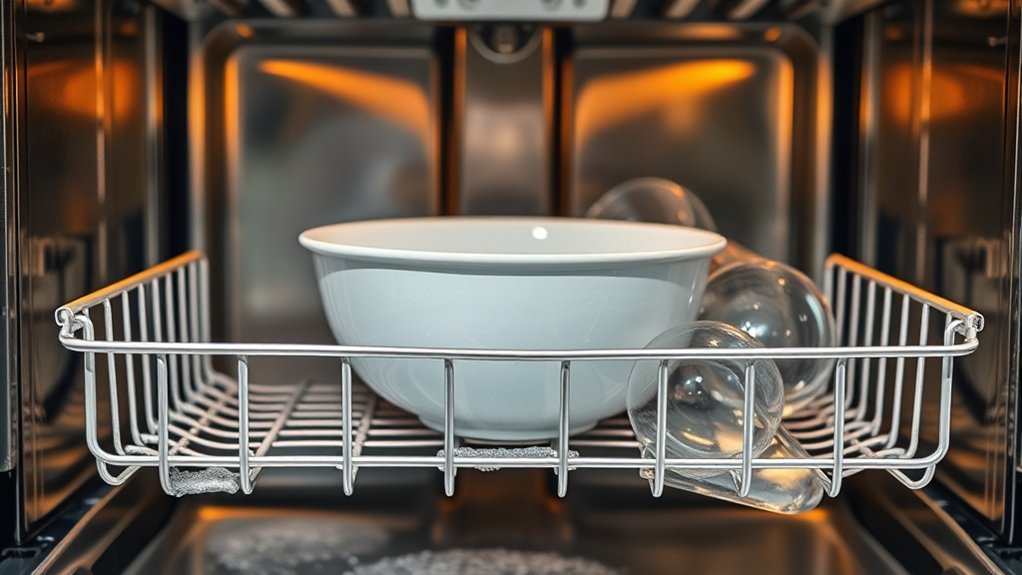
Although OxiClean is a powerful cleaner for laundry, you shouldn’t use it in your dishwasher because it can leave behind residue and white film on your dishes.
OxiClean’s main ingredient, sodium percarbonate, works well on laundry stains but doesn’t break down food soils effectively in a dishwasher. Plus, its formula isn’t designed to handle the high heat and pressure inside dishwashers.
Sodium percarbonate in OxiClean excels on laundry stains but fails to tackle dishwasher food soils or withstand dishwasher conditions.
You might notice a chalky film, especially if you have hard water. This residue isn’t just annoying; it can dull your dishes over time.
Instead, stick to dishwasher detergents like Cascade Platinum or Bubble Bandit, which are specially formulated to clean tough food residues without leaving any unwanted buildup.
Using the right product keeps your dishes sparkling and your dishwasher running smoothly.
Why OxiClean Doesn’t Work Well in Dishwashers
When you use OxiClean in your dishwasher, you’ll quickly find it doesn’t perform as expected because it’s formulated for laundry, not dishwashing. Its active ingredient, sodium percarbonate, often fails to dissolve properly in the dishwasher, leaving residue on your dishes.
Hard water further reduces OxiClean’s effectiveness, as it doesn’t contain agents to combat mineral deposits common in dishwashers.
Users report that OxiClean struggles against tough food soils compared to specialized dishwasher detergents. Additionally, OxiClean can cause excessive suds, which may harm your appliance or disrupt its cleaning cycle.
For these reasons, relying on OxiClean in your dishwasher can lead to poor cleaning results and potential appliance issues, making it a less-than-ideal choice for your dishwashing needs.
How Dishwasher Detergents Differ From Oxiclean
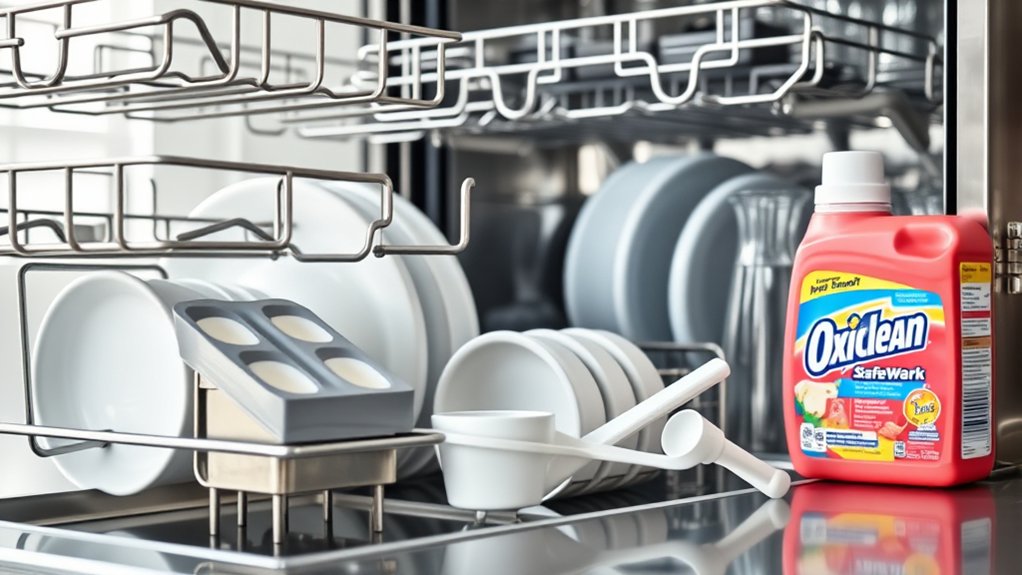
Understanding why OxiClean doesn’t perform well in dishwashers starts with recognizing how dishwasher detergents are specifically designed for their environment.
These detergents are formulated to work under high heat and pressure, using enzymes and surfactants that target food residues and grease effectively.
In contrast, OxiClean relies on sodium percarbonate, which excels at stain removal but isn’t optimized for dishwasher conditions.
Dishwasher detergents also contain rinse aids to prevent spotting and film on your dishes, something OxiClean lacks.
Because of these differences, dishwasher detergents like Cascade Platinum or Finish Quantum tabs clean tougher food soils more efficiently.
When you use OxiClean in your dishwasher, you won’t get the same thorough clean since it’s not tailored for that specific setting.
Residue and Damage Risks From Oxiclean in Dishwashers
Since OxiClean isn’t formulated for dishwasher use, it can leave a stubborn residue on your dishes and inside the appliance. Its active ingredient, sodium percarbonate, may not dissolve fully, causing buildup. This can result in cloudy glassware or film on plates, especially in hard water areas.
Additionally, some cookware may get damaged due to chemical incompatibility. To help you understand the risks, here’s a quick comparison:
| Issue | Cause | Effect |
|---|---|---|
| Residue on dishes | Incomplete dissolution | Cloudy or filmy surfaces |
| Appliance buildup | Chemical deposits | Reduced efficiency |
| Cookware damage | Harsh chemicals | Surface corrosion |
| Hard water effects | Mineral interaction | White spots on glass |
| Cleaning results | Not designed for dishwashers | Unsatisfactory wash |
Avoid these risks by using dishwasher-specific detergents instead.
Top Dishwasher Detergents Instead of OxiClean
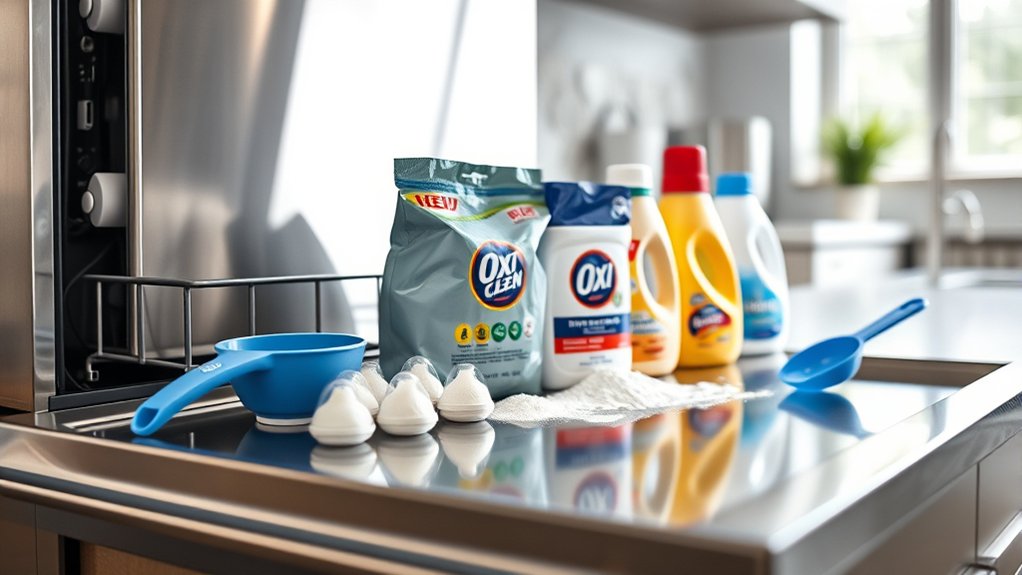
Although OxiClean excels in many cleaning tasks, you’ll get better dishwasher results by choosing detergents specifically formulated for that purpose.
Cascade Platinum stands out for tackling tough food soils and leaving no residue, making it a reliable choice.
If you deal with hard water, Bubble Bandit effectively combats deposits, improving your dishwasher’s performance.
Finish Quantum tabs are praised for powerful cleaning and preventing glassware cloudiness, ensuring your dishes look spotless.
Since user preferences vary, you might want to try a few brands to find what works best for your needs.
These detergents are designed to work with your dishwasher’s mechanics and water chemistry, giving you cleaner dishes without the risks associated with using OxiClean.
Safe and Effective Dishwasher Use Tips
Proper dosing reduces buildup, while the next section explains loading dishes for even cleaning.
Proper Dosage Guidelines
When using OxiClean in your dishwasher, you should never exceed one tablespoon per load to prevent excessive sudsing and residue buildup. This dosage aligns with manufacturer guidelines and helps minimize potential issues, like clogging or leftover powder.
Keep in mind, OxiClean is primarily designed for laundry, so its performance in dishwashers can vary depending on your water type and dishes.
Before adding it, check if your dishwasher’s manual allows non-dishwasher detergents to avoid voiding warranties or causing damage.
For consistent results, stick to dishwasher-specific detergents, which handle food soils and hard water more effectively. If you choose to use OxiClean, start with this small amount and monitor your dishwasher’s performance to guarantee safe and efficient cleaning.
Avoiding Residue Build-Up
Since residue build-up can compromise both your dishes and dishwasher, taking steps to prevent it is crucial for maintaining excellent cleaning performance.
Using OxiClean Dishwasher Detergent helps because it effectively removes tough food soils without leaving residue, even on stainless steel cookware.
Its water-softening properties also tackle hard water deposits, which often cause build-up.
To further avoid residue, don’t overcrowd your dishwasher. Allowing proper water circulation guarantees detergent reaches every dish.
Regularly clean your dishwasher’s filters and spray arms to maintain peak performance.
Frequently Asked Questions
Can Oxiclean Be Used to Clean Dishwasher Filters?
Yes, you can use OxiClean to clean dishwasher filters. Soak them in a hot water and OxiClean solution for 10 to 30 minutes, then scrub gently and rinse thoroughly. This can help keep the filter clear and the dishwasher running smoothly.
Is Oxiclean Safe for Hand-Washing Dishes?
No. It’s best to avoid using OxiClean for hand-washing dishes because you risk residue and damage. Use dish soap made for cleaning dishes instead so your dishes stay safe, clean, and food-friendly without hassle.
How Does Oxiclean Affect Water Hardness in Dishwashers?
Yes, Oxiclean can soften water slightly in your dishwasher by breaking down minerals, but it won’t fully handle hard water issues. For better results and to help prevent mineral buildup, you’ll likely need a dedicated water softener.
Can Oxiclean Remove Odors From a Dishwasher?
Yes, you can use OxiClean to help remove odors from your dishwasher. It can break down food residue and leave the interior fresher. Dissolve it in hot water and run an empty cycle for best results.
Does Oxiclean Work Better With Hot or Cold Water in Cleaning?
Use hot water with OxiClean for better stain removal because heat helps activate its stain-fighting ingredients and break down grime more effectively. Cold water may not activate it as well, so it is usually a weaker choice for tough stains.
Conclusion
While OxiClean might seem like a handy dishwasher booster, it’s not designed for that use and can leave residue or damage your machine. For example, Jane tried OxiClean in her dishwasher and ended up with clogged spray arms and cloudy dishes.
Instead, stick to detergents made specifically for dishwashers. They clean effectively without risks. Following manufacturer guidelines keeps your appliance running smoothly and your dishes sparkling every time.