What Might Lead To A Pile Of Dirty Laundry – Meaning & More
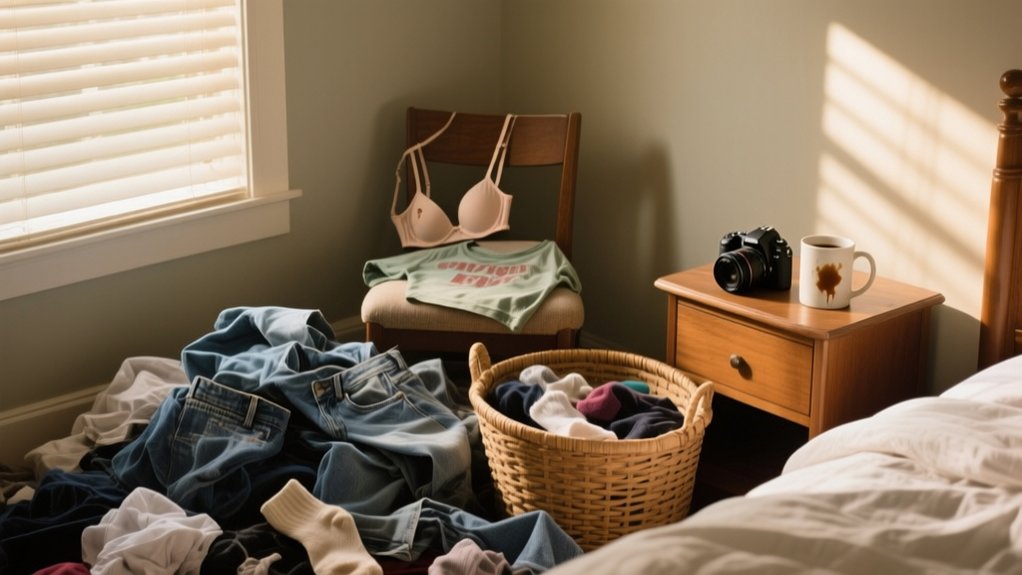
You might end up with a pile of dirty laundry when busy schedules, frequent outfit changes, or skipped laundry days get in the way. Larger families and seasonal clothing swaps can quickly add to the mess, creating health risks like bacteria, pests, and mold.
Poor ventilation makes these issues worse, so managing laundry is essential. By adopting simple habits and knowing when to seek help, you can keep things under control.
Keep exploring to discover practical strategies and insights on maintaining a cleaner home.
Key Takeaways
- Busy schedules and skipping laundry days often cause dirty clothes to accumulate into large piles.
- Larger families and frequent outfit changes significantly increase the volume of laundry generated daily.
- Piles of dirty laundry pose health risks due to bacteria, mold, pests, and allergens developing on unwashed fabrics.
- Managing laundry regularly with sorting and stain treatment helps prevent unsanitary conditions and clutter.
- Professional laundry services offer convenient solutions for overwhelmed individuals to maintain cleanliness and reduce stress.
Understanding the Phrase “A Pile of Dirty Laundry
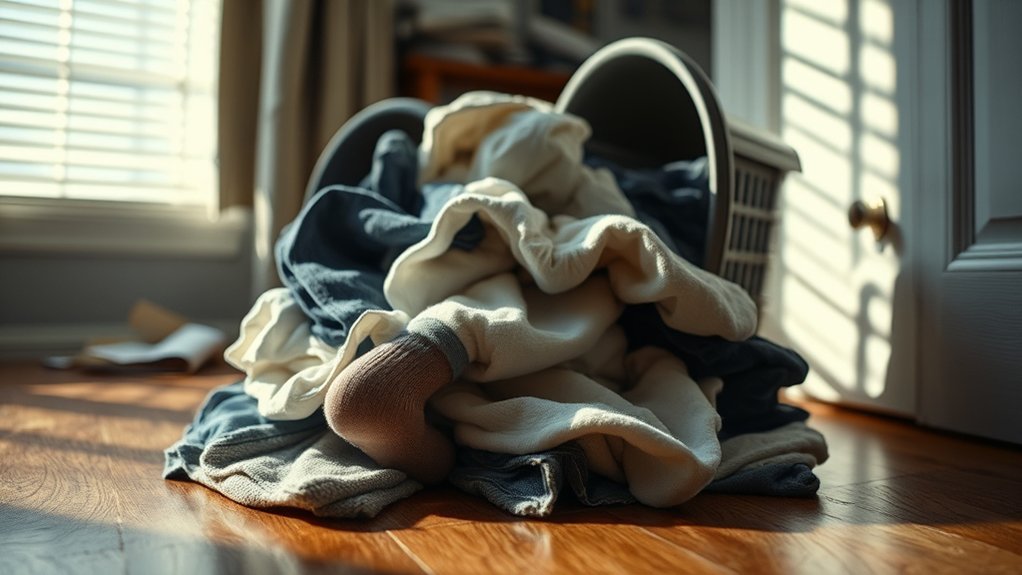
When you hear the phrase “a pile of dirty laundry,” it often brings to mind heaps of unwashed clothes waiting to be cleaned. This literal accumulation can create unsanitary conditions, attracting pests and causing hygiene issues.
But the phrase also carries a metaphorical meaning: it refers to personal matters that, if revealed, might be embarrassing or damaging. When sensitive information comes to light, it can feel like airing your dirty laundry in public.
Both the physical and figurative piles highlight the importance of regular management.
Whether it’s washing clothes promptly or handling private issues discreetly, addressing your pile of dirty laundry on time helps you maintain cleanliness, protect your health, and preserve your personal reputation.
Common Habits Causing Piles of Dirty Laundry
Although managing your laundry might seem straightforward, several everyday habits can quickly lead to overwhelming piles of dirty clothes.
Laundry neglect often happens when busy schedules force you to postpone washing, causing a buildup of items.
Busy schedules often lead to postponed laundry, resulting in overwhelming piles of dirty clothes.
Frequent outfit changes, especially when moving between activities, add to the pile of dirty clothes faster than you expect.
Family size plays a big role too; the more people in your household, the more laundry you generate daily.
Seasonal clothing swaps also contribute, as switching wardrobes means dealing with a sudden influx of items needing cleaning.
Skipping laundry days due to hectic routines
Changing clothes multiple times a day
Regular sports and exercise gear piling up
Managing laundry for a large family
Recognizing these habits can help you stay on top of your laundry.
How Laundry Chutes Cause Laundry Piles
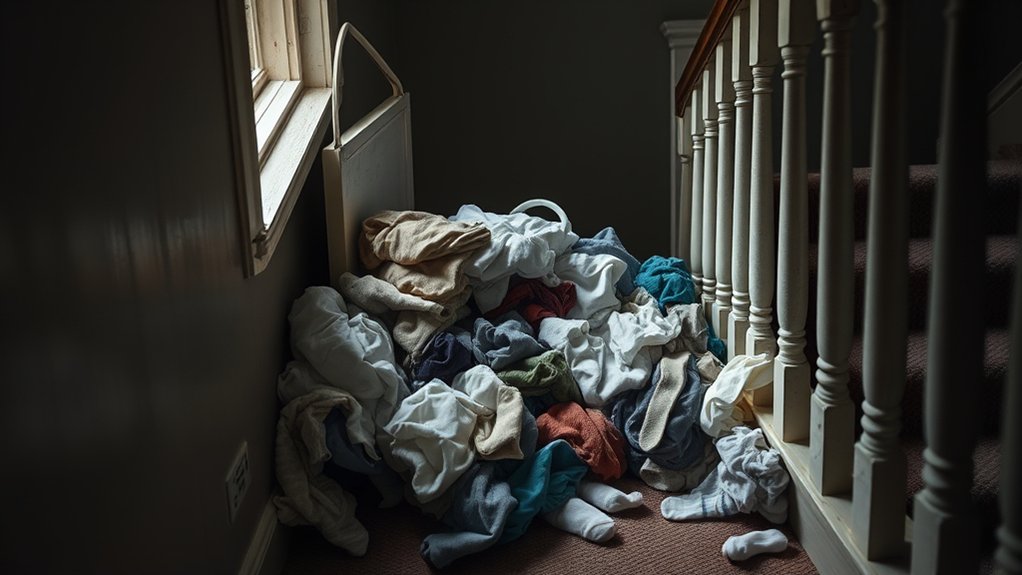
You might think laundry chutes make cleaning easier, but actually, their design can cause clothes to pile up pretty fast.
If you don’t collect laundry regularly, it just gathers at the bottom and creates a cluttered mess.
Laundry Chute Design
Since laundry chutes offer quick and easy disposal of dirty clothes from upper floors, they often lead to large piles accumulating at the bottom. The laundry chute design plays a key role in how smoothly dirty clothes travel and how much accumulation happens.
A well-designed chute includes features like a wide opening and a sloped angle to guarantee smooth movement and prevent blockages. However, without regular maintenance, debris and buildup can cause odors and mold, making the pile worse.
Keep in mind, design flaws or neglect can turn your convenient chute into a laundry nightmare.
Consider these emotions you might feel with poor laundry chute design:
- Frustration over frequent blockages
- Overwhelm from laundry pile buildup
- Disgust if odors develop
- Anxiety about maintenance demands
Common Laundry Buildups
When laundry chutes make dropping clothes effortless, it’s easy to lose track of the growing pile at the bottom.
Laundry chutes often cause dirty clothes to accumulate quickly, especially in multi-story homes where several people use them.
Without coordinated laundry schedules, you might find a significant pile-up waiting to be washed. This convenience can encourage procrastination, as dropping clothes feels like the final step, making you forget to retrieve and clean them promptly.
To prevent overwhelming buildups, regular maintenance of the chute and timely reminders are essential.
Setting specific laundry schedules and checking the chute frequently can keep dirty clothes under control, ensuring the laundry area stays manageable and your chores don’t pile up beyond control.
Health Risks From Piles of Dirty Laundry
Although it might seem harmless at first, letting laundry pile up can create a host of health risks you mightn’t expect. Piles of dirty clothes foster bacteria and dust mites, increasing allergens that can trigger respiratory issues.
You also risk skin infections from germs lurking on unwashed fabric. Beyond health, cluttered laundry areas pose tripping hazards, especially dangerous for children and the elderly.
Plus, dirty laundry attracts pests, leading to further health complications.
Here’s what you face with neglected laundry piles:
- Increased bacteria and germs causing skin infections
- Dust mites and allergens triggering respiratory issues
- Tripping hazards risking falls and injuries
- Pest infestations bringing additional health threats
Keeping laundry under control helps protect your health and home safety.
How Moisture and Poor Ventilation Worsen Laundry Problems
You mightn’t realize it, but moisture creates the perfect conditions for mold to grow on your laundry.
And when your laundry room doesn’t have proper ventilation, all that humidity gets trapped, making the problem even worse.
So, tackling moisture and improving airflow can really help keep your clothes clean and healthy.
It’s a simple fix that makes a big difference!
Moisture Encourages Mold Growth
Since moisture thrives in damp environments, it creates the perfect breeding ground for mold and mildew to grow on your laundry, especially if the area lacks proper ventilation.
When dirty laundry sits too long in humid spaces, mold spores multiply quickly, increasing humidity and health risks. You can’t ignore this because mold affects air quality and causes respiratory problems.
To protect yourself and your home:
- Keep laundry areas dry and well-ventilated.
- Avoid leaving damp clothes in piles; wash them promptly.
- Monitor humidity levels, especially above 60%.
- Be extra cautious in bathrooms and kitchens where moisture lingers.
Regular washing and drying reduce moisture, stopping mold before it starts.
Don’t let moisture and poor ventilation turn your laundry room into a health hazard.
Poor Ventilation Traps Humidity
When poor ventilation traps humidity in your laundry area, it creates an environment where moisture lingers and makes drying clothes a challenge.
This poor ventilation causes dampness that encourages mold and mildew to grow on your fabrics, worsening laundry problems.
Without proper airflow, wet clothes stay damp longer, leading to unpleasant odors and fabric damage.
High humidity also attracts dust mites and allergens, increasing health risks for you and your family.
To prevent these issues, you need to improve ventilation by maintaining exhaust fans and opening windows when possible.
Doing so reduces moisture buildup, keeps your laundry area dry, and helps your clothes dry faster.
Addressing poor ventilation is key to avoiding a pile of dirty laundry and safeguarding your home’s health.
Pests and Allergens Hidden in Laundry Piles
Although laundry piles may seem harmless, they can harbor pests and allergens that affect your health. The accumulation of dirty laundry creates an ideal environment for dust mites and other pests to thrive, especially in humid conditions.
This buildup often attracts allergens like pet dander and pollen, which can trigger respiratory issues. Mold and mildew also develop easily in these damp surroundings, posing further health risks. You should be aware that neglecting washing allows harmful bacteria to multiply, worsening these problems.
Consider these risks hidden in your laundry pile:
- Dust mites exacerbating allergies and asthma
- Pet dander and pollen increasing allergic reactions
- Mold and mildew growth causing respiratory issues
- Pests like ants and cockroaches invading your home
Regular washing keeps these dangers at bay.
Simple Habits to Prevent Dirty Laundry From Piling Up
If you want to keep your laundry from piling up, developing simple habits can make a big difference. Start by establishing a consistent laundry schedule to prevent accumulation and keep clothes fresh.
Sort clothes as you go, using separate bins for whites, colors, and delicates. This helps streamline the process and saves time.
Treat stains promptly to avoid re-washing and maintain cleanliness. Being mindful of your clothing purchases also reduces the volume of laundry, helping you manage loads better.
Finally, encourage family participation by assigning laundry tasks to everyone at home. This shared effort not only speeds up washing but also helps reduce buildup.
When to Use Laundry Services for a Cleaner Home
Keeping up with laundry routines can sometimes feel overwhelming, especially when life gets busy or loads start to pile up faster than you can manage. Using laundry services can be a game-changer for maintaining a cleaner home. They help you avoid unsanitary living caused by accumulated dirty clothes and reduce health hazards linked to mold and allergens.
Plus, professional disinfecting processes guarantee your clothes come out germ-free.
Consider laundry services when you want:
- Time-saving solutions amid busy lifestyles
- To prevent clutter and improve home organization
- To minimize exposure to germs and bacteria
- A stress-free way to handle large laundry loads
Outsourcing laundry tasks lets you focus on what matters most while keeping your living space fresh and healthy.
Frequently Asked Questions
What Does “Airing Your Dirty Laundry” Mean Socially?
When you “air your dirty laundry” socially, you’re sharing personal or embarrassing issues with others, often publicly. You might expose family secrets, relationship problems, or conflicts that are usually kept private.
Doing this can lead to gossip, judgment, or damaged reputations. You’re basically putting your private struggles on display, which can make you vulnerable or cause tension among friends and acquaintances.
It’s a risky move that can backfire socially.
How Can Personal Secrets Become “Dirty Laundry” in Politics?
Did you know 85% of voters say a candidate’s personal secrets affect their trust? Your secrets become “dirty laundry” in politics when they reveal scandals like affairs or financial misdeeds.
Once exposed, these secrets erode your credibility and give opponents ammunition. The media and opposition research teams dig deep, turning private matters into public controversies.
Can Unresolved Conflicts Lead to Metaphorical Dirty Laundry?
Yes, unresolved conflicts definitely lead to metaphorical dirty laundry. When you avoid addressing issues, those problems pile up, creating emotional tension and discomfort.
You might feel embarrassment or shame if these hidden grievances surface later. By facing conflicts head-on and communicating openly, you prevent that buildup.
This keeps your relationships healthier and avoids the toxic atmosphere that festers when problems stay hidden and unspoken.
How Do Media Outlets Exploit Someone’s Dirty Laundry?
Media outlets can blow your dirty laundry up like it’s the scandal of the century, grabbing attention at lightning speed.
They dig into your past, highlight every mistake, and spin stories to attract viewers or readers.
By sensationalizing your private troubles, they fuel gossip and public judgment.
You’ll see your personal issues plastered everywhere, often without your consent, as they prioritize ratings over your privacy and reputation.
What Are Common Signs Someone Is Hiding Their Dirty Laundry?
You’ll notice someone hiding their dirty laundry if they avoid eye contact or act nervously.
They might get defensive or change the subject when certain topics come up.
If they suddenly guard their privacy more, like changing passwords or hiding their phone, that’s a red flag.
Inconsistencies in their stories or withdrawing from social situations also signal they’re keeping something private.
Pay attention; these signs often reveal hidden issues.
Conclusion
Don’t let a pile of dirty laundry take over your space. Remember, “a stitch in time saves nine.” By staying on top of your laundry habits and ensuring proper ventilation, you can avoid health risks and pesky allergens lurking in those piles.
If it feels overwhelming, don’t hesitate to use laundry services to keep your home fresh and clean. Taking small steps now saves you bigger headaches later.