How To Start A Laundry Business From Home – Smart Tips
To start a home laundry business, first register your business and secure necessary permits. Invest in reliable, energy-efficient commercial washers and dryers with proper electrical setup.
Set prices competitively, offering subscriptions and add-ons to attract loyal customers. Create a smooth workflow space and use technology like scheduling apps and management software to streamline operations.
Plan for equipment maintenance and customer service. As you grow, explore smart scaling strategies to boost efficiency and profits.
Keep exploring for detailed steps to succeed.
Key Takeaways
- Secure necessary permits, register your business, and comply with local zoning regulations before starting your home laundry business.
- Invest in commercial-grade washers and dryers with proper electrical setup, including dedicated 220V circuits for efficiency and reliability.
- Research local pricing, offer competitive rates, and create subscription plans to build a loyal customer base and steady revenue.
- Implement customer engagement strategies like referral incentives and subscription benefits to enhance loyalty and repeat business.
- Use laundry management software and scheduling apps to streamline operations and consider scaling with part-time help and service expansion.
Register Your Home Laundry Business Legally
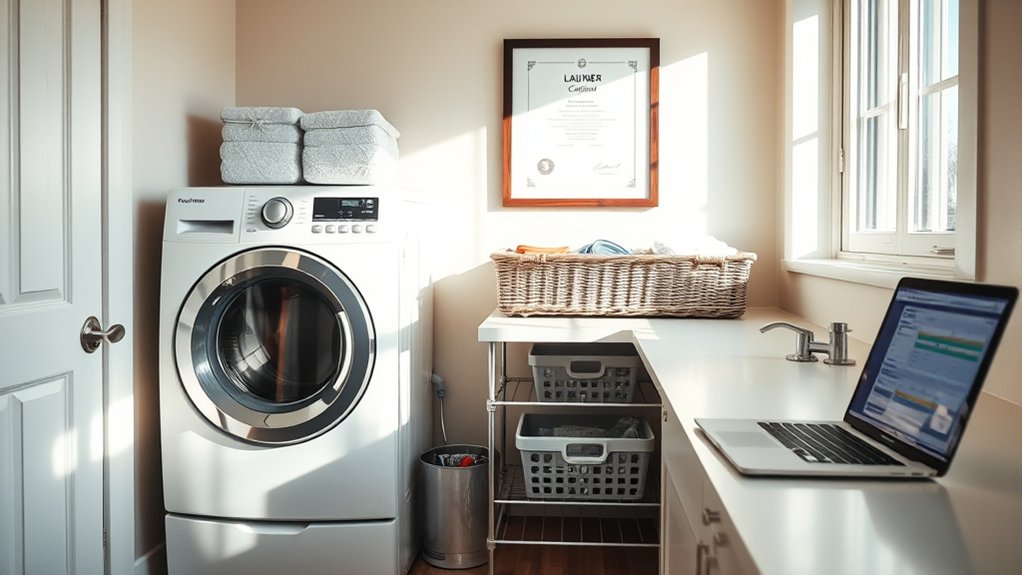
Before you start washing clothes for customers, you’ll need to register your home laundry business legally.
Begin by securing a city business permit, which typically costs $50 to $200 annually and requires yearly renewal.
If your business operates under a name different from your legal one, make sure to register a fictitious business name, usually costing $10 to $50.
For LLCs or corporations, apply for a Federal Tax ID through the IRS to handle taxes and employee hiring.
Don’t overlook obtaining general liability insurance. It’s essential for protecting your business assets and is often required for permit renewals.
Finally, check local zoning regulations to confirm your home-based laundry complies with residential area rules, ensuring smooth operation and avoiding fines.
Choose Equipment to Start Your Laundry Service
You’ll want to invest in reliable, commercial-grade washers and dryers that match your expected volume and energy needs.
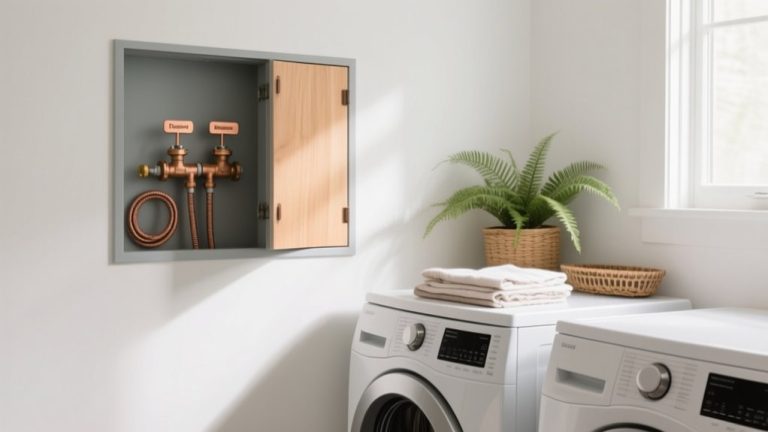
It’s important to make sure your electrical setup can handle the power requirements, including having 220V outlets and maybe even an upgraded panel.
Also, think about planning a dedicated workspace that makes the workflow smooth—from washing and drying to folding and customer service.
This way, everything runs efficiently and keeps customers happy.
Essential Laundry Equipment
Selecting the right equipment lays the foundation for a successful laundry business from home. Invest in commercial-grade washers and dryers, ideally stackable units to save space.
Dedicate 150-200 sq. ft. for your setup, ensuring proper ventilation and drainage. Equip your workspace with laundry carts and garment bags to streamline operations and protect items.
Don’t forget a hanging scale for accurate pricing by weight. Regular maintenance is essential to avoid downtime and maintain efficiency, keeping your service reliable.
| Equipment Type | Purpose | Key Benefit |
|---|---|---|
| Commercial washers/dryers | Frequent, heavy use | Durability, efficiency |
| Laundry carts & garment bags | Transport and protect laundry | Organized workflow |
| Stackable units | Space-saving setup | Maximizes dedicated space |
Electrical Requirements Setup
Although setting up your laundry equipment is essential, confirming your electrical system can support commercial-grade washers and dryers is just as important.
As a home-based operator, verify your electrical panel can handle 220V outlets and consider upgrading it if necessary, which may cost $800 to $1,200.
Each commercial washer and dryer needs at least 30 amps, so plan for a dedicated electrical circuit to avoid tripped breakers during peak use.
Choose energy-efficient machines to reduce electricity costs while meeting service demands.
Don’t overlook regular maintenance of electrical connections to confirm safety and prevent costly repairs.
Proper electrical setup not only protects your investment but also guarantees smooth, uninterrupted operation of your laundry business.
Space And Layout
When planning your laundry business space, allocate 150 to 200 square feet to accommodate washing, drying, folding, and proper ventilation. A well-thought-out layout guarantees operational efficiency and prevents moisture buildup.
- Invest in at least two commercial-grade washers and dryers to handle peak loads without delays.
- Ascertain proper drainage and install 220V outlets to support multiple machines safely.
- Design a linear workflow from intake through washing and drying to folding for smooth movement.
- Equip the folding area with large, waist-high folding tables to reduce strain and maintain a professional finish.
Set Up Your Laundry Space for Maximum Efficiency
Creating a dedicated laundry space of 150 to 200 square feet with proper ventilation and drainage sets the foundation for a smooth operation.
Arrange your commercial-grade washers and dryers in a linear workflow to reduce movement and boost operational efficiency.
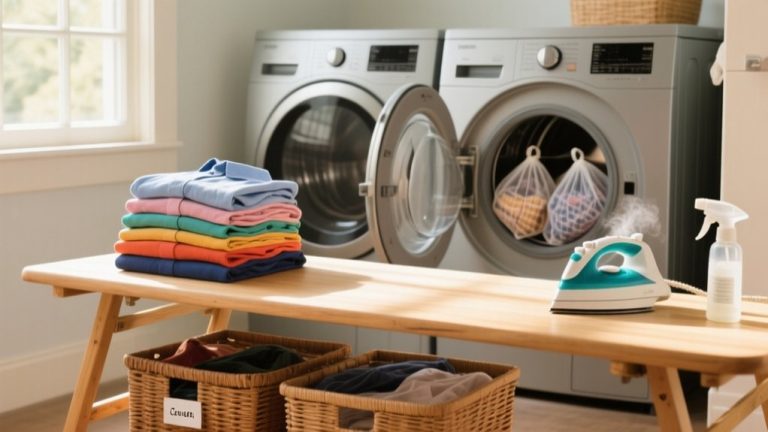
Use a color-coded system with bins to organize customer orders, speeding up sorting and processing.
Install waist-high folding tables for efficient folding, ensuring comfort and easy access to both clean and dirty laundry areas.
Keep detergents and laundry supplies neatly stored on shelving units within reach to minimize downtime.
By optimizing your layout and workflow, you’ll deliver prompt laundry services while maximizing productivity and maintaining a professional workspace.
This setup directly supports consistent quality and timely order fulfillment.
Set Competitive Prices for Wash and Fold Services
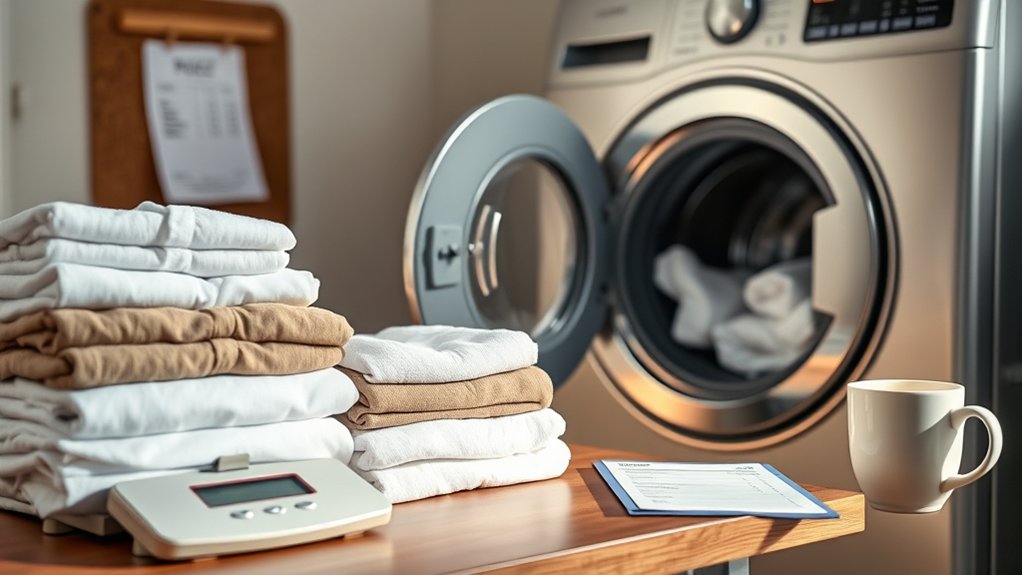
With your laundry space optimized for efficiency, the next step is setting prices that attract customers while keeping your business profitable.
To set competitive prices for wash and fold services, follow these steps:
- Research the local market using tools like Google Trends and competitor rates to align your pricing with customer expectations.
- Set per-pound prices between $1.25 and $1.75, about 10-15% below competitors, to appeal to budget-conscious clients.
- Offer subscription plans around $89 monthly for steady revenue and enhanced customer loyalty.
- Monitor operational costs quarterly and adjust prices to maintain at least a 45% profit margin, adding tiered add-ons like stain treatment to boost earnings.
This approach guarantees your pricing remains competitive and sustainable.
Find Your First Wash and Fold Customers and Build Loyalty
Start by targeting busy local professionals, college students, and families nearby. These groups are often looking for convenient laundry solutions and are more likely to become your first wash and fold customers.
Then, consider offering subscription plans. These not only make life easier for your customers but also give you steady, predictable income. Before you know it, your service becomes a regular part of their routine.
And don’t forget about referral incentives! Encouraging your customers to spread the word can help you grow quickly and build a loyal customer base without much extra effort. It’s a win-win for everyone.
Target Local Professionals
How do you find your first wash and fold customers among busy local professionals? To target local professionals effectively, focus on their convenience and needs. Here’s how:
- Offer laundry pickup and delivery with flexible scheduling tailored to customer preferences.
- Set competitive pricing about 10-15% below local competitors to attract initial clients.
- Launch a referral incentive program, like a $10 credit for every new customer they bring in.
- Use local SEO and Google Business Profile to boost your visibility where professionals look for laundry services.
Offer Subscription Plans
Building on convenient pickup and delivery options, offering subscription plans can help you secure steady customers and predictable income. By providing weekly bundles at competitive rates, like $89 monthly, you encourage customer loyalty and guarantee consistent cash flow.
Subscription plans boost customer retention because clients appreciate the convenience and value, making them less likely to switch services. Personalizing these plans to match individual preferences, such as specific laundry needs or preferred pickup times, further enhances satisfaction and long-term loyalty.
While referral incentives can expand your customer base, focusing first on tailored subscription services builds a solid foundation.
Ultimately, well-designed subscription plans create predictable revenue and foster strong customer relationships, positioning your laundry business for sustained growth and success.
Implement Referral Incentives
Once you’ve set up convenient subscription plans, implementing referral incentives can help you quickly find your first wash and fold customers while building loyalty.
A well-designed referral program motivates your existing customers to spread the word by rewarding them for new sign-ups. Here’s how to get started:
- Offer a $10 credit for each referral to boost customer loyalty and encourage participation.
- Promote your referral incentives through local ads and social media, highlighting customer testimonials and positive experiences.
- Track referral success by assigning unique codes, so you can measure and optimize your program.
- Introduce tiered rewards, like extra discounts or free services, to motivate ongoing referrals.
This approach leverages satisfied customers to grow your business efficiently while reinforcing trust and loyalty.
Handle Equipment Breakdowns & Customer Issues
Although equipment breakdowns and customer issues are inevitable, you can minimize their impact by establishing a regular maintenance schedule and investing in extended warranties for your machines.
Service your commercial washers and dryers at least twice a year to guarantee a reliable laundry operation.
Set aside a cash reserve covering two to three months of expenses to manage unexpected repairs or slow periods without service disruption.
Develop a customer service protocol to address complaints swiftly. Seventy percent of customers remain loyal when issues are resolved quickly.
Actively seek and use customer feedback to identify recurring problems and improve satisfaction by up to 25%.
Use Tech Tools That Make Laundry Easier
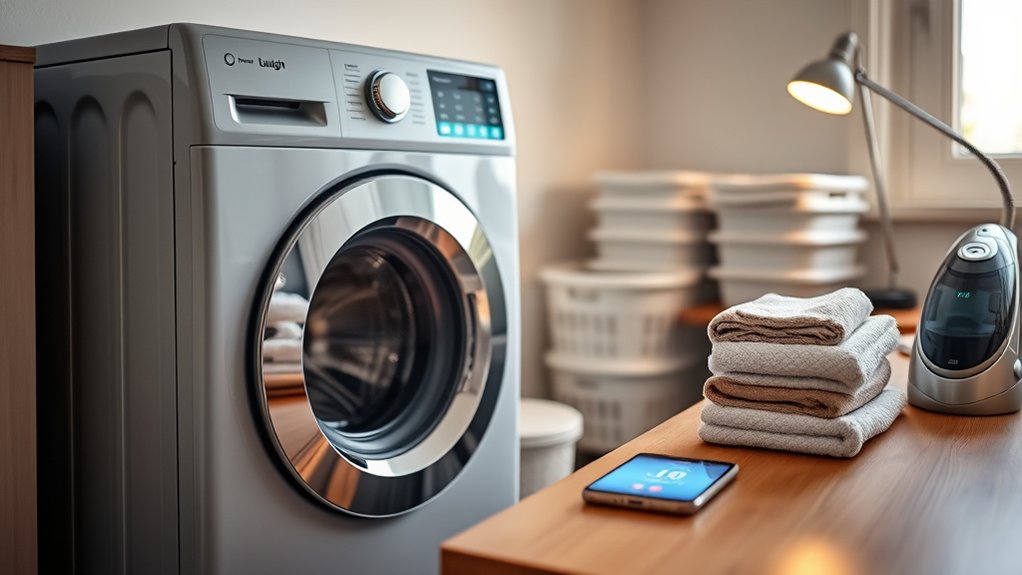
When you integrate technology into your laundry business, you can simplify operations and enhance customer experience simultaneously. To make laundry easier, focus on these tech tools:
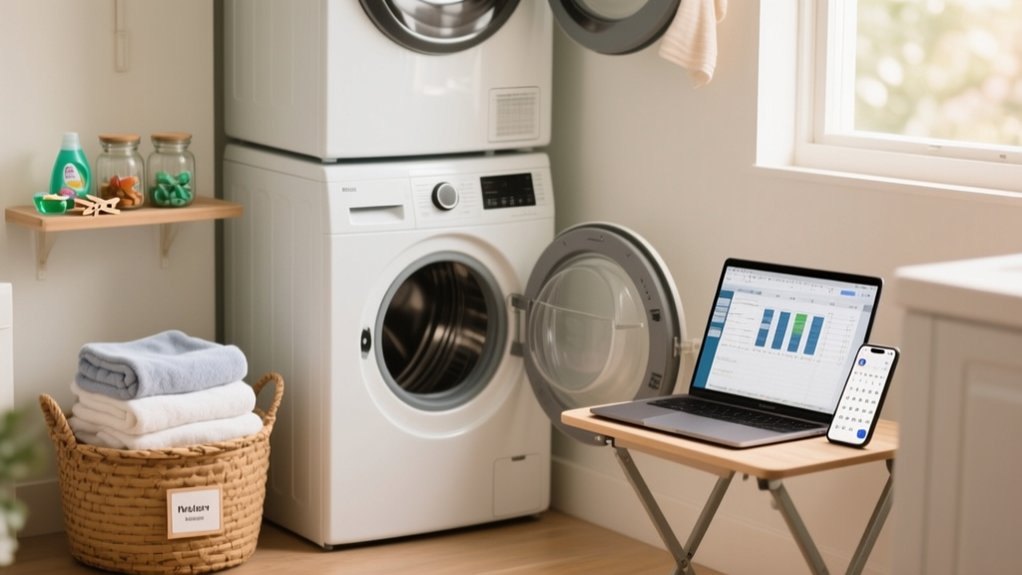
- Use laundry management software for efficient order tracking, invoicing, and customer communication.
- Implement a scheduling app to automate pickup and delivery logistics, reducing delays and errors.
- Invest in smart laundry appliances that connect to apps, letting you monitor wash cycles and receive alerts.
- Utilize cloud-based inventory management to keep tabs on supplies and prevent shortages during busy periods.
Additionally, leverage customer relationship management (CRM) software to personalize services and promotions, boosting loyalty.
These technologies streamline your workflow, improve accuracy, and foster stronger customer connections, helping your home laundry business thrive.
When and How to Scale Your Home Laundry Business
As your home laundry business consistently handles around 50 orders per week, you’ll find it practical to contemplate scaling up by hiring part-time help or expanding your services.
Revisit your business model to include additional revenue streams like delicate fabric care or business accounts, which can broaden your customer base.
Monitor feedback closely to refine pickup and delivery times, ensuring efficiency and satisfaction.
Consider geographic expansion by targeting underserved areas within a 3-mile radius to grow your market without high overhead.
Invest in automated solutions such as scheduling software or laundry lockers to streamline operations and manage increased volume effectively.
Scaling thoughtfully helps you meet demand, improve retention, and sustain steady growth while maintaining service quality.
Frequently Asked Questions
How Do I Manage Laundry Stains Effectively at Home?
To manage laundry stains effectively, act quickly by blotting spills with a clean cloth to prevent setting.
Rinse stains with cold water first, avoiding hot water that can set protein stains.
Know your fabric type and choose the right stain remover. Use enzymatic ones for organic stains and solvents for grease.
Always test stain removers on a hidden area to avoid damage.
This approach keeps your laundry stain-free and fabric-safe every time.
What Eco-Friendly Detergents Work Best for Home Laundry Services?
You’ll find Seventh Generation and Ecover work best for home laundry services because they use concentrated, plant-based formulas that clean effectively without harmful chemicals.
These detergents are biodegradable and certified by programs like EPA’s Safer Choice, ensuring safety and sustainability.
Using them not only gets clothes spotless but also appeals to eco-conscious clients, boosting your business’s reputation.
Stick to these trusted brands for reliable, eco-friendly results every time.
How Can I Offer Same-Day Laundry Pickup and Delivery?
Like the swift courier Hermes, you can offer same-day laundry pickup and delivery by streamlining your workflow to finish washing, drying, and folding within 24 hours.
Use commercial-grade machines for efficiency and limit your service radius to three miles for faster trips.
Set a reliable schedule and keep clients informed with automated updates or an app.
Consider a subscription model to prioritize frequent users and boost loyalty.
What Packaging Options Are Best for Clean Laundry Drops?
You should choose sturdy, reusable laundry bags that protect clothes during transport and can handle multiple uses.
Branded packaging like custom bags or tissue paper boosts your professional image and helps customers recognize your service.
Offer various sizes to suit different laundry loads, and consider eco-friendly materials to attract green-minded clients.
Clear bags or labeled packaging improve order visibility and prevent mix-ups, enhancing customer satisfaction during clean laundry drops.
How Do I Handle Customer Allergies or Fabric Sensitivities?
Think of each garment as a delicate bloom that needs gentle care.
To handle customer allergies or fabric sensitivities, always ask about their specific needs upfront.
Use hypoallergenic products and separate washing loads to avoid cross-contamination.
Label orders clearly with any special instructions, and educate your customers about the detergents you use.
Offering them the option to supply their own products shows professionalism and builds trust.
Conclusion
Starting your home laundry business is a smart move. Did you know the laundry service market is expected to grow by 6.2% annually?
By legally registering your business, choosing the right equipment, and setting competitive prices, you’re already ahead. Focus on efficient space setup and excellent customer service to build loyalty.
Use tech tools to streamline operations and be ready to scale when demand grows. Stay proactive, and your laundry business will thrive.