What Does Aspirin Do To Laundry – Straight Answer
When you add aspirin to laundry, its salicylic acid targets and breaks down protein-based stains like blood while reducing yellowing on white fabrics. Aspirin dissolves dirt and enhances whitening without harsh chemical damage, especially when soaked in hot water for hours.
However, it’s ineffective on grease or dye stains and unsuitable for delicate fabrics like silk or wool. Combining aspirin with detergent boosts overall stain removal performance. Explore deeper to understand proper methods and limitations.
Key Takeaways
- Aspirin’s salicylic acid breaks down dirt and protein-based stains like blood in laundry.
- It helps reduce yellowing and brightens white fabrics effectively.
- Soaking clothes in dissolved aspirin enhances stain removal and whitening.
- Aspirin is gentler than bleach but unsuitable for delicate fabrics like silk or wool.
- It is ineffective on greasy or dye-based stains and should be used with standard detergents.
What Happens When You Add Aspirin to Laundry
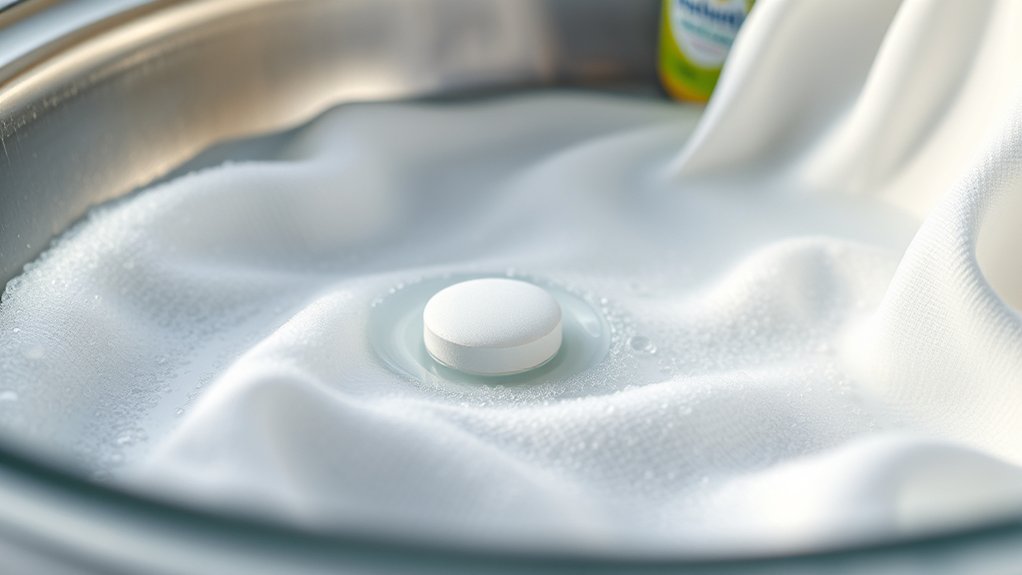
When you add aspirin to your laundry, its salicylic acid actively targets and breaks down dirt, stains, and yellowing, especially on white fabrics.
Aspirin’s chemical structure lets it interact with the proteins and organic compounds in stubborn stains, like blood, helping to break them down.
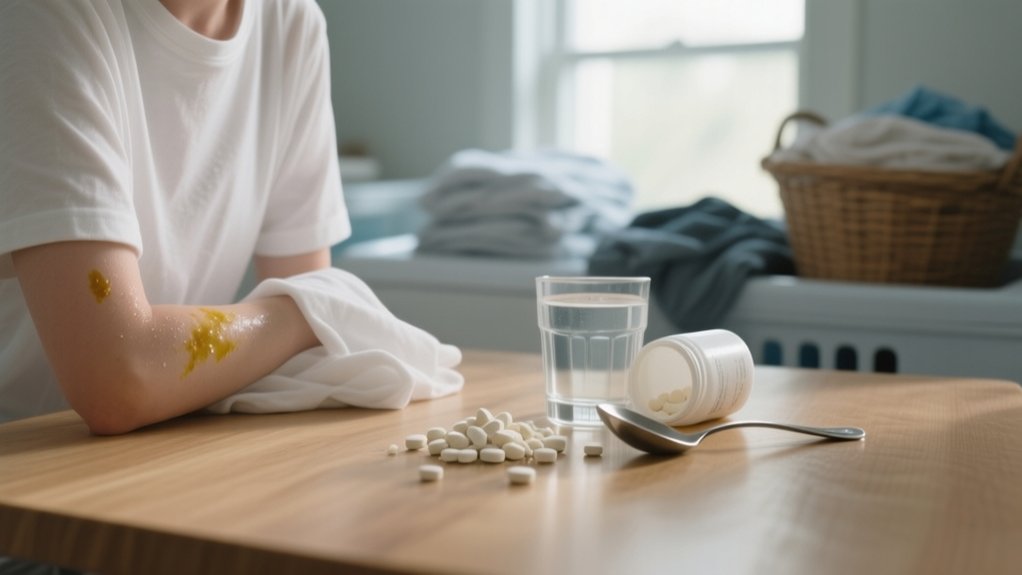
For white clothing, aspirin helps reduce yellow pit stains and general discoloration by chemically altering the stain components. This makes them easier to remove during washing.
Usually, dissolving about 10 aspirin pills per gallon of hot water and soaking garments for at least eight hours boosts this effect.
While scientific proof is still limited, aspirin’s salicylic acid content offers a reasonable way to improve stain removal and whitening in laundry—especially on white clothes with stubborn stains.
How Aspirin Whitens and Cleans Clothes
Building on aspirin’s ability to break down stains, its salicylic acid also plays a key role in whitening and brightening fabrics.
When you dissolve aspirin in hot water, the salicylic acid interacts with the fabric fibers, loosening dirt and discoloration embedded within.
This process helps to whiten laundry by effectively lifting stains, especially on white garments.
To optimize results, soak clothes in a solution of about 10 aspirin tablets per gallon of hot water for at least eight hours. This gives the active compounds enough time to work.
While aspirin can help improve fabric brightness, keep in mind its stain-removal power may not always match conventional laundry additives.
Still, aspirin offers a chemical way to target stains and boost whitening through its acid properties.
How to Remove Yellow Pit Stains With Aspirin
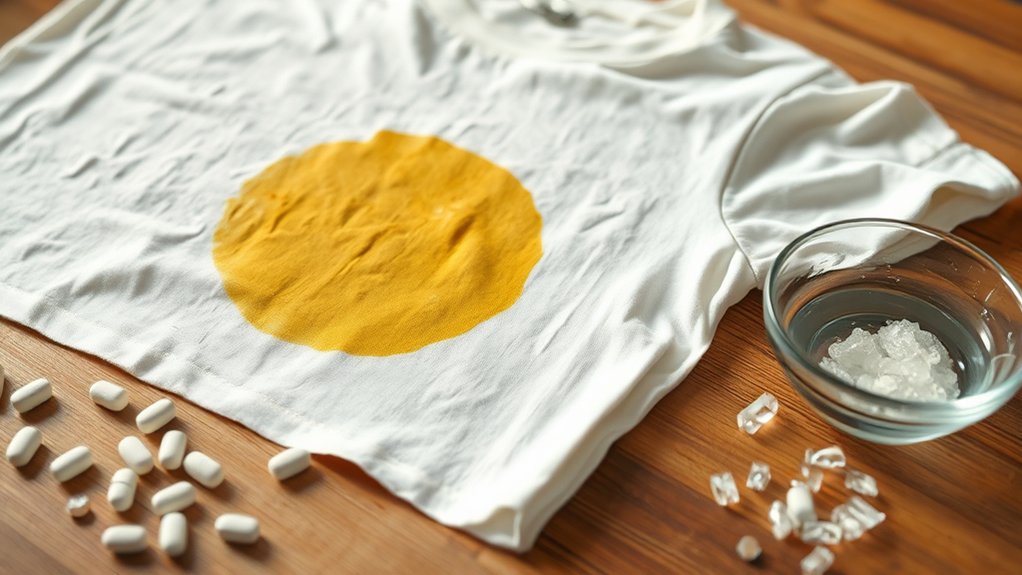
Although yellow pit stains can be stubborn, aspirin’s salicylic acid effectively breaks down the discoloration at a molecular level. To remove stubborn yellow pit stains, you’ll need to prepare a solution that maximizes aspirin’s chemical action before the wash cycle.
Follow these steps precisely:
- Dissolve 10 aspirin tablets (325 mg each) in a gallon of hot water to create an active solution.
- Soak the stained garment in this solution for at least 8 hours, allowing salicylic acid to penetrate and degrade stain compounds.
- After soaking, run the garment through a regular wash cycle to eliminate residual aspirin and loosened stains.
- Inspect the garment post-wash; if stains persist, repeat the process for thorough removal.
This method leverages aspirin’s chemistry to systematically break down and remove yellow pit stains.
How Aspirin Removes Blood Stains
Because aspirin contains salicylic acid, it effectively breaks down the proteins that bind blood stains to fabric fibers. When you dissolve 1-2 aspirin tablets in cold water, the resulting solution targets the protein structure within blood stains, loosening their grip on the fabric.
It’s critical to use cold water because hot water can coagulate blood proteins, causing the stain to set permanently. Applying the aspirin solution directly to blood stains initiates this chemical reaction, facilitating stain lift during subsequent washing.
Using cold water prevents blood proteins from setting, allowing aspirin to effectively lift stains during washing.
Alternatively, crushed aspirin powder can be applied to the stain and left to act for several hours to maximize protein breakdown. If the stain remains after one treatment, you can repeat the process to enhance the removal efficiency.
This method leverages aspirin’s acidic properties for precise, effective blood stain removal.
How to Soak Clothes With Aspirin
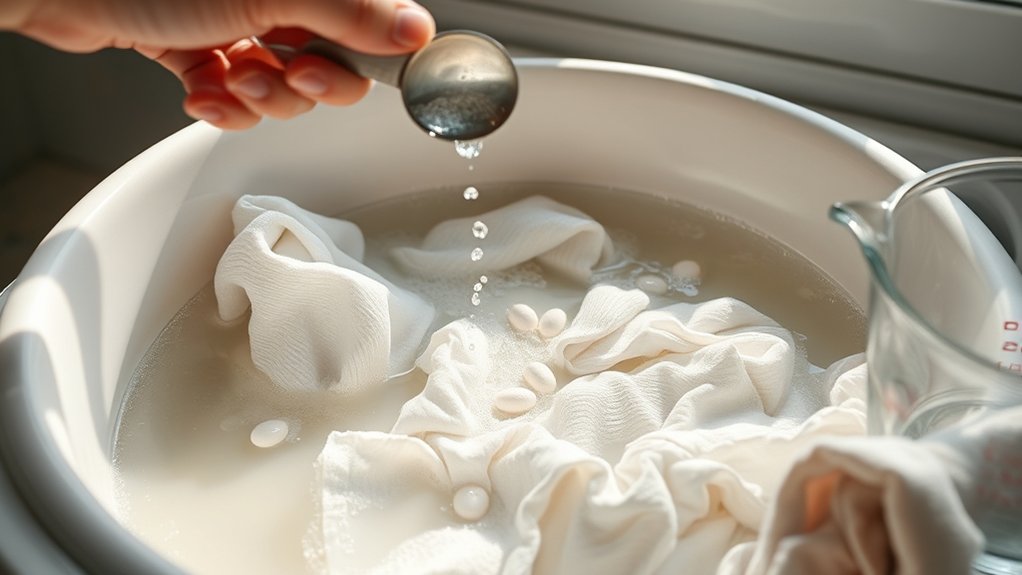
When you dissolve 10 aspirin tablets in a gallon of hot water, you create a potent solution that effectively whitens fabrics and removes stubborn stains.
To soak clothes using this method, follow these precise steps:
Fully submerge garments in the aspirin solution to maximize whitening and stain removal effects. Allow clothes to soak for at least 8 hours, ensuring the salicylic acid adequately breaks down dirt and discoloration.
Target white fabrics with yellowing, such as shirts with pit stains, for best results.
After soaking, launder the clothes as usual to eliminate residual aspirin and enhance brightness.
This process leverages aspirin’s chemical properties to improve fabric appearance through systematic soaking, delivering measurable whitening and stain removal without harsh chemicals.
How to Apply Aspirin for Effective Stain Removal
Two crushed aspirin tablets dissolved in cold water create a targeted solution for removing blood stains effectively. Apply this mixture directly to the stain and let it sit for several hours to allow salicylic acid to break down protein-based residues, enhancing stain removal.
For stubborn stains, you can also apply crushed aspirin powder directly onto fabric before washing.
When aiming for whitening clothes, dissolve 10 aspirin tablets per gallon of hot water and soak garments for at least 8 hours. This optimizes the lifting of yellow pit stains common on white shirts.
After treatment, rinse thoroughly to eliminate any aspirin residue, which could alter fabric texture or color.
Avoid using aspirin as a fabric softener substitute, as it lacks conditioning properties and serves strictly for stain removal and whitening purposes.
Comparing Aspirin With Other Laundry Additives
Although many laundry additives focus solely on cleaning or softening, aspirin stands out by combining stain removal and fabric brightening in one solution. When you load your washing machine, aspirin’s salicylic acid works to whiten clothes and tackle persistent stains, such as yellow pit marks, every time.
Aspirin uniquely combines stain removal and fabric brightening, tackling tough stains like yellow pit marks with ease.
Compared to traditional additives, aspirin offers a versatile approach without leaving residue.
Consider these points when opening a new account for laundry care:
- Aspirin removes a broad range of stains, unlike targeted stain removers.
- It brightens fabrics without dulling whites, unlike some softeners.
- Aspirin is gentler than bleach, minimizing fabric damage.
- Its dual function reduces the need for multiple products in each wash cycle.
Using aspirin in your laundry routine can optimize cleaning efficiency while preserving fabric integrity.
When to Avoid Using Aspirin in Laundry
You should avoid using aspirin on delicate fabrics like silk or wool because its chemical action can break down the fibers and cause damage.
Also, aspirin doesn’t work well on protein-based stains like blood or sweat. In fact, if you use it with hot water, it might actually set those stains instead of removing them.
Knowing these limits can help you protect your clothes and get the best results when tackling stains.
Fabric Sensitivity Concerns
When using aspirin in laundry, you should consider potential fabric sensitivity issues carefully. Aspirin contains salicylic acid, which can trigger allergic reactions in sensitive individuals and irritate skin-contact fabrics.
Also, certain delicate materials may not tolerate aspirin’s chemical properties well. To avoid damage, you must evaluate fabric compatibility before application.
Keep these points in mind:
- Silk and wool may discolor or weaken when exposed to aspirin.
- Aspirin’s acidity can deteriorate fabric fibers with repeated use, shortening garment lifespan.
- Always perform a patch test on a hidden fabric section to detect adverse reactions.
- Review care labels and manufacturer guidelines to confirm aspirin won’t compromise fabric integrity.
Following these precautions helps maintain both fabric quality and wearer safety when incorporating aspirin into laundry routines.
Ineffective On Certain Stains
Since aspirin lacks the chemical properties to break down greasy substances, it proves ineffective on oil-based stains. You should avoid using aspirin on protein stains like dairy or egg residues, especially if you apply hot water afterward, as this can cause the stain to set more firmly.
Aspirin also isn’t suitable for delicate fabrics such as silk or wool; it may induce damage or discoloration.
If you’re dealing with dye-based stains, like ink or wine, aspirin won’t provide effective removal, and specialized stain removers are a better choice.
Furthermore, using aspirin on synthetic fabrics can trigger unwanted chemical reactions that compromise fabric integrity and color.
How to Combine Aspirin With Detergent
Although standard detergents are effective, combining them with aspirin can greatly enhance stain removal and whitening, especially for white fabrics.
To optimize results, you dissolve aspirin tablets in hot water, creating a potent solution that works synergistically with detergent.
Here’s how to combine them effectively:
- Dissolve 10 aspirin tablets (325 mg each) in 1 gallon of hot water before washing.
- Soak garments in the aspirin solution for at least 8 hours prior to washing for stubborn stains.
- Add the aspirin solution during the wash cycle, not the rinse cycle, to maximize cleaning power.
- For targeted stain treatment, crush aspirin, mix with water to form a paste, and apply directly before laundering.
This method leverages aspirin’s chemical properties to boost detergent efficiency, ensuring improved whitening and stain removal.
Busting Common Myths About Aspirin in Laundry
How effective is aspirin really in tackling laundry stains? Aspirin contains salicylic acid, which can help break down stains and brighten fabrics, particularly yellow pit stains when soaked in a hot water solution.
However, its stain removal capabilities largely rely on anecdotal evidence rather than rigorous scientific validation.
Applying crushed aspirin directly to blood stains may aid removal without setting the protein, but this effect isn’t universally guaranteed. Many users attribute success to aspirin, yet alternative, scientifically supported stain removers generally outperform it.
Understanding these distinctions is vital, as aspirin’s role in laundry remains more myth than proven method.
You should consider it a supplementary option rather than a primary solution, applying it with realistic expectations and awareness of its limited, situational efficacy.
Frequently Asked Questions
Can Aspirin Damage Colored Fabrics in Laundry?
Yes, aspirin can damage colored fabrics in laundry. The salicylic acid it contains may react chemically with dyes, causing fading or discoloration.
You should test aspirin on a hidden area before applying it broadly, as the acidity can alter fabric color.
To avoid damage, always follow the garment’s care instructions and use aspirin cautiously, especially on delicate or vibrant colored textiles, ensuring you preserve their original appearance.
Is Aspirin Safe for Use in All Washing Machines?
Think of aspirin as a gentle tide washing over your fabrics. It’s generally safe for most washing machines since it dissolves cleanly without harmful residue.
However, you shouldn’t flood your machine; using about 10 pills per gallon of hot water keeps buildup at bay. You must check your washer’s manual because some models don’t handle additives well.
Use aspirin cautiously to avoid compromising your machine’s long-term performance.
How Often Can Aspirin Be Used in Laundry Without Fabric Wear?
You should use aspirin in your laundry no more than once per wash cycle to minimize fabric wear.
Frequent use increases the risk of weakening fibers and fading colors over time.
To protect your clothes, alternate aspirin treatments with other stain removal methods.
Applying aspirin selectively for tough stains rather than every wash helps maintain fabric integrity.
This way, your garments stay durable and vibrant longer without adverse effects.
Does Aspirin Affect the Scent of Washed Clothes?
You might expect aspirin to leave a scent on your clothes, but it doesn’t. The salicylic acid in aspirin targets stains, not fragrance, so it won’t add any noticeable smell.
If you use scented detergent, that scent will dominate. Occasionally, you could detect a faint chemical odor from aspirin, but it usually fades during washing.
Can Aspirin Be Combined With Fabric Softeners?
No, you shouldn’t combine aspirin with fabric softeners in the same wash cycle.
Aspirin’s active ingredients work to break down stains and brighten fabrics, but fabric softeners create a coating that reduces static and softens fibers.
Mixing them can dilute their effectiveness and interfere with each product’s function.
Instead, treat fabrics with aspirin separately, either before or after using fabric softener, to guarantee the best results.
Conclusion
When you add aspirin to your laundry, you release a powerful yet simple ally against stubborn stains and dingy whites. Like a precision tool in your cleaning arsenal, aspirin targets yellow pit stains and blood spots efficiently.
However, use it wisely. Avoid delicate fabrics and always combine it properly with detergent for best results. By understanding aspirin’s chemical action, you can elevate your laundry routine from mundane to meticulous, achieving cleaner, brighter clothes every time.